
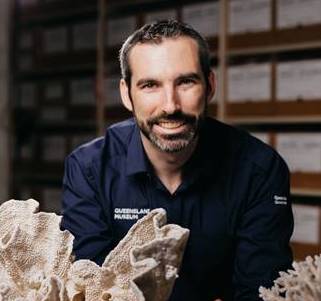
Peter Cowman
- peter.cowman@jcu.edu.au
 https://orcid.org/0000-0001-5977-5327
- Associate Professor
- Marine Biology & Aquaculture
Biography
Dr Peter F. Cowman is an Associate Professor of Marine Biology in the College of Science and Engineering at James Cook University (JCU). He holds a significant co-appointment as a Principal Scientist and Curator of Marine Biodiversity within the Biodiversity and Geosciences Program at the Queensland Museum Tropics (QMT), having previously served as Principal Scientist & Curator of Biosystematics from 2021 to 2022. Dr Cowman is also a Theme Leader in the Centre for Tropical Bioinformatics and Molecular Evolution at JCU.
He is a recognized leader in Australian science, having received the Queensland Young Tall Poppy Science Award (2020) for his achievements as an outstanding researcher and communicator. Prior to his current roles, he was an ARC DECRA Fellow (2017–2020) and a Senior Research Fellow at the ARC Centre of Excellence for Coral Reef Studies. He also received the prestigious Gaylord Donnelley Postdoctoral Environmental Fellowship (2014–2016) administered by the Yale Institute for Biospheric Studies (YIBS).
Research Focus and Expertise
Dr Cowman is a leading authority on the phylogenetic systematics and evolutionary origins of coral reef-associated fishes and corals. His extensive research, supported by over $1.8 million in competitive funding, leverages molecular phylogenetics and genomics to reconstruct deep evolutionary histories and resolve contemporary taxonomic challenges across tropical reefs.
Phylogenomic Systematics of Corals (CoralBank Project)
Dr Cowman has demonstrated leadership in integrating cutting-edge genomic techniques into collections-based research, notably through the CoralBank Project at the Queensland Museum. This initiative, funded through the partnership between QM and Project DIG, serves as an expansive genomic and taxonomic repository for the state’s marine collections.
Through his expertise in genomics and bioinformatics, Dr Cowman has directed the application of targeted capture methods, such as Ultraconserved Elements (UCEs) and exons, to generate highly informative molecular data. His foundational work includes redesigning and testing an enhanced target-enrichment bait set specifically for the subclass Hexacorallia (stony corals and their relatives) to improve phylogenetic resolution.
Under this ambitious project, Dr Cowman has contributed to the comprehensive systematic assessment of coral diversity, generating significant data across numerous samples:
• The project has collected approximately 10,000 coral colonies from around 45 ecoregions.
• This material includes associated Field Images, Voucher specimens, and Tissue samples, ensuring robust links between morphology and genetic data, which is critical given the issues of morphological plasticity in corals.
• Over 5,500 specimens have been sequenced using either UCE/Exon methods or Genome Skims.
• This expansive sampling covers 24 Scleractinia Families and 120 genera (many representing previously unrecognized lineages).
• The project includes over 3,000 specimens of the speciose Acroporidae, the dominant reef-building family.
• A key element of this taxonomic approach is the strategic collection and analysis of approximately 360 Topotype Samples, providing crucial anchor points to reliably link molecular sequences with nominal species descriptions.
This work has produced high-profile findings that reveal coral diversity to be significantly underestimated by traditional morphological taxonomy, highlighting the urgent need for a systematic revision of groups like Acropora.
Macroevolutionary Studies of Coral Reef Fishes
In parallel research, Dr Cowman continues to explore major macroevolutionary questions concerning tropical fishes. His work focuses on understanding:
• Origins of Biodiversity: Reconstructing evolutionary histories to map ancestral biogeography and dispersal patterns.
• Reefs as Diversification Drivers: He established that coral reefs act as both a 'cradle of speciation', promoting accelerated rates of diversification, and a 'safe haven' or refuge for fish lineages, protecting them from extinction during periods of climate instability.
• Global Patterns: He contributed to the finding of an inverse latitudinal gradient in speciation rate for marine fishes.
• Trophic Novelty: His early work successfully dated the evolutionary origins of wrasse lineages (Labridae) and demonstrated the rise of trophic novelty on coral reefs.
• Genomic Change: He explores the causative relationships between genomic change, processes of diversification and life history traits across the tree of life.
Public Engagement and Service
Dr Cowman actively translates his complex research for broad audiences, an achievement recognized by his Tall Poppy award. His outreach activities include:
• Serving as the Lead Curator for the Queensland Museum exhibition “Making Waves: A Century of Australian Coral Reef Science” (2022), which attracted approximately 80,000 visitors.
• Participating as an Invited Panelist in high-profile discussions at the World Science Festival in 2022 and 2024.
• Conducting live genome sequencing demonstrations at major community science events, such as Unearthed Mackay (2022).
• Briefing government agencies, including the Great Barrier Reef Marine Park Authority (GBRMPA) and the Australian Institute of Marine Science (AIMS), on the importance of molecular systematics and taxonomy for coral conservation and monitoring efforts.
• His research has generated extensive media attention, resulting in 118 news mentions over seven years, including interviews with the New York Times and ABC Science.
• He is a lifetime member of the Australian Coral Reef Society (ACRS) and previously co-edited its magazine, “Reef in Review”.
Research
Research Interests
Dr Cowman's research interests lie at the intersection of Evolutionary Biology, Biogeography, and Genomics, specifically focusing on understanding the origins and maintenance of life in tropical marine environments. His work leverages molecular phylogenetics and high-throughput sequencing technologies to address fundamental macroevolutionary questions about fishes and corals associated with reefs.
His primary research themes are:
1. Phylogenetic Systematics and Comparative Genomics
Dr Cowman is committed to resolving systematic uncertainties using cutting-edge genomic tools.
- Genomic Tool Development: A key focus is the design and application of phylogenomic methods for difficult taxonomic groups. He was instrumental in redesigning an enhanced target-enrichment bait set (hexa-v2) specifically for the subclass Hexacorallia (stony corals and their relatives) to improve phylogenetic resolution across deep and shallow evolutionary time scales. This approach utilizes targeted capture of ultraconserved elements (UCEs) and exons.
- Collections-Based Genomics (CoralBank): His curatorial role drives the integration of these genomic methods into Queensland Museum Network's (QMN) collections. He leads the phylogenetic component of the CoralBank Project, which functions as an expansive genomic and taxonomic repository for the state’s marine collections. This work ensures that molecular data (like the 5,500 sequenced coral specimens in the project) are linked robustly to voucher specimens and morphological data.
- Taxonomic Revision: This research highlights the incongruence between traditional morphological taxonomy and molecular phylogenetics in corals. Dr Cowman champions the 'topotype approach' - the process of linking molecular data from specimens collected at the original type locality to their nominal species - to build a robust, quantitative taxonomic framework for reef corals that resolves species boundaries without ambiguity.
- Genomic Evolution and Diversification: He explores the mechanisms linking genomic change to processes of diversification and the evolution of life history traits across the tree of life.
2. Macroevolutionary Biogeography of Reef Fishes and Corals
A significant portion of Dr Cowman's research focuses on the historical factors that have shaped the evolution and distribution of tropical reef fishes.
- Origins of Biodiversity Hotspots: His research aims to discern the processes responsible for the enigmatic diversity gradient found in the marine tropics, centered on the Indo-Australian Archipelago (IAA) biodiversity hotspot. This includes evaluating complex hypotheses such as the 'Center of Origin,' 'Center of Overlap,' and 'Center of Accumulation/Survival' models, concluding that the genesis of biodiversity is a dynamic process driven by multiple factors interacting across spatial and temporal scales.
- Reefs as Evolutionary Drivers: He has demonstrated that coral reefs act as drivers of cladogenesis. Specifically, reefs function as a 'cradle of speciation', accelerating diversification rates for associated fish lineages, while also serving as a 'safe haven' or refuge that preserves diversity and protects lineages from extinction during periods of rapid climate change.
- Tectonic and Climatic Influence: His work uses dated phylogenies and ancestral biogeographic estimation (e.g., using the BayArea approach) to map how major geological and climatic events - such as the Terminal Tethyan Event (TTE) and the Isthmus of Panama (IOP) closure - have regionalized the tropical marine belt and influenced speciation patterns over the last 65 million years. This includes quantifying the impact of hard versus soft barriers on vicariance among clades.
- Global Diversification Patterns: Dr Cowman was a lead contributor to the finding of an inverse latitudinal gradient in speciation rate for marine fishes, highlighting that speciation rates are highest outside the tropics.
3. Evolutionary Ecology and Functional Diversity
Dr Cowman integrates evolutionary history with ecological function to understand how reef systems remain healthy and resilient.
- Trophic Novelty: His early work focused on dating the evolutionary origins of wrasse lineages (Labridae) and examining the rise of trophic novelty on coral reefs. More recently, he has shown that trophic innovations fuel reef fish diversification.
- Functional Vulnerability: He assesses how the evolutionary history of tropical corals and fishes is protected (or not protected) by global marine protected areas. He examines how functional roles critical for reef health have evolved along lineages and whether high species diversity translates to redundancy or vulnerability in function.
Projects
Research Data
Teaching
Teaching Interests
Dr Cowman's teaching interests centre on the fields of Marine Biology, Evolutionary Ecology, and cutting-edge Molecular and Bioinformatics methods, particularly applied to tropical marine systems.
His experience encompasses designing and delivering educational content to a broad audience, spanning first-year students through to postgraduates.
Core Teaching Areas
Dr Cowman has consistently designed and delivered undergraduate and postgraduate lectures and practical components in the following topics:
- Evolutionary Biology and Biogeography: Topics include Evolution and the biogeography of marine fishes (e.g., MB2060).
- Reef Ecology and Evolution: Subjects such as Reef fish ecology and evolution (e.g., MB2160).
- Genetics and Genomics: Course content covers Genes, genomes and development (e.g., BC3101/B5101) and Ecological and Conservation Genetics (e.g., BZ3450/BZ5450).
- Molecular Methods: This includes teaching in Molecular methods in marine ecology (e.g., MB5450), specifically involving a practical component on Phylogenetic Methods.
Specialist Training and Mentorship
A significant aspect of Dr Cowman's pedagogical engagement involves hands-on training in advanced scientific and computational techniques:
- Bioinformatics and Programming: He has co-organised and co-instructed conference workshops focusing on "An Introduction to R for Beginners" and "Biogeographic analyses in R with BioGeoBEARs". He has run workshops in R programming and Geneious Pro genetics software.
- Research Mentoring: Dr Cowman actively mentors early career researchers (ECRs) and students. He has been an Invited panel speaker at the Australian Coral Reef Society (ACRS) National Student Mentoring day, providing advice and "pro-tips to get a job after graduation".
- Supervision: He currently supervises six PhD students at JCU and has supervised seven PhD students to completion. He has successfully mentored students who have graduated Cum Laude and received the Deans Medal. He has also directed research experiences for visiting educators through the Columbia University Science Teacher Placement Program, supervising research into the molecular evolution of corals and fishes.
- Integrating Collections and Research: His engagement involves recruiting and providing research opportunities for students at the Queensland Museum Network (QMN), thereby strengthening the symbiotic relationship between QM and JCU. He has hosted undergraduate students on Industry Placement Programs at QM.