
College of Medicine & Dentistry
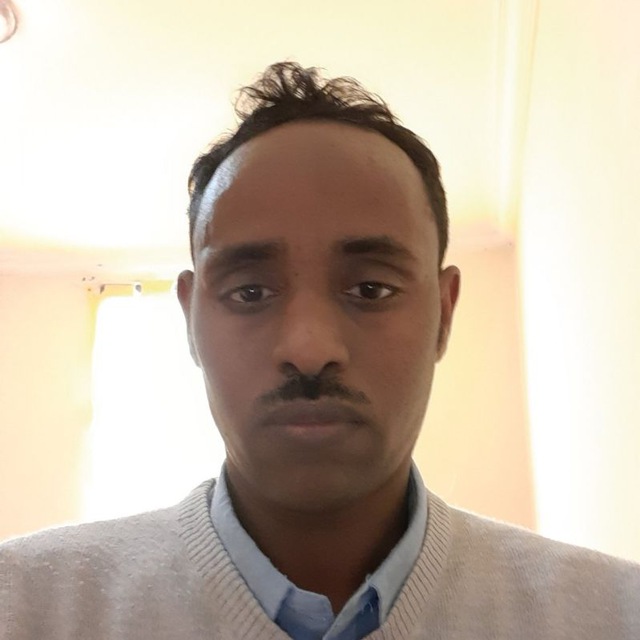
Semagn Abate
- Doctor of Philosophy (Health)
- semagn.abate@my.jcu.edu.au

Joseph Kamara
- Senior Lecturer Disaster Health and Humanitarian Assistance
- joseph.kamara@jcu.edu.au

Eric Kalo
- Lecturer Medical Education
- eric.kalo@jcu.edu.au

Erin Waters
- JCU Associate Professor
- erin.waters@jcu.edu.au

Kannan Maharajan
- Associate Professor, Pharmacy
- kannan.maharajan@jcu.edu.au

Fahmida Begum Mina
- Doctor of Philosophy (Medical, Molecular and Veterinary Sciences)
- fahmidabegum.mina@my.jcu.edu.au

Lynsey Brown
- Adjunct Senior Lecturer
- lynsey.brown@jcu.edu.au

Ali Isin
- Adjunct Senior Research Fellow
- ali.isin@jcu.edu.au

Muideen Olaiya
- Senior Research Fellow
- muideen.olaiya@jcu.edu.au

Mila Grinblat
- Postdoctoral Research Fellow
- mila.grinblat@jcu.edu.au
Proposed development of revised framework for operational and implementation research in health and disease control programmes. (Old ID 27222)
Karen Johnston
26 Apr 2021 - 24 Sep 2021
Strong, responsive and resilient health systems are the critical foundation for global health security. Health systems depend on effective functioning of both people and networks in order to implement effective disease control programmes, detect and respond quickly to infectious disease threats and develop evidence-informed policy/practice. The purpose of this work is to develop a revised framework for operational and implementation research (OR/IR) in health and disease control programs. This framework can be used to develop adequate and sustainable OR/IR capacity in public health programs and create an organisational culture of policy and practice that is informed by evidence-informed decision making.
Assessment of the efficacy of a novel treatment for Peripheral Artery Disease (PAD) (Old ID 26206)
Joseph Moxon
01 Jul 2018 - 31 Dec 2020
Blockage of leg arteries (peripheral artery disease - PAD) leads to severe exertional leg pain (intermittent claudication), impaired walking ability, reduced health-related quality of life, and high risk of amputation and death. Multiple lines of evidence suggest that metformin, a cheap and safe medication, promotes formation of new vessels, improves microcirculation and muscle function,s and limits pain.
Strengthening the Quality of Dementia Care in Aboriginal and Torres Strait Islander Residential Aged Care (Old ID 27652)
Rachel Quigley
01 Feb 2022 - 31 May 2022
Aim: Develop and field-test an audit tool for assessing the standard of dementia care in Aboriginal/Torres Strait Islander residential aged care (RAC), against Quality Standards and Best Practice guidelines for dementia care. Method: - Undertake scoping review on best practice dementia care; - Develop a standardised audit tool based on scoping review evidence; - Field-test tool to evaluate face and content validity and inter-rater reliability. Outcome: Best practice dementia care audit tool and accompanying manual. Significance: Groundwork for a larger funding application to Dementia Australia that will test the audit tool and inform the feasibility and acceptability of a continuous quality improvement approach for strengthening dementia care in Aboriginal/Torres Strait Islander RAC.
Quality Improvement in Indigenous Primary Health Care: Leveraging Effective Ambulatory Practices (LEAP) (Old ID 22468)
Rebecca Evans
01 Jan 2016 - 31 Dec 2016
Continuous quality improvement (CQI) initiatives are well-accepted as an effective means for improving quality of care at primary health care (PHC) services. However, there remains significant variation in the quality of care provided between individual services and the degree of response to CQI activities. This sis so despite active and effective CQI networks supported by a number of organisations. Understanding the detail of this variability is vital before quality improvement initiatives in Indigenous PHC can be effectively scaled-up and expanded. We aim to enhance understanding of how quality improvement initiatives in Indigenous PHC can be rolled out on a broader scale, particularly in services that face capacity and resource-based challenges, through I0 building on our understanding of how contextual factors interact to facilitate or limit the success of CQI initiatives; and ii) collaborative development and testing of a toolkit of interventions to address barriers to improvement.
Design, implementation, and evaluation of an intervention for a kidney transplant service in northern Queensland (Phase 2)
Andrew Mallett
11 Dec 2025 - 31 Oct 2029
This study will explore the experiences of kidney transplant recipients and health professionals, perceived barriers to transplantation and ways in which patient experiences could be improved. This data will inform the design of an intervention for the proposed new kidney transplant service for northern Queensland, which will be implemented and evaluated using a prospective cohort study. The expected outcome of this study is that the intervention will influence the development and provision of clinical services for the northern Queensland kidney transplant service, improving patient experiences and clinical outcomes.
A Study of Genotype and Blood Group Types With Respect To HBV In Blood Donors In PNG
Donna Rudd
01 Oct 2024 - 31 Dec 2026
My PHD student, Francisca Varpit has been awarded a Schlumberger Foundation Grant for the value of up to US$50000. The grant money must be used within the period April 2024 to April 2025. "Before any funds are disbursed, the Grantee shall sign a Grant Agreement (GA) with the Foundation. The Grantee will be contacted in due course following the announcement of the award by the Administration team to complete and sign this document. It should be noted that this Agreement is between the Grantee and the Foundation only, i.e., the Host University does not need to sign it as well. Whenever the Host Institution plays the role of Grant Administrator, a Memorandum of Understanding (MOU) shall be signed between the Host University and the Foundation. " JCU will act as the Host University and Francisca Varpit is the Grantee. Hence, we require: 1. An account into which the money can be deposited and managed; 2. a MOU to be drafted between JCU and Shulumberger Foundation and the signing of this MOU.
Building Capacity for Frailty management in Regional Queensland Residential Aged Care Facilities
Nathan Dawes
01 Oct 2024 - 31 Dec 2025
Virtually all older adults living within aged care are at risk of becoming or are currently frail, with increased risk of adverse health outcomes. The core treatments for frailty are good nutrition, medication optimisation, and robust exercise, which was recently evaluated in the novel Frailty Reduction via Implementation of Exercise, Nutrition and Deprescribing (FRIEND) trial. This trial developed comprehensive training resources for the aged care sector. This project aims to build capacity through dissemination of this training to aged care champions across regional Queensland facilities and support them to improve frailty care and client health within their facility.
The project has two main project aims:
1. Disseminate FRIEND in an online and in-person, train-the-trainer model to build capacity of aged care champions and key regional, healthcare professionals
2. Support aged care champions to develop local facility training, and an organisational strategy for improving frailty care
The study will involve two phases:
1. Pre/post evaluation of a train-the-trainer education intervention (FRIEND website modules and an intensive one-day course on frailty management). Five strategically located RACFs across North-West Queensland will nominate an aged care champion (i.e. senior staff member) by early September to complete website training and travel to Townsville for intensive training in Late October/Early November along with local healthcare professionals (e.g. nurses, physiotherapists, exercise physiologists, social workers) working within aged care.
2. Involves evaluation of the champion-led local training implementation development of an organisational strategy to improve frailty care over a six-month period. The champion will identify key implementation/leadership staff and training needs to develop a 1–2-hour training webinar and develop an organisational strategy to improve frailty management in their facility
Improved respiratory support in remote settings for children: A paediatric acute respiratory intervention study (PARIS), PARIS on Country. (Old ID 29018)
Sally West
01 Apr 2022 - 31 Mar 2027
Respiratory illnesses are the most frequent reason for non-elective hospital admissions in children <5 years. Acute respiratory failure (ARF) is the common endpoint for many underlying specific diagnoses such as bronchiolitis, asthma and pneumonia. In FNQ approximately 50-70% of mostly indigenous children with ARF require transfer to a tertiary hospital, compared to 10-15% of these children in SEQ. We aim to introduce a measured model of care using a comprehensive respiratory care package for children with ARF in remote hospitals in Queensland. The aim is to reduce the number of transfers and offload the pressure on the emergency/retrieval systems.
Viral Causes of Crayfish Handling Mortalities (Old ID 23613)
Jenny Elliman
18 Sep 2017 - 31 Dec 2020
Northern Queensland crayfish from farms affected by stress, particularly transportation stress, started to die with mortality reaching 20-40% after about three weeks. Two new viruses were found, Cheque iflavirus and Athtab Bunya-like virus. This research will determine the infection cycle of the viruses to understand how to intervene and control the impact of these viruses.
Securing the frontline for health secure communities (Old ID 26522)
Lars Henning
01 Aug 2020 - 31 Dec 2023
The aim is to build capacity to detect/respond to infectious disease outbreaks through frontline public health (human and animal) workforce which includes community members, volunteers, community health workers, environmental health workers, biosecurity and environmental officers and primary health care staff. This will be achieved through: Strengthened capability at community/primary care levels to anticipate outbreaks; Improved response at early stages of potential outbreaks; A quality timely and thorough response to outbreaks at the frontline level ; An operational learning and feedback process for continued improvement and currency of detection of and response to infectious diseases outbreaks.
Regenerating lizard tails: A new model for investigating lymphangiogenesis
- 2003
- Researchers:Suzy Munns
Association of osteoprotegerin with human abdominal aortic aneurysm progression
- 2005
- American Heart Association
- Researchers:Jonathan Golledge
A simple plan: cnidarians and the origins of developmental mechanisms
- 2004
- Nature Publishing
- Researchers:David Miller
Start Date:
01 Jan 2011
Start Date:
01 Jan 2008
Start Date:
01 Jan 2016
Start Date:
01 Jan 2011
Start Date:
01 Jan 2010
Start Date:
01 Jan 2007
Start Date:
01 Jan 2005
Start Date:
01 Jan 2024
End Date:
01 Jan 2024
Start Date:
01 Jan 2008
Start Date:
01 Jan 2021