
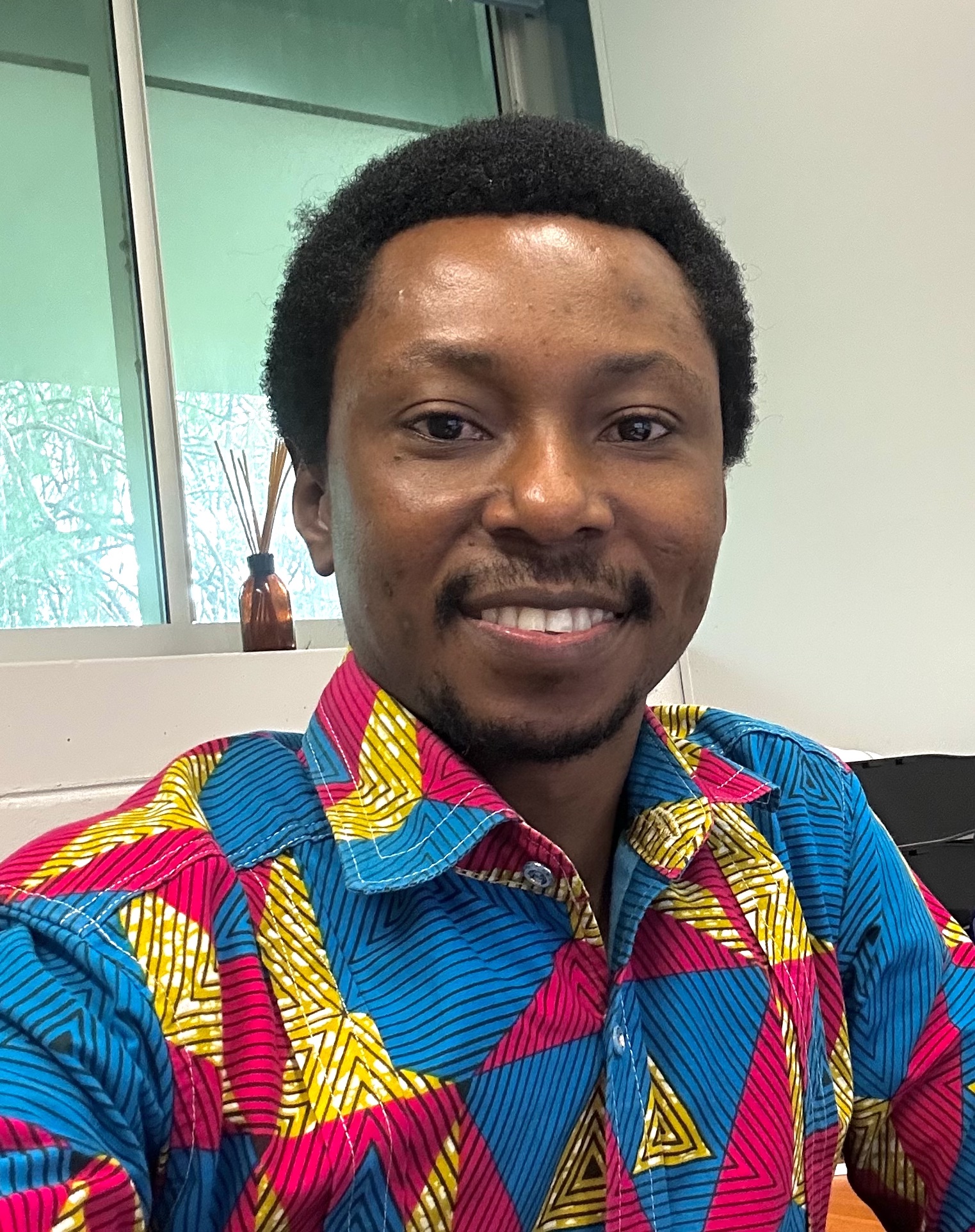
Abdul-Aziz Seidu
- abdulaziz.seidu@jcu.edu.au
 https://orcid.org/0000-0001-9734-9054
- Lecturer, Public Health
- PHTM - Research Methods
Contact Details
- 0747816617
- abdulaziz.seidu@jcu.edu.au
-
JCU Townsville, Bebegu Yumba Campus
Biography
I am a Public Health Lecturer in the College of Medicine and Dentistry, James Cook University, Australia, with a strong track record in public health research, teaching, and research capacity building. My expertise spans epidemiology, health policy, disability-inclusive health research, quantitative, qualitative and mixed methods research, and the management and analysis of large-scale population health datasets.
My research advances health equity for vulnerable and underserved populations, spanning disability and health, sexual and reproductive health, non-communicable diseases, maternal and child health, gender-based violence, and global health. I have published extensively in these areas, am recognised in the Stanford and Elsevier list of the world's top 2% of scientists, and contribute as a Senior Collaborator to the Global Burden of Disease network. My work is cited widely in policy documents internationally, demonstrating reach beyond the academy. I recently contributed to World Health Organization commissioned scoping review on lessons learnt from arboviral outbreaks. Since appointment, I have attracted research and community funding as Chief Investigator, including a $52,900 youth digital mentorship program, and as Co-Investigator on grants from Townsville Hospital and Health Service, the Tropical Australian Academic Health Centre, the Margaret Roderick Centre for Mental Health Research, and the University of Michigan USA, with several others under review.
I establish and lead interdisciplinary collaborations connecting epidemiological methods with health service delivery and community practice. My collaborators include researchers and health partners at the University of Michigan, Bielefeld University, the African Population and Health Research Center, the University of Ghana, the University of Cape Coast, and many other institutions globally. Locally, my engagement with NQ Ummah Care, a Townsville-based not-for-profit serving migrant, refugee, culturally and linguistically diverse and First Nations communities, connects my research directly to the populations it concerns and grounds it in community priorities.
I build research capability through higher degree research supervision, mentoring of early career researchers, and applied training in research methods, scientific writing and data analysis, including leading the design and in-country delivery of research methods training in Papua New Guinea.
I teach and coordinate undergraduate and postgraduate public health subjects spanning epidemiology and research methods, with an emphasis on building the critical reasoning that underpins evidence-based practice across diverse health disciplines and practice settings.
I exercise leadership in my discipline through editorial and conference roles. I serve as Associate Editor for BMC Health Services Research and Frontiers in Epidemiology, lead a special collection as co-Guest Editor for SAGE Women's Health, and safeguard research quality as a reviewer for leading journals including The Lancet Global Health and BMJ Global Health. I lead the Scientific Committee of the ICGE conference for 2024-2027, shaping the scientific program and peer review of submissions. I am an active member of the Public Health Association of Australia, the Australasian Epidemiological Association, the Sub-Saharan African University Gender-Based Violence Prevention and Response Network (SUBVERT), and the Queensland Disability Research Network. I co-lead the Health, Medicine and Well-being sub-theme of the Australian Research Network for African Academics, driving research idea generation and implementation.
I completed my PhD in Public Health at James Cook University, examining the impact of health policies and interventions on sexual and reproductive health outcomes among persons with disabilities in Ghana. I also hold an MPhil in Population and Health, a Bachelor of Science in Population and Health, and a Postgraduate Diploma in Education from the University of Cape Coast, Ghana. This background continues to shape my commitment to equity-focused research and to strengthening research capability in resource-constrained settings.
Research
Research Interests
Sexual and reproductive health and rights
Disability and health
Maternal and child health
Gender-based violence
Social Epidemiology
Social determinants of health
Projects
Teaching
Teaching Interests
Epidemiology: Foundational and applied epidemiology, including measures of disease frequency and association, study design, causal inference, random error, bias and confounding, screening and diagnostic test evaluation, outbreak investigation, surveillance, and the interpretation of epidemiological evidence for population health decision-making.
Health professional research methods: Formulating answerable research questions, quantitative and qualitative study design, sampling and measurement, data collection and management, critical appraisal of published evidence, research ethics and integrity, and the communication of findings to professional and lay audiences, with an emphasis on the research literacy required for evidence-based allied health and public health practice.
Qualitative and mixed methods inquiry: Qualitative research paradigms and designs, interviewing and focus group methods, thematic and content analysis, rigour and trustworthiness in qualitative work, and the integration of qualitative and quantitative evidence within mixed methods designs to address complex health problems.
Quantitative analysis and applied biostatistics: Descriptive and inferential statistics, hypothesis testing and estimation, regression modelling, systematic review and meta-analysis, and the analysis of large-scale population health and demographic survey data, taught with a focus on interpretation and application.
Higher Degree Research training: Research design, epidemiological and statistical reasoning, scientific writing and publication, data analysis, and the development of independent research capability among HDR candidates, early career researchers and health professionals, including in-country research methods training delivered internationally.
Research Advisor Accreditation
Advisor Type
Primary