
College of Science & Engineering

Sophia Love
- Doctor of Philosophy (Natural and Physical Sciences)
- sophie.love@jcu.edu.au

Romain Vaucher
- Senior Lecturer, Sedimentology
- romain.vaucher@jcu.edu.au

Jenny Fisher
- Associate Dean, Learning and Teaching
- jenny.fisher@jcu.edu.au

Ambili Narayanan
- Doctor of Philosophy (Natural and Physical Sciences)
- ambili.narayanan@my.jcu.edu.au

Sarfaraz Ali
- Postdoctoral Research Fellow
- sarfaraz.ali@jcu.edu.au

Mikaeylah Davidson
- Postdoctoral Research Fellow
- mikaeylah.davidson@jcu.edu.au

Liuxin Chen
- Lecturer
- liuxin.chen@jcu.edu.au

Rafael Cabral Carvalho
- Lecturer, Marine Geoscience
- rafael.cabralcarvalho@jcu.edu.au
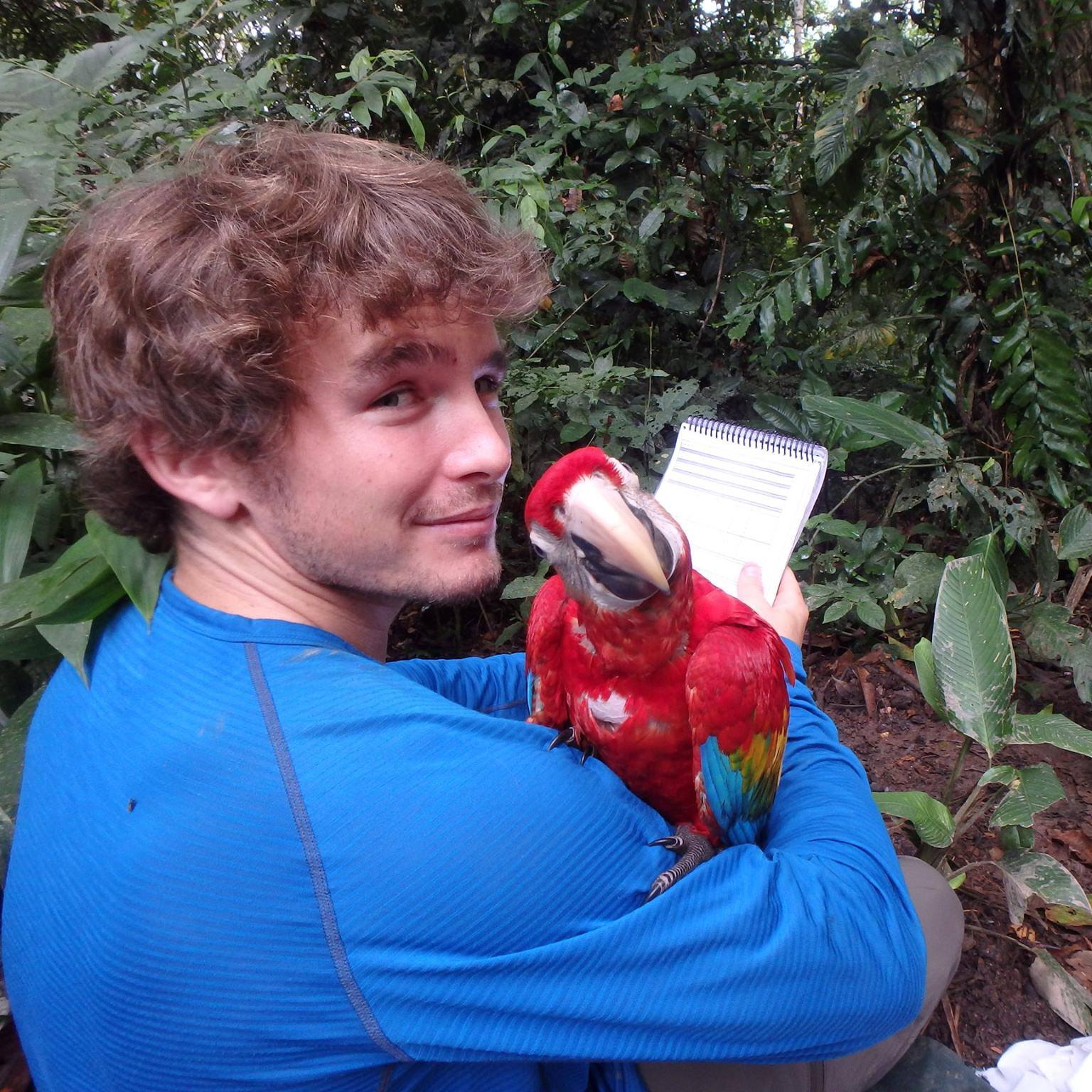
Tom Lloyd
- Postdoctoral Research Fellow, Global Ecosystems
- tom.lloyd@jcu.edu.au
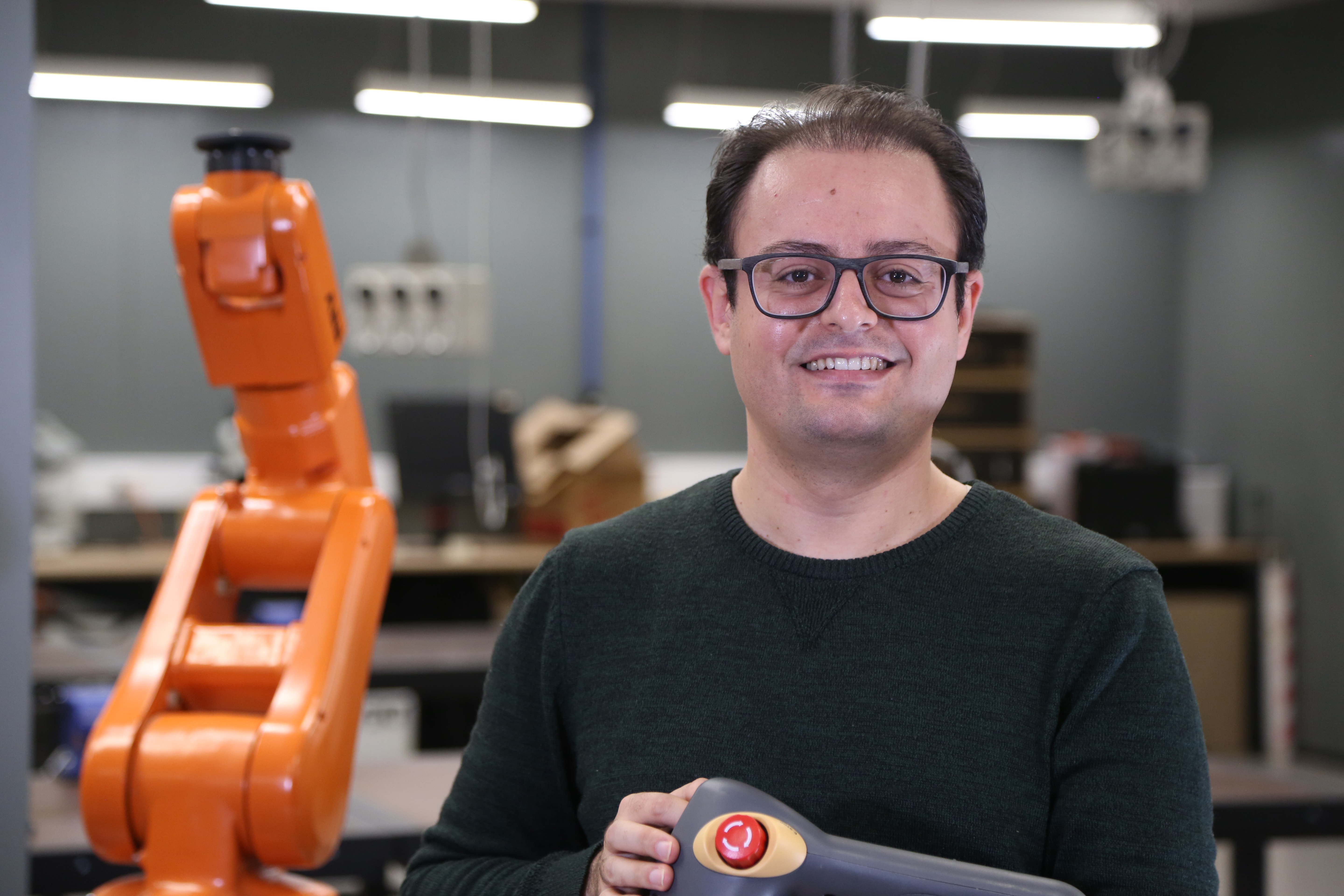
Mohamadreza Chalak Qazani
- Lecturer, Mechanical Engineering
- mohamadreza.chalakqazani@jcu.edu.au
Circulating human papillomavirus (HPV) DNA for post-treatment surveillance of HPV-related oropharyngeal squamous cell carcinoma (HPV-OPSCC)
Ludwig Lopata
01 Jun 2025 - 31 May 2027
HPV is an established cause of the majority of oropharyngeal cancer cases in Australia, with incidence rates continuing to rise. Despite its favourable prognosis with current treatments, post-treatment surveillance for HPV-OPSCC remains challenging, requiring frequent visits to tertiary hospitals for clinical assessments and imaging. This imposes a significant burden on patients in terms of time and cost, as well as on the healthcare system.
Models suggest that incorporating circulating tumour biomarkers into surveillance protocols offers a more cost-effective alternative while maintaining clinical efficacy [1]. The detection of HPV DNA in the blood (circulating HPV DNA, or cHPV-DNA) has shown promise as a non-invasive biomarker that can reliably identify disease recurrence before clinical symptoms or imaging abnormalities arise [2]. This early detection has the potential to enable timely salvage treatments, improving survival rates and reducing treatment-associated morbidity.
Our project aims to establish a highly sensitive and specific method for detecting cHPV-DNA in patient blood using state-of-the-art biotechnology, such as digital droplet PCR (ddPCR) or next-generation sequencing (NGS). By optimizing assay sensitivity and validating its clinical utility, we intend to create a robust platform for post-treatment monitoring of cancer recurrence.
This research will also explore the integration of cHPV-DNA testing into current surveillance frameworks, with the goal of reducing patient visits and reliance on resource-intensive imaging. Additionally, the project has the potential to contribute to the development of personalized, response-adapted treatment strategies for HPV-OPSCC, by identifying patients at higher risk of recurrence or those who may benefit from de-escalated therapy.
Strengthening coral reef monitoring and ocean equity for marine co-management in Tonga. (Old ID 30026)
Patrick Smallhorn-West
16 Jun 2023 - 18 Dec 2023
The proposed project would aim to build off one of the most successfully implemented marine management programs in Tonga, the Special Management Area program (SMA). The SMA program is Tonga’s version of marine co-management and currently involves over 50 % of coastal communities (59 communities as of February 2023), with the aim to reach 100 % capacity by 2025. Implementation and scaling of the SMA program has been widely successful but is now struggling with issues in M&E, as well as community coordination. These issues have been expressed to us from the Ministry of Fisheries (MoF) and Civil Society of Tonga and are largely due to staff in these organisations being under-resourced and already working at full capacity. 1. Strengthen SMA Monitoring and Evaluation capacity in Tonga 2. Strengthen equity and resilience in the governance structure of Tonga’s Special Management Area program
Forever chemicals accidentally produced in a modern cleaner atmosphere
Jenny Fisher
01 Jan 2026 - 31 Dec 2028
The world is reliant on chemicals -- but many have detrimental impacts on the ozone layer and climate. Replacements have been developed that have no ozone depletion or global warming potential. However, their atmospheric breakdown products may not be so safe. We will combine cutting-edge laboratory experiments and state-of-the-art global models to quantify how 'clean' these replacements truly are.
Reintroduction and monitoring of the Armoured Mistfrog, Litoria lorica (Old ID 31133)
Conrad Hoskin
12 Sep 2023 - 31 Dec 2026
I have a long-term research project on the monitoring and recovery of the Critically Endangered Armoured Mistfrog. I am collaborating on this with the Threatened Species Group (DES, Qld Government) to perform a reintroduction and subsequently monitor all populations for three years. This grant will fund that research.
Feasibility of Vibration-Based Projectile Impact Localisation on Steel Targets
Tao Huang
02 Mar 2026 - 01 Mar 2027
This project will investigate whether vibration signals measured directly on steel shooting targets can be used to reliably determine the two-dimensional impact location of projectiles. The work focuses on the sensing and signal-processing components of impact localisation, while the overall system design, wireless communications, and firearm testing will be handled separately by TACRDLABS.
The core idea is to attach a small array of vibration sensors to the rear of a steel target and analyse the resulting waveforms when an impact occurs. Different sensor technologies will be considered, such as piezoelectric sensors, contact microphones, and knock sensors. The project will study how sensor type, mounting method (for example, adhesive versus bolt-on), and placement on the target influence signal quality, especially the earliest part of the vibration response that is most informative for localisation.
High-sample-rate vibration data from live firearm tests on steel targets will be collected and supplied by TACRDLABS. James Cook University will complement this with controlled mechanical impact experiments, such as hammer or pendulum strikes at known locations on instrumented targets. These datasets will be curated with associated metadata (sensor type, mounting method, target size, impact location, and impact type) to enable systematic analysis.
Using these datasets, the project will develop proof-of-concept signal processing methods and Python scripts to detect impacts, extract the earliest identifiable arrivals across multiple sensors, and estimate impact coordinates using time-difference-of-arrival style approaches. The analysis will examine how localisation performance depends on sensor layout, target size, and mounting method, and will explore strategies to improve robustness, such as increasing sensor count or applying appropriate filtering.
Performance will be quantified in terms of localisation error, timing precision requirements, and detection reliability under a range of realistic conditions. The findings will be synthesised into practical design rules and guidelines for sensor selection, coupling, and placement on steel targets, along with recommendations on timing and sampling requirements for future embedded implementations.
Overall, the project will deliver a focused feasibility assessment of vibration-based projectile impact localisation on steel targets, along with example algorithms and configuration guidelines that TACRDLABS can use in the design of an integrated smart target system for defence, law enforcement, and recreational shooting applications.
Microgrid Systems with Integrated Waste-to-Energy source for Forward-Deployed Defence Infrastructure
Yang Du
16 Mar 2026 - 16 Nov 2027
This project proposes the design and validation of a renewable, deployable microgrid that integrates various inputs such as waste-to-energy (W2E) systems, solar PV, batter and diesel generator. Designed for Defence operations in Northern Australia, the system will convert operational waste into usable energy (e.g., syngas or bio-oil) and provide reliable power for charging or storing energy in portable devices. It aims to enhance energy resilience, reduce reliance on fuel logistics, and support sustainable operations in remote or contested environments.
Australian Venom Innovation and Discovery (AVID) Initiative
Sally Lau
01 Jan 2026 - 31 Dec 2026
Antarctic brittle star transcriptome and proteome
Australian Venom Innovation and Discovery (AVID) Initiative
Sally Lau
01 Jan 2026 - 31 Dec 2026
Antarctic octopus genome, transcriptome and proteome
Developing the basis for wild caught prawn broodstock biosecurity protocols (Old ID 26238)
Dean Jerry
14 Nov 2018 - 08 Nov 2019
The project will monitor the presence and viral load of a number of endemic prawn viruses in farmed prawns collected at Australian Prawn Farm. The data collected will be used to prepare evidence based management protocols to improve productivity on the farm.
Northern Aquaculture Industry Situational Analysis (Old ID 26272)
Dean Jerry
31 Jan 2019 - 11 Feb 2020
This project will identify key challenges and opportunities facing the North Australian aquaculture sector and explore potential solutions and/or identify the most strategic research projects for further investment. This will include and not be limited to: infrastructure, policy, investment, environmental, production, knoweldge, training and human capital gaps and the research or alternative solutions to address them. The project will be delivered through a literature review, development of the 'Northern aquaculture industry vision 2028' in consultation with indigenous and non-indigenous stakholders, desktop study and SWOT analysis, and the situational analysis report.
Linking feeding behaviour and jaw mechanics in fishes
- 2000
- BIOS Scientific Publishers Ltd
- Researchers:David Bellwood
Water circulation in mangroves, and its implications for biodiversity
- 2001
- CRC Press Inc
- Researchers:Eric Wolanski
Start Date:
10 Nov 2024
Start Date:
31 Mar 2025
Title:
Bengali
Reseracher:
Khandakar Faisal Ibn Murad
(Doctor of Philosophy (Engineering and Related Technologies))
Title:
English
Reseracher:
Khandakar Faisal Ibn Murad
(Doctor of Philosophy (Engineering and Related Technologies))
Start Date:
01 Jan 2024
Start Date:
01 Jan 2024
End Date:
01 Jan 2027
Start Date:
01 Jan 2014
Start Date:
01 Jan 2003
Title:
PhD, James Cook University
End Date:
01 Jan 2010
Start Date:
01 Jan 2024
End Date:
01 Jan 2024