
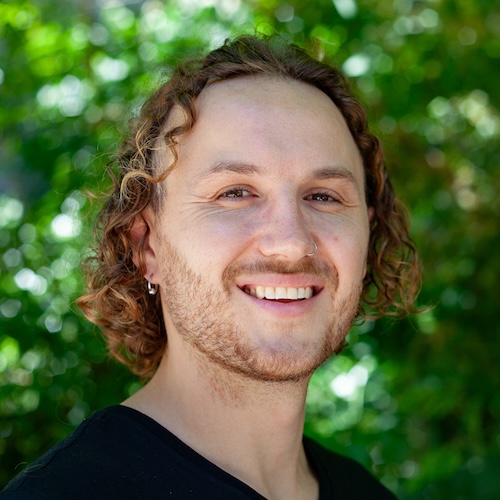
Patrick Smallhorn-West

Biography
I am a Senior Lecturer at James Cook University, where my research examines how marine protected areas and small-scale fisheries can be governed effectively and equitably across the Pacific and Southeast Asia. My work sits at the intersection of conservation science, small scale fisheries, and governance, drawing on a background in coral reef ecology to address the practical and institutional challenges of managing coastal resources that support the livelihoods and food security of millions of people.
My research program centres on four broad themes:
Marine protected area and fisheries co-management. I study how partnerships between communities and government agencies can deliver conservation and fisheries outcomes that are both ecologically effective and socially just. This includes evaluating the design and performance of co-management arrangements, understanding the factors that influence their success, and translating research findings into practical guidance for policymakers and resource managers.
Pacific small-scale fisheries. Since 2016 I have worked closely with Pacific Island governments and communities—including long-standing collaboration with Tonga's Ministry of Fisheries—on the monitoring, management, and governance of coastal coral reef fisheries. This work spans ecological assessment, socioeconomic evaluation, and the co-management institutions that connect the two.
Coral reef ecology and ecosystem function. My research investigates the condition, productivity, and resilience of coral reef ecosystems and the fisheries they support. This includes developing efficient ecological monitoring approaches, understanding patterns of biodiversity and fisheries productivity, and generating evidence to support conservation planning and adaptive management in tropical marine systems.
Conservation, governance, and human rights. I examine how social justice concepts such as equity, inclusion, participation, and human rights, shape conservation outcomes. My research explores the role of conservation organisations, governments, and local communities in delivering conservation that is both effective and socially legitimate, with a particular interest in human rights-based approaches to marine conservation and community-based resource management.
Engagement. Beyond research, I am actively involved in capacity building and knowledge transfer across the Pacific region. I have developed and delivered training programs on fisheries co-management, monitoring and evaluation, and marine ecological survey methods in partnership with organisations including FAO, WorldFish, and national government agencies.
Collaboration. My research is closely tied to international conservation and development practice. I collaborate regularly with the Wildlife Conservation Society (WCS), WWF, WorldFish, National Geographic Society, and Pacific government partners, and my work has contributed to organisational strategies on community fisheries, impact evaluation, and human rights-based approaches to conservation.
Supervision. I supervise a growing group of postgraduate researchers and early-career scientists working across these themes, including PhD and postdoctoral researchers examining fisheries governance, conservation impact evaluation, and marine resource management in the Pacific.
You can access the WCS Community Fisheries playbook and strategy here.
You can access the Fisheries Co-Management Guidebook here.
You can access the 2020 Tonga Special Management Area Report here.
You can watch a video of our work on Tonga’s volcanic archipelago here.
Research
Research Interests
Inclusive governance of small-scale fisheries, including co-management, community-based marine management, and locally managed marine areas.
Impact framing and conservation planning. Counterfactual analysis, ecological and socioeconomic monitoring and evaluation.
Coral reef ecology. Using underwater visual surveys and experiments to address ecological questions on coral reefs.
Projects
Teaching
Research Advisor Accreditation
Advisor Type
Primary