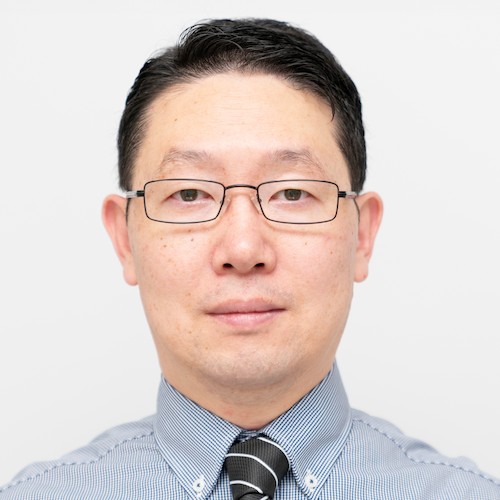
Tao Huang
- tao.huang1@jcu.edu.au
https://orcid.org/0000-0002-8098-8906- Senior Lecturer, Electronic Systems and IoT Engineering
- Engineering
Contact Details
Biography
Dr Tao (Kevin) Huang is a Senior Lecturer in Electronic Systems and Internet of Things Engineering at James Cook University. His research focuses on artificial intelligence, computer vision, Internet of Things technologies, intelligent sensing, multimodal data fusion, remote sensing, autonomous systems, and wireless communications.
A major focus of his work is the development of practical AI and IoT solutions for environmental monitoring and engineering applications. His current projects include AI-enabled saltwater crocodile detection, ground-level weed detection for tropical forestry, fire-risk vegetation mapping, and intelligent sensing for infrastructure and autonomous systems. His research aims to translate advanced technologies into practical systems that can support environmental management, public safety, industry, and regional communities.
Dr Huang also conducts research in object detection and tracking, cooperative perception for connected and autonomous vehicles, multimodal sensor fusion, medical image analysis, intelligent wireless systems, and machine learning for engineering applications.
He currently serves as Course Coordinator for the Master of Engineering (Professional), Program Coordinator for the IoT and Data Engineering major, and Head of International Partnerships within the College of Science and Engineering. He is also Co-Deputy Head of the Centre for AI and Data Science Innovation and a Centre Impact Domain Lead for Nature.
100+ publications · 2,500+ citations · h-index 24 · 8 editorial appointments
AUD 1.5m+ project funding (AUD 700k+ since2024)
More information can be found at his website.
Research interests
Dr Huang’s research interests include:
- artificial intelligence and deep learning;
- computer vision and image analysis;
- Internet of Things technologies;
- AI, IoT, and remote sensing for environmental monitoring;
- autonomous systems and cooperative perception;
- multimodal sensor fusion;
- medical image analysis;
- wireless communications;
Current research and projects
- AI-enabled saltwater crocodile detection
- Automated Detection and Counting of Flying-Foxes from Thermal Imagery
- AI-based weed detection for tropical forestry
- Fire-risk vegetation mapping
- Automated Estimation of Snail Shell Volume and Morphology
- AI-Based Detection of Marine Invasive Species
- Autonomous systems and cooperative perception
- Intelligent sensing and engineering applications
AI-enabled Saltwater Crocodile Detection
Dr Huang leads research on the development of an intelligent, remotely deployable monitoring system for saltwater crocodile detection. The project integrates camera technologies, cloud-connected sensing, deep-learning-based object detection, web-based monitoring, and local alert functions. The system has been evaluated through field trials under different weather, lighting, and environmental conditions.
The project aims to support more effective crocodile monitoring and improve public safety in remote and regional areas. It has also attracted public and media interest and has potential for further industry development and commercialisation.
Automated Detection and Counting of Flying-Foxes from Thermal Imagery
The endangered spectacled flying-fox (Pteropus conspicillatus) plays an important role in pollination, seed dispersal, and forest regeneration across Australia’s Wet Tropics. However, traditional population surveys are labour-intensive and difficult to conduct across large or densely vegetated roosts.
This project uses drone-based thermal imagery, artificial intelligence, and computer vision to automatically detect and count flying-foxes. The research involves developing annotated datasets and deep-learning models designed to identify small animals in noisy, low-resolution thermal images.
The system aims to provide faster, more consistent, and scalable population monitoring to support ecological research and wildlife conservation.
AI-based Weed Detection for Tropical Forestry
This project develops computer-vision and intelligent monitoring methods for detecting ground-level weeds in tropical forestry environments. The research supports more efficient vegetation management, sustainable reforestation, and improved monitoring of forestry operations.
The project involves field data collection, AI model development, system evaluation, and collaboration with industry partners. It also explores opportunities for automated weed management and future commercial application.
Fire-risk Vegetation Mapping
Dr Huang is involved in research that applies artificial intelligence, remote sensing, image analysis, and field observations to identify and map vegetation associated with elevated fire risk.
The project aims to improve vegetation assessment and support more informed land-management and fire-risk mitigation practices, particularly in tropical and regional environments.
Automated Estimation of Snail Shell Volume and Morphology
This project develops an AI-based pipeline to automatically estimate snail shell volume and extract morphological features from large image collections. Computer vision and image segmentation are used to isolate shell shapes and reconstruct approximate 3D geometry from available views, including datasets with inconsistent angles, repeated images, or missing views.
The project also investigates traits such as surface area, growth patterns, colour, and evidence of shell repair. The resulting system aims to provide faster, scalable, and consistent analysis for research on shell biology, morphological variation, ecology, and evolution.
AI-Based Detection of Marine Invasive Species
This project explores the use of artificial intelligence to detect marine invasive species in underwater imagery collected from ports and marinas. These species can pose serious ecological and economic risks, particularly to sensitive environments such as the Great Barrier Reef and Small Island Developing States.
The project initially develops a deep-learning classification model to distinguish images containing target invasive species from those without them. Future work will refine the dataset, improve evaluation, and introduce object detection or segmentation annotations for more precise identification.
The research aims to support faster, scalable, and more efficient marine biosecurity monitoring and reduce reliance on labour-intensive manual inspections.
Teaching and educational leadership
Dr Huang is committed to delivering practical, student-focused engineering education that connects theoretical knowledge with professional practice. His teaching focuses primarily on communication technologies and Internet of Things technologies.
As Course Coordinator for the Master of Engineering (Professional), he contributes to curriculum design, course planning, subject coordination, student engagement, quality assurance, accreditation, and continuous improvement.
He is also Program Coordinator for the IoT and Data Engineering major and has contributed to the development of new programs and majors within the Master of Engineering (Professional). Through these roles, he works with academic colleagues, professional staff, industry representatives, and external stakeholders to ensure that the curriculum remains academically rigorous, professionally relevant, and responsive to emerging engineering needs.
Dr Huang also leads work-integrated learning across Engineering and coordinates subjects that support students in applying academic knowledge in professional, industry, and research environments. His teaching approach emphasises technical knowledge, practical problem-solving, professional communication, teamwork, ethical practice, and readiness for engineering employment.
Academic leadership and professional service
Dr Huang holds a number of academic and professional leadership roles, including:
- Course Coordinator, Master of Engineering (Professional), JCU;
- Program Coordinator, IoT and Data Engineering, JCU;
- Head of International Partnerships, College of Science and Engineering, JCU;
- Co-Deputy Head, Centre for AI and Data Science Innovation, JCU;
- Centre Impact Domain Co-Lead – Nature, Centre for AI and Data Science Innovation, JCU;
- Executive Committee Member - Agriculture Technology and Adoption Centre (AgTAC), JCU
- Deputy Lead - Building Food Security in Adaptive Tropical Food Systems, JCU
- Vice Chair, IEEE Northern Australia Section;
- Chair, IEEE Joint Communications Society and Microwave Theory and Technology Society Northern Australia Chapter
Through these roles, he contributes to engineering education, international partnerships, interdisciplinary research, industry engagement, professional development, and the growth of AI, IoT, and engineering activities in Northern Australia.
He has also held leadership roles in international conferences and technical workshops, including serving as General Co-Chair of the 2026 IEEE International Microwave Workshop Series on Advanced Materials and Processes for RF and THz Applications in Cairns.
Editorial and professional activities
Dr Huang serves as an Associate Editor for several international journals, including journals published by IEEE, Springer Nature, Frontiers, and the Institution of Engineering and Technology.
His editorial roles include appointments with:
- IEEE Transactions on Vehicular Technology;
- IEEE Transactions on Emerging Topics in Computing;
- IEEE Open Journal of the Communications Society;
- IEEE Access - Outstanding AE (2023, 2024, 2025);
- Scientific Reports - Two Springer Nature Editor of Distinction Awards 2026;
- Frontiers in Artificial Intelligence -Section Medicine and Public Health;
- IET Communications.
He also contributes as a reviewer for international journals, conferences, research proposals, and doctoral theses in artificial intelligence, communications, IoT, autonomous systems, remote sensing, image processing, and related engineering fields.
Awards and recognition
Dr Huang’s awards and professional recognition include:
- Springer Nature Editor of Distinction Award for Editorial Contribution, 2026;
- Springer Nature Editor of Distinction Award for Author Service, 2026;
- IEEE Access Outstanding Associate Editor Recognition, 2023–2025;
- IEEE Outstanding Leadership Award, 2022;
- Best Paper Award, IEEE Wireless Communications and Networking Conference, 2011;
- Senior Member, IEEE.
He has also received recognition for his contributions to student learning, research leadership, editorial service, and professional engagement.
Publications and research impact
Dr Huang has published extensively in artificial intelligence, computer vision, autonomous systems, wireless communications, Internet of Things technologies, remote sensing, and medical imaging.
His publications include journal articles, conference papers, review papers, and invited contributions. His work has appeared in leading international journals and conferences, including the Proceedings of the IEEE (Impact Factor 30.9), IEEE Transactions on Intelligent Transportation Systems, IEEE Transactions on Artificial Intelligence, IEEE Journal of Biomedical and Health Informatics, International Conference on Machine Learning, and the Association for the Advancement of Artificial Intelligence (AAAI) Conference, and other multidisciplinary scientific publications. One of his works has also been cited by the Policy Document: Deforestation and Forest Degradation in the Amazon - Update for the year 2023 and assessment of humid forest regrowth, published by the Publications Office of the European Union.
A complete and current publication list is available through his Google Scholar, ORCID, and personal academic website.
Collaboration and engagement
Dr Huang welcomes opportunities to collaborate with researchers, industry partners, government agencies, community organisations, and prospective students.
He is particularly interested in collaboration involving:
- AI, IoT, computer vision, and remote sensing for environmental monitoring;
- wildlife and ecosystem monitoring;
- forestry, agriculture, and vegetation management;
- autonomous and connected systems;
- engineering education and international partnerships.
Research
Projects
Teaching
Research Advisor Accreditation
Advisor Type
Primary
