
College of Science & Engineering

Sophia Love
- Doctor of Philosophy (Natural and Physical Sciences)
- sophie.love@jcu.edu.au
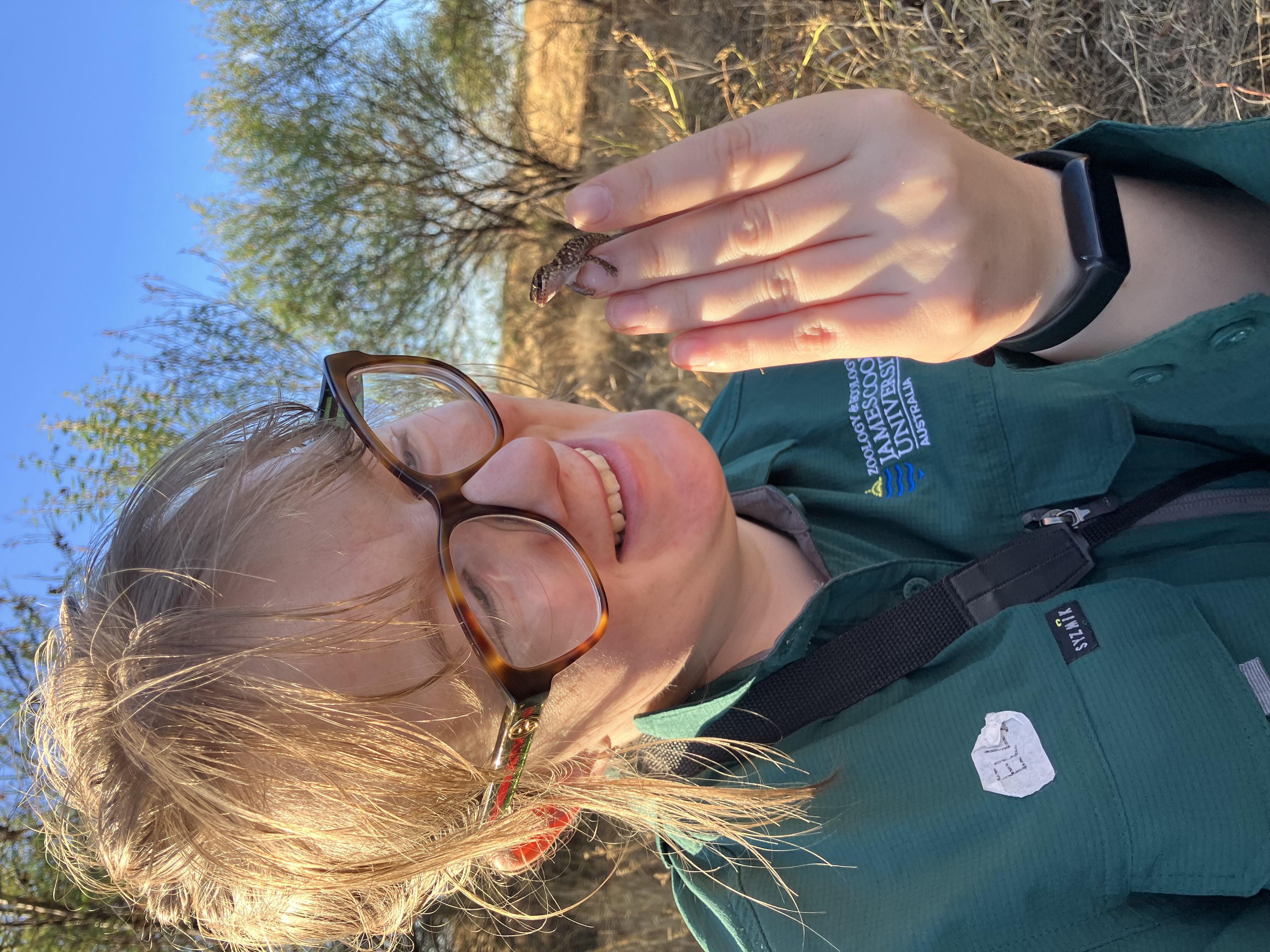
Elle Robertson
- Doctor of Philosophy (Agriculture, Environmental and Related Studies)
- elle.robertson@jcu.edu.au
Romain Vaucher
- Senior Lecturer, Sedimentology
- romain.vaucher@jcu.edu.au
Jenny Fisher
- Associate Dean, Learning and Teaching
- jenny.fisher@jcu.edu.au

Ambili Narayanan
- Doctor of Philosophy (Natural and Physical Sciences)
- ambili.narayanan@my.jcu.edu.au

Sarfaraz Ali
- Postdoctoral Research Fellow
- sarfaraz.ali@jcu.edu.au
Mikaeylah Davidson
- Postdoctoral Research Fellow
- mikaeylah.davidson@jcu.edu.au
Liuxin Chen
- Adjunct Lecturer
- liuxin.chen@jcu.edu.au
Rafael Cabral Carvalho
- Lecturer, Marine Geoscience
- rafael.cabralcarvalho@jcu.edu.au
Tom Lloyd
- Postdoctoral Research Fellow, Global Ecosystems
- tom.lloyd@jcu.edu.au
Sustainable REE extraction from Australian ores using environmentally friendly reagents, advanced characterisation techniques and geological knowledge
This project aims to improve the sustainable extraction of rare earths from Australian ores using environmentally friendly reagents.
Sustainable REE extraction from Australian ores using environmentally friendly reagents, advanced characterisation techniques and geological knowledge
This project aims to improve the sustainable extraction of rare earths from Australian ores using environmentally friendly reagents.
Sustainable REE extraction from Australian ores using environmentally friendly reagents, advanced characterisation techniques and geological knowledge
This project aims to improve the sustainable extraction of rare earths from Australian ores using environmentally friendly reagents.
Sustainable REE extraction from Australian ores using environmentally friendly reagents, advanced characterisation techniques and geological knowledge
This project aims to improve the sustainable extraction of rare earths from Australian ores using environmentally friendly reagents.
Optimising the geophysical ore body model to aid in the discovery of new critical mineral deposits
This project aims to develop advanced geophysical tools that can help exploration companies identify critical mineral resources. Current geophysical exploration methods—such as magnetic, electric, gravimetric, magnetotelluric, radiometric, and seismic surveys—are commonly used in the industry to detect geophysical anomalies. However, many detected anomalies do not contain mineralization due to a lack of tools to identify the specific geophysical signatures of ore bodies.
Our goal is to create tools that enable explorers to distinguish between barren and mineralized anomalies, enhancing the accuracy of mineral discovery. Currently, there is limited knowledge on the specific geophysical responses of mineralized ore bodies. Some preliminary research by CSIRO on IOCG deposits in Cloncurry suggests that combining geological and petrophysical data can model an ore body's geophysical response.
Genetic sequencing analysis of Nangur spiny skink tissue samples to inform the captive breeding program
This project will be undertaken as laboratory analysis of genetic sequencing data of 41 captive N. spinosa tissue samples that will inform pairing for the captive breeding program at the Walkabout Creek Discovery Centre captive breeding facility.
Organic matter, sodicity and soil structure
- 1998
- Oxford University Press
- Researchers:Paul Nelson
Title:
Italian
Title:
Senior Research Fellow, ARC Centre of Excellence for Coral Reef Studies, James Cook University
Start Date:
01 Jan 2022
End Date:
01 Jan 2023
Start Date:
01 Jan 2018
End Date:
01 Jan 2022
Start Date:
01 Jan 2022
Start Date:
01 Jan 2022
Start Date:
01 Jan 2022
End Date:
01 Jan 2023
Start Date:
01 Jan 2019
End Date:
01 Jan 2022
Start Date:
01 Jan 2015
End Date:
01 Jan 2019
Start Date:
01 Jan 2011
End Date:
01 Jan 2015
Title:
University Medal
Start Date:
01 Jan 2025