
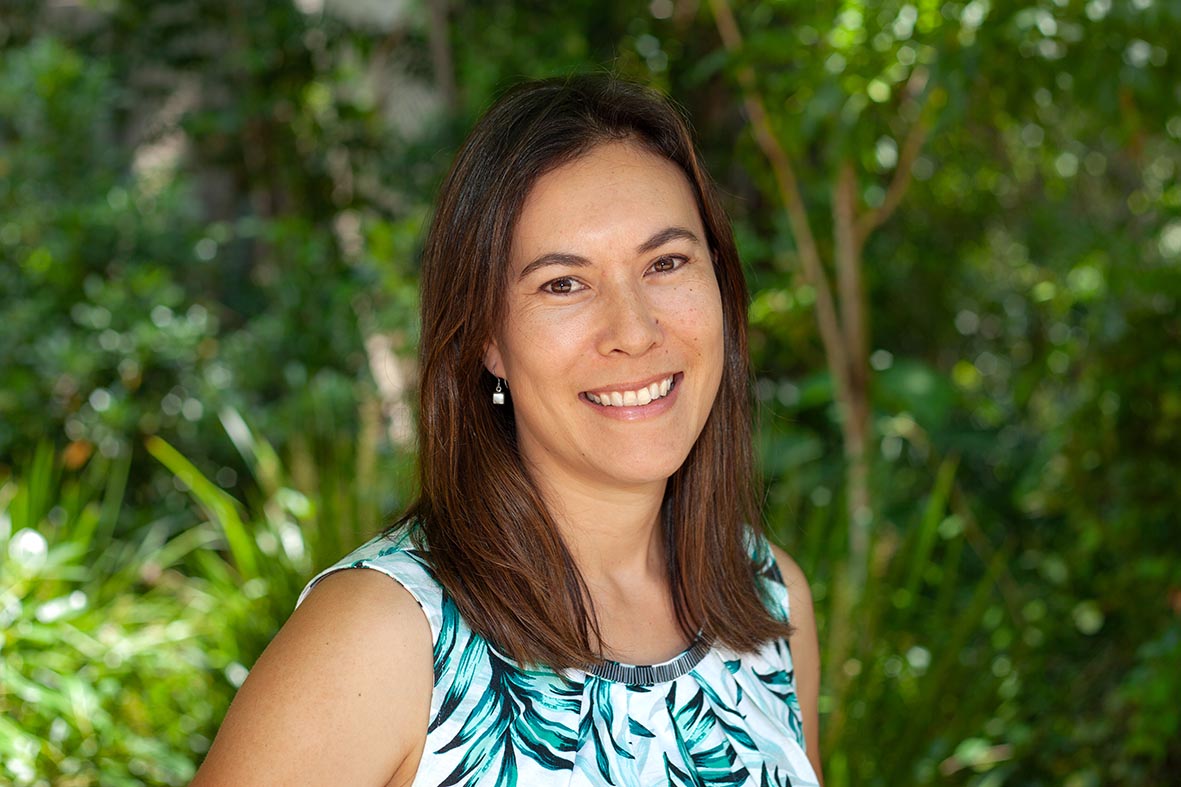
Sue-Ann Watson

Biography
Sue-Ann is an Associate Professor and ARC Future Fellow in the Marine Biology and Aquaculture team within the College of Science and Engineering (CSE) at James Cook University (JCU). She is President for the Australian Marine Sciences Association (AMSA) North Queensland Branch, National Councillor (and Diversity, Equity, and Inclusion representative) for the Australian Marine Sciences Association (AMSA), and a Scientific Advisory Committee member for Invertebrates Australia. Sue-Ann is Nature Lead (Ecosystems, biodiversity and climate systems) for the JCU Centre for AI and Data Science Innovation (CADSI), on the JCU CSE Equity, Diversity, Inclusion and Belonging (EDIB) committee and JCU Boating and Diving Committee. Sue-Ann recently completed a three-year term on the Queensland Minister-appointed Species Technical Committee to assess species (marine and terrestrial) at risk of extinction using the International Union for Conservation of Nature (IUCN) Red List framework. Sue-Ann's role provides a worldwide partnership with international and national universities, research institutes and natural history collections (e.g. museums), and she actively translates research knowledge to education and action through government and non-government agencies and communities. Examples include policy briefings, presentations to members of the Royal Family, keynote talks (e.g. STEM, women in science), museum exhibitions (physical and web-based), and national and international media outreach (TV, radio, online and in print). Sue-Ann has extensive field research experience from the tropics to the poles, including boating, SCUBA diving, and remote ocean-going expeditions.
Sue-Ann’s research focuses on the responses of marine organisms to change, both in space (along natural evolutionary gradients) and time (responses to environmental change). She is particularly interested in large scale evolutionary patterns and ecological trends in marine invertebrates and the effects of stressors such as ocean acidification, warming and water quality impacts including light availability (turbidity), nutrients and salinity on invertebrates, corals and fishes. Sue-Ann’s broad research interests include ecology, physiology, behavior, biogeography, biodiversity, and the potential for acclimation and adaptation to change in marine organisms.
Research organisms include: bivalve and gastropod molluscs (oysters, giant clams, jumping snails, cone snails, pteropods), crown-of-thorns starfish (COTS), hard and soft corals, crustaceans, sea urchins, fish (coral reef fish, kingfish, barramundi), brachiopods and sea cucumbers.
Research sites include: Australia, Singapore, French Polynesia, Antarctica, Arctic, UK, deep sea (Crozet Islands and North Atlantic abyssal plain), Falkland Islands and New Zealand.
Sue-Ann is originally from the UK and studied for a BSc (Hons) degree in Biology from the University of Nottingham and MSc in Oceanography from the National Oceanography Centre, University of Southampton. With the University of Southampton and British Antarctic Survey, Sue-Ann researched evolutionary trends across latitudinal gradients in marine invertebrates to determine how adaptive traits change along environmental gradients from the tropics to the poles for her PhD, in collaboration with the National University of Singapore, University of Melbourne and James Cook University.
PhD projects are available in my group and enquiries are welcome. Please submit a cover letter (1 page maximum) letter detailing your suitability and interest, academic transcript and a CV with contact details of two referees by email.
Example research
Smart growth: Marine snails know how to budget their housing costs
For nearly 50 years, researchers have been stumped as to why sea shells from warm tropical waters are comparatively larger than their cold-water relatives. Research, led by the ARC Centre of Excellence for Coral Reef Studies (Coral CoE) at James Cook University, suggests that it all comes down to ‘housing cost.’The paper “Latitudinal trends in shell production cost from the tropics to the poles” is published in the journal Science Advances.
http://advances.sciencemag.org/content/3/9/e1701362
Teaching
Research Advisor Accreditation
Advisor Type
Primary