
Chemistry and Chemical Engineering

Sarfaraz Ali
- Postdoctoral Research Fellow
- sarfaraz.ali@jcu.edu.au

Liyuan Fan
- Adjunct Senior Lecturer
- liyuan.fan@jcu.edu.au
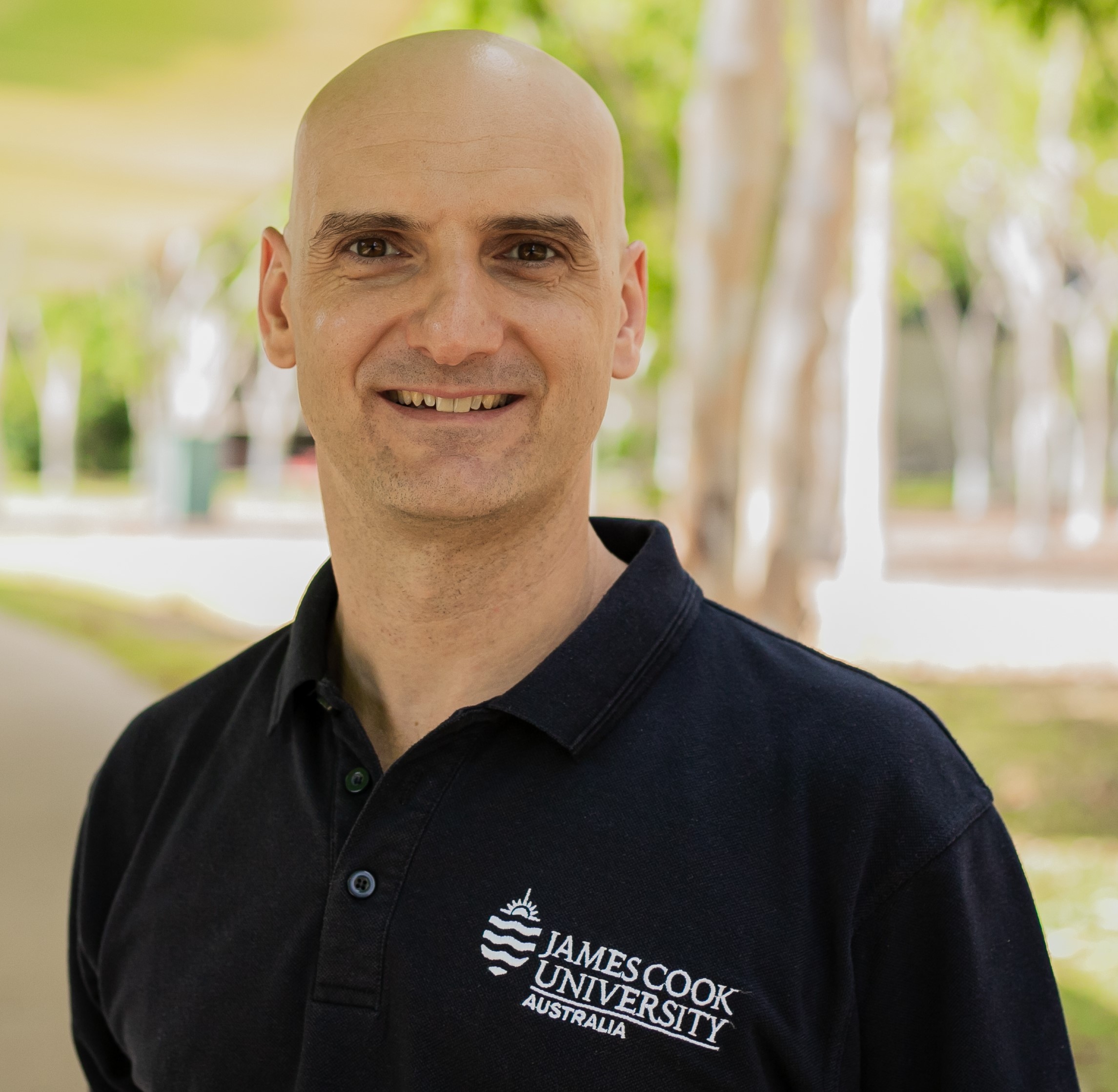
George Vamvounis
- Associate Professor, Chemical Engineering
- george.vamvounis@jcu.edu.au

Murray Davies
- Senior Lecturer
- murray.davies@jcu.edu.au

Michael Oelgemoeller
- Adjunct Professor
- michael.oelgemoeller@jcu.edu.au

Peter Junk
- Distinguished Professor; Nevitt Professor of Chemistry
- peter.junk@jcu.edu.au

Zhifang Guo
- Postdoctoral Researcher
- zhifang.guo@jcu.edu.au

Phurpa Wangchuk
- Associate Professor
- phurpa.wangchuk@jcu.edu.au

Yang Liu
- Associate Professor, Analytical Chemistry
- yang.liu11@jcu.edu.au
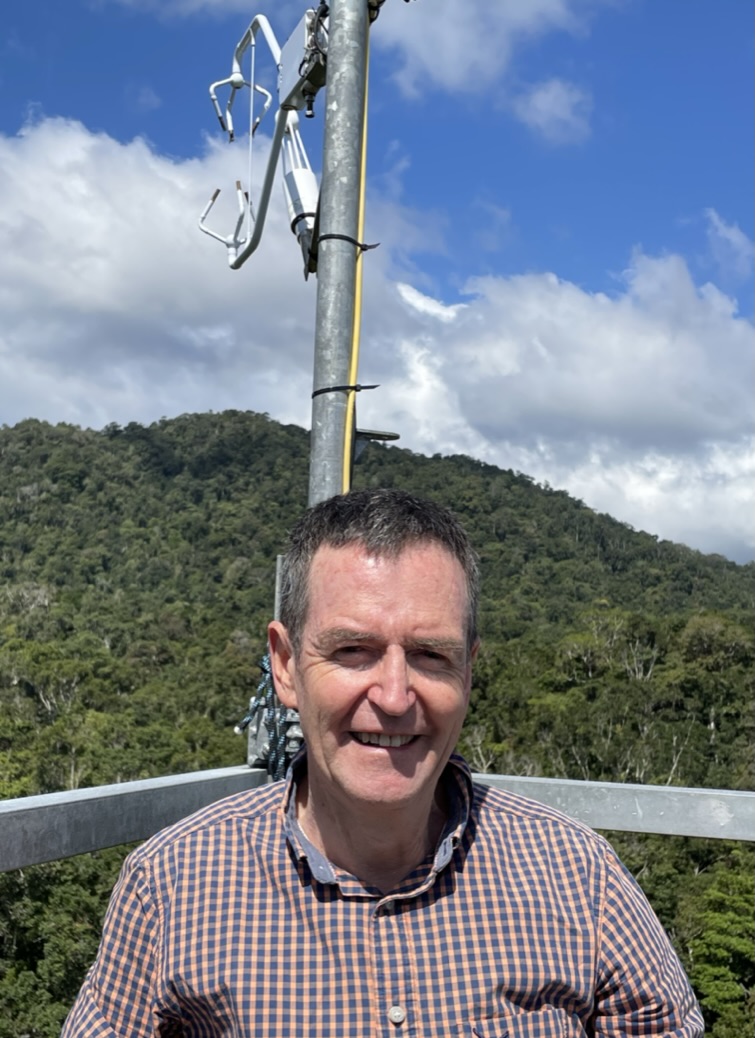
Michael Liddell
- Associate Professor
- michael.liddell@jcu.edu.au
Advancing the chemistry of rare earths-an Australian resource (Old ID 27702)
This project aims to advance knowledge of the synthesis, structures and reactivity of highly reactive rare earth metal-organic compounds. The project expects to build the knowledge and skills to underpin many developments of Australia's still under utilized rare earth resources to diversity from Chinese domination. The expected outcomes will be new synthetic and reaction chemistry including a demonstration of how size and electronic factors can be used to modify and advance rare earth chemistry and related heavy group 2 chemistry. This project should provide significant benefit such as are a better knowledge base in rare earth chemistry to underpin future applications in chemical manufacturing, new materials, catalysis and recycling.
Environmentally friendly corrosion inhibitors (Old ID 25075)
Corrosion is a multibillion dollar cost afflicting critical infrastructure in almost all major industries. This research project aims to translate the cutting edge of corrosion science and technology to advance the knowledge of corrosion and its inhibition for a practical industry application. JCU will collaborate with Prochem haulage to design a corrosion inhibitor formulation for water used in cleaning/washing of mining vehicles.
Nuclear Magnetic Resonance facility for Northern Australia (Old ID 21541)
Nuclear magnetic resonance spectroscopy is a fundamentally and critically important technique in the characterisation of organic, inorganic and biological compounds. The purchase of a state-of-the-art instrument at James Cook University and a lower resolution instrument at Charles Darwin University are required to support productive existing research projects, and nurture future projects, in organometallic chemistry and the development of new materials and analytical sensors; organic photochemistry as applied in synthesis and degradation; natural products, pharmaceutical, inorganic chemistry, where multinuclear nuclear magnetic resonance is most important and applicable in drug design, development and delivery.
Mecaflavo - Understanding the Anti-inflammatory Structure-Activity Relationships of Flavonoid Analogues [Compréhension des relations structures-activités dans les MECanismes Anti-inflammatoires d’analogues de FLAVOnoïdes] – MECAFLAVO (Old ID 27204)
Flavonoids are a class of natural compounds with various phenolic structures that are widely distributed in plants, including fruits and vegetables, tea or wine. The project MECAFLAVO will synthesize and evaluate the anti-inflammatory potential of pinocembrin and pinobanksin analogues in order to understand their mechanism of action, metabolism and therapeutic safety. Through derivatization it further aims to improve the therapeutic profile and applications of these semi-synthetic compounds.
Safeguarding New Caledonia from insect-borne diseases: sustainable production of insect repellent from native plants (Old ID 22661)
The public debate about climate change and pollution has seen some major shifts in community thinking in regards to sustainability and environmental resilience. These changes in public attitude have placed significant pressure on the chemical industry to move to using renewable energy sources and sustainable starting materials. The tropical region is rich in natural resources, especially biomass from tropical plants and sunlight. At the same time, insect-bone diseases such as dengue and malaria hamper the tropics, causing significant health, economic and social stresses. Following the 'prevention is better than cure' approach, this project will develop economically viable green manufacturing processes for potent insect repellents from local New Caledonian plants.
Oil Identification Aging (Old ID 23478)
A colourimetric array will be used to investigate crude oil samples, with the focus on the effect of aging.
Photochemical Optimization Study (Old ID 22803)
This project deals with the optimization of a known photochemical reaction of industrial interest. It will investigate the exploratory, validation and scale-up of the reaction.
Analysis of sheet metals cladding anti rust coatings. (Old ID 27127)
Glencore are looking at replacing their minerals concentrate storage sheds with new colorbond materials and require testing on several materials so we can advise them on the most optimal materials to use to minimise corrosion for the future.
Advancing the chemistry of topical rare earth metals (Old ID 20618)
With abundant, but until recently neglected, rare earth resources, Australia is positioned to become a major supplier of these strategic elements as the world faces a shortage created by a Chinese monopoly and much reduced exports. Advancing the chemistry of highly reactive rare earth metal-organic compounds including syntheses from the free metals and alloys will provide a knowledge base and breakthrough science to underpin future applications in chemical manufacture, catalysis, new materials and recycling. Steric and electronic manipulation of rare earth coordination behaviour will transform their syntheses and reactions.
Reactive metal-organics embracing the rare earth and alkaline earth metals (Old ID 21968)
With abundant, but until recently neglected, rare earth resources, Australia is positioned to become a major supplier of these strategic elements as the world faces a shortage created by a Chinese monopoly and much reduced exports. Advancing the chemistry of highly reactive rare earth metal-organic compounds including syntheses from the free metals and alloys will provide a knowledge base and breakthrough science to underpin future applications in chemical manufacture, catalysis, new materials and recycling. Steric and electronic manipulation of rare earth coordination behaviour will transform their syntheses and reactions.
A new brominated diphenyl ether from the marine sponge Dysidea herbacea
- 2000
- CSIRO Publishing
- Researchers:Peter Junk
Tropical rainforest canopies and climate change
- 2007
- Wiley-Blackwell
- Researchers:Michael Liddell
Start Date:
01 Jan 2022
End Date:
01 Jan 2025
Start Date:
01 Jan 2022
Start Date:
01 Jan 2025
Title:
JCU Distinguished Professor
Start Date:
01 Jan 2021
Start Date:
01 Jan 2020
Title:
Burrows Award, Premier Inorganic Chemistry Award for the RACI. Contributions to Inorganic Chemistry
Start Date:
01 Jan 2016
Start Date:
01 Jan 2016
Start Date:
01 Jan 2016
Start Date:
01 Jan 2007
Start Date:
01 Jan 2003