
College of Medicine & Dentistry

Hannah Woodall
- Doctor of Philosophy (Medical, Molecular and Veterinary Sciences)
- hannah.woodall@my.jcu.edu.au

Amar Sholapurkar
- Senior Lecturer, Clinical Dentistry & Oral Radiology
- amar.sholapurkar@jcu.edu.au

Jessica Scott
- Doctor of Philosophy (Medical, Molecular and Veterinary Sciences)
- jessica.scott2@jcu.edu.au

Shiv Thanigaimani
- Senior Research Fellow, Peripheral Vascular Disease (PVD)
- shiv.thanigaimani@jcu.edu.au

Touraj Nejatian
- Head of Dentistry
- touraj.nejatian@jcu.edu.au

Swapna Chaudhary
- Lecturer, Pharmacy
- swapna.chaudhary@jcu.edu.au

Dena Francis
- Lecturer, Molecular Genetics
- deanne.francis@jcu.edu.au
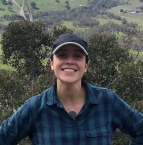
Brittany Moller
- Doctor of Philosophy (Health)
- brittany.moller@my.jcu.edu.au
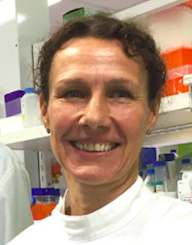
Doris Pierce
- Lecturer, Dental Sciences
- doris.pierce@jcu.edu.au

Alkira Deren
- Clinical Research Officer
- alkira.venn@jcu.edu.au
Evaluation of student-led community rehabilitation and lifestyle service and Implementation of Nasal High Flow (Old ID 27090)
This research grant is to support two studies conducted in Weipa, Cape York. The first project is the “Evaluation and Implementation of a Student-led Community Rehabilitation and Lifestyle Service”, the second project is the “Implementation of Nasal High Flow (NHF): A remote context”. Both projects explore the effectiveness of service delivery to remote and Aboriginal and/or Torres Strait Islander people. Both projects explore the effectiveness of the delivery of novel health care interventions. The community rehabilitation project evaluates an innovative health workforce model that is providing a service for people experiencing the impact of non-communicable diseases (chronic disease) that previously didn’t have access to community rehabilitation.
A new Ultra-Small Volume Fluid for Far-Forward, Noncompressible Hemorrhage and Traumatic Brain Injury (Old ID 21867)
To provide USSOCOM with a new small-volume hypotensive fluid and drip to treat the critically wounded in austere, remote locations. The hypothesis to be tested is that small-volume 3% NaCI ALM will show a unique set of resuscitative and restorative properties that will maintain MAP in the hypotensive range with sufficient cardiac output and oxygen delivery to protect the brain and other organs during uncoltrolled bleeding with or without TBI.
Providing kidney care close to home: Evaluating the Cape York Kidney Care model. (Old ID 27763)
The Cape York Kidney Care team is an integrated and multidisciplinary health care team that was formed in September 2019 to provide consistent, frequent and client centred tertiary-level (specialist) care, in the communities of the Western Cape, Far North Queensland. This project will evaluate this program with respect to health outcomes, cost efficiency, and explore implementation factors that are enablers or barrier to the success of the program. The results will provide evidence for investment or disinvestment in this new service model and will provide an evaluation plan for rollout of future services.
Activation of AMPK to treat abdominal aortic aneurysm (5As). (Old ID 31075)
Twenty million people worldwide (100,000 Australians) have weakening and dilatation of their main abdominal artery (AAA), responsible for 200,000 deaths/year due to aneurysm rupture. Randomised controlled trials show that surgery does not benefit patients with aneurysms <55mm in diameter. About 95% of AAAs are identified when they are small and are simply imaged every 6 to 12 months until aortic diameter becomes ≥55mm, when surgery is considered. About 5% of AAAs fatally rupture during surveillance and 70% grow within 5 years to 55mm and are repaired, with the risk of complications. The lack of treatment for small AAA concerns patients who worry about aneurysm rupture, which impairs their quality of life. Surveys of patients and specialists, and our systematic reviews show the number one deficiency in AAA management is the lack of drugs to prevent aneurysm growth and rupture. A wealth of evidence suggests that pharmacological activation of the AMPK pathway may prevent AAA growth and rupture. We have access to a novel potent 5′ adenosine monophosphate-activated protein kinase (AMPK) pathway activator (O304) which has been shown to be safe in older adults for other indications. This 5As project will build on our past discoveries using our unique resources and expertise (clinically-relevant mouse model, human AAA explant culture methods, novel drug, statistical methods, human AAA biobanks, registries and genome wide data) to test if: 1. AMPK agonist 0304 inhibits aneurysm growth and rupture in our mouse model; 2. AMPK agonist 0304 reduces markers of AAA growth in human AAA samples in vitro; 3. Genetic AMPK upregulation is protective against AAA development and growth.
Activation of AMPK to treat abdominal aortic aneurysm (5As). (Old ID 31075)
Twenty million people worldwide (100,000 Australians) have weakening and dilatation of their main abdominal artery (AAA), responsible for 200,000 deaths/year due to aneurysm rupture. Randomised controlled trials show that surgery does not benefit patients with aneurysms <55mm in diameter. About 95% of AAAs are identified when they are small and are simply imaged every 6 to 12 months until aortic diameter becomes ≥55mm, when surgery is considered. About 5% of AAAs fatally rupture during surveillance and 70% grow within 5 years to 55mm and are repaired, with the risk of complications. The lack of treatment for small AAA concerns patients who worry about aneurysm rupture, which impairs their quality of life. Surveys of patients and specialists, and our systematic reviews show the number one deficiency in AAA management is the lack of drugs to prevent aneurysm growth and rupture. A wealth of evidence suggests that pharmacological activation of the AMPK pathway may prevent AAA growth and rupture. We have access to a novel potent 5′ adenosine monophosphate-activated protein kinase (AMPK) pathway activator (O304) which has been shown to be safe in older adults for other indications. This 5As project will build on our past discoveries using our unique resources and expertise (clinically-relevant mouse model, human AAA explant culture methods, novel drug, statistical methods, human AAA biobanks, registries and genome wide data) to test if: 1. AMPK agonist 0304 inhibits aneurysm growth and rupture in our mouse model; 2. AMPK agonist 0304 reduces markers of AAA growth in human AAA samples in vitro; 3. Genetic AMPK upregulation is protective against AAA development and growth.
Revealing the hidden knowledge in pathology big data: Machine learning to support clinical decision making for unknown infectious diseases and recognise biosecurity incursions in tropical Australia (Old ID 26978)
Pathology departments generate massive data from the results of routine and targeted tests conducted to serve community health needs. With the availability of large pathology data collections, the application of sophisticated machine learning (ML) algorithms allows the detection of novel data patterns to characterise disease processes and monitor population health. We will apply recursive partitioning (trees and forests) and support vector machines (SVM) to large pathology data sets to: (a) investigate the biosecurity potential of linked community data, and; (b) assist early decision support for patients presenting with a tropical pyrexia of unknown origin (PUOs).
Understanding factors in infancy and early childhood (birth to 24 months) that influence obesity development (Old ID 22138)
Youth who are obese face myriad short-term and longer-term health consequences. Obesity during childhood also contributes to disabilities as well as increased health care costs. Although some interventional clinical trials to prevent obesity or excessive weight gain during infancy and early childhood are ongoing, many knowledge gaps need to be filled in order to better develop successful interventions in this age group. Further research is needed to compare predictive risk factors for, and protective factors against, infant obesity among Indigenous and non-Indigenous children.
Metformin for treating peripheral artery disease-related walking impairment (MERIT) (Old ID 27481)
Blockage of the leg arteries (peripheral artery disease; PAD) leads to severe pain, walking impairment and a substantial risk of leg amputation and death. Over 20,000 North Queenslanders have PAD which is overrepresented in regional, remote and rural populations. There are currently no effective PAD medications. Multiple lines of evidence suggest that metformin, a cheap and safe medication, promotes formation of new vessels, improves microcirculation and muscle function and limits PAD-related pain. This placebo-controlled, randomised clinical trial, run by a North Queensland vascular research collaboration, will examine the efficacy of metformin in improving walking ability of PAD patients.
Does renal denervation promote atherosclerosis? (Old ID 20864)
The long-term side effects of renal denervation are unknown. This project is designed to (1) investigate the potential atherosclerosis-promoting effect of renal denervation, and (2) to study the effectiveness of anti-inflammatory drugs to minimize this potential side effect. Ultimately, this project may improve the beneficial effects and minimize the potential side effects of renal denervation by routinely treating renal denervated patients with anti-inflammatory drugs.
Developing culturally appropriate mental health assessment tools for older adults living in the Torres Strait (Old ID 27220)
The aim of the study is to develop culturally appropriate mental health assessment tools for older adults (e.g. aged 45 and over) living in the Torres Strait. Data from yarning circles with Torres Strait community members and health care staff will be used to identify how mental health disorders are expressed in the Torres Strait. A Delphi process will then be used to identify appropriate tools for assessing these domains of mental ill health for use in older adults in the Torres Strait. These tools will then be piloted to determine acceptability and validated for use in the Torres Strait.
The innate immune repertoire in Cnidaria - ancestral complexity and stochastic gene loss
- 2007
- BioMed Central
- Researchers:David Miller
Evidence for the classification of a crayfish pathogen as a member of the genus Coxiella
- 2007
- Wiley-Blackwell
- Researchers:Alanna Sorenson
The small abdominal aortic aneurysm
- 2007
- Edizioni Minerva Medica
- Researchers:Jonathan Golledge
Cold water recovery reduces anaerobic performance
- 2007
- Georg Thieme Verlag
- Researchers:Donna Rudd
Title:
Men are shaving off their eyelashes on TikTok, here's why that might be a bad idea, The Conversation
Start Date:
14 May 2025
Start Date:
15 May 2025
Start Date:
03 Jun 2025
Start Date:
01 Jan 2012
Title:
Grants Review
Start Date:
01 Jan 2024
End Date:
01 Jan 2024
Title:
Public Health Advocacy
Start Date:
01 Jan 2024
End Date:
01 Jan 2024
Start Date:
16 Jun 2025