
Engineering
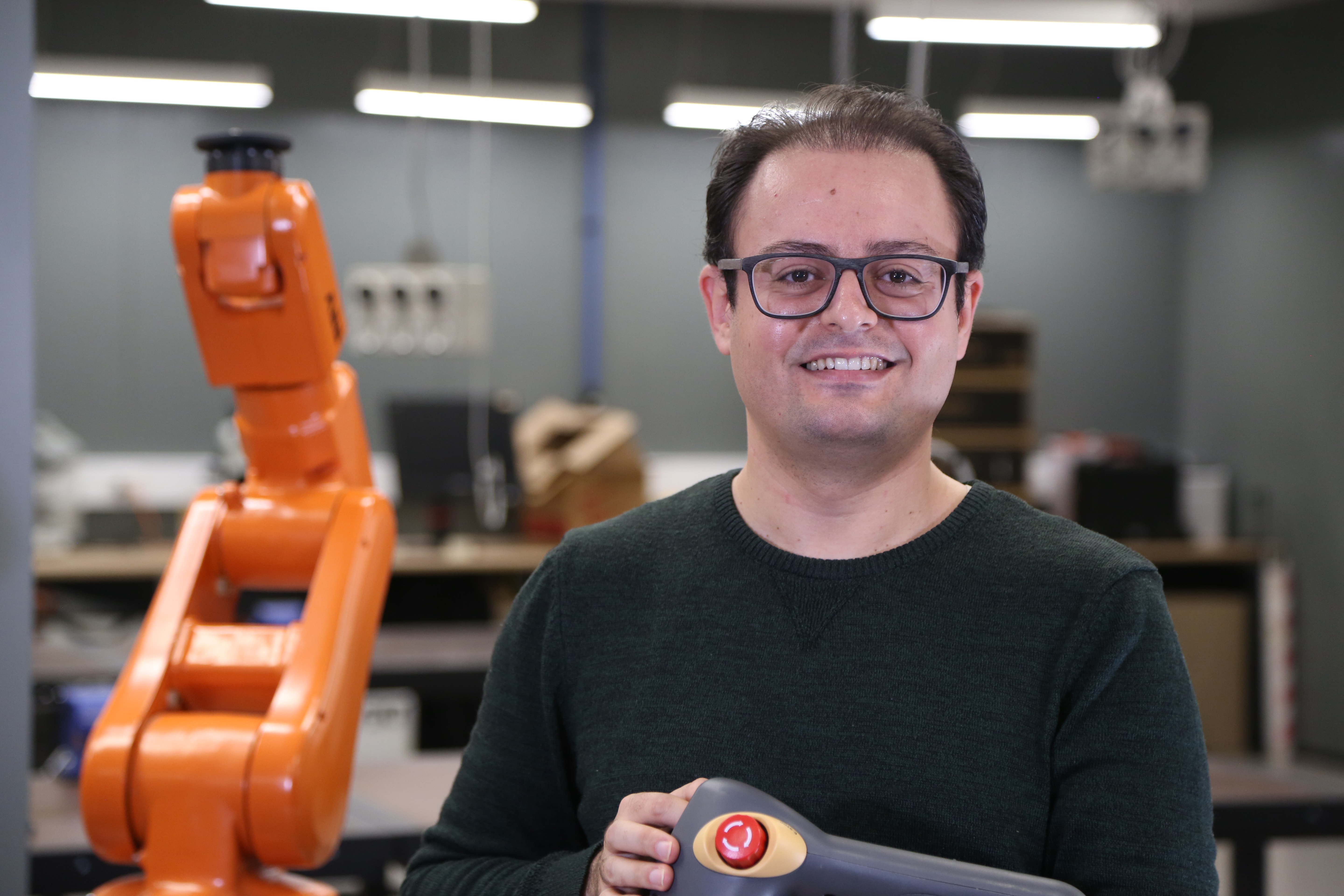
Mohamadreza Chalak Qazani
- Lecturer, Mechanical Engineering
- mohamadreza.chalakqazani@jcu.edu.au

Lewis Gooch
- Lecturer
- lewis.gooch@jcu.edu.au

Judy Yang
- Postdoctoral Research Fellow, Applied AI for Forestry Weed Detection and Mapping
- judy.yang@jcu.edu.au

Alzayat Saleh
- AIMS@JCU Postdoctoral Research Fellow, Marine Science Technology
- alzayat.saleh@jcu.edu.au

Anne Steinemann
- Adjunct Professor
- anne.steinemann@jcu.edu.au

Nico Adams
- Professor, Electronic Systems & IoT Engineering
- nico.adams@jcu.edu.au

Elsa Antunes
- Associate Professor, Mechanical Engineering
- elsa.antunes1@jcu.edu.au

Eric Wang
- Senior Lecturer, Electronic Systems and IoT Engineering
- eric.wang@jcu.edu.au

Yang Du
- Senior Lecturer, Electronic Systems and IoT Engineering
- yang.du@jcu.edu.au

Tao Huang
- Senior Lecturer, Electronic Systems and IoT Engineering
- tao.huang1@jcu.edu.au
AI-Powered Precision Farming: Mapping, Detection, Planning, and Spot Spraying (Old ID 31107)
High-tech solutions in agriculture offer many benefits for improved crop and land management. However, current methods rely heavily on human experts for monitoring and planning. To address this, we propose a state-of-the-art AI-based spraying strategy software that: • takes aerial images of the farm/land vegetation (using drones, planes, satellites, etc.) and detects field requirements, • generates a pre-spray map on GIS systems, considering the existing terrain topographies, • optimally plans the detailed spraying strategy and suggests one or a combination of proper spraying methods such as blanket, vehicular spot, or aerial spraying, and • whenever possible, effectively commands and controls appropriate devices to spray, such as drones, vehicles, people, etc. It might also receive feedback and correspondingly optimize the process/plan. This AI-Powered system helps farmers and producers precisely spray, saving costs and the environment.
Improving the accuracy of weed killing robots with new image processing algorithms and near infra-red spectroscopy techniques (Old ID 23146)
Automated weed species recognition remains a major obstacle to the development and industry acceptance of robotic weed control technology. Particular problems occur in rangeland applications, including high light variability and weed-camera distance variability, which cause camera dynamic range problems, image blurring, and occlusion by other plants. This project aims to develop robust image recognition systems combined with Near Infra-Red spectroscopic methods for these complex rangeland environments with special emphasis on the broad-acre grazing pastures in North Queensland. The developed imaging systems will be suitable for all weed killing applications with particular emphasis given to foliar spot-spraying and Herbicide Ballistic Technologies.
Mitigation of Losses in Community from Extreme Wind Events (Old ID 22387)
The objective of the project is to investigate and inform on aspects of building codes/standards and implementation to mitigate losses from extreme wind events including Cyclones.
Vibration analysis of mining industry conveyor belt systems: validation of method and pathways to improvement (Old ID 26579)
Equipment failures in the mining industry can cause serious safety hazards and substantial financial losses. An automated, cost-effective monitoring system that could be retrofitted to existing equipment would provide advance warning to operators and reduce the likelihood of unscheduled outages. This project will test and validate a vibration-based monitoring system for conveyor belts and associated equipment. It will also identify improved methods to analyse the vibration data to increase the sensitivity and/or accuracy of the alerts that are generated.
2020 IBM PhD Fellowship (Old ID 26834)
To contribute to current efforts towards highly efficient hardware implementations of augmented neuromorphic architectures for edge devices using FPGAs and memristive devices.
Improving water quality for the Great Barrier Reef and wetlands by better managing irrigation in the sugarcane farming system (Old ID 23136)
This project will work in partnership with industry, extension, NRM, research and government organisations to develop and deploy an irrigation system that is automatically controlled by remotely accessing feedback from the IrrigWeb decision support tool. Irrigweb provides optimal irrigation schedules on a paddock-by-paddock basis by linking information abut climate, soils and management regimes. If new water quality targets as specified in the revised Burdekin Water Quality Improvement Plan are to by met by 2025, it will be critical to establish pathways that enable industry partners to capitalise on new technologies.
Applying new technologies to enhance biosecurity and cattle quality. (Old ID 23456)
The vast natural environment of Northern Australia feeds the cattle industry; however, biosecurity threats have negatively impacted this. Conventional management of such threats such as weeds are not suited to such broad, harsh landscapes. The project will use an Internet of Things network with low-cost environmental sensors, drone mapping and big data analytics to develop and test data-driven, strategic pest management programs - ultimately improving both cattle industry and natural assets.
An Advanced Ultrafast Laser Spectroscopy Facility in Queensland (Old ID 27154)
The project aims to establish a world-class ultrafast laser spectroscopy facility to investigate how molecules interact with visible or ultraviolet light. Light-matter interactions are key to energy generation in nature through photosynthesis as well as technologies we use on a daily basis including optical communications and displays. This project expects to generate new knowledge in on how light interacts with matter at the molecular level. Expected outcomes of the ultrafast spectroscopic measurements will be understanding the fate of light absorbed by or generated in different materials. Application of the knowledge gained will enable the design of materials for more efficient technologies such as solar cells, lighting, and sensors.
Development of Customised Hospital Waste Processing Technology (Old ID 26326)
Phase 1 aims to use microwave pyrolysis technology to process a mix medical waste supplied by Medafield Pty Ltd, and study the pyrolysis conditions and resulting byproducts (syngas, bio-oil and biochar) material analysis using the different analytical tools. Phase 2 of this project will focus on the optimisation of the material properties especially to increase the value of the byproducts of particular interest. We will also undertake the biological characterisation of the samples to better understand the hazardous nature of the syngas and the biochar.
ARC Research Hub for Supercharging Tropical Aquaculture Through Genetic Solutions (Old ID 27374)
This project aims to integrate cutting edge genetic and genomic approaches into innovative aquaculture enterprises that farm in tropical northern Australia. It will deliver the requisite genetic knowledge to instigate world-leading and highly productive breeding programs for five species (barramundi, pearl oyster, prawn, grouper and marine seaweed), along with a novel understanding of the genetic basis of disease resistance and how the production environment interfaces with the bacterial microbiome, pathogens and water quality to cause disease. It will increase Australia's capacity to deliver advanced genetics outcomes to the aquaculture sector, while increasing productivity, international competitiveness, and lowered risk due to disease.
Direct simulation of weak axisymmetric fountains in a homogeneous fluid
- 2000
- Cambridge University Press
- Researchers:Wenxian Lin
Natural convection cooling of rectangular and cylindrical containers
- 2001
- Researchers:Wenxian Lin
Start Date:
01 Jan 2010
End Date:
01 Jan 2015
Start Date:
01 Jan 2004
End Date:
01 Jan 2006
Start Date:
01 Jan 2010
Title:
Senior Member, IEEE
Start Date:
01 Jan 2012
Title:
Reperio Innovation Award
Start Date:
01 Jan 2015
Start Date:
01 Jan 2015
Start Date:
01 Jan 2013
Start Date:
01 Jan 2010
Start Date:
01 Jan 2006
Start Date:
01 Jan 2006