
Engineering
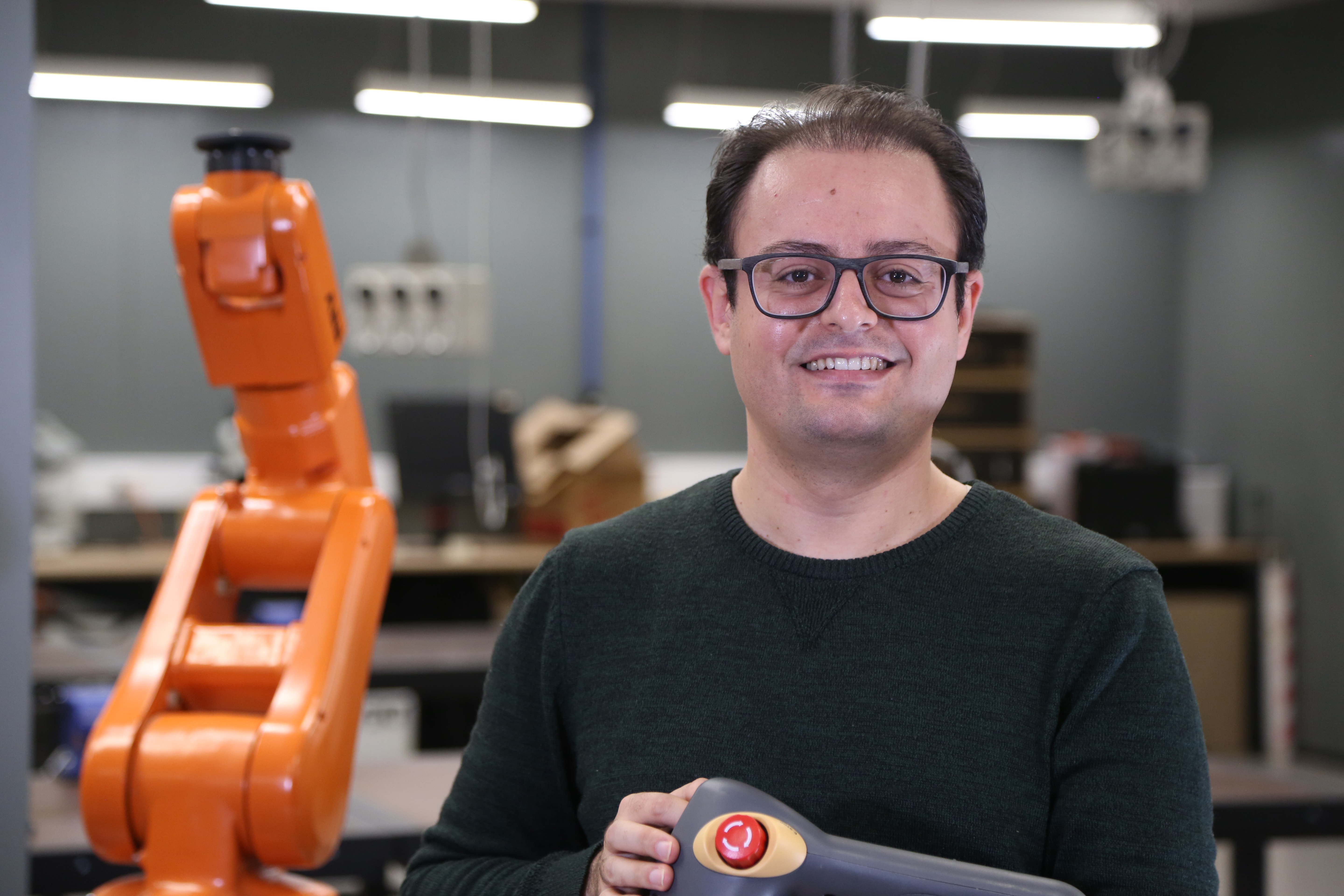
Mohamadreza Chalak Qazani
- Lecturer, Mechanical Engineering
- mohamadreza.chalakqazani@jcu.edu.au

Lewis Gooch
- Lecturer
- lewis.gooch@jcu.edu.au

Judy Yang
- Postdoctoral Research Fellow, Applied AI for Forestry Weed Detection and Mapping
- judy.yang@jcu.edu.au

Bouchra Senadji
- Head, Engineering
- bouchra.senadji@jcu.edu.au

Alzayat Saleh
- AIMS@JCU Postdoctoral Research Fellow, Marine Science Technology
- alzayat.saleh@jcu.edu.au

Anne Steinemann
- Adjunct Professor
- anne.steinemann@jcu.edu.au

Nico Adams
- Professor, Electronic Systems & IoT Engineering
- nico.adams@jcu.edu.au

Elsa Antunes
- Associate Professor, Mechanical Engineering
- elsa.antunes1@jcu.edu.au

Eric Wang
- Senior Lecturer, Electronic Systems and IoT Engineering
- eric.wang@jcu.edu.au

Yang Du
- Senior Lecturer, Electronic Systems and IoT Engineering
- yang.du@jcu.edu.au
Reducing herbicide usage in the Burdekin and Proserpine reef catchment areas with precise robotic weed control in sugarcane (Old ID 26973)
The main objective of this project is to develop and build the world’s first robotic platform for selective weed control in sugarcane. Specifically, we aim to retrofit two 12-metre sugarcane booms for farmers in the Burdekin and Proserpine GBR catchment areas with state-of-the-art deep learning detection and spraying technology. The fundamental aim of this project is to significantly minimise the herbicide usage by selective spot spraying. We have set a target to reduce the knockdown herbicide usage on the chosen farms by 80% compared to the traditional blanket spraying that is performed during various stages of the crop cycle.
Developing Deep Learning Applications for Smart Aquaculture (Old ID 27329)
This project proposes to use deep learning technology to extract various data in commercial environments in a non-intrusive and cost-effective way from fish farms. Currently, most of the fish data is analysed manually. The aim is to use deep learning to extract useful features and traits of fish and to analyse the collected data automatically and efficiently. The project will be in direct partnership with our industry collaborators across Australia and Asia.
Study of wind loads on US and AU roofing tile systems (Old ID 23540)
Due to the porous nature of roofing tile systems, pressure equalization effects must be considered in estimating wind-induced loads. However, these effects (and therefore net wind loading) are not well understood for various roof zones and the range of tile configurations in the global housing market. To better characterize these effects, IBHS will conduct full-scale wind tunnel testing on North American and Australian roofing tile systems. The CTS will assist with testing design, data analysis and reporting.
Supply of Impact Resistance (part 2) (Old ID 23212)
Collaborative project with Queensland Government to determine defining properties of variability and risk of wind driven debris impact testing in order to develop uniform code / standard for assessment of materials for cyclone shelters etc.
Smart Ear Tag for Livestock (Old ID 23414)
CeresTag is investing in the development of a smart ear tag for livestock to enable near real-time geo-location and health monitoring. The developed ear tag will be compliant with the current NLIS identification system and cost only marginally more than existing tags. This technology will revolutionise the industry through enhanced animal welfare, improved land management practices and increased profitability. It will form the starting point of block chain traceability that will underpin the continued success of this important component of the Australian economy and help maintain the premium status of Australian livestock products.
GBRF Burdekin Irrigation Project. (Old ID 27063)
Increasing Industry Productivity and Profitability Through Transformational, Whole of Systems Sugarcane Approaches that Deliver Water Quality Benefits.
Development of multi-layered scaffolds to promote bone healing responses in non-union fractures
In 2022 FNQ had an estimated 18,000 people living with osteoporosis with on the rise. Sufferers are susceptible to complex or large bone fractures which take longer to heal or result in a non-union fracture. Bioactive ceramic structures can promote bone healing responses but, currently, these lack the required mechanical strength. We have used 3D printing to create multi-layered structures that contain the required mechanical strength but their ability to promote the correct healing response needs to be assessed. Information from this project can be used to create new treatment alternatives for those at risk of non-healing fractures.
Tropical North Queensland Drought Resilience Adoption and Innovation Hub (Old ID 27718)
The TNQ Agricultural Innovation Hub is anchored as part of the established TNQ Drought Hub and will sit within the JCU ideas Lab in Cairns – on the traditional land of the Yirrganydji people. Under the TNQ Agricultural Innovation Hub (as part of the broader TNQ Drought Hub) JCU will bring together producers, agriculture companies, supply chain businesses, innovators, start-ups, investors, and researchers to drive agricultural innovation in Northern Australia. The TNQ Agricultural Innovation Hub can also leverage the expertise of JCU’s Innovation Advisory Committee (IAC) and Scientific and Technical Advisory Committee (STAC) as/when required to support new project concepts.
A low power flexible sensor network system for viticulture (Old ID 22420)
While many researchers are focusing on wireless sensor networks as the core component of on-farm sensor networks, these systems suffer from high maintenance due to the number of units required, each with their own batteries and charging systems. For viticulture, where sensor strings can be run down rows, I propose a wired system capable of driving 1000's of sensors from a single sensor master. There is a gap in the types of sensors currently available in viticulture research and routine that the proposed development would meet.
Climate Smart Sugarcane Irrigation Partnerships (CSSIP) (Old ID 24754)
CSSIP will minimise nutrient runoff, improve soil health and increase wetlands water quality by facilitating the adoption of world-class irrigation practices in sugarcane farming systems. Currently, best practice irrigation is assisted by an Irrigation Decision Support Tool (IDST) that provides evidence-based advice. However, IDSTs have not reached their full potential. Firstly, they do not integrate short to medium term weather forecasts (e.g. weekly to multi-weekly forecasts). Secondly, IDSTs do not operate at a spatial scale relevant to farmers. CSSIP will incorporate the Bureau or Meteorology’s new high-resolution climate model into the Irrigation Decision Support Tool. Thirdly, IDSTs require substantial time in manual data entry, which can be alleviated using real-time monitoring via Internet of Things technologies. This will increase irrigation efficiency, reducing excessive runoff into river systems and onto the Reef, and, will help farmers save water and energy costs.
Direct simulation of weak axisymmetric fountains in a homogeneous fluid
- 2000
- Cambridge University Press
- Researchers:Wenxian Lin
Natural convection cooling of rectangular and cylindrical containers
- 2001
- Researchers:Wenxian Lin
Start Date:
01 Jan 2010
End Date:
01 Jan 2015
Start Date:
01 Jan 2004
End Date:
01 Jan 2006
Start Date:
01 Jan 2010
Title:
Senior Member, IEEE
Start Date:
01 Jan 2012
Title:
Reperio Innovation Award
Start Date:
01 Jan 2015
Start Date:
01 Jan 2015
Start Date:
01 Jan 2013
Start Date:
01 Jan 2010
Start Date:
01 Jan 2006
Start Date:
01 Jan 2006