
College of Science & Engineering

Sophia Love
- Doctor of Philosophy (Natural and Physical Sciences)
- sophie.love@jcu.edu.au

Romain Vaucher
- Senior Lecturer, Sedimentology
- romain.vaucher@jcu.edu.au

Jenny Fisher
- Associate Dean, Learning and Teaching
- jenny.fisher@jcu.edu.au

Ambili Narayanan
- Doctor of Philosophy (Natural and Physical Sciences)
- ambili.narayanan@my.jcu.edu.au

Sarfaraz Ali
- Postdoctoral Research Fellow
- sarfaraz.ali@jcu.edu.au

Mikaeylah Davidson
- Postdoctoral Research Fellow
- mikaeylah.davidson@jcu.edu.au

Liuxin Chen
- Lecturer
- liuxin.chen@jcu.edu.au
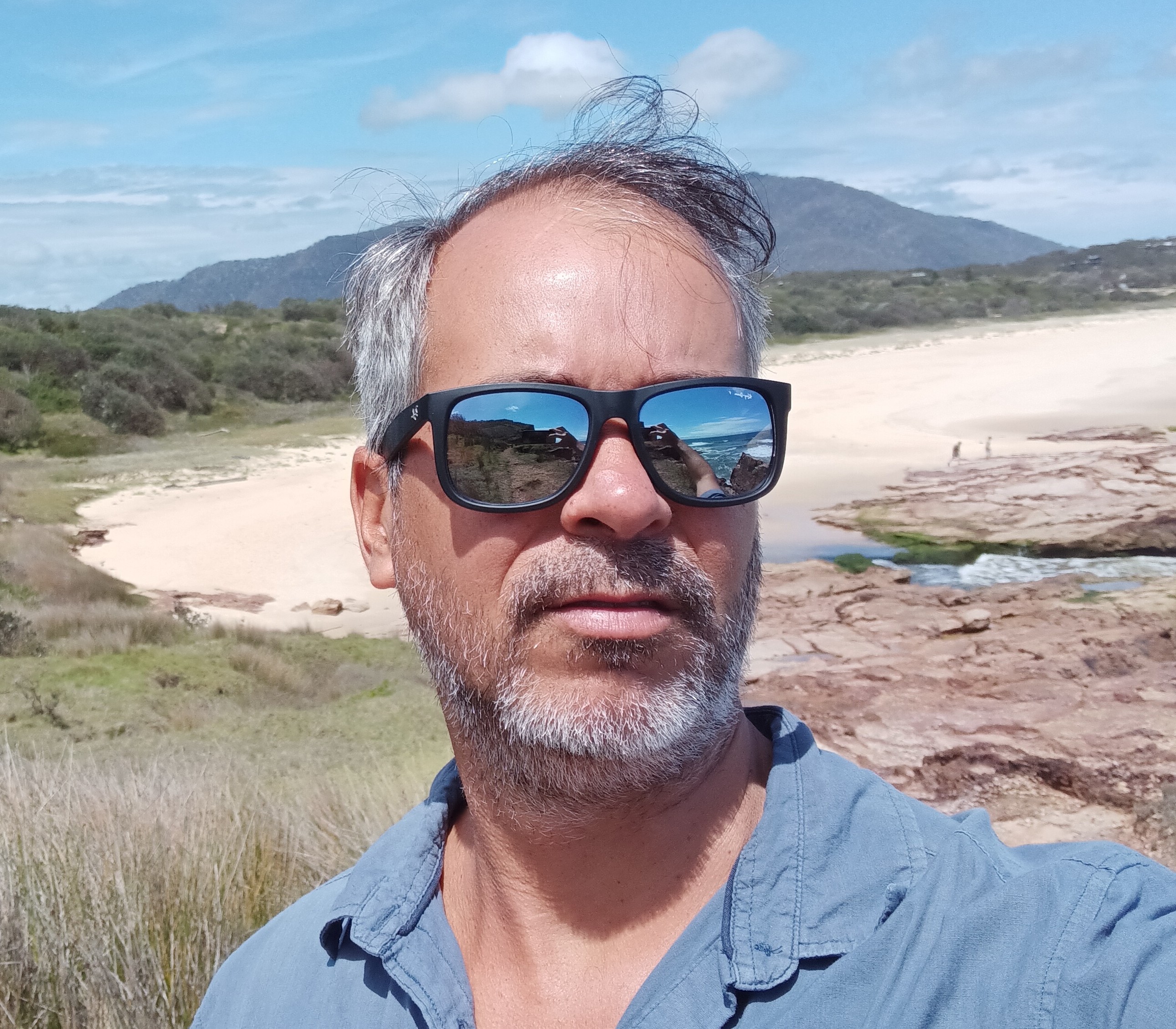
Rafael Cabral Carvalho
- Lecturer, Marine Geoscience
- rafael.cabralcarvalho@jcu.edu.au
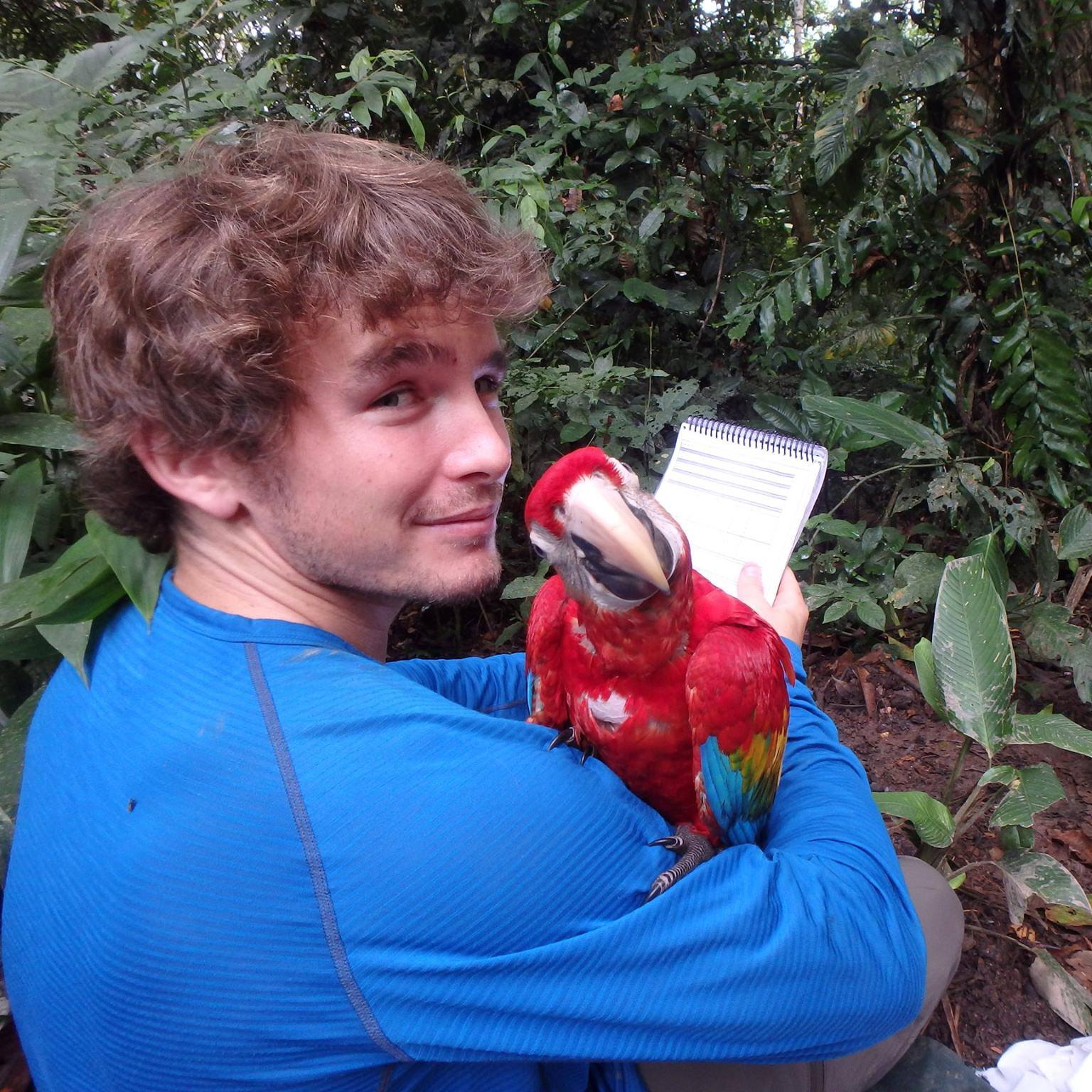
Tom Lloyd
- Postdoctoral Research Fellow, Global Ecosystems
- tom.lloyd@jcu.edu.au
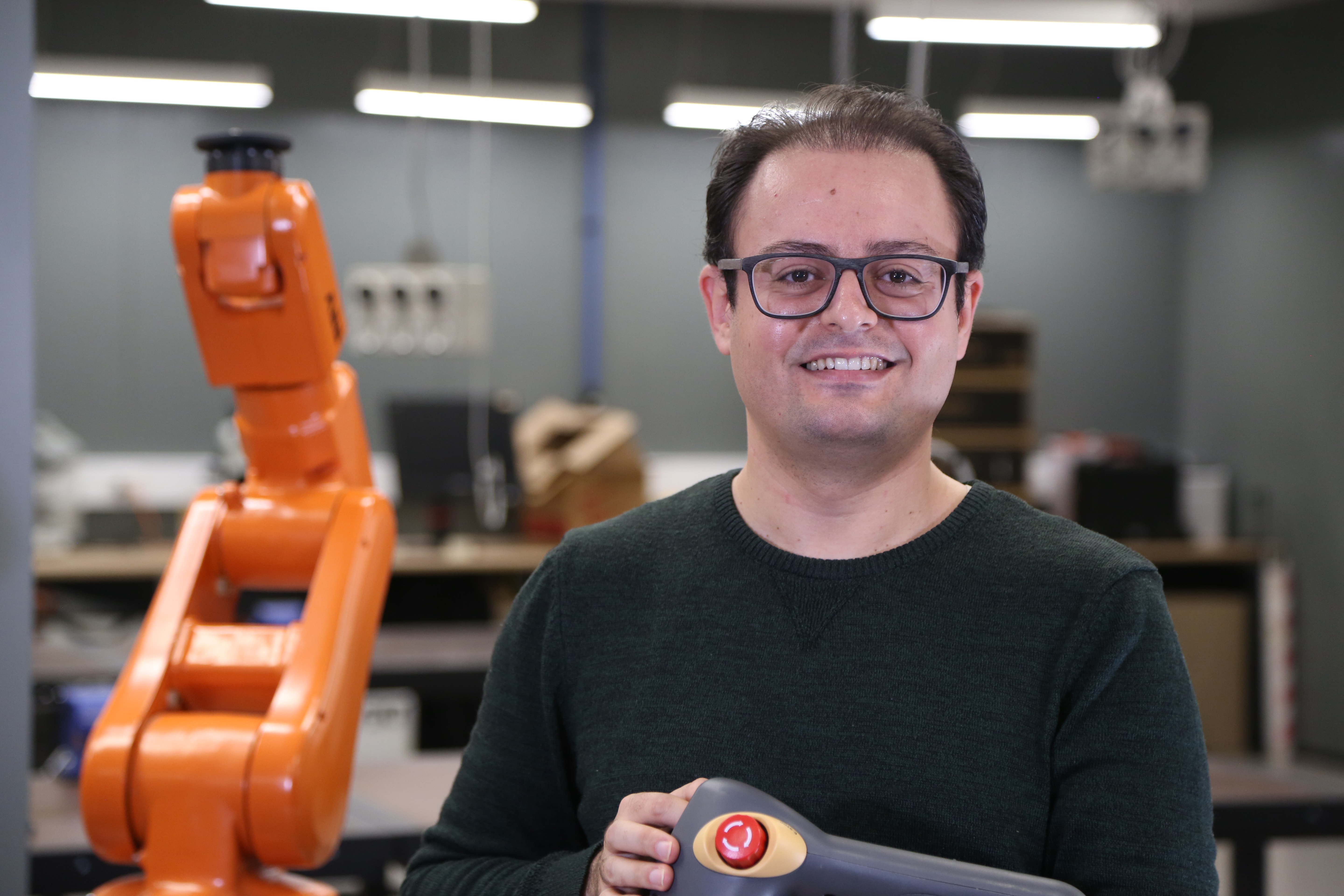
Mohamadreza Chalak Qazani
- Lecturer, Mechanical Engineering
- mohamadreza.chalakqazani@jcu.edu.au
Macroalgal removal for reef restoration (Old ID 26442)
Hillary Smith
14 Oct 2019 - 13 Oct 2020
This project investigates the potential for restoration of reef ecosystems around Magnetic Island. It aims to remove macroalgae at varying frequencies and monitor changes in coral recruitment to develop best practices for the large-scale implementation of the technique to restore coral reefs impacted by macroalgal phase shifts. This grant is to support the project funded by Earthwatch Australia by increasing funds for field work.
The Science of Seafood: STEM Pathways through Aquaculture
Jarrod Guppy
03 Apr 2025 - 03 Apr 2026
To support the growth of Northern Australia’s Aquaculture industry, which will require between 1400 and 2300 new STEM-skilled staff by 2030 (CRCNA No.A.1.2021014 Report), this project will engage high school students in a series of interactive workshops designed to showcase aquaculture and highlight its range of attractive STEM career pathways. The workshops will be offered in key regional hubs of Queensland for aquaculture and economic development, including Cairns, Rockhampton, Whitsundays, and Townsville. Workshops will be structured as interactive, hands-on sessions at schools, designed to balance theoretical learning with practical application. The project goals are to raise awareness of aquaculture among the next generation and inspire students to pursue studies and careers in the field.
‘Planim Fiuja fo Yumi’ - Co-planning climate-smart and equitable livelihood futures with small-scale fishing communities through a participatory and integrated approach to community engagement. (Old ID 30038)
Bethany Smith
22 Jan 2025 - 03 Feb 2030
The project will implement a Participatory and Integrated Planning Approach (PIPA) trialled in a previous ACIAR project. The PIPA aims to equip small-scale fishing communities with the information, resources and capacity to pro-actively and autonomously strengthen their livelihoods towards more equitable, sustainable and climate-smart outcomes. The PIPA is underpinned by a risk-based spatial analysis that is used through participatory engagement activities to support a joint understanding of risk and strengths within local land and seascapes. The approach draws on local knowledge, decision making and governance arrangements to enhance customary community-based livelihoods planning, assessment, prioritising and action processes. This project will seek to adapt and extend the PIPA across Solomon Island contexts, and leverage opportunities to scale to other countries in the Pacific and Southeast Asia.
‘Planim Fiuja fo Yumi’ - Co-planning climate-smart and equitable livelihood futures with small-scale fishing communities through a participatory and integrated approach to community engagement. (Old ID 30038)
Amy Diedrich
22 Jan 2025 - 03 Feb 2030
The project will implement a Participatory and Integrated Planning Approach (PIPA) trialled in a previous ACIAR project. The PIPA aims to equip small-scale fishing communities with the information, resources and capacity to pro-actively and autonomously strengthen their livelihoods towards more equitable, sustainable and climate-smart outcomes. The PIPA is underpinned by a risk-based spatial analysis that is used through participatory engagement activities to support a joint understanding of risk and strengths within local land and seascapes. The approach draws on local knowledge, decision making and governance arrangements to enhance customary community-based livelihoods planning, assessment, prioritising and action processes. This project will seek to adapt and extend the PIPA across Solomon Island contexts, and leverage opportunities to scale to other countries in the Pacific and Southeast Asia.
‘Planim Fiuja fo Yumi’ - Co-planning climate-smart and equitable livelihood futures with small-scale fishing communities through a participatory and integrated approach to community engagement. (Old ID 30038)
Stephanie Duce
22 Jan 2025 - 03 Feb 2030
The project will implement a Participatory and Integrated Planning Approach (PIPA) trialled in a previous ACIAR project. The PIPA aims to equip small-scale fishing communities with the information, resources and capacity to pro-actively and autonomously strengthen their livelihoods towards more equitable, sustainable and climate-smart outcomes. The PIPA is underpinned by a risk-based spatial analysis that is used through participatory engagement activities to support a joint understanding of risk and strengths within local land and seascapes. The approach draws on local knowledge, decision making and governance arrangements to enhance customary community-based livelihoods planning, assessment, prioritising and action processes. This project will seek to adapt and extend the PIPA across Solomon Island contexts, and leverage opportunities to scale to other countries in the Pacific and Southeast Asia.
Develop an autonomous AI vehicle damage assessment tool (Old ID 26683)
Ickjai Lee
29 Nov 2019 - 27 Nov 2020
Development of a practical means and method for automated detection, identification and categorisation of vehicle panel damage using AI, deep learning and selected semantic segmentation networks. Semi-Supervised methods will be investigated to minimize the requirements on hand made training data (archived damaged vehicle images) and research will be conducted to determine the possibility to build a minimum viable product (MVP) directly onto the existing platform architecture.
Assessing recovery in threatened Australian amphibians and reptiles
Conrad Hoskin
01 Jan 2025 - 31 Dec 2027
Biodiversity loss is occurring at unprecedented levels. Worldwide, human activities have ushered in the sixth mass extinction event, and driven swathes of species to the brink of extinction. In Australia, the condition of the environment is poor and declining, with the key threats to biodiversity being habitat loss, invasive species, altered fire regimes, and climate change. As a result, Australia is both a biodiversity hotspot, with 8% of the world’s species, and an extinction hotspot with 100 confirmed extinctions, and a further ~2,000 species threatened with extinction.
For 60 years, the International Union for Conservation of Nature’s (IUCN) Red List of Threatened Species has provided the global standard approach for assessing the extinction risk of species. The IUCN Red List provides an internationally accepted language for assessing the likelihood of a species going extinct, that can be used across all plant and animal groups, and regions of Earth. Australia’s Environment Protection and Biodiversity Conservation Act 1999 (EPBC Act) uses the IUCN Red List methodology to determine its list of threatened species. But whilst the IUCN Red List is an extremely effective way in which to assess a species’ risk of extinction, it was not designed to assess species recovery nor assess the value and effectiveness of conservation actions.
Why is measuring species recovery important? Avoiding extinction is only the first stage of successful conservation—ultimate success requires maintaining viable and functional populations, and achieving the recovery of declining and depleted populations. Indeed, the Federal Government’s Threatened Species Action Plan 2022-2032 is focused on more than simply preventing new extinctions, but also ensuring that threatened species are “on track for improved trajectory” (2027 Target 1). However, recent attempts to measure recovery of the Australian fauna, using de-listing under IUCN Red List criteria as a proxy for recovery, have proved extremely controversial. Crucially, we argue that this is because such studies have been using the wrong approach to measure species recovery.
In fact, there is a much more meaningful method for measuring species recovery, recently developed and tested by the international conservation community: the IUCN’s Green Status of Species (GSS). The GSS metrics complement the IUCN Red List, extending its existing conservation language, ecological theory, and criteria to assess how far a species is from being fully recovered (Fig. 1). The GSS also provides a way to determine the benefit of past and future conservation efforts. Critically, although the GSS approach has been adopted under the international Convention on Biological Diversity as a key indicator for measuring species recovery, it is yet to be integrated into the Australian EPBC Act or state-based conservation policy, nor any other country’s legislation.
Assessing recovery in threatened Australian amphibians and reptiles
Conrad Hoskin
01 Jan 2025 - 31 Dec 2027
Biodiversity loss is occurring at unprecedented levels. Worldwide, human activities have ushered in the sixth mass extinction event, and driven swathes of species to the brink of extinction. In Australia, the condition of the environment is poor and declining, with the key threats to biodiversity being habitat loss, invasive species, altered fire regimes, and climate change. As a result, Australia is both a biodiversity hotspot, with 8% of the world’s species, and an extinction hotspot with 100 confirmed extinctions, and a further ~2,000 species threatened with extinction.
For 60 years, the International Union for Conservation of Nature’s (IUCN) Red List of Threatened Species has provided the global standard approach for assessing the extinction risk of species. The IUCN Red List provides an internationally accepted language for assessing the likelihood of a species going extinct, that can be used across all plant and animal groups, and regions of Earth. Australia’s Environment Protection and Biodiversity Conservation Act 1999 (EPBC Act) uses the IUCN Red List methodology to determine its list of threatened species. But whilst the IUCN Red List is an extremely effective way in which to assess a species’ risk of extinction, it was not designed to assess species recovery nor assess the value and effectiveness of conservation actions.
Why is measuring species recovery important? Avoiding extinction is only the first stage of successful conservation—ultimate success requires maintaining viable and functional populations, and achieving the recovery of declining and depleted populations. Indeed, the Federal Government’s Threatened Species Action Plan 2022-2032 is focused on more than simply preventing new extinctions, but also ensuring that threatened species are “on track for improved trajectory” (2027 Target 1). However, recent attempts to measure recovery of the Australian fauna, using de-listing under IUCN Red List criteria as a proxy for recovery, have proved extremely controversial. Crucially, we argue that this is because such studies have been using the wrong approach to measure species recovery.
In fact, there is a much more meaningful method for measuring species recovery, recently developed and tested by the international conservation community: the IUCN’s Green Status of Species (GSS). The GSS metrics complement the IUCN Red List, extending its existing conservation language, ecological theory, and criteria to assess how far a species is from being fully recovered (Fig. 1). The GSS also provides a way to determine the benefit of past and future conservation efforts. Critically, although the GSS approach has been adopted under the international Convention on Biological Diversity as a key indicator for measuring species recovery, it is yet to be integrated into the Australian EPBC Act or state-based conservation policy, nor any other country’s legislation.
Climate Vulnerability Index Greater Blue Mountains (Old ID 27457)
Scott Heron
01 Dec 2021 - 31 Mar 2022
Globally, heritage locations are being impacted by local-scale and global-scale stressors. Climate change poses an existential threat to global heritage. With rising sea-levels, more extreme weather events and aridification, the extensive impacts of climate are evident at heritage sites globally and the pace of this change is startling. In most parts of the world the rate of loss is exceeding adaptive capacity and this deficit is only getting worse. Decisions on conservation and preservation begin with a detailed understanding of a place's vulnerability. The choices made will directly impact that ability to effectively integrate the goals of safeguarding heritage, adapting and mitigating climate change, and driving sustainable development. This project will apply aspects of the Climate Vulnerability Index process to the Greater Blue Mountains World Heritage property.
Conservation genomics and population status of the endangered Mahogany Gliders (Petaurus gracilis) (Old ID 27672)
Eryn Chang
30 Jun 2022 - 30 Jun 2023
Habitat loss and fragmentation have been threatening population connectivity and genetic diversity of Mahogany Gliders, a rare and endangered gliding possum endemic to the Australian Wet Tropics. Substantial habitat loss and fragmentation have brought concerns to the status of remnant populations. I will use distribution models to refine the distribution and guide camera trapping to find unknown populations. Connectivity between populations will be assessed using genomics, which also allows estimations of population structure and effective population size. Knowledge of distribution and genetics will be used to choose populations for long-term monitoring, and to guide conservation actions for Mahogany Gliders recovery.
Organic matter, sodicity and soil structure
- 1998
- Oxford University Press
- Researchers:Paul Nelson
Argument free clustering via boundary extraction for massive point-data Sets
- 2002
- Researchers:Ickjai Lee
Title:
International speaker x 7
Start Date:
01 Jan 2014
Title:
National Speaker x 6
Start Date:
01 Jan 2014
Title:
A*STAR visitor
Start Date:
01 Jan 2018
Title:
Digital Twin Student , CISRO
Start Date:
25 Jun 2024
Start Date:
01 Jan 2022
Title:
Malayalam
Title:
English
Title:
Tamil
Title:
Hindi