
College of Science & Engineering

Sophia Love
- Doctor of Philosophy (Natural and Physical Sciences)
- sophie.love@jcu.edu.au
Romain Vaucher
- Senior Lecturer, Sedimentology
- romain.vaucher@jcu.edu.au

Jenny Fisher
- Associate Dean, Learning and Teaching
- jenny.fisher@jcu.edu.au

Ambili Narayanan
- Doctor of Philosophy (Natural and Physical Sciences)
- ambili.narayanan@my.jcu.edu.au

Sarfaraz Ali
- Postdoctoral Research Fellow
- sarfaraz.ali@jcu.edu.au

Mikaeylah Davidson
- Postdoctoral Research Fellow
- mikaeylah.davidson@jcu.edu.au
Liuxin Chen
- Lecturer
- liuxin.chen@jcu.edu.au
Rafael Cabral Carvalho
- Lecturer, Marine Geoscience
- rafael.cabralcarvalho@jcu.edu.au
Tom Lloyd
- Postdoctoral Research Fellow, Global Ecosystems
- tom.lloyd@jcu.edu.au
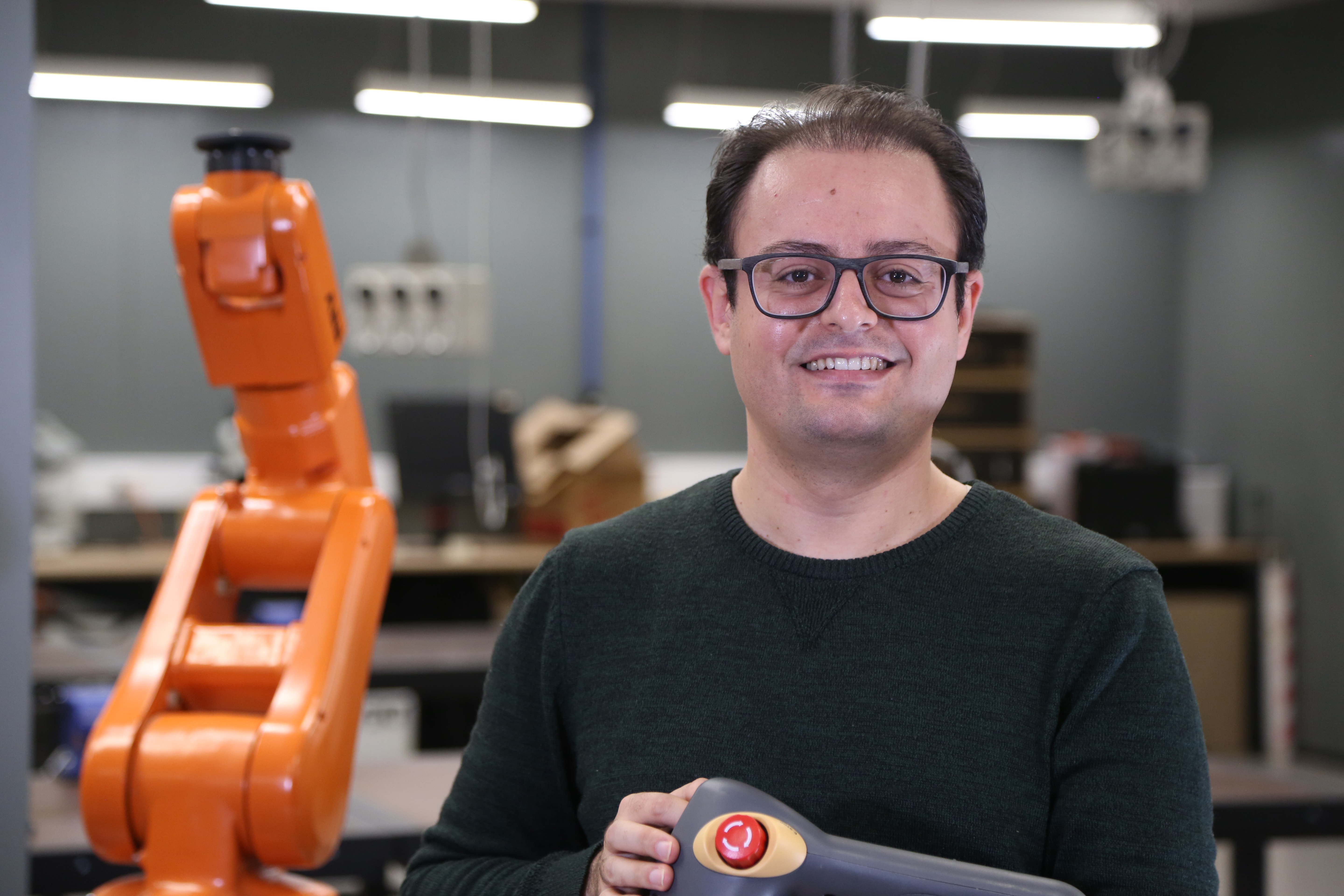
Mohamadreza Chalak Qazani
- Lecturer, Mechanical Engineering
- mohamadreza.chalakqazani@jcu.edu.au
Enhancing AI detection of dugong and other marine megafauna species (Old ID 30032)
Mohammad Jahanbakht
15 Jun 2023 - 01 May 2024
Standardised aerial surveys have been conducted across northern Australia for over three decades to monitor dugong populations. JCU is currently monitoring dugongs across the entire eastern Queensland coast using conventional observer survey approach. In parallel to the monitoring work, JCU is experimenting the use of aerial images to conduct these large scales surveys. Preliminary results from the image processing work reveals that substantial efforts need to be put in to streamline and fast-track the processing of large image datasets to make imagery survey a cost-effective approach in the future. An AI for detecting dugongs is available but was developed based on images collected in Western Australian waters, a different habitat compared to eastern Queensland inshore waters. Preliminary tests ran by our team suggest that the current AI requires additional research work to improve its level of precision while other competitive AIs also need to be investigated. Upon completion of our tests, our team will outline steps toward the improvement of the current AI and/or exploration of alternative methods with the end goal of producing an automated approach that fast-tracks the processing of large image datasets collected during large-scale marine wildlife surveys.
Going feral: The colonisation of natural environments by Asian house geckos (Old ID 21725)
Conrad Hoskin
01 Aug 2014 - 31 Mar 2016
Asian house geckos (Hemidactylus frenatus) were accidentally introduced to Australia in the 1960s and are now common across the tropics. They commonly establish in towns, leading to the belief that this introduced species is benign. However, surveys conducted in the Townsville region revealed high-density populations of Asian house geckos in natural environments. This is very concerning given that Australia is a global centre of gecko diversity and endemism. My project will investigate the extent of Asian house gecko invasion in natural environments and highlight factors that might contribute to this range expansion.
Can experimental hookworm infection prevent metabolic disease/Type 2 diabetes? (Old ID 24710)
Matt Field
01 Jan 2018 - 01 Jun 2019
We will conduct a world-first clinical trial in Cairns testing the safety and efficacy of experimental hookworm infection in women at risk of getting Type 2 diabetes. For this application we will examine how worm infection alters the microbiome, a potental mechanism of how worms control metabolism.
A temperature and humidity analysis of the Golden-shouldered parrot (Psepholus chrsoterygius) nest chambers: implications in a changing climate? (Old ID 27245)
Susan Laurance
01 May 2021 - 01 May 2022
The Golden-shouldered Parrot (Psepholus chrsoterysius) is an endangered species endemic to Cape York, Queensland. This bird has particular significance to the Olkola People, an important totem, called Alwal in language. Bush heritage have been working in partnership with Olkola rangers for the last 5 years to protect and recover this endangered species. Alwal has particular nesting habits; it nests in specific chronical termite mounds constructed by Amitermes scolpulus. The Parrot is very particular in mound choice, only selecting those of certain size and width (170cm height to 70 cm width). This is believed to provide optimum incubation temperatures. Nest success is also thought to be reliant upon a symbiotic relationship with an Australian mallee motth (Trisyntopa scatophaga) which feeds on the parrots droppings and therefore keeps the nest clean, preventing risk of infections. This study eill assess nest chamber and ambient temperatures and humidity across the breeding season of 2021, using Hydrochron humidity and temperature loggers (DS1923), which will be placed inside and outside selected nests. FLIR heat sensing cameras will also be used to take pictures of all active and non active nests and their nearest neighbours. The data will be compared to early nest research carried out by Weaver (1986) who assessed nest temperatures in the 1970s. This study will provide insight into nest chamber thermal changes, and create a more reliable baseline longer term, due to the technnological constrictions when this study was first carried out in the 1970s.
Microanalytical Facility Supporting Resources Development and Manufacturing (Old ID 27524)
Michael Bird
20 Jul 2022 - 30 Jun 2023
The project aims to establish a state-of-the-art electron probe microanalysis facility enabling accurate chemical analysis to be undertaken at the micro-scale. It is expected to provide new knowledge and support applied research on a range of natural, synthetic and processed materials that will deeply impact advancements in the fields of metals processing and recycling, Earth and environmental science, and the development of materials for a healthier society. It will support ARC funded and industry engaged research enhancing the minerals exploration, mining and metallurgical industries and inform sustainable practice. It will also provide the key research infrastructure to enhance Australia’s research leadership in these fields.
JCU Spawning Potential app development (Old ID 27727)
Ickjai Lee
28 Jun 2022 - 30 Jul 2022
The central biological measure of success for the “Community- Based Sustainable Development in Solomon Island and PNG Coastal Communities” projects are trends in the Spawning Potential Ratio (SPR) of key target species. This Project seeks to refine the Spawning Potential Survey (SPS) App (JCU FISH) to include spatial reporting tools that can be utilised by survey participants to monitor spatial and temporal trends in SPR. This project extends from an earlier “proof of concept” project funded by the WWF Ocean Practice where the potential for automatic identification and measurement of target species from a single image was realised.
Monitoring the distribution and abundance of dugongs (and in-water, large marine turtles) within the GBRWHA using a combined aerial observer and imagery approach (Old ID 27811)
Helene Marsh
20 Sep 2022 - 30 May 2026
This project aims to: (1) to monitor the trends in the abundance and distribution of dugongs within the GBRWHA and (2) contribute to the transition to the use of novel imagery survey technologies to enhance survey methods and accuracy in abundance estimates. The project will be conducted in five main stages which will include: the development of a Traditional Owners engagement strategy and the drafting and submitting regulatory permit applications (stage 1), the development of the survey design and data collection protocols and undertake observer training (stage 2), conduct the dugong observer surveys and imagery experimental work within the GBRWHA (stage 3) and the production of a final report including summary of all survey report findings and advice about the implications of the findings for the conservation and management of dugongs and large marine turtles within the GBRWHA (stage 4).
Sugar-AI: Smart Sugarcane Health Monitoring and Ratoon Stunting Disease (RSD) Detection with Satellite Remote Sensing and Machine Learning (Old ID 30057)
Ethan Waters
01 Aug 2024 - 31 Dec 2025
The aim of the Sugar-AI project is to develop a prototype smart software system for sugarcane health monitoring. The prototype will focus on accurately diagnosing Ratoon Stunting Disease (RSD), which is considered by most sugarcane pathologists globally to be the most important disease that impacts on sugarcane yields between 5-60%.
Can species interactions cause rapid adaptation? (Old ID 24883)
Conrad Hoskin
01 Apr 2018 - 31 Mar 2019
Under environmental change, the persistence of a species centers on its ability to disperse from or adapt to changing conditions. Dispersal is limited in the Australian Wet Tropics due to restricted environmental space and mountain-top edges, so adaptation is necessary. This includes adaption to the changing conditions (e.g., temperature) and changing species interactions. This project will use experimental evolution in two Australian rainforest Drosophila species to test if novel competition can drive adaptation to warming temperatures and enable coexistence. Results will then be used with field data to create a comprehensive niche model aimed at predicting effects of climate change to a Wet Tropics species.
Can species interactions cause rapid adaptation? (Old ID 24883)
Megan Higgie
01 Apr 2018 - 31 Mar 2019
Under environmental change, the persistence of a species centers on its ability to disperse from or adapt to changing conditions. Dispersal is limited in the Australian Wet Tropics due to restricted environmental space and mountain-top edges, so adaptation is necessary. This includes adaption to the changing conditions (e.g., temperature) and changing species interactions. This project will use experimental evolution in two Australian rainforest Drosophila species to test if novel competition can drive adaptation to warming temperatures and enable coexistence. Results will then be used with field data to create a comprehensive niche model aimed at predicting effects of climate change to a Wet Tropics species.
Organic matter, sodicity and soil structure
- 1998
- Oxford University Press
- Researchers:Paul Nelson
Argument free clustering via boundary extraction for massive point-data Sets
- 2002
- Researchers:Ickjai Lee
Start Date:
01 Jan 2007
End Date:
01 Jan 2025
End Date:
01 Jan 2022
End Date:
01 Jan 2024
Title:
PhD, University of Cambridge
Start Date:
01 Jan 2008
End Date:
01 Jan 2012
Start Date:
01 Jan 2004
End Date:
01 Jan 2008
Reseracher:
Khandakar Faisal Ibn Murad
(Doctor of Philosophy (Engineering and Related Technologies))
Start Date:
01 Jan 2014
End Date:
01 Jan 2015
Reseracher:
Khandakar Faisal Ibn Murad
(Doctor of Philosophy (Engineering and Related Technologies))
Start Date:
01 Jan 2006
End Date:
01 Jan 2010
Title:
PhD, James Cook University
Start Date:
01 Jan 2017
End Date:
01 Jan 2021
Start Date:
01 Jan 2018