
Engineering
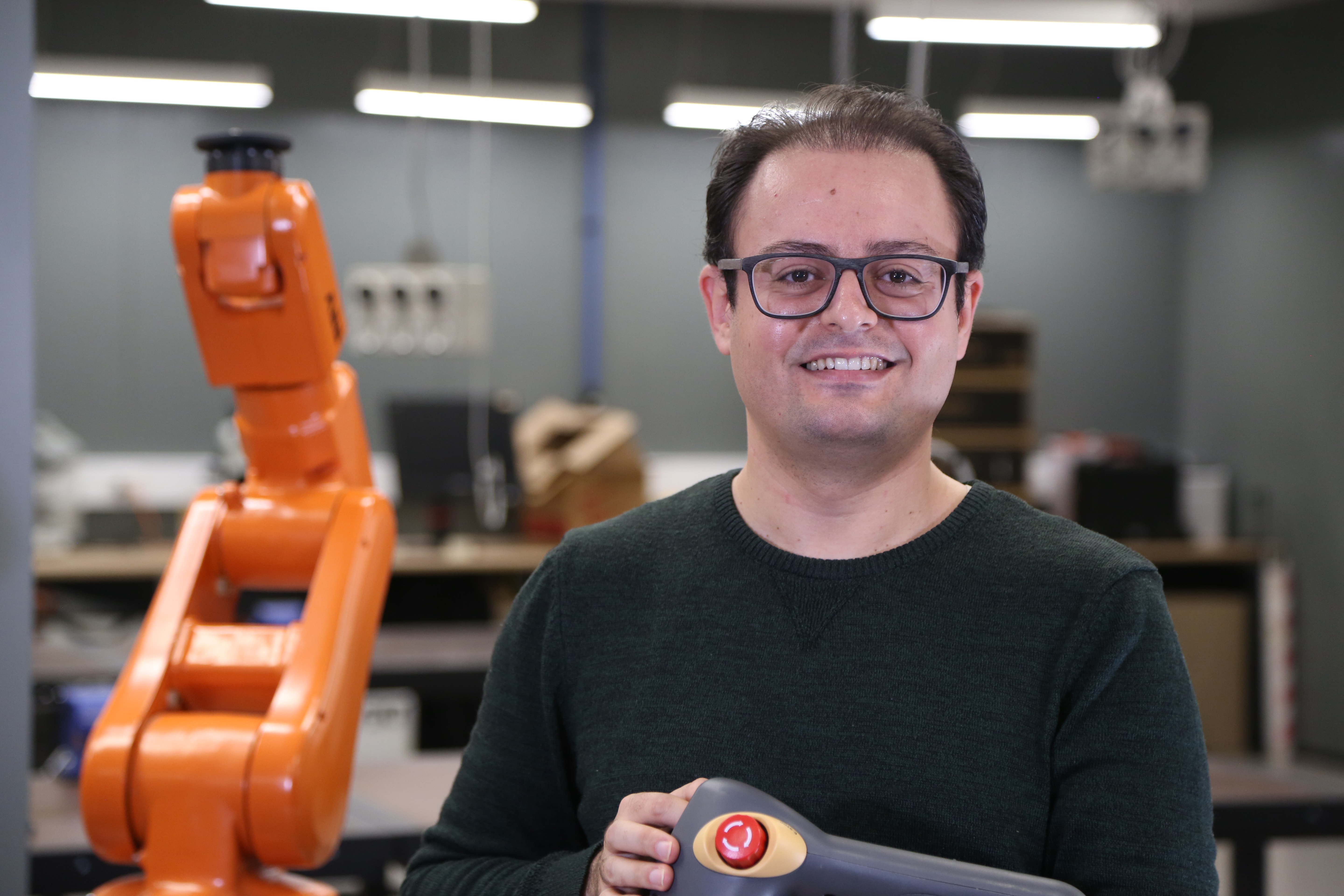
Mohamadreza Chalak Qazani
- Lecturer, Mechanical Engineering
- mohamadreza.chalakqazani@jcu.edu.au

Lewis Gooch
- Lecturer
- lewis.gooch@jcu.edu.au

Judy Yang
- Postdoctoral Research Fellow, Applied AI for Forestry Weed Detection and Mapping
- judy.yang@jcu.edu.au

Bouchra Senadji
- Head, Engineering
- bouchra.senadji@jcu.edu.au

Alzayat Saleh
- AIMS@JCU Postdoctoral Research Fellow, Marine Science Technology
- alzayat.saleh@jcu.edu.au

Anne Steinemann
- Adjunct Professor
- anne.steinemann@jcu.edu.au

Nico Adams
- Professor, Electronic Systems & IoT Engineering
- nico.adams@jcu.edu.au

Elsa Antunes
- Associate Professor, Mechanical Engineering
- elsa.antunes1@jcu.edu.au

Eric Wang
- Senior Lecturer, Electronic Systems and IoT Engineering
- eric.wang@jcu.edu.au

Yang Du
- Senior Lecturer, Electronic Systems and IoT Engineering
- yang.du@jcu.edu.au
RRAP CAD-01: Coral propagation and deployment (Old ID 27237)
Deployment device shape and material can considerably affect the growth rates and survival of recruits, but the optimal physical properties of deployment devices to maximise the survival and growth of a diversity of corals are not yet clear. For example, crevice size is an important physical factor that influences the survivorship of coral recruits and juveniles. Spatial structure of settlement surfaces can provide refugia from algae and release from grazing. The first part of the project consists of selecting potential device materials, porosities and textures that will be assessed for fouling and recruit survival. These will be first tested in the SeaSim and the most promising candidates in the field in across a range of environments and environmental gradients. The second part of the project consists of optimization and scaling up of the fabrication technology to produce millions of devices.
Developing an innovative low-power and high-speed architecture for smart machines (Old ID 25065)
This project aims to significantly improve the processing speed and power consumption of intelligent, mobile computing devices. Using a novel computing architecture inspired by the low-energy, parallel processing of the brain, the project will overcome a major impediment to progress, that placing ever more transistors on electronic chips is reaching its physical limits. The intended outcomes include important theoretical advances in electronic engineering, a new architecture enabling intelligent devices to operate independently of remote supercomputers, and a software trial in a robot. Applicable to devices ranging from smartphones to medical diagnostic equipment to autonomous vehicles, the new architecture promises significant benefits.
Independent testing of solar panel cooling device (the B-Panel) (Old ID 23054)
Provide independent testing of a solar panel modification claiming to boost average power output by 30%. Testing will help progress the concept and current prototype further towards commercialisation. Test a collaboration model for new, early stage start-ups being trailed by JCU and iNQ. Aims to explore how access to JCU's technical skills, equipment and technical mentoring plus guided linkage with local entrepreneurial activities at iNQ e.g. Involvement in Start-Up weekends and membership of iNQ plus access to one-on-one entrepreneurial assessment, mentoring and training activities at iNQ improves the chances of success for micro and SMEs in commercialisation ideas.
Deep Learning for Waste Management (Old ID 27687)
To keep our planet safe and healthy, new techniques for managing and recycling waste should be devised. This project aims to use the latest advances in deep learning and computer vision technologies to better manage waste by developing a fast and accurate waste analysis system.
Vibration analysis of mining industry conveyor belt systems: validation of method and pathways to improvement (Old ID 26579)
Equipment failures in the mining industry can cause serious safety hazards and substantial financial losses. An automated, cost-effective monitoring system that could be retrofitted to existing equipment would provide advance warning to operators and reduce the likelihood of unscheduled outages. This project will test and validate a vibration-based monitoring system for conveyor belts and associated equipment. It will also identify improved methods to analyse the vibration data to increase the sensitivity and/or accuracy of the alerts that are generated.
Mix Designs for Paste Aggregate Fills (Old ID 22395)
JCU is requested to prepare the paste aggregate fill (PAF) samples, mixed with tailings in three different proportions. The samples are approximately 200mm diameter and 400mm in length, and the PAF should exclude fractions larger than 20mm and those less than 1.18mm. In all three mixes, UCS tests will be carried out after 7, 14, 28, 56 and 100 days and strength and Young's modulus will be determined. In addition, the grain size distribution, specific gravity, bulk density, and moisture content will be determined. In addition, it is also required to carry out slump tests on the different mixes using the standard slump cone.
Effective PPE waste processing using microwave pyrolysis (Old ID 28926)
This project aims to investigate the feasibility of processing the PPE waste materials using a Microwave Assisted Waste processing technology developed at James Cook University. The specific objectives of the project are: i. Identify the processing conditions (e.g. Microwave power, time) suitable to kill pathogens in the waste material ii. Investigate the presence of pathogens in the residual material or by-products iii. Understand the physical and chemical properties of the by-products to identify potential applications
Performance tests of acid mist suppressants (Old ID 22793)
This project will test the effect of two (2) chemicals (acid mist suppressants) supplied by Huntsman Corporation on the morphology of the cathode during an electro-winning process.
Qcide® Oil Extraction and Processing Technology with the aim to improve the oil extraction process (Old ID 26262)
Implement an on-site experimentation program to establish baseline parameters (temperature, pressure, flow rates, oil yield) for the existing static oil extraction system using instrumentation acquired and installed as part of a previous (Phase 1) project. Evaluate the effect of key extraction process variables on the quantity and quality of the oil, and evaluate product change with process variable(s). Correlate the measurement results with the oil content results to develop an understanding of steam flow, biomass-stream contact and the oil extraction dynamics, and their possible variations from batch to batch. Analysis and reporting of experimentation results.
Improving the resilience of existing housing to severe wind events (Old ID 21317)
Australian houses built prior to the mid 1980s do not offer the same level of performance and protection during windstorms as houses constructed to contemporary building standards. This project will develop the evidence base for risk mitigation by devising simple practical and economic upgrading options for existing houses. The primary objective of this project is to develop cost-effective strategies for mitigating damage to housing from severe windstorms across Australia. Outputs from this project will target a range of users from policy development through to homeowners and builders on recommended actions to improve resilience of existing housing.
Direct simulation of weak axisymmetric fountains in a homogeneous fluid
- 2000
- Cambridge University Press
- Researchers:Wenxian Lin
Natural convection cooling of rectangular and cylindrical containers
- 2001
- Researchers:Wenxian Lin
Start Date:
01 Jan 2010
End Date:
01 Jan 2015
Start Date:
01 Jan 2004
End Date:
01 Jan 2006
Start Date:
01 Jan 2010
Title:
Senior Member, IEEE
Start Date:
01 Jan 2012
Title:
Reperio Innovation Award
Start Date:
01 Jan 2015
Start Date:
01 Jan 2015
Start Date:
01 Jan 2013
Start Date:
01 Jan 2010
Start Date:
01 Jan 2006
Start Date:
01 Jan 2006