
College of Science & Engineering

Sophia Love
- Doctor of Philosophy (Natural and Physical Sciences)
- sophie.love@jcu.edu.au
Romain Vaucher
- Senior Lecturer, Sedimentology
- romain.vaucher@jcu.edu.au

Jenny Fisher
- Associate Dean, Learning and Teaching
- jenny.fisher@jcu.edu.au

Ambili Narayanan
- Doctor of Philosophy (Natural and Physical Sciences)
- ambili.narayanan@my.jcu.edu.au

Sarfaraz Ali
- Postdoctoral Research Fellow
- sarfaraz.ali@jcu.edu.au

Mikaeylah Davidson
- Postdoctoral Research Fellow
- mikaeylah.davidson@jcu.edu.au
Liuxin Chen
- Lecturer
- liuxin.chen@jcu.edu.au
Rafael Cabral Carvalho
- Lecturer, Marine Geoscience
- rafael.cabralcarvalho@jcu.edu.au
Tom Lloyd
- Postdoctoral Research Fellow, Global Ecosystems
- tom.lloyd@jcu.edu.au
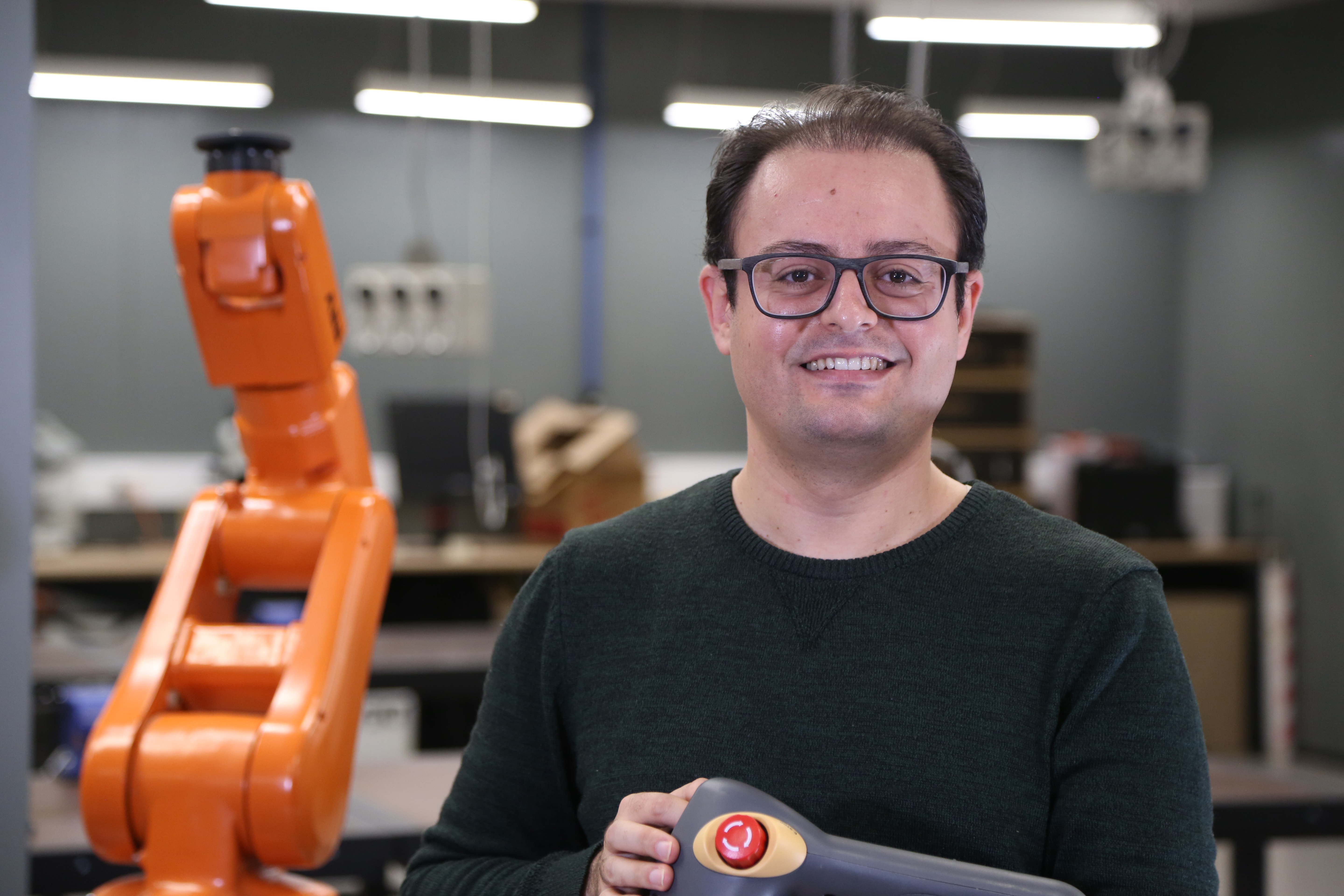
Mohamadreza Chalak Qazani
- Lecturer, Mechanical Engineering
- mohamadreza.chalakqazani@jcu.edu.au
ResPax Digital Passbook (Phase II) (Old ID 29015)
Thomas Napier
15 Jun 2023 - 14 Jun 2024
To continue the Phase I of project to further develop digital tools for collecting tourism data in the region to enable better decisionmaking.
Gold Mineralisation Styles in the Alice River Gold Field, FNQ (Old ID 23601)
Ioan Sanislav
01 Aug 2017 - 31 Mar 2018
The deposits along Alice River, including the Alice Queen mine are aligned along a lineament, interpreted as the Alice River Shear zone. The GSQ (Geological Survey of Queensland), in a recently completed study of the geology of Cape York Peninsula has interpreted the deposits as orogenic gold deposits based on outcrop patterns and limited field data. In spite of this interpretation, the age, mineral association, associated intrusives and structural styles of the deposits remains unknown and they have not been studied in details. Spitfire Materials is interested to know the age and style of mineralisation as this will assist future exploration.
Species interactions and the volution of plasticity in mating signals (Old ID 23407)
Megan Higgie
01 May 2017 - 30 Apr 2018
Displaying for mates is one of the most important forms of communication. The impact on mating displays in the presence of other species (reproductive interference) has generally been overlooked but is increasingly being recognised as a major selective force driving the evolution of mating traits. This project will investigate if species interactions can evoke immediate (plastic) changes to male mating displays. Plastic changes to mating displays will allow species to stand out in the crowd, thus avoiding reproductive interference and continue being reproductively successful. This adaptation may become extremely important due to changing species distributions in this rapidly changing world.
Development of Customised Hospital Waste Processing Technology (Old ID 26326)
Elsa Antunes
25 Feb 2019 - 31 Mar 2020
Phase 1 aims to use microwave pyrolysis technology to process a mix medical waste supplied by Medafield Pty Ltd, and study the pyrolysis conditions and resulting byproducts (syngas, bio-oil and biochar) material analysis using the different analytical tools. Phase 2 of this project will focus on the optimisation of the material properties especially to increase the value of the byproducts of particular interest. We will also undertake the biological characterisation of the samples to better understand the hazardous nature of the syngas and the biochar.
Monitoring of avian influenza in samples collected from aquatic birds in North Queensland (Old ID 27162)
Paul Horwood
01 Mar 2021 - 05 Feb 2024
At least 576 fresh faecal samples from wild ducks and magpie geese will be collected as environmental samples in the Townsville region. Swabs in transport media and immediately transported to the laboratory. Samples will be pooled and nucleic acid extracted. The extracted nucleic acid will be screened using assays based on TaqMan that will detect avian influenza. Pools that react will be individually extracted and tested. Avian influenza isolates will be checked using TaqMan specific for H5 and H7. Should the samples react in these assays it will be sent to AAHL for further testing and the CVO will be notified. Sequencing on all isolates other than those reacting in H5 and H7 will be carried out to determine genotype and to confirm pathotype.
ARC Research Hub for Supercharging Tropical Aquaculture Through Genetic Solutions (Old ID 27374)
Ludwig Lopata
09 Sep 2021 - 31 Dec 2025
This project aims to integrate cutting edge genetic and genomic approaches into innovative aquaculture enterprises that farm in tropical northern Australia. It will deliver the requisite genetic knowledge to instigate world-leading and highly productive breeding programs for five species (barramundi, pearl oyster, prawn, grouper and marine seaweed), along with a novel understanding of the genetic basis of disease resistance and how the production environment interfaces with the bacterial microbiome, pathogens and water quality to cause disease. It will increase Australia's capacity to deliver advanced genetics outcomes to the aquaculture sector, while increasing productivity, international competitiveness, and lowered risk due to disease.
ARC Research Hub for Supercharging Tropical Aquaculture Through Genetic Solutions (Old ID 27374)
Ira Cooke
09 Sep 2021 - 31 Dec 2025
This project aims to integrate cutting edge genetic and genomic approaches into innovative aquaculture enterprises that farm in tropical northern Australia. It will deliver the requisite genetic knowledge to instigate world-leading and highly productive breeding programs for five species (barramundi, pearl oyster, prawn, grouper and marine seaweed), along with a novel understanding of the genetic basis of disease resistance and how the production environment interfaces with the bacterial microbiome, pathogens and water quality to cause disease. It will increase Australia's capacity to deliver advanced genetics outcomes to the aquaculture sector, while increasing productivity, international competitiveness, and lowered risk due to disease.
ARC Research Hub for Supercharging Tropical Aquaculture Through Genetic Solutions (Old ID 27374)
Leo Nankervis
09 Sep 2021 - 31 Dec 2025
This project aims to integrate cutting edge genetic and genomic approaches into innovative aquaculture enterprises that farm in tropical northern Australia. It will deliver the requisite genetic knowledge to instigate world-leading and highly productive breeding programs for five species (barramundi, pearl oyster, prawn, grouper and marine seaweed), along with a novel understanding of the genetic basis of disease resistance and how the production environment interfaces with the bacterial microbiome, pathogens and water quality to cause disease. It will increase Australia's capacity to deliver advanced genetics outcomes to the aquaculture sector, while increasing productivity, international competitiveness, and lowered risk due to disease.
ARC Research Hub for Supercharging Tropical Aquaculture Through Genetic Solutions (Old ID 27374)
Mostafa Rahimi Azghadi
09 Sep 2021 - 31 Dec 2025
This project aims to integrate cutting edge genetic and genomic approaches into innovative aquaculture enterprises that farm in tropical northern Australia. It will deliver the requisite genetic knowledge to instigate world-leading and highly productive breeding programs for five species (barramundi, pearl oyster, prawn, grouper and marine seaweed), along with a novel understanding of the genetic basis of disease resistance and how the production environment interfaces with the bacterial microbiome, pathogens and water quality to cause disease. It will increase Australia's capacity to deliver advanced genetics outcomes to the aquaculture sector, while increasing productivity, international competitiveness, and lowered risk due to disease.
Population connectivity in the Kuranda Tree frog (Litoria myola) (Old ID 22198)
Conrad Hoskin
01 Aug 2015 - 31 Jul 2016
The critically endangered Kuranda Tree frog (Litoria myola) occurs only in a small distribution near Kuranda. This population is divided into 13 known breeding sites (subpopulations). Connectivity between these subpopulations is not known; therefore I will use genetic analysis to gain insight into both historical and current connectivity. Knowledge of population connectivity is of great importance for management, as it will help focus conservation efforts. This study will provide information on genetic distinctness of subpopulations, potential for natural recolonization if subpopulations decline or disappear, and where individuals should be sourced from if managers wanted to reintroduce the species to a site.
Growth rates of juvenile smalltooth sawfish Pristis pectinata Latham in the western Atlantic
- 2008
- Wiley-Blackwell
- Researchers:Colin Simpfendorfer
Environmental and socioeconomic dynamics of the Indian Ocean tsunami in Penang, Malaysia
- 2008
- Wiley-Blackwell
- Researchers:Michael BirdLisa Law
Start Date:
10 Nov 2024
Start Date:
31 Mar 2025
Title:
Bengali
Reseracher:
Khandakar Faisal Ibn Murad
(Doctor of Philosophy (Engineering and Related Technologies))
Title:
English
Reseracher:
Khandakar Faisal Ibn Murad
(Doctor of Philosophy (Engineering and Related Technologies))
Start Date:
01 Jan 2024
Start Date:
01 Jan 2024
End Date:
01 Jan 2027
Start Date:
01 Jan 2014
Start Date:
01 Jan 2003
Title:
PhD, James Cook University
End Date:
01 Jan 2010
End Date:
01 Jan 2003