
College of Science & Engineering

Sophia Love
- Doctor of Philosophy (Natural and Physical Sciences)
- sophie.love@jcu.edu.au

Romain Vaucher
- Senior Lecturer, Sedimentology
- romain.vaucher@jcu.edu.au

Jenny Fisher
- Associate Dean, Learning and Teaching
- jenny.fisher@jcu.edu.au

Ambili Narayanan
- Doctor of Philosophy (Natural and Physical Sciences)
- ambili.narayanan@my.jcu.edu.au

Sarfaraz Ali
- Postdoctoral Research Fellow
- sarfaraz.ali@jcu.edu.au

Mikaeylah Davidson
- Postdoctoral Research Fellow
- mikaeylah.davidson@jcu.edu.au

Liuxin Chen
- Lecturer
- liuxin.chen@jcu.edu.au

Rafael Cabral Carvalho
- Lecturer, Marine Geoscience
- rafael.cabralcarvalho@jcu.edu.au
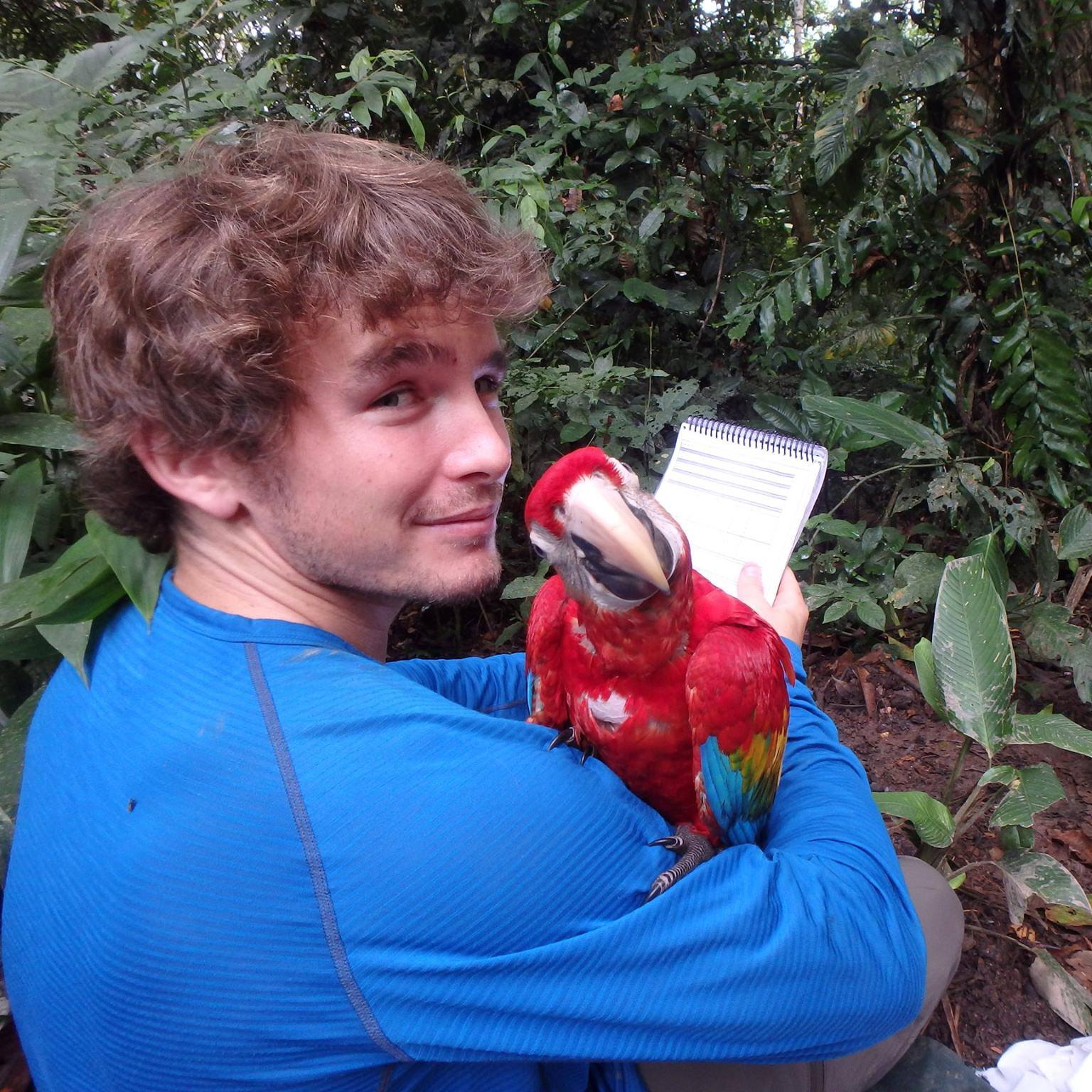
Tom Lloyd
- Postdoctoral Research Fellow, Global Ecosystems
- tom.lloyd@jcu.edu.au
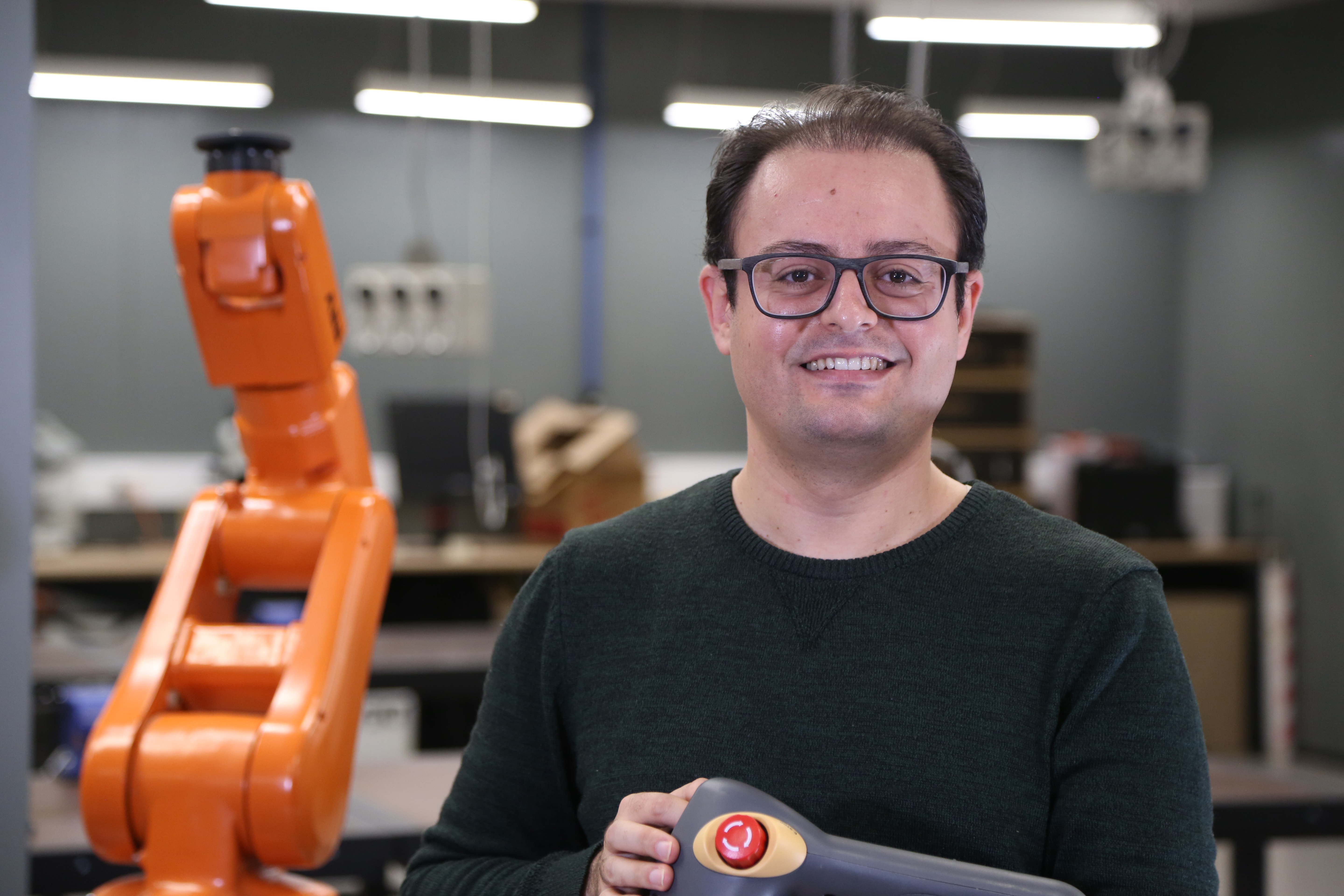
Mohamadreza Chalak Qazani
- Lecturer, Mechanical Engineering
- mohamadreza.chalakqazani@jcu.edu.au
Determining the role of a novel gene in liver cancer. (Old ID 27055)
Ludwig Lopata
01 Jan 2021 - 31 Dec 2021
Liver cancer incidence is increasing dramatically in Australia. Through a genetic screen we have found a novel gene that associates with liver cancer cell DNA damage and metabolism. To investigate its function, we will perform cellular assays and tumour experiments to test how this gene regulates liver cancer growth. The proposed research will provide a better understanding of the factors that promote liver cancer and allow the development of new therapies to treat this devastating disease.
Airbag deployment test (Old ID 30048)
Wenxian Lin
12 Jun 2023 - 31 Aug 2023
AEP Advance Engineering is planning to study airbag deployment in a car after modifications done on the car. This test will study an airbag deployment along the ceiling using high-speed camera at high frame per second rate of 5000. This study aims to investigate the deployment stages of the airbag and visually capture this process, so modifications applied on the car does not interfere with safety.
Predicting genetic exchange between species under climate change (Old ID 27104)
Conrad Hoskin
01 Apr 2021 - 30 Apr 2024
This project aims to resolve the factors that lead to the mixing of species’ gene pools, with a focus on whether climate change will increase such mixing, possibly leading to extinction by genetic swamping. The significance is that the project would improve our understanding of speciation and species’ vulnerability to rapid climate change through genetic mixing; a largely overlooked process. Key outcomes would be to generate new knowledge of a fundamental evolutionary process and extend the toolbox of biodiversity managers facing rapid environmental change. The project would benefit Australia by highlighting our unique biodiversity and scientific capability, and by training early career researchers in advanced evolutionary biology.
Development of advanced reproductive techniques to characterize infertility in Barramundi (Old ID 23111)
Jarrod Guppy
17 Jan 2017 - 16 Jan 2020
Since the 1980's, the $45 million barramundi aquaculture industry has stagnated due to a lack of development of advanced breeding technologies. With the recent development of genomic resources & putative methods to control sex, the industry is poised to undergo rapid expansion by implementing a genetic-based breeding program. Significant impediments to progress include dependence on often unsuccessful mixed spawning events, under-representation of genetically valuable individuals in offspring, & an inability to preserve valuable bloodlines - all due to a poor understanding of the factors that determine (in)fertility in this species. This project will develop advanced reproductive techniques to characterize infertility & accelerate selective breeding in barramundi, which will be implemented into the industry. This project has been granted by the JCU Partnership Grants to consolidate the collaboration between the university and our industry partner, Mainstream Aquaculture, endowed with the largest recirculating aquaculture system operating in mainland Australia. Barramundi farming hold a subsequent place in Queensland as it is place of more than half of the Australian barramundi farm production. The outcomes of this project will provide a new leverage for Queensland's industry and economy by directly impacting the production, increasing capability for aquaculture farms and bring innovation in rural regions. Page 2
The interaction of yellow crazy ants (Anoplolepsis gracilipes) with mammals of the Wet Tropics (Old ID 24871)
Peter Yeeles
01 Apr 2018 - 31 Dec 2018
Yellow crazy ants arrived in Cairns in 2001 and have spread to other locations in the Wet Tropics. These ants have the potential to be environmentally destructive and while studies have been conducted on the effects of ants on reptiles, amphibians and invertebrates, to date no significant study has been made on the effects of these ants on mammals. Through trapping surveys and behavioural testing I aim to provide insight into these effects and gain understanding of the broader ecological impacts of yellow crazy ants in the Wet Tropics.
The interaction of yellow crazy ants (Anoplolepsis gracilipes) with mammals of the Wet Tropics (Old ID 24871)
Tasmin Rymer
01 Apr 2018 - 31 Dec 2018
Yellow crazy ants arrived in Cairns in 2001 and have spread to other locations in the Wet Tropics. These ants have the potential to be environmentally destructive and while studies have been conducted on the effects of ants on reptiles, amphibians and invertebrates, to date no significant study has been made on the effects of these ants on mammals. Through trapping surveys and behavioural testing I aim to provide insight into these effects and gain understanding of the broader ecological impacts of yellow crazy ants in the Wet Tropics.
Northern Aquaculture Industry Situational Analysis (Old ID 26272)
Amy Diedrich
31 Jan 2019 - 11 Feb 2020
This project will identify key challenges and opportunities facing the North Australian aquaculture sector and explore potential solutions and/or identify the most strategic research projects for further investment. This will include and not be limited to: infrastructure, policy, investment, environmental, production, knoweldge, training and human capital gaps and the research or alternative solutions to address them. The project will be delivered through a literature review, development of the 'Northern aquaculture industry vision 2028' in consultation with indigenous and non-indigenous stakholders, desktop study and SWOT analysis, and the situational analysis report.
Sustainable use of tailings as land-fill and non-structural construction material - Phase 1 (Old ID 27170)
Mohan Jacob
01 Jan 2021 - 31 Dec 2021
The central aim of the project is the assessment of blended residue from Townsville Energy Chemicals Hub (TECH) for sustainable use. Tailings can be processed to remove the acidic content or mixed with binder to become safe backfill or non-structural materials. TECH proposed to process annually 600,000 tons of high grenade Nickel and Cobalt ore. Phase 1 of the project will undertake physical, chemical, geotechnical and engineering strength tests on tailings from TECH to estimate the limits and to assess characteristics, including the acid-insoluble content of the tailings. The understanding will help to develop research in phase 2 and 3.
Can parental care behaviour and breeding microhabitat protect Critically Endangered nursery frogs from rising temperatures on Wet Tropics mountaintops? (Old ID 28975)
Conrad Hoskin
01 Apr 2023 - 01 Aug 2025
Nursery frogs are terrestrial breeders with ‘direct development’ and the male stays with the eggs until hatching. While climate change is their biggest threat and their breeding biology of is very poorly known. I will study parental care across Nursery frog species, under varied environmental conditions in the field (low elevation, upland areas, heatwaves, drought) to uncover the details of nest choice and parental care. I will use non-invasive cameras, artificial shelters, and data loggers in natural nesting sites to determine how variation in parental behaviour impacts larval survival and differs between species and microhabitats under different climatic conditions.
Investigating Herpesvirus Infections in Australian Wildlife (Old ID 27327)
Paul Horwood
01 Jul 2021 - 01 Jul 2023
Many Australian wildlife populations are considered vulnerable and are threatened by various infectious agents including herpesviruses (HV)s. In Australia, HVs have been identified in wild reptiles, birds and marsupials. However, some of these viruses have been poorly characterised and tehre is a paucity of epidemiological data, which has hampered possible control measures. Also, the lack of sensitive assays for viral surveillancec has led to under-reporting of novel and known HVs in Australia. Therefore, this research will investigate herpesvirus infections in Australian wildlife. Upon completion of this project, we will be able to ascertain the circulating HV species/strains and provide current epidemiological information that could improve managerial practice and strengthen curent conservation efforts in Australia.
Dispersed clay and organic matter in soil: their nature and associations
- 1999
- CSIRO Publishing
- Researchers:Paul Nelson
Start Date:
10 Nov 2024
Start Date:
31 Mar 2025
Title:
Bengali
Reseracher:
Khandakar Faisal Ibn Murad
(Doctor of Philosophy (Engineering and Related Technologies))
Title:
English
Reseracher:
Khandakar Faisal Ibn Murad
(Doctor of Philosophy (Engineering and Related Technologies))
Start Date:
01 Jan 2024
Start Date:
01 Jan 2024
End Date:
01 Jan 2027
Start Date:
01 Jan 2014
Start Date:
01 Jan 2003
Title:
PhD, James Cook University
End Date:
01 Jan 2010
Start Date:
01 Jan 2024
End Date:
01 Jan 2024