
College of Science & Engineering

Sophia Love
- Doctor of Philosophy (Natural and Physical Sciences)
- sophie.love@jcu.edu.au
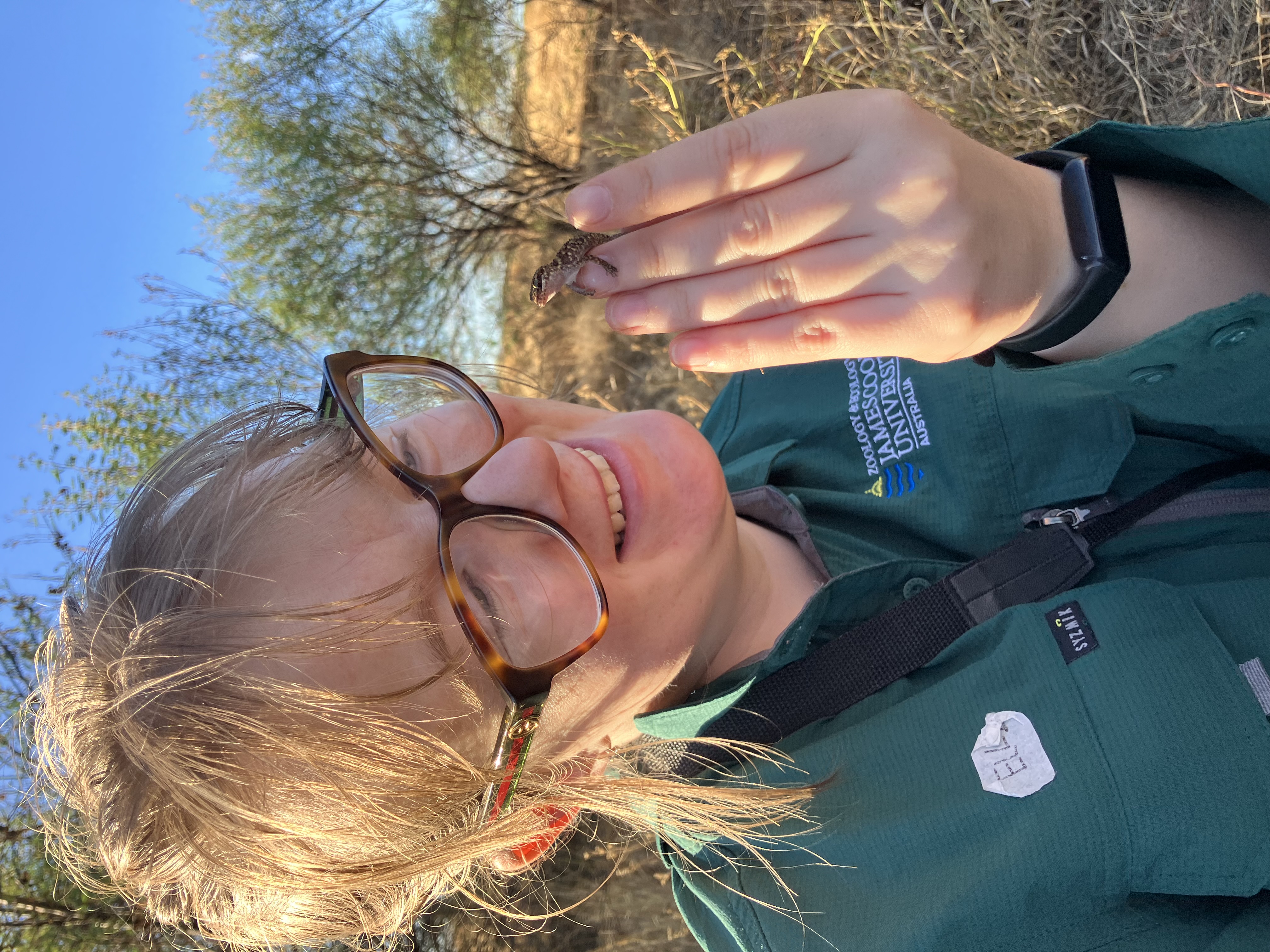
Elle Robertson
- Doctor of Philosophy (Agriculture, Environmental and Related Studies)
- elle.robertson@jcu.edu.au
Romain Vaucher
- Senior Lecturer, Sedimentology
- romain.vaucher@jcu.edu.au
Jenny Fisher
- Associate Dean, Learning and Teaching
- jenny.fisher@jcu.edu.au
Ambili Narayanan
- Doctor of Philosophy (Natural and Physical Sciences)
- ambili.narayanan@my.jcu.edu.au

Sarfaraz Ali
- Postdoctoral Research Fellow
- sarfaraz.ali@jcu.edu.au
Mikaeylah Davidson
- Postdoctoral Research Fellow
- mikaeylah.davidson@jcu.edu.au
Liuxin Chen
- Lecturer
- liuxin.chen@jcu.edu.au
Rafael Cabral Carvalho
- Lecturer, Marine Geoscience
- rafael.cabralcarvalho@jcu.edu.au
Tom Lloyd
- Postdoctoral Research Fellow, Global Ecosystems
- tom.lloyd@jcu.edu.au
Spatio-temporal statistical methods for producing OCO-2/OCO-3 Level 3 and Level 4 estimates
Spatio-temporal statistical methods for producing OCO-2/OCO-3 Level 3 and Level 4 estimates -- Science Team Membership
Using NASA aircraft observations to improve understanding of biogenic VOC chemistry and aerosols over the eastern US, and to increase the value of related satellite observations
Using NASA aircraft observations to improve understanding of biogenic VOC chemistry and aerosols over the eastern US, and to increase the value of related satellite observations
SEAC4RS mission support using the nested GEOS-Chem chemical transport model
SEAC4RS mission support using the nested GEOS-Chem chemical transport model
Novel methods for crown-of-thorns starfish management to contain emerging outbreaks in the Lizard Island region
Population irruptions of crown-of-thorns starfish (CoTS) are a major cause of coral mortality on the Great Barrier Reef (GBR), contributing to ongoing reef degradation. There is, therefore, a concerted effort to manage CoTS on the GBR, but established surveillance and culling activities are largely ineffective for dealing with relatively low densities of CoTS. This project will pioneer novel culling methods to contain emerging population outbreaks of CoTS in the Lizard Island region. This research will not only directly contribute to improved management of the GBR, but will be conducted alongside existing CoTS management programs to maximize application and uptake of proposed methods.
Dugong population genetic services to Parque Nacional do Arquipélago do Barzaruto, Moçambique - 2
Provision of research support to estimate genetic diversity and assess changing population sizes on 15 dugong tissue samples (11 skin, 4 tissue) collected from Moçambique.
The work will include DNA extractions, genomic sequencing, bioinformatic analyses, and interpretation in a written report. The work is designed to enable comparison with existing estimates of dugong genetic diversity and population size changes.
Specific bioinformatic analyses include:
Genetic diversity estimates
- heterozygosity
- genome-wide nucleotide diversity
- runs of homozygosity (inbreeding indicator)
Population size change estimates
- Tajima’s D
- Multi sequential Markovian Coalescent analyses
- Gone analyses (to estimate recent effective population size changes)
Improving land condition across Southern Gulf rangelands to build resilience to variable and extreme climate
Grant: https://www.business.qld.gov.au/running-business/environment/natural-resource-funding/apply#key-dates
Project description:
Recent extreme climatic events (e.g., the 2019 flood and preceding drought, and the 2023 flood) have had a devasting impact on the Southern Gulf’s grazing industry and local communities, as well as the health and functioning of the region’s sensitive natural assets, including soils, pastures, water, and biodiversity. The occurrence and severity of such extreme climatic events are predicted to increase into the future. The overarching aim of the project is to build resilience in Southern Gulf rangeland production systems to better manage climate variability and extreme climatic events, through improving land condition. Land that is maintained in good condition is less susceptible to severe impacts associated with extreme climatic events and recovers more quickly after events occur. To achieve improved land condition across the region, the project will work directly with X land managers to implement on-ground land management practice changes and/or remediation treatments, spanning an estimated area of X. The effectiveness of these interventions will be rigorously monitoring and evaluated, and the data made publicly available. Key learnings and outcomes will be passed on to the other landholders, NRM groups, Government extension staff and researchers through demonstration sites, field days, communications materials, scientific publications, and capacity building events. Overall, the project will provide much needed new knowledge, information, data, tools, and capacity to better manage and respond to climate variability and extreme climatic events across the Southern Gulf region, and other parts of northern Australia.
Electron scattering and transport for plasma-liquid interactions (Old ID 23301)
The project addresses the emerging technologies associated with the interaction of plasmas with liquids and biological matter, including plasma medicine. The project expects to generate new knowledge on the role of electron-induced processes through the development of complete and accurate sets of microscopic cross- sections for electrons with biomolecules within tissue. This microscopic data will inform new microscopic models for non equilibrium electron transport in liquids and biological matter, and its coupling to plasmas. The expected outcomes of this project include progress towards the optimization of safety/efficacy of future generation plasma medicine devices through detailed understanding of plasma-biological tissue interactions.
Do tropical conifers differ fundamentally from angiosperms in CO2 response?
ARC Discovery Expression of Interest - DP250100943
Development of a culture based fishery for giant freshwater prawn in Sri Lankan reservoirs (Old ID 23638)
Giant freshwater prawn (GFWP) - Macrobrachium rosenbergii is a high value aquaculture species suited to culture-based fishery stocking into reservoirs in Sri Lanka. The project will develop a science based stocking strategy of hatchery reared juvenile prawns, to improve the yields of GFWP in reservoirs and design and use of fishing gear that will prevent damage to the animals. Socio-economic research will lead to a better understanding of the value chain to enable further improvements to the fishery. The research will ensure the fishery is profitable, efficient and sustainable in the long term. The research is part of an ACIAR Small Research Activity (SRA) that will form the basis of a larger, full four year project to follow on in 2019.
Does genome rearrangement enable adaptation in times of environmental change?
This project aims to investigate the role of genomic rearrangement in adaptation of marine animals during times of rapid past environmental change. By employing long-read genomic sequencing, powerful demographic analyses, and eco-evolutionary modeling this project expects to generate new knowledge regarding the impact of structural variation on population persistence during future environmental change. Expected outcomes of this project include models of future scenarios including climate change and the consequences of proposed genomic interventions. This should provide significant benefits for informing management interventions including assisted gene flow and assisted evolution.
Public health and well-being in public open spaces through climate responsive urban planning and design
- 2020
- City space architecture
- Researchers:Silvia TavaresDave Sellars
Title:
International speaker x 7
Start Date:
01 Jan 2014
Title:
National Speaker x 6
Start Date:
01 Jan 2014
Title:
A*STAR visitor
Start Date:
01 Jan 2018
Title:
Digital Twin Student , CISRO
Start Date:
25 Jun 2024
Start Date:
01 Jan 2022
Title:
Malayalam
Title:
English
Title:
Tamil
Title:
Hindi