
College of Medicine & Dentistry

Vicki Dunk
- Lecturer, Biomedicine
- vicki.dunk@my.jcu.edu.au

Joyce Cooper
- Associate Professor, Pharmacy
- joyce.cooper@jcu.edu.au

Michael Robinson
- JCU Lecturer
- michael.robinson@jcu.edu.au

Shaun Solomon
- Senior Lecturer, Indigenous Health
- shaun.solomon1@jcu.edu.au

Manjunath Rajashekhar
- Senior Lecturer in Clinical Dentistry and Dental Public Health
- manjunath.rajashekhar@jcu.edu.au

Stephanie King
- Senior Research Officer, Indigenous Health
- stephanie.king1@my.jcu.edu.au

Aileen Traves
- Head of Clinical School, Cairns
- aileen.traves@jcu.edu.au

Nalita Turner
- Research Officer
- nalita.turner@jcu.edu.au

Bunmi Malau-Aduli
- JCU Professor
- bunmi.malauaduli@jcu.edu.au
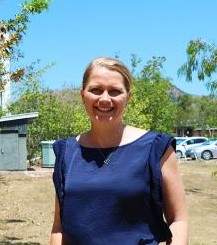
Amanda Mackay
- Rural Pharmacy Liaison Officer
- amanda.mackay@jcu.edu.au
Investigating a potential viral aetiology for the development of multi-focal chondro-osseous proliferations in lovebirds
From the year June 2017 – 2024, 25 lovebirds (Agapornis roseicolli) presented for multi-focal, proliferative bony masses across two veterinary clinics in Australia and Europe (Melbourne Bird Veterinary Clinic, Victoria, Australia; and Ecole Nationale Vétérinaire d’Alfort, Maisons-Alfort, France, respectively).
Understanding the virome and microbiome of the Australia's most endangered psittacine parrots
This project focuses on understanding the virome and microbiome of Australia’s most endangered psittacine parrots to enhance conservation efforts. Using advanced next-generation sequencing (NGS) technologies, we aim to characterize the viral and microbial communities within these birds, identifying known and novel pathogens and assessing their potential impacts on health and survival. The study will explore the interplay between host genetics, environmental factors, and microbial ecosystems, offering insights into disease dynamics. This foundational knowledge will inform targeted disease management strategies and conservation plans, helping safeguard these iconic species against extinction threats posed by infectious diseases and environmental changes.
Ending the neglect – setting the platform for strongyloidiasis elimination in Australia
Strongyloidiasis is caused by parasitic nematodes (roundworms) of the genus Strongyloides and is considered to be one of the most neglected of the neglected tropical diseases (NTDs). There are two main Strongyloides species that cause human infection; S. stercoralis and S. fuelleborni. In Australia, S. stercoralis is the infecting species that disproportionately affects remote Indigenous communities, with the prevalence ranging from 10-60%. The lifecycle and transmission is complex with both a parasitic cycle and a free-living cycle. This is further complicated by autoinfection and the possibility of zoonotic transmission– recent genetic evidence suggests the possibility of a dog reservoir. These factors coupled with less than ideal diagnostics and treatment options (Ivermectin and Albendazole) where there is evidence of treatment failures, the spectre of emerging resistance and their inability to prevent reinfection, all have implications for control and elimination efforts.
It is our central thesis that strongyloidiasis is a zoonotic neglected tropical disease of public health importance in Australia and that an integrated interdisciplinary “One Health” approach is required for its elimination.
Beyond the bump: Leveraging social media to build positive perinatal mental health in regional, rural and remote North Queensland women
This project aims to codesign, develop, and evaluate a preventative intervention to address mental health among perinatal women in regional, rural, and remote (RRR) areas. Co-designed with RRR perinatal parents and mental health professionals, the intervention will deliver a established psychotherapeutic techniques that are effective for preventing perinatal depression and anxiety (psychoeducation and behavior change on health literacy, interpersonal therapy) at-scale, tailored to the unique needs of the RRR maternity and mental health system. The evaluation will assess the feasibility, reach, engagement, and acceptability of the intervention, enabling a future larger-scale efficacy and implementation trial.
A study of Waldenström macroglobulinaemia in Queensland
Waldenström macroglobulinaemia (WM) is a rare type of Lymphoplasmacytic lymphoma (LPL) characterised by bone marrow and an IgM monoclonal gammopathy. To date, no review of this disease within an Australian population has ever been performed. This research seeks to report epidemiological information from 2001-2020. Records will be sourced from each State and Territory cancer registry and be released by the Australian Cancer Database (ACD).
Data collection will be funded using the Australian Institute of Medical Scientists (AIMS) Research Seeding Grant, with an awarded value of $2,500. A quote supplied by the ACD dated 18/07/2024 estimates this cost to be $1,869.
Are Australians in midlife ready to implement Lifestyle Medicine to improve their health and wellbeing?
The global population is ageing and with an ageing population comes an increase in the prevalence of non-communicable diseases. An opportune life stage to reduce the burden of non-communicable diseases in older age is midlife. Addressing these health issues at this midlife stage can help with the transition into a healthier older age. Lifestyle Medicine (LM) can be used as a method of managing overall health and wellbeing as well as preventing chronic disease. Despite what is known about the increase in chronic diseases and the high potential of LM, LM is still not utilised enough in healthcare. This student led project aims to understand what Australians in midlife know about Lifestyle Medicine (LM) and examine attitudes towards using LM to improve health and wellbeing. This research will add to the knowledge of acceptance of LM in midlife, to inform future health interventions.
Are Australians in midlife ready to implement Lifestyle Medicine to improve their health and wellbeing?
The global population is ageing and with an ageing population comes an increase in the prevalence of non-communicable diseases. An opportune life stage to reduce the burden of non-communicable diseases in older age is midlife. Addressing these health issues at this midlife stage can help with the transition into a healthier older age. Lifestyle Medicine (LM) can be used as a method of managing overall health and wellbeing as well as preventing chronic disease. Despite what is known about the increase in chronic diseases and the high potential of LM, LM is still not utilised enough in healthcare. This student led project aims to understand what Australians in midlife know about Lifestyle Medicine (LM) and examine attitudes towards using LM to improve health and wellbeing. This research will add to the knowledge of acceptance of LM in midlife, to inform future health interventions.
Outcomes of SGLT-2 Inhibitor induced Euglycaemic Diabetic Ketoacidosis in North Queensland Intensive Care Units: a Retrospective Cohort Study
This study will examine all ICU outcomes, including but not limited to; mortality, length of stay, use of ventilator, pertaining to SGLT-2 inhibitor induced
euglycaemic ketoacidosis over a period of 8 years at the nominated study sites. A secondary aim will be to compare these findings to ICU outcomes of
diabetic ketoacidosis patients, sex/age/co-morbidity matched. The data will be analysed to primarily determine differences between both groups, with the
aim to develop an understanding of the unique natural history and risk factors of euglycaemic ketoacidosis.
Outcomes of SGLT-2 Inhibitor induced Euglycaemic Diabetic Ketoacidosis in North Queensland Intensive Care Units: a Retrospective Cohort Study
This study will examine all ICU outcomes, including but not limited to; mortality, length of stay, use of ventilator, pertaining to SGLT-2 inhibitor induced
euglycaemic ketoacidosis over a period of 8 years at the nominated study sites. A secondary aim will be to compare these findings to ICU outcomes of
diabetic ketoacidosis patients, sex/age/co-morbidity matched. The data will be analysed to primarily determine differences between both groups, with the
aim to develop an understanding of the unique natural history and risk factors of euglycaemic ketoacidosis.
Melioidosis on the move: Informing the public health response.
Melioidosis is an often fatal infectious disease acquired from the environment and cases are rising in Australia. It mostly affects people living in regional locations who suffer from conditions like diabetes. Without the correct treatment, people die so awareness that this disease exists in communities is important for successful outcomes. This study will use innovative microbiology, genome and public health tools to detect and predict current and future melioidosis risk across the country
Will helminth co-infection modulate COVID-19 severity in endemic regions?
- 2020
- Nature Publishing Group
- Researchers:Richard Bradbury
Where Have All the Diagnostic Morphological Parasitologists Gone?
- 2022
- American Society for Microbiology
- Researchers:Richard Bradbury
Title:
Men are shaving off their eyelashes on TikTok, here's why that might be a bad idea, The Conversation
Start Date:
14 May 2025
Start Date:
15 May 2025
Start Date:
03 Jun 2025
Start Date:
01 Jan 2012
Title:
Grants Review
Start Date:
01 Jan 2024
End Date:
01 Jan 2024
Title:
Public Health Advocacy
Start Date:
01 Jan 2024
End Date:
01 Jan 2024
Start Date:
16 Jun 2025