
College of Medicine & Dentistry
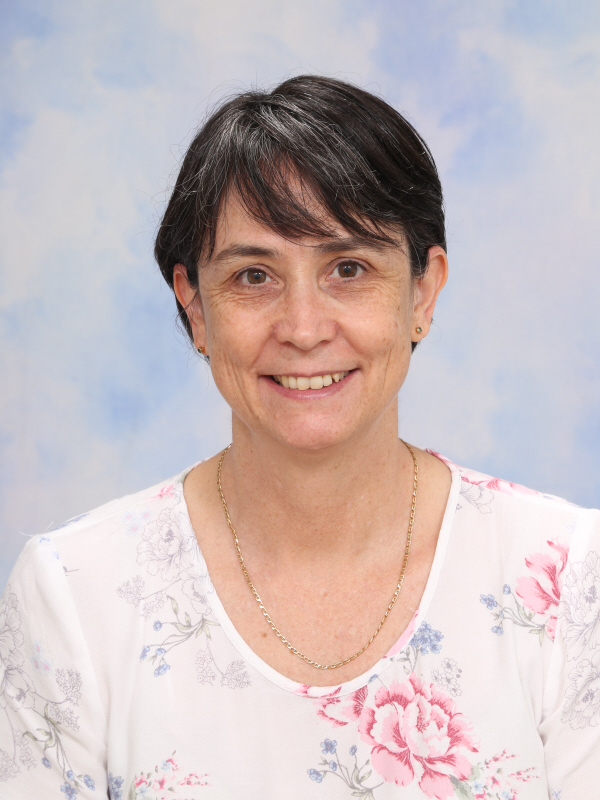
Vicki Dunk
- Lecturer, Biomedicine
- vicki.dunk@my.jcu.edu.au

Joyce Cooper
- Associate Professor, Pharmacy
- joyce.cooper@jcu.edu.au

Michael Robinson
- JCU Lecturer
- michael.robinson@jcu.edu.au

Shaun Solomon
- Senior Lecturer, Indigenous Health
- shaun.solomon1@jcu.edu.au

Manjunath Rajashekhar
- Senior Lecturer in Clinical Dentistry and Dental Public Health
- manjunath.rajashekhar@jcu.edu.au

Stephanie King
- Senior Research Officer, Indigenous Health
- stephanie.king1@my.jcu.edu.au

Aileen Traves
- Head of Clinical School, Cairns
- aileen.traves@jcu.edu.au

Nalita Turner
- Research Officer
- nalita.turner@jcu.edu.au

Bunmi Malau-Aduli
- JCU Professor
- bunmi.malauaduli@jcu.edu.au
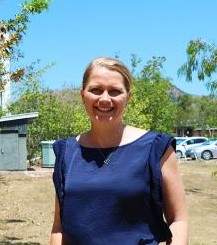
Amanda Mackay
- Rural Pharmacy Liaison Officer
- amanda.mackay@jcu.edu.au
Suspected Pulmonary Embolism Exclusion with D-dimers in Emergency Departments (SPEED-ED)
Pulmonary embolism (PE) is defined as obstruction of the pulmonary artery or one of its branches, most often by blood clot circulating from a distant site. Acute PE is common, potentially fatal and is associated with a major global burden of disease. predicted to increase in an ageing society Global hospital admission rates have also increased in recent years. The clinical presentation of PE is non-specific due to an overlap of clinical features with other conditions and can vary from asymptomatic to sudden death, meaning the diagnosis is both challenging to make, and important. This has resulted in the development of clinical decision rules (CDRs) and algorithms to aid the diagnostic process and minimise practice variation. These rules employ a combination of clinical probability assessment, laboratory plasma D-dimer measurement and imaging modalities like Computed Tomography Pulmonary Angiography (CTPA) or Ventilation-Perfusion(V/Q) scan. Modified Wells’ score,
Revised Geneva Score, Pulmonary Embolism Rule out Criteria (PERC) and Age-adjusted D-dimer threshold are the major validated CDRs in current clinical use that aim to improve consistency and minimise variation.
Leveraging NQ telehealth experience for contextually-informed process guidelines to optimise health service access, quality and safety in rural and remote Australia
Use of telehealth in north Queensland has evolved early and rapidly in response to the health service needs of a culturally diverse population spread over a large area. This project maps knowledge about existing telehealth usage, examines strategies for safe and high quality use, including cultural acceptability and co-develops guidelines for health care providers and consumers for the optimal usage of telehealth across north Queensland. This is likely to be applicable across other RRR areas.
Seed funding -improving stroke management by characterising the ischaemic penumrba proteome.
Current therapies for stroke work by restoring the blood supply to the brain to rescue oxygen-starved tissue at risk of dying (known as the ischaemic penumbra). Consumer groups highlight that therapies to slow the death of cells in the penumbra is a priority, however, surprisingly little is known about the biology of this tissue. This study will utilise laboratory models of stroke, and apply modern imaging, proteomic and bioinformatic approaches to characterise the major pathways driving penumbra phenotype. Generated data will provide a world's first perspective into penumbra biology as an important foundation for subsequent grants seeking to test potential therapuetic targets.
Comparison of PoCT for salivary cortisol with Salimetrics ELIZA Salivary Cortisol
Salivary cortisol has always been a useful tool for measuring and monitoring stress in individuals particularly in a research setting. This tool is now very much moving into a diagnostic setting with the use of salivary and hair cortisols as a part of routine psychiatric investigation. Methodological validation is important to ensure that the methods employed in research trials are validated to a standard expected in pathology laboratories and recommended by ISO15189 and local guidelines. This project will utilise salivary cortisol samples collected for two ongoing research trials to validate the Salimetrics Salivary Cortisol assay and provide researchers with quality assurance around their results.
Enhancing notification-driven linkage to care for people living with hepatitis C in Queensland: System constraints and solutions
This project aims to identify and address system barriers hindering the effective use of notification data to identify individuals with untreated hepatitis C (HCV) infection in Queensland, Australia. The study will focus on improving surveillance and linkage to care processes.
Despite the availability of curative treatments, HCV remains a significant public health issue, particularly among high-risk populations. Current surveillance systems and case definitions are inadequate for identifying individuals with active HCV infection who require treatment.
The project involves a comprehensive approach, including a literature review, system mapping, and gap analysis of the Queensland HCV surveillance system. Additionally, a pilot study will analyze HCV notification data to inform potential data outputs and system improvements.
The ultimate goal is to develop recommendations for enhancing HCV surveillance and linkage to care in Queensland, contributing to Australia’s HCV elimination targets
Global, regional, and national burden of stroke and its risk factors, 1990–2021: a systematic analysis for the Global Burden of Disease Study 2021
- 2024
- Lancet Publishing Group
- Researchers:Richard FranklinKehinde ObamiroIyke Emeto
Title:
Men are shaving off their eyelashes on TikTok, here's why that might be a bad idea, The Conversation
Start Date:
14 May 2025
Start Date:
15 May 2025
Start Date:
03 Jun 2025
Start Date:
01 Jan 2012
Title:
Grants Review
Start Date:
01 Jan 2024
End Date:
01 Jan 2024
Title:
Public Health Advocacy
Start Date:
01 Jan 2024
End Date:
01 Jan 2024
Start Date:
16 Jun 2025