
College of Medicine & Dentistry
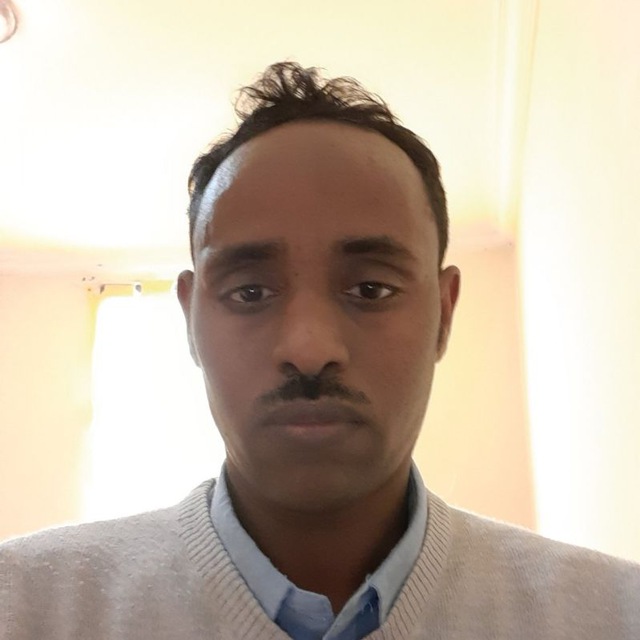
Semagn Abate
- Doctor of Philosophy (Health)
- semagn.abate@my.jcu.edu.au

Joseph Kamara
- Senior Lecturer Disaster Health and Humanitarian Assistance
- joseph.kamara@jcu.edu.au

Eric Kalo
- Lecturer Medical Education
- eric.kalo@jcu.edu.au

Erin Waters
- JCU Associate Professor
- erin.waters@jcu.edu.au

Kannan Maharajan
- Associate Professor, Pharmacy
- kannan.maharajan@jcu.edu.au

Fahmida Begum Mina
- Doctor of Philosophy (Medical, Molecular and Veterinary Sciences)
- fahmidabegum.mina@my.jcu.edu.au

Lynsey Brown
- Adjunct Senior Lecturer
- lynsey.brown@jcu.edu.au

Ali Isin
- Adjunct Senior Research Fellow
- ali.isin@jcu.edu.au

Muideen Olaiya
- Senior Research Fellow
- muideen.olaiya@jcu.edu.au

Mila Grinblat
- Postdoctoral Research Fellow
- mila.grinblat@jcu.edu.au
Research capacity building for control of neglected tropical diseases: A path for sustainable societies on the tropics (Old ID 27483)
The international community has pledged through the Sustainable Development Goals to eliminate neglected tropical diseases (NTDs) by 2030. NTDs are distributed in several regions in the world, including Oceania and The Americas, and are estimated to affect close to 2 billion people. Guatemala and Queensland, Australia share similar ecological and tropical environments that enhances their susceptibility to epidemics caused by NTDs, particularly considering the effect of climate change. The Universidad del Valle de Guatemala (UVG) and James Cook University (JCU) will conduct a project to build NTDs data analysis capacity and support the efforts of early and middle career researchers to conduct collaborative research in Australia and Guatemala. The project consists of a mixture of online workshops and online research meetings.
Genomics of lung cancer in Indigenous people of North Queensland (Old ID 26764)
Cancer genomic profiling is a major determinant of chemotherapy selection for non-small cell lung cancer and is widely used internationally. Indigenous genomes carry ~10X more uncharacterised DNA sequence variation than people of European heritage. THHS is currently trialling the use of whole exome sequencing, instead of the existing 4 gene panel, to base choice of targeted therapies in lung cancer. This creates an opportunity to study whether the cancer-associated variation currently being used to select therapies is adequate, and if not, these data will form the foundation for an NHMRC funding application to identify improved markers.
Identifying the roles of online communities in rural resilience (Old ID 26434)
The role of online communities in helping rural people to overcome isolation and service inaccessibility, and in identifying service priorities, is the study focus. We will apply social media data analytics to study seven diverse examples of online communities, to inform what rural people discuss, where, when and in different online communities and to identify the impact of online communities in addressing rural resilience. Findings will inform workshops with online hosts to develop and test a 'best practice toolkit' to inform future online community data analy6tics. The project's outcomes will be to: extend knowledge about roles of online communities for realising rural resilience and providing data to inform service innovations.
Australian Defence Force Heat Tolerance Testing (Old ID 20420)
This agreement will enable Dr Melissa Crowe and associated staff of the Institute of Sport and Exercise Science at JCU to provide heat tolerance testing for member of the Australian Defence Force who may have suffered heat stroke in accordance with policy from the Australian Defence Force Joint Health Command.
Health system governance and tuberculosis control in the Torres Strait: an institutional analysis (Old ID 26306)
Using institutional analysis, the project will address a gap in knowledge regarding the nature and robustness of health system governance for tuberculosis (TB) control in the Torres Strait Protected Zone. The Torres Strait Protected Zone is an area of strategic public health importance due to high rates of TB and multi-drug resistant TB and proximity to Papua New Guinea where the disease is endemic. The project will identify and characterise the role(s) of different stakeholders and evaluate the formal and informal rules that drive TB-related decisions in this unique cross-border region. In doing so, it will deliver critical insights into the resilience and adaptive capacity of health system responses to TB, and produce recommendations to strengthen governance capabilities to counter existing and emerging communicable disease threats.
Implementation of quality improvement in Indigenous primary health care: Leveraging Effective Ambulatory Practices (LEAP) (Old ID 23468)
Despite increased policy attention and funding, not all primary healthcare (PHC) services for Indigenous Australians show the desired improvements in quality of care. Practices which provide PHC services are complex systems and emerging evidence indicates many things affect quality improvement. There remains a knowledge gap regarding what is required for Indigenous PHCs to succeed in improving the quality of their services and, subsequently, health outcomes for their patients. This project will capitalise on emerging research and existing strong partnerships to provide a solid evidence base for interventions to improve quality of priority health services in Indigenous PHC settings.
The role of non-neutralising ADCC antibodies in the treatment of human influenza B virus (IBV) infection with anti-influenza hyperimmune immunoglobulin (Flu-IVIG) (Old ID 26827)
Antibody-dependent cellular cytotoxicity (ADCC) and other Fc-mediated antibody functions are increasingly recognised as potential mediators of influenza immunity. However, a definitive role for ADCC antibodies during severe human influenza infection remains unclear. The INSIGHT006 study (NCT02287467) provides a unique platform to examine the impact of neutralising and non-neutralising ADCC antibodies, delivered by Flu-IVIG, on outcomes of severe human influenza.
Progressing health equity through strengthening the Aboriginal and Torres Strait Islander Health Workforce (Old ID 27906)
This collaborative TAAHC project aims to build on QH led Health Equity Strategies and plans within each of the partner HHSs in nQ through co-designed Aboriginal and Torres Strait Islander health workforce plans to strengthen recruitment, retention and career pathways for Aboriginal and Torres Strait Islander staff (clinical and non-clinical) within HHSs, and also strengthening the capacity of non-Indigenous staff to work respectfully with Aboriginal and Torres Strait Islander colleagues.
Causes of multiple scelerosis: A functional genomics approach (Old ID 21267)
Multiple sclerosis (MS) is a chronic disease that damages the brain and spinal cord and can cause numbness, muscle weakness, difficulties with coordination and balance, problems with speech and swallowing, visual problems, fatigue and bladder and bowel difficulties. After a worldwide effort, a large number of multiple sclerosis genes have been localised in the human genome. This project examines two of these genes in more detail with the aim of identifying exactly how they contribute to the risk of developing MS.
Sequence identification of a new virus impacting the crayfish industry for RNAi intervention. (Old ID 22431)
The crayfish industry is set to bloom as hatchery technology has started to sustainably produce craylings to stock farms. Both hatchery and table demand for crayfish are completely unmet with farm gate prices consistently at $34/kg with a huge potential market. The crayfish industry has a pressing issue of chronic, stress-related mortality events. We have identified a positive sense, single stranded RNA virus (+ve ssRNA) from partial sequences taken from these crayfish. Crayfish cannot be vaccinated against this virus due to a lack of B-cell lineage (antibody producing cells). However, we can use RNA interference (RNAi) to knock down the load of the virus to a minimum, manageable load. To do this, we need to know the sequence of the virus. Positive ssRNA viruses make up about 1/3 of the virosphere, so we cannot assume what virus are likely to have in our crayfish based on our preliminary viral sequence.
Weedy Life: Coloniality, Decoloniality, and Tropicality
- 2023
- James Cook University
- Researchers:Rosita HenrySimon FoaleKris McBain-Rigg
A Paradigm Shift for Rheumatic Heart Disease: Role of Group G Streptococcus
- 2018
- Chattogram Veterinary and Animal Sciences University
- Researchers:Suchandan SikderCatherine Rush
Group G streptococcus induces autoimmune mediated carditis in the Lewis rat model of Rheumatic Heart Disease
- 2017
- Lancefield International Society
- Researchers:Suchandan SikderCatherine Rush
Anti-streptococcal antibodies and T-cells induce heart pathology in Lewis rats following adoptive transfer
- 2017
- Lancefield International Society
- Researchers:Suchandan SikderCatherine Rush
Adenosine, lidocaine and Mg2+ update: teaching old drugs new tricks
- 2023
- Frontiers Research Foundation
- Researchers:Jodie MorrisHayley Letson
Reshaping curriculum delivery to transition to a multiple campus MBBS program
- 2023
- Australian & New Zealand Association for Health Professional Educators
- Researchers:Karen CarlisleHaleagrahara Nagaraja
Start Date:
01 Jan 2002
Start Date:
01 Jan 2001
End Date:
01 Jan 2003
Start Date:
01 Jan 1996
Start Date:
01 Jan 1996
End Date:
01 Jan 2000
Start Date:
01 Jan 2002
End Date:
01 Jan 2009
Start Date:
01 Jan 2003
End Date:
01 Jan 2004
Start Date:
01 Jan 1996
End Date:
01 Jan 2001
Start Date:
01 Jan 2011
Start Date:
01 Jan 2007
Start Date:
01 Jan 1998
End Date:
01 Jan 2001