
JCU Singapore

Jose Domingos
- Professor/Principal Research Fellow Aquaculture and Deputy Director TFI
- jose.domingos1@jcu.edu.au

Thimo Ruethers
- Senior Research Fellow Human Health & Aging
- thimo.ruethers@jcu.edu.au

Ai Ni Teoh
- Academic Head for School of Social and Health Sciences/Associate Professor
- aini.teoh@jcu.edu.au

Chris Durden
- Associate Professor Business
- chris.durden@jcu.edu.au

Victor Wong
- JCU Lecturer / Manager Psychology Clinic
- victor.wong2@jcu.edu.au

Sherry Aw
- Senior Lecturer Psychology
- sherry.aw@jcu.edu.au

Davinder Gill
- Clinical Supervisor
- davinder.gill@jcu.edu.au

TY Thong
- Lecturer Business
- ty.thong@jcu.edu.au

Alexander Josiassen
- Professor Marketing
- alexander.josiassen@jcu.edu.au
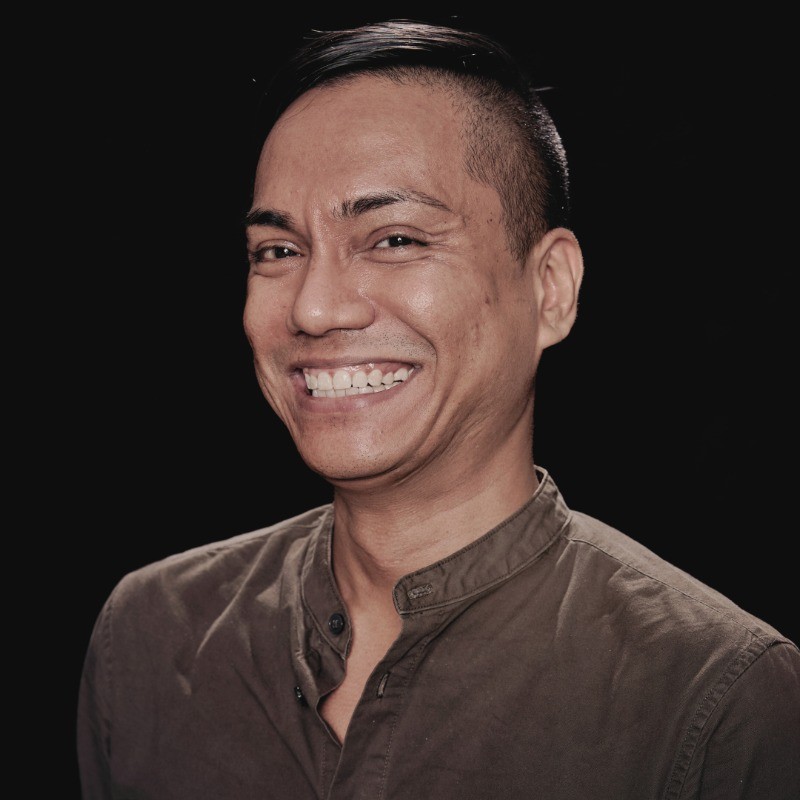
Muhamad Alif Bin Ibrahim
- Adjunct Research Associate
- muhamadalif.binibrahim@jcu.edu.au
High frequency analysis of financial stress index of ASEAN-5
This study aims to construct financial stress index (FSI) for ASEAN-5 countries (Indonesia, Malaysia, the Philippines, Singapore, and Thailand), taking into consideration time-varying correlations across different financial market segments. The expected outcome of this study is to obtain a reliable set of daily financial stress index which would enable us to quantify financial stresses facing the region in the COVID-19 period. Given the fast-evolving situation during the COVID-19 pandemic, it is imperative to develop a high-frequency dataset that can monitor the potential frailty of the regional financial markets in a real-time manner.
Determinants of Economic Policy Uncertainty (EPU) Spillovers and Spillbacks
We propose a research study of EPU with three key objectives. First, this research aims to investigate the cross-country connectedness of EPU based on Diebold and Yilmaz's (2012) methodology. Second, we will estimate both EPU spillovers (risks transmitted to other countries) and EPU spillbacks (risks received from other countries) for each country in the sample. This may provide insight into asymmetric EPU propagation between emerging and advanced economies. Third, this study aims to examine the determinants of EPU spillovers and spillbacks using the panel data regression technique.
Mind your own business, you are a pest! A study on workplace nosiness and its impact on employees
Workplace nosiness has been increasingly recognized as a detrimental factor affecting employee mental health and productivity. Studies have shown that intrusive behaviors lead to higher stress levels, decreased job satisfaction, and lower productivity. Despite this recognition, there is a lack of comprehensive research that systematically examines the antecedents, types, and impacts of workplace nosiness across different organizational contexts. This study aims to fill this gap by providing a detailed analysis of workplace nosiness and its effects. The research will contribute to the existing body of knowledge by identifying specific behaviors and practices that constitute workplace nosiness, demonstrating the direct and indirect impacts of nosiness on key employee outcomes, and offering practical recommendations for managers and organizations to address and reduce nosiness.
Fish Detection Conference
. In the evolving landscape of aquaculture, maintaining optimal fish health is pivotal for sustainability and productivity. Traditional health monitoring methods are labor-intensive and subject to human error, leading to inconsistencies in early disease detection and treatment. Utilizing the data obtained from James Cook University Singapore Aquaculture Laboratory consisting of videos of seabass (Dicentrarchus labrax) movements. We implemented a YOLOv8-based detection system to facilitate faster and more accurate detection of seabass under typical farming conditions. Our results demonstrate the effectiveness of this approach, achieving a mean Average Precision (mAP) at the 50th percentile intersection over union (IoU) threshold of 0.824 and a mAP between the 50th and 95th percentiles of 0.358. Future work will focus on expanding this detection system to perform real-time behaviour analysis through fish trajectory tracking under various environmental conditions, enhancing early disease detection capabilities.
Dolphin-watching tourism as an alternative or supplemental livelihood to marginalised artisanal fishers in Indonesia
Jointly funded by Conservation Strategy Fund (Indonesia) & James Cook University (JCUA-JCUS). This project reflects on testimonials of marginalized artisanal fishers, who have adopted dolphin-watching tourism as a supplementary livelihood in Kiluan, Lampung in Indonesia. Predominantly, marginalized, owing to extreme poverty, unsafe working conditions, for a diminishing resource against powerful industrial large-scale fishers; these fishers’ merit to be included in discourses of empowerment and livelihoods. Dolphin-watching tourism is occupationally close and has the potential of being an ideal supplementary livelihood, this study explored to ascertain its potential to contribute to social empowerment and eliminate injustices.
Regenerative cross- border tourism post COVID 19
This project was funded as a JCUS-JCUA cross campus collaboration grant. This exploratory study aims to investigate opportunities for regenerative tourism in SIJORI (Singapore, Johor, and Riau Islands) context. Given calls for a paradigm shift towards ‘regenerative’ tourism, a system that goes beyond sustainability and its shortfalls. Regenerative tourism is a system that places importance on societal wellbeing and the environment and provide social, environmental and economic benefits without increasing concerns for climate change.
Why does your study matter? Developing doctoral writing with Legitimation Code Theory
Why does your study matter? Developing doctoral writing with Legitimation Code Theory - This research focuses on raising student awareness of how to articulate and construct the rationale for a doctoral thesis. Rationale statements do not necessarily appear as a stable section or chapter in a thesis in the way that, for instance, the literature review does. This can make it an obscured and overlooked aspect of the thinking and writing process early in the research process. The workshop that forms the basis of this project seeks to address this blind spot. The workshop aims to improve doctoral writing by developing a teaching approach using Legitimation Code Theory (LCT), a framework for educational research and practice (Maton 2014). The session draws insights and examples from doctoral work conducted originally at the University of Sydney (Wilmot 2019) and will be taught in three different international contexts: the UK (Durham University), Singapore (James Cook University) and South Africa (Rhodes University). The workshop tutors are experts in the use of LCT in educational contexts and include the author of the PhD study on which the project is based.
Effects of Visitor Health Risk Perception, Destination Image and Future Travel Intentions post COVID-19
This research project investigates the effects of perceived health risk on destination image and on travel intention and the relationships between perceived health risks and travel intention to Singapore and other ASEAN destinations. The target population of this study is inbound visitors to ASEAN who had revised their travel plans due to COVID-19 pandemic. The study employs mixed methods approach and will be conducted over three phases.
Life history of the critically endangered ray bottlenose wedgefish Rhynchobatus australiae (Old ID 26572)
Management and conservation efforts for threatened species can be hampered by the lack of age, growth and maturity (life history) information. The bottlenose wedgefish, Rhynchobatus australiae, is a large coastal ray that is found throughout the Indo-Pacific. It is the most commonly caught wedgefish and it is retained in fisheries for its high valued fins and meat. It is classified as Critically Endangered by the IUCN Red List and faces an extremely high risk of extinction. However there is limited life history information available globally. This project will further the biological knowledge available for this species and can be used to help implement effective management and conservation measures.
Seafood Consumption and Production Trends – Singapore Market Study
The research project seeks to provide WWF-Singapore with detailed information around trends in seafood supply and apparent
consumption in Singapore, with a focus at the species level. The analysis will also involve the calculations around the volume of
certified and non-certified seafood imported into and exported from Singapore, disaggregated by species. The analysis will also seek
to both identify the sectors and respective major buyers that are importing seafood, and calculate seafood import volume (down to
species level) for each identified sector/buyer. Finally, the analysis will also seek to cover total production volume of local
aquaculture farms, disaggregated by species, and the market share of individual farms. The results from this study will be used to
inform WWF-Singapore’s seafood strategy
Changing role of public managers
- 2012
- Singapore Institute of Management
- Researchers:Adrian Kuah
Therapeutic animatron: interaction framework for making people happy
- 2011
- Cognitive Science Society
- Researchers:Insu SongDenise Dillon
Start Date:
01 Jan 2022
End Date:
01 Jan 2026
Start Date:
01 Jan 2014
End Date:
01 Jan 2016
Start Date:
01 Jan 2005
End Date:
01 Jan 2008
Start Date:
01 Jan 2018
End Date:
01 Jan 2021
Start Date:
01 Jan 2024
Start Date:
01 Jan 2024
Start Date:
01 Jan 2023
Start Date:
01 Jan 2017
End Date:
01 Jan 2018
Start Date:
01 Jan 2024
Start Date:
01 Jan 2024
End Date:
01 Jan 2025