
JCU Singapore School of Science and Technology
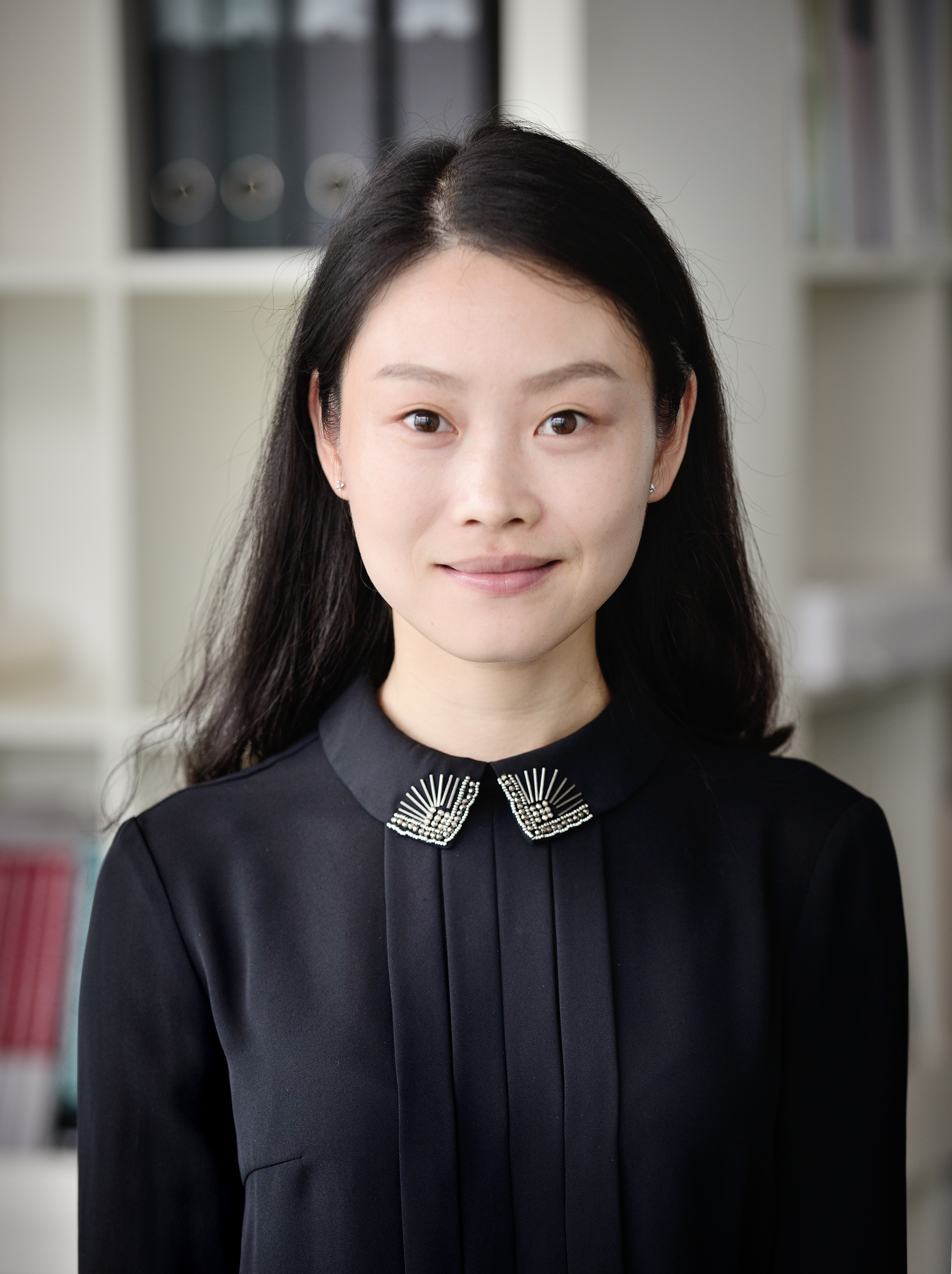
Lijuan Shen
- Senior Lecturer Information Technology
- lijuan.shen@jcu.edu.au

Erik Hormann
- Lecturer Mathematics
- erik.hormann@jcu.edu.au

Ghazalnaz Sharifonnasabi
- Lecturer, JCU Singapore
- ghazalnaz.sharifonnasabi@jcu.edu.au

Insu Song
- Senior Lecturer IT
- insu.song@jcu.edu.au

Neil Hutchinson
- Associate Professor
- neil.hutchinson@jcu.edu.au

Randy Zhu
- IT Lecturer
- randy.zhu@jcu.edu.au

Steve Kerrison
- Senior Lecturer Cybersecurity
- steve.kerrison@jcu.edu.au

Jusak Jusak
- Senior Lecturer loT
- jusak.jusak@jcu.edu.au

Fanny Yasumaru
- Senior Lecturer
- fanny.yasumaru@jcu.edu.au
Diversity, Distribution, Movement and Health of marine catfish (Ariidae) in the Eastern Johor strait
Singapore’s coastal waters, though limited in extent and heavily modified, support a surprisingly diverse assemblage of marine life that faces increasing pressure from coastal development, intensive maritime activity, and aquaculture expansion. Among these species, marine catfishes (family Ariidae) are an ecologically important yet overlooked group. Widely distributed across tropical and subtropical coasts, ariid catfish play crucial roles in benthic food webs as both predators and prey, linking estuarine, mangrove, and marine ecosystems. Despite their abundance and ecological importance, little is known about their population dynamics, habitat use, or conservation status in Singapore.
The conservation relevance of marine catfish extends beyond ecology. These fishes are venomous and are frequently encountered by recreational anglers and coastal users. Painful stings from their fin spines are a common risk, which highlights the importance of understanding their movement, abundance, and interactions with people. Addressing this knowledge gap will improve both biodiversity management and human–wildlife coexistence along Singapore’s shores.
This project will examine wild ariid catfishes in the Straits of Johor, where open-sea aquaculture farms overlap with natural habitats. By investigating their diversity, population connectivity, and ecological associations — including parasite and microbial communities — the study will generate essential baseline data on a locally important but poorly documented group.
This study will compare contemporary ariid species occurrence with historical records to assess temporal changes in distribution and community composition. Dietary analyses will clarify their trophic role within Singapore’s coastal food webs, providing insight into their functional role in nearshore ecosystems. Pathological and haematological profiling will establish the first baseline health dataset for wild ariid populations.
Together, these ecological and physiological data will provide foundational knowledge for understanding population status and informing future research, conservation and management efforts.
Seafood Consumption and Production Trends – Singapore Market Study
The research project seeks to provide WWF-Singapore with detailed information around trends in seafood supply and apparent
consumption in Singapore, with a focus at the species level. The analysis will also involve the calculations around the volume of
certified and non-certified seafood imported into and exported from Singapore, disaggregated by species. The analysis will also seek
to both identify the sectors and respective major buyers that are importing seafood, and calculate seafood import volume (down to
species level) for each identified sector/buyer. Finally, the analysis will also seek to cover total production volume of local
aquaculture farms, disaggregated by species, and the market share of individual farms. The results from this study will be used to
inform WWF-Singapore’s seafood strategy
Baseline Ecology and Population Assessment of Marine Catfish of the Channel Waters, Eastern Johor Strait
Singapore's coastal waters, though heavily modified, continue to support diverse marine life under increasing pressure from coastal development, maritime activity, and aquaculture. Among these species, marine catfishes (family Ariidae) are ecologically important components of coastal food webs, yet little is known about their distribution, abundance, habitat use, or movement patterns in Singapore.
This project will investigate wild ariid catfish populations in the western waters of Pulau Ubin. Through targeted surveys, species identification, and tag-recapture studies, the project will establish baseline data on species diversity, distribution, relative abundance, age and growth, and population connectivity. Historical records will be compared with contemporary observations to assess changes in species occurrence and distribution over time.
Marine catfish are also relevant to human communities as their venomous fin spines can inflict painful injuries on fishers and coastal users. Understanding their movements and interactions with people can therefore support both biodiversity management and human–wildlife coexistence.
The findings will provide the first comprehensive baseline assessment of marine catfish populations in Singapore and contribute to the conservation and management of the nation's coastal biodiversity.
Fish Detection Conference
. In the evolving landscape of aquaculture, maintaining optimal fish health is pivotal for sustainability and productivity. Traditional health monitoring methods are labor-intensive and subject to human error, leading to inconsistencies in early disease detection and treatment. Utilizing the data obtained from James Cook University Singapore Aquaculture Laboratory consisting of videos of seabass (Dicentrarchus labrax) movements. We implemented a YOLOv8-based detection system to facilitate faster and more accurate detection of seabass under typical farming conditions. Our results demonstrate the effectiveness of this approach, achieving a mean Average Precision (mAP) at the 50th percentile intersection over union (IoU) threshold of 0.824 and a mAP between the 50th and 95th percentiles of 0.358. Future work will focus on expanding this detection system to perform real-time behaviour analysis through fish trajectory tracking under various environmental conditions, enhancing early disease detection capabilities.
Life history of the critically endangered ray bottlenose wedgefish Rhynchobatus australiae (Old ID 26572)
Management and conservation efforts for threatened species can be hampered by the lack of age, growth and maturity (life history) information. The bottlenose wedgefish, Rhynchobatus australiae, is a large coastal ray that is found throughout the Indo-Pacific. It is the most commonly caught wedgefish and it is retained in fisheries for its high valued fins and meat. It is classified as Critically Endangered by the IUCN Red List and faces an extremely high risk of extinction. However there is limited life history information available globally. This project will further the biological knowledge available for this species and can be used to help implement effective management and conservation measures.
Southeast Asian shark and ray research and conservation capacity building workshop 2019 (Old ID 26392)
Capacity building workshop for South East Asian shark and ray researchers, NGOs, academics, fisheries officers and government agencies. The project will bring together participant from Malaysia, Singapore, Indonesia and the Philippines for a workshop at JCU-Singapore in shark field research techniques, analysis of movement data and fisheries risk assessment.
Life history and ecology analysis of the whitespotted whipray and sharpnose whipray: assessing vulnerability to fisheries.
The whitespotted whipray and sharpnose whipray (Endangered), are the preferred and most imported stingray species into Singapore for BBQ stingray. Understanding how vulnerable a species is to exploitation in relation to their ‘life history’ enables the creation of species-suitable fisheries management plans. A species’ life-history will answer questions such as: when do they reach maturity? How long do they live for? How many young do they have? While their ecology will give insight to their diet and habitat use. This information will enable understanding of their vulnerability, and help inform fisheries management and conservation throughout their range.
SEA shark conservation and management workshop (TOP UP FUNDING #2) (Old ID 31080)
JCUA and JCUS are running a capacity building workshop at JCU Singapore from 25 to 29 September 2023 for delegates across SE Asia in shark research and conservation. Unfortunately, costs have increased significantly post COVID, and these increases exceed the original budget. This funding from the Save Our Seas Foundation provides additional funds to support travel for delegates to attend the event.
SEA shark conservation and management workshop (Old ID 31101)
JCUA and JCUS are running a capacity building workshop at JCU Singapore from 25 to 29 September 2023 for delegates across SE Asia in shark research and conservation. This funding provides additional funds to support travel for delegates to attend the event.
IEEE REGION 10 CONFERENCE 2024 (TENCON 2024)
The work titled "Teaching the Internet With Augmented Reality (AR) and Toy Bricks" has been approved for presentation at the IEEE TENCON 2024 conference. This work is the outcome of our Teaching and Learning Grant for the year 2023.
Real-time road sign recognition
- 2010
- Australian National University
- Researchers:Insu Song
Therapeutic animatron: interaction framework for making people happy
- 2011
- Cognitive Science Society
- Researchers:Insu SongDenise Dillon
Start Date:
01 Jan 2017
End Date:
01 Jan 2018
Start Date:
01 Jan 2024
End Date:
01 Jan 2025
Start Date:
01 Jan 2025
End Date:
01 Jan 2025
Start Date:
01 Jan 2023
End Date:
01 Jan 2025
Start Date:
01 Jan 2024
End Date:
01 Jan 2025
Start Date:
01 Jan 2024
End Date:
01 Jan 2025
Start Date:
01 Jan 2024
End Date:
01 Jan 2025
Start Date:
01 Jan 2024
End Date:
01 Jan 2025
Start Date:
01 Jan 2025
End Date:
01 Jan 2025
Start Date:
01 Jan 2023
End Date:
01 Jan 2025