
JCU Singapore

Joseph Angelo
- Senior Manager Laboratory
- joseph.angelo@jcu.edu.au

Lucy Tan
- Associate Professor Clinical Psychology
- lucy.tan@jcu.edu.au
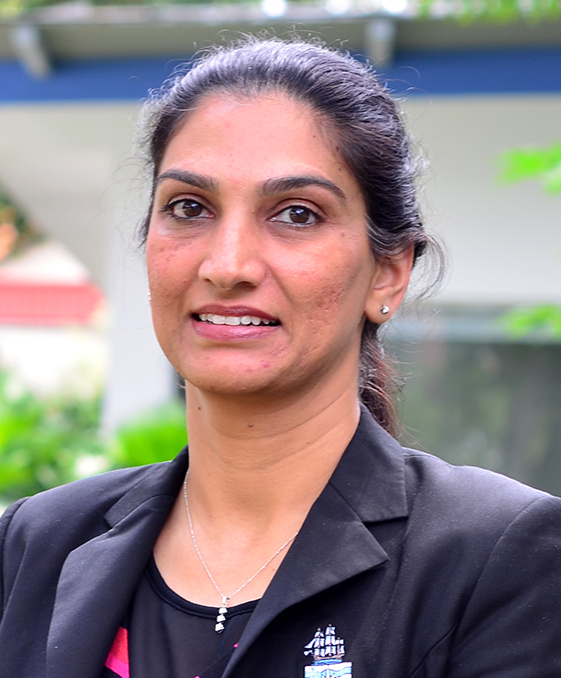
Divjyot Kaur
- Senior Lecturer Psychology
- divjyot.kaur@jcu.edu.au

Pengji Wang
- Acting Academic Head JCU Singapore Business School / Associate Professor Business
- pengji.wang@jcu.edu.au

Zilmiyah Kamble
- Senior Lecturer Hospitality & Tourism Management
- zilmiyah.kamble@jcu.edu.au
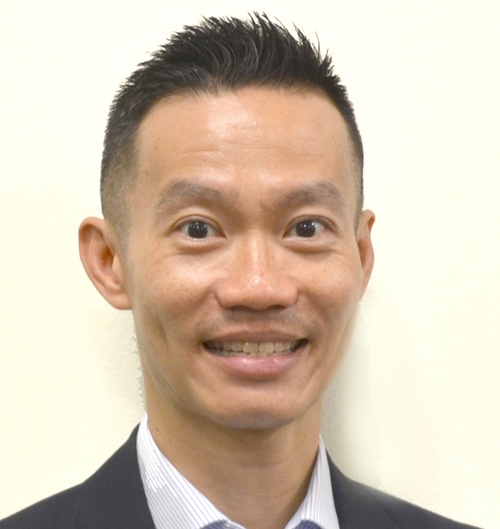
Eddy Ng
- Professor Organisational Behaviour
- eddy.ng@jcu.edu.au

Xueyan Shen
- Associate Professor
- xueyan.shen@jcu.edu.au

Michael Joyce
- Senior Learning Specialist
- michael.joyce@jcu.edu.au
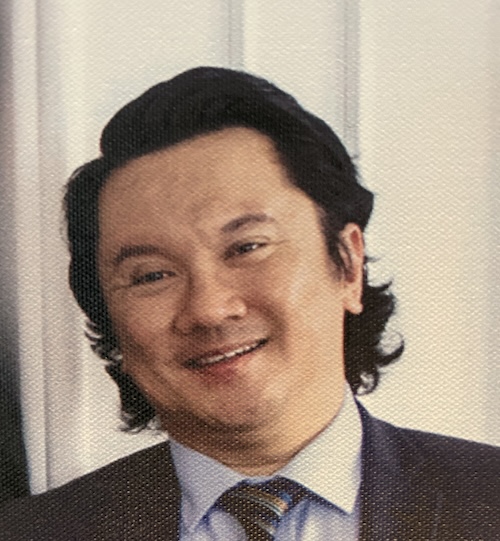
Adrian Kuah
- Professor
- adrian.kuah@jcu.edu.au

Peter Chew
- Associate Professor
- peter.chew@jcu.edu.au
Seafood Consumption and Production Trends – Singapore Market Study
The research project seeks to provide WWF-Singapore with detailed information around trends in seafood supply and apparent
consumption in Singapore, with a focus at the species level. The analysis will also involve the calculations around the volume of
certified and non-certified seafood imported into and exported from Singapore, disaggregated by species. The analysis will also seek
to both identify the sectors and respective major buyers that are importing seafood, and calculate seafood import volume (down to
species level) for each identified sector/buyer. Finally, the analysis will also seek to cover total production volume of local
aquaculture farms, disaggregated by species, and the market share of individual farms. The results from this study will be used to
inform WWF-Singapore’s seafood strategy
Seafood Consumption and Production Trends – Singapore Market Study
The research project seeks to provide WWF-Singapore with detailed information around trends in seafood supply and apparent
consumption in Singapore, with a focus at the species level. The analysis will also involve the calculations around the volume of
certified and non-certified seafood imported into and exported from Singapore, disaggregated by species. The analysis will also seek
to both identify the sectors and respective major buyers that are importing seafood, and calculate seafood import volume (down to
species level) for each identified sector/buyer. Finally, the analysis will also seek to cover total production volume of local
aquaculture farms, disaggregated by species, and the market share of individual farms. The results from this study will be used to
inform WWF-Singapore’s seafood strategy
A pilot study to analyze whether changes in bacteria microbial community using flow cytometry and pathogen eDNA can be employed to monitor and predict disease outbreaks in commercial fish farms in Singapore
AIM:
Can changes in bacteria microbial community using flow cytometry and pathogen eDNA be used as a proxy for predicting disease outbreaks in commercial fish farms in Singapore?
CONTEXT:
The aquaculture industry is constantly jeopardized by diseases which can result in insignificant economic losses due to poor growth performance and mortality. Fish diseases are caused by a wide range of infectious organisms, including viruses, bacteria, fungi, protozoan, and metazoan parasites. Microbial communities can change rapidly in aquatic environments and adversely impact fish health and water quality such that efficient and reliable monitoring methods are needed to inform the management of aquaculture production. Conventional total bacteria plate counts are commonly used to monitor bacteria load and serve as an indicator for managing water exchange, but this is a tedious technique for large sample sizes. Flow cytometry (FCM) and eDNA monitoring are fast gaining traction for fast and reliable high throughput analysis of large sample sizes. Environmental DNA sampling methodology represents the new frontier of research, where water, soil, and biofilms are collected for DNA analysis of potential environmental pathogens. Total bacteria counts are an indicator of water quality and microbial loads are highly correlated with suspended solids from land runoffs that can harbor aquatic pathogens (sea snow). This study will compare whether eDNA molecular analysis with FCM for total viable bacteria counts is a rapid, reliable, and efficient tool to improve disease monitoring to predict the presence of pathogens that may cause an outbreak.
METHODOLOGY:
Representative water samples will be collected once weekly from selected farm sites ( Singapore Aquaculture Technologies SAT) for analysis using FCM and eDNA, for 6 months. Fish samples will be examined using histopathology to provide an overview of general fish health and the presence of any significant disease. Depending on an initial site visit assessment and interview with farms, a panel of up to 5 significant pathogens of interest to fish farms may be included in the eDNA monitoring panel. The final sampling design will be developed based on issues that partner farms wish to investigate. Up to 6 water and 6 fish samples will be collected each week for analysis, giving an overall total of 144 water and 144 fish samples. A monthly report will be made available to partner farms to assist them in making management decisions. Trends in viable bacteria counts and pathogen loads will be correlated to farm production data and general fish health.
Serving the underserved in the tropics: Making a difference with positive psychology (Old ID 25136)
As the first AASP (mini) conference focusing on serving the underserved in the tropics, the proposed mini conference aims to address this gap to promote making a difference in tropical Asia with positive psychology. The themes of the mini conference include: * mental health and psychological wellbeing in the tropics; * projudice, discimination and structural inequality; * individual and community resilience.
Effects of black soldier fly larvae (Hermetia illucens) reared from heterogeneous food waste as a supplement to fishmeal-limited diets on growth indices, hepatosomatic responses and immuno-responses of Barramundi in grow-out phase
NTU has contacted TFI for assistance in running a feeding trial with barramundi using black soldier fly larvae (BSFL) as sustainable replacement for fish meal (FM) in feed. The trial will be carried out in the JCUS Aquaculture Teaching and Research Lab over a 3 month period. The project will evaluate the effects of dietary BSFL as a FM replacement on the growth performance, histological effects on fish gut and immune responses of barramundi. Results will be published in peer reviewed journal.
Establishing blood biochemistry reference intervals for juvenile Asian Seabass
Asian Seabass, Lates calcarifer is one of the most important farmed fish species in Singapore and SE Asia. Like for many other intensively farmed animals, diseases remain one of the main threats to sustainable aquaculture of this species. Diseases are more prevalent in juvenile L. calcarifer due to less developed immunity. Histopathology is commonly used for screening fish for disease and health certifications. However, organ pathology maybe preceded by changes in blood biochemistry days to weeks ahead of clinical signs and visible pathology. In human and domesticated animal species, blood biochemistry has been established as a reliable and economical method to monitor organ function, general health, and guide disease management, but has yet to be established for aquaculture species. This study aims to build on the blood reference intervals published by Chew et al., 2023, and extend them to biochemical parameters indicative of organ function for important organs such as the liver and kidney. Biochemistry will be correlated to histopathological evaluations of healthy reference population of L. calcarifer, for a more robust evaluation of health status.
Educating diverse learners for local/global citizenship: Curriculum and pedagogical frameworks that bring global perspectives from the periphery to the core (Old ID 21948)
Securing enhanced student outcomes associated with global understandings and perspectives is this project's focus. It seek to ascertain how best to utilise and augment students' current service learning experiences in domestic and international settings to realise these outcomes through a process of identifying, analysing and evaluating existing curriculum and pedagogic practices.
Does Social Monitoring Reduce Procrastination? Findings from a Five-Day Study
I propose to attend the 33rd International Congress of Psychology that will be held between 21 and 26 July 2024 in Prague, Czech Republic. The conference is usually held once every four years by the International Union of Psychological Science, a global organization representing psychology associations from different countries. I will present a study that examines how a social monitoring approach could alleviate procrastination. The abstract is accepted for an oral presentation. The study was supported by a JCUS IRG grant (IRG20210012). The conference is a suitable platform to present the research findings because it is a reputable conference attracting scholars to attend (typically attracting over 6000 participants). It is a platform where I can gain feedback for my research and its applicability in various branches of psychology.
In the past 5 years, I have received a CPA grant to present my study at the 13th Biennial Conference of the Asian Association of Social Psychology. The study was published in 2022.
Supercharging barramundi production through advanced selective breeding for improved disease resistance, growth and fillet traits
Barramundi, or Asian seabass, Lates calcarifer, is the major aquaculture species farmed in Singapore and has wide consumer acceptance
due to its white, firm flesh. The barramundi currently farmed in Singapore, however, have not been significantly improved through
simultaneous selection to be resistant to major diseases (like scale drop disease), faster growth, or fillet characteristics. This project will use
gold standard breeding methodologies that utilise genomics, industrial-scale phenotyping and cutting-edge digital technologies to select for
barramundi that are more productive, have whiter flesh and possess a lower risk to farming due to disease in Singaporean waters.
Outcomes from the project will be barramundi that have average survival to scale drop disease of 60%, grow 15% faster, and have
increased fillet yields and white flesh colouration.
Southeast Asian shark and ray research and conservation capacity building workshop 2019 (Old ID 26392)
Capacity building workshop for South East Asian shark and ray researchers, NGOs, academics, fisheries officers and government agencies. The project will bring together participant from Malaysia, Singapore, Indonesia and the Philippines for a workshop at JCU-Singapore in shark field research techniques, analysis of movement data and fisheries risk assessment.
Start Date:
01 Jan 2024
End Date:
01 Jan 2024
Title:
Brown Bag talks
Start Date:
01 Jan 2022
End Date:
01 Jan 2024
Start Date:
01 Jan 2024
End Date:
01 Jan 2028
Start Date:
01 Jan 2020
End Date:
01 Jan 2024
Start Date:
01 Jan 2022
End Date:
01 Jan 2026
Title:
Spirits of Singapore: Ghosts, history and the eerie allure of dark tourism, The Straits Times
Start Date:
07 Sep 2025
Title:
Mandarin Chinese
Title:
PhD, University of Otago
Start Date:
01 Jan 1985
End Date:
01 Jan 1989