
Medicine
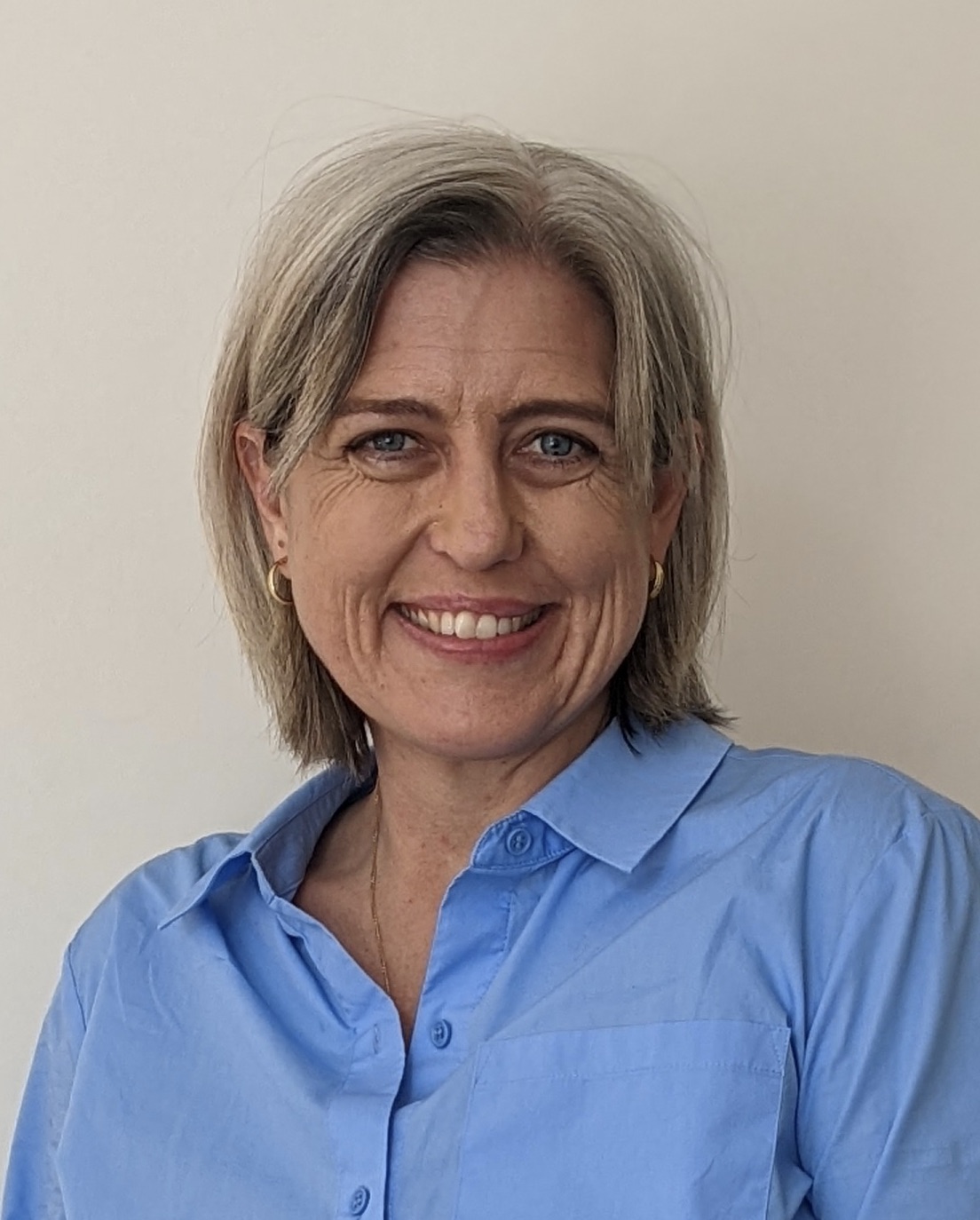
Erin Waters
- JCU Associate Professor
- erin.waters@jcu.edu.au

Shiv Thanigaimani
- Senior Research Fellow, Peripheral Vascular Disease (PVD)
- shiv.thanigaimani@jcu.edu.au

Alkira Deren
- Clinical Research Officer
- alkira.venn@jcu.edu.au

Michael Robinson
- JCU Lecturer
- michael.robinson@jcu.edu.au

Nalita Turner
- Research Officer
- nalita.turner@jcu.edu.au

Bunmi Malau-Aduli
- JCU Professor
- bunmi.malauaduli@jcu.edu.au

Jenna Graffini
- Research Project Manager
- jenna.graffini@jcu.edu.au

Mel Muscat
- Adjunct Research Fellow
- melody.muscat@jcu.edu.au

Yvonne Hornby-Turner
- Adjunct Research Fellow
- yvonne.hornbyturner@jcu.edu.au

Geoffrey Dobson
- Professor
- geoffrey.dobson@jcu.edu.au
ALM Drug Therapy to reduce inflammation and scar formation after ACL reconstruction surgery: Targeting earlier return to active duty. (Old ID 26666)
Jodie Morris
30 Sep 2020 - 29 Sep 2024
Two complications of anterior cruciate ligament (ACL) reconstruction surgery are cartilage degeneration and scarring within the joint, which can prolong healing, promote pain and restrict knee movement. Our project will evaluate a new therapy known as ALM solution that can be administrered during ACL reconstruction surgery to dampen inflammation, protect cartilage and promote tissue healing within the joint. Our study has the potential to expedite a patient's return to an active duty with fewer complications.
Community led development, climate resilience and conservation in East Malaita - Phase 2 (Old ID 27912)
Michelle Redman-MacLaren
14 Dec 2022 - 30 Dec 2023
Baru Conservation Alliance (BCA) was established a registered Non-Government Organisation in 2019 by leaders from East Kwaio, Malaita, Solomon Islands to coordinate ecological and cultural conservation in their tribal lands. This includes the holistic health and wellbeing of plants, animals and people living in prescribed conservation areas. This project, funded by the Australian High Commission in Solomon Islands allows JCU and the Australian Museum to build sustainable scientific and management capacities with the fledgling organisation. The project will support a series of local JCU supported projects within conservation areas that include TB, water and sanitation, reproductive health, community education and reforestation.
The effect of Isotretinoin on mood in patients with severe acne - a feasibility study and dermatologists perception (Old ID 22245)
Ronny Gunnarsson
01 Mar 2015 - 30 Jun 2016
Part A - Triple blind RCT using Isotretinoin/Doxycyline for 2 weeks in patients with severe acne. Mood will be assessed at the start and en of two weeks using K10, CES-D, CLQI, WHO-QOL BREF. Outcome measures include percentage that agree to reandomisation, complaince/follow up and questionnaire sensitivity. Part B - Questionnaire conducted at Australasian Dermatology Conference in Adelaide in May this year regarding dermatologists perceptions on the effect of Isotretinoin on mood.
Using portable long-read sequencing to diagnose Chronic Kidney Disease in regional North QLD Using portable long-read sequencing to diagnose Chronic Kidney Disease in regional North Using portable long-read sequencing to diagnose Chronic Kidney Disease (Old ID 27478)
Andrew Mallett
21 Jan 2022 - 28 Jul 2024
This project addresses the early diagnosis of genetic predispositions for Chronic Kidney Disease (CKD), which poses an increasing burden on the North Queensland population and unequally affects the Indigenous Australian peoples. We will develop a mobile diagnostic pipeline that allows a rapid and cost-efficient screening for genetic CKD predispositions and circulating biomarkers using a targeted, DNA/RNA long-read sequencing approach.
METformin for treating peripheral artery disease Related walking Impairment Trial (MERIT) (Old ID 27507)
Joseph Moxon
01 Jun 2023 - 31 May 2028
Peripheral artery disease (PAD) is a very common chronic cardiovascular disease of ageing affecting approximately 1 million older Australians and causing substantial leg pain on walking (intermittent claudication), marked functional impairment, reduced quality of life (QOL) and very high risk of major adverse cardiovascular and limb events. Vulnerable populations (e.g. regional or remote, lower income and Aboriginal and Torres Strait Islander populations) have much greater PAD-related burden. Our past consultations with patients indicate that improvements in walking is their number one priority. The only widely available PAD treatment in Australia is revascularisation but this does not improve walking distance and has substantial safety concerns. Multiple lines of evidence suggest that metformin safely improves leg blood supply. MERIT is a placebo-controlled randomised trial performed across 7 sites. The importance of the trial has been endorsed by patients, Heart Foundation, Queensland Health and Australian and New Zealand Society for Vascular Surgery and Alliance for Cardiovascular Trials. If positive, MERIT will identify a cheap, safe and widely available drug to improve the function and QOL of millions of older adults worldwide who have PAD.
Improving clinical pathways for abdominal aortic aneurysm through incorporating biomarkers (Old ID 27513)
Joseph Moxon
01 Jun 2023 - 31 May 2028
MRF2015999
20 million people worldwide have weakening of their main abdominal artery (abdominal aortic aneurysm; AAA) and are at high risk of both major adverse cardiovascular events (MACE) and AAA related events (AAA repair and rupture-related death). Most AAAs are identified at a small size when their risk of rupture is low. Management of small AAA focuses on repeat aortic imaging every 6 months to identify when the threshold diameter (50mm in women and 55mm in men) is reached for elective surgical AAA repair. Most small AAAs continue to grow in size and eventually undergo repair. No drugs have been shown to limit AAA growth and the clinical pathway focuses on identifying those needing surgery rather than medical management. There are no established means to individualise care. Our interviews with patients and health professionals indicate that the number one deficiency in current AAA management is the lack of individualising medical management to reduce the high incidence of MACE and AAA related events. Our international AAA alliance is uniquely placed due to our resources (biobank-registry) and IP (bioinformatics, clinical, engineering software, genomics, biomarkers, machine learning and pathogenesis) to addresses this unmet clinical need.
Trauma Care in the Tropics: A Multi-centre Retrospective Analysis. (Old ID 26855)
Hayley Letson
01 Jul 2020 - 31 Dec 2021
High quality pre-hospital trauma care and timely access to emergency aeromedical retrieval services is paramount for an efficient, sustainable healthcare system in North Queensland. We propose to identify and classify trauma patients in the North Queensland since 2016 to assess the magnitude of the total injury burden and evaluate the chain-of-care from the prehospital environment, through patient transfer, to hospital discharge. The dataset generated will provide valuable insights into patterns of primary retrieval, trauma distribution, and service provisions and gaps.
Carrier Rates of Group A Streptococci (GAS) in Australian Wet Tropics (Old ID 24783)
Ronny Gunnarsson
01 Jan 2018 - 31 Dec 2018
It is now possible to do a cheap rapid PCR analysis directly in the GP clinic for presence of Group A Streptococci in a throat swab and obtain a result in 8 minutes. This study intends to clarify the carrier rate of Group A Streptococci in Australian Wet Tropics. This knowledge is crucial to be able to correctly interpret test outcomes in patients with a sore throat.
Working it Out Together! Aboriginal and Torres Strait Islander led co-design for a strong and deadly health workforce (Old ID 27074)
Karen Carlisle
01 Sep 2021 - 31 Aug 2026
Building a stable, well-trained and culturally safe health workforce is a crucial part of delivering high quality primary health care (PHC) services. Previous attempts to strengthen rural/remote health workforce have failed, partly because they have not integrated Aboriginal and Torres Strait Islander knowledge and lived experience with necessary policy and systems support. There has been little research into culturally safe strategies to improve workforce stability in complex PHC context. This project will bridge these gaps through a community-led, place-based planning approach, engaging service providers, policy-makers and funders to co-design workforce strategies and models of care that are locally relevant, successful and sustainable. This community-based participatory project uses a mixed methods quasi-experimental pre-post design to implement co-designed actions to explore: How do we systematically embed Aboriginal and Torres Strait Islander perspectives into place-based planning and action for a stable and effective workforce that engenders community trust in local PHC delivery? Working with key sector partners in four service-based rural/remote clusters across Qld, NT and NSW, we will co-design and trial strategies to strengthen workforce competency and stability (by strengthening local career pathways for Indigenous people and strengthening cultural competency of non-Indigenous staff), and use community-centred impact and economic evaluation. Our team is majority Aboriginal and Torres Strait Islander and builds on relationships and learnings developed through our ongoing PHC system improvement work. Each jurisdictional team comprises a local Indigenous PHC service, community-controlled peak body, primary health network, government health department and university partner. This optimal mix will ensure successful implementation of sustainable strategies and translation into policy and practice for improved community access to quality PHC and health outcomes.
Working it Out Together! Aboriginal and Torres Strait Islander led co-design for a strong and deadly health workforce (Old ID 27074)
Michelle Redman-MacLaren
01 Sep 2021 - 31 Aug 2026
Building a stable, well-trained and culturally safe health workforce is a crucial part of delivering high quality primary health care (PHC) services. Previous attempts to strengthen rural/remote health workforce have failed, partly because they have not integrated Aboriginal and Torres Strait Islander knowledge and lived experience with necessary policy and systems support. There has been little research into culturally safe strategies to improve workforce stability in complex PHC context. This project will bridge these gaps through a community-led, place-based planning approach, engaging service providers, policy-makers and funders to co-design workforce strategies and models of care that are locally relevant, successful and sustainable. This community-based participatory project uses a mixed methods quasi-experimental pre-post design to implement co-designed actions to explore: How do we systematically embed Aboriginal and Torres Strait Islander perspectives into place-based planning and action for a stable and effective workforce that engenders community trust in local PHC delivery? Working with key sector partners in four service-based rural/remote clusters across Qld, NT and NSW, we will co-design and trial strategies to strengthen workforce competency and stability (by strengthening local career pathways for Indigenous people and strengthening cultural competency of non-Indigenous staff), and use community-centred impact and economic evaluation. Our team is majority Aboriginal and Torres Strait Islander and builds on relationships and learnings developed through our ongoing PHC system improvement work. Each jurisdictional team comprises a local Indigenous PHC service, community-controlled peak body, primary health network, government health department and university partner. This optimal mix will ensure successful implementation of sustainable strategies and translation into policy and practice for improved community access to quality PHC and health outcomes.
The increasing rates of acute interstitial nephritis in Australia: a single centre case series
- 2017
- BioMed Central Ltd
- Researchers:Andrew Mallett
Mutations in mitochondrial DNA causing tubulointerstitial kidney disease
- 2017
- Public Library of Science
- Researchers:Andrew Mallett
A multidisciplinary renal genetics clinic improves patient diagnosis
- 2016
- Australasian Medical Publishing Company
- Researchers:Andrew Mallett
Fibrillary glomerulonephritis: An apparent familial form?
- 2015
- Wiley-Blackwell Publishing Asia
- Researchers:Andrew Mallett
Start Date:
01 Jan 2012
Start Date:
01 Jan 2012
Start Date:
01 Jan 2009
Start Date:
01 Jan 2009
Start Date:
01 Jan 2007
Start Date:
01 Jan 2002
Start Date:
01 Jan 2002
Start Date:
01 Jan 1996
Start Date:
01 Jan 2002
End Date:
01 Jan 2009
Start Date:
01 Jan 2003
End Date:
01 Jan 2004