
Engineering

Liuxin Chen
- Lecturer
- liuxin.chen@jcu.edu.au
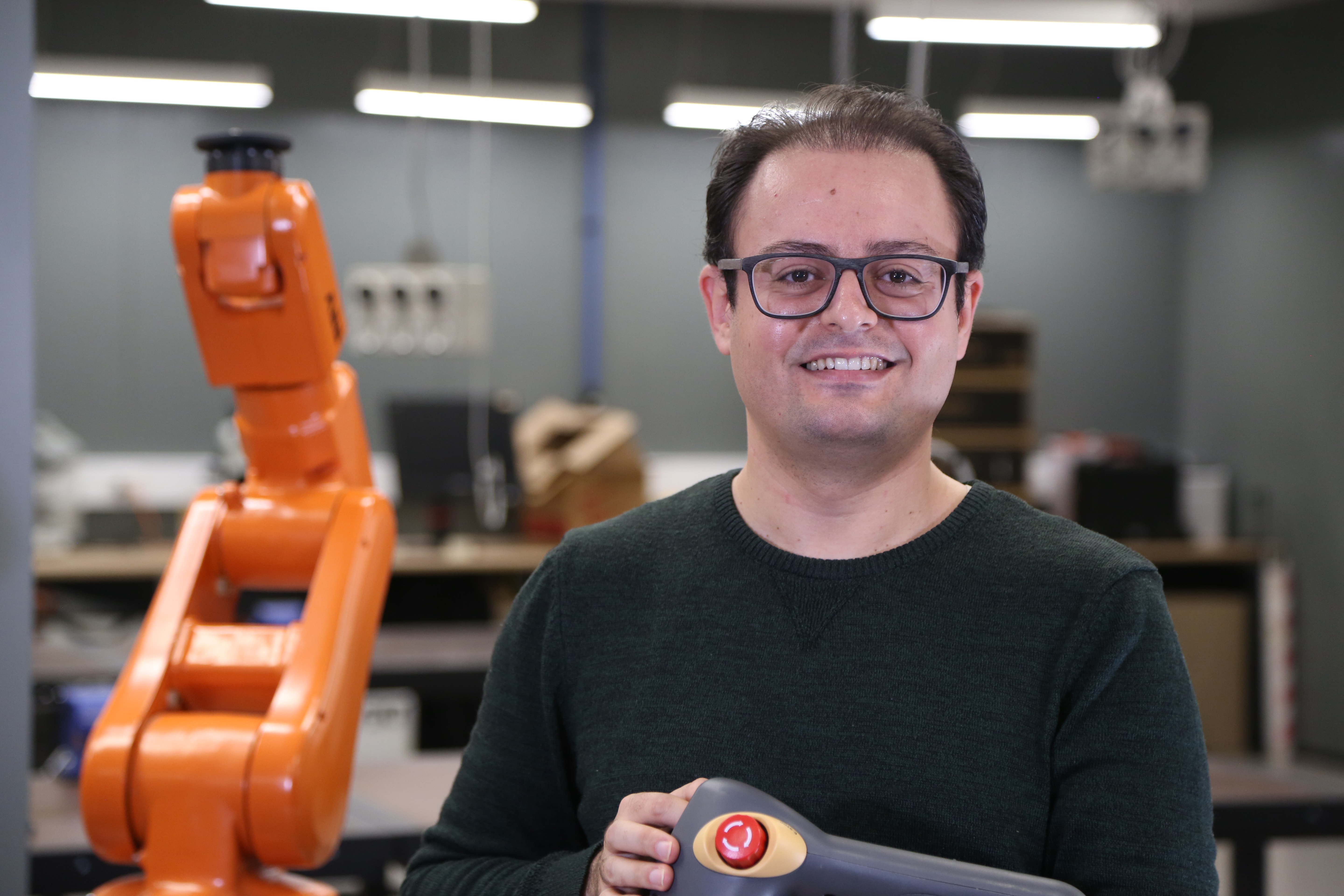
Mohamadreza Chalak Qazani
- Lecturer, Mechanical Engineering
- mohamadreza.chalakqazani@jcu.edu.au

Lewis Gooch
- Lecturer
- lewis.gooch@jcu.edu.au

Judy Yang
- Postdoctoral Research Fellow, Applied AI for Forestry Weed Detection and Mapping
- judy.yang@jcu.edu.au

Bouchra Senadji
- Head, Engineering
- bouchra.senadji@jcu.edu.au

Alzayat Saleh
- AIMS@JCU Postdoctoral Research Fellow, Marine Science Technology
- alzayat.saleh@jcu.edu.au

Anne Steinemann
- Adjunct Professor
- anne.steinemann@jcu.edu.au

Nico Adams
- Professor, Electronic Systems & IoT Engineering
- nico.adams@jcu.edu.au

Elsa Antunes
- Associate Professor, Mechanical Engineering
- elsa.antunes1@jcu.edu.au

Eric Wang
- Senior Lecturer, Electronic Systems and IoT Engineering
- eric.wang@jcu.edu.au
Sustainable assessment of nickel production residue as engineered landfill. (Old ID 27759)
Peter To
01 Sep 2022 - 31 Jan 2024
The residue left after leaching is a silica-rich sand material, which will be a washed, filtered and neutralised with magnesia, before being stockpiled on site for over 36 months. Numerous options for the end use of this leach residue have been investigated and were previously reported by JCU. These included re-use as a building product in bricks and as an engineered fill. The results favoured the material as a potential fill material and since these results were published numerous potential sites requiring fill in and around the Townville region have been identified. For this to be viable the mechanical and chemical properties of the material must be further investigated. If successful, the results of this test program should indicate eligibility for an End of Waste Code (EOWC).
Deployable Waste to Energy System (Old ID 27701)
Mohan Jacob
24 May 2022 - 31 Dec 2025
JCU has developed a customised microwave pyrolysis unit that can be used to conduct various experiments and control the pyrolysis conditions to convert different waste materials and generate by-products such as gas, oil and char. This project aims to develop a scale-up Deployable Waste to Energy processing unit that can process up to 50 kg of waste at a time. The project will be done in partnership with CUBIC, who will manage the project delivery.
Development of a Ground-Based AI Vision System for Fine-Scale Weed Detection in Tropical Reforestation
Tao Huang
09 Jan 2026 - 08 Jan 2027
Tropical reforestation initiatives face significant early-stage threats from fast-growing weed species that compete with young seedlings for sunlight, nutrients, and water. While drone-based monitoring provides valuable aerial perspectives, it often lacks the resolution needed to detect weeds growing in close proximity to seedlings or partially hidden by surrounding vegetation. To complement aerial detection, this project proposes the development of a ground-based computer vision system for fine-scale weed detection and growth dominance estimation, enabling precision weeding and decision support in reforestation programs. This first year of the TerraWeed project will focus on hardware setup, initial dataset creation, and the development of deep learning models for close-range classification and segmentation of weeds versus tree seedlings. This foundational work will provide a basis for deploying intelligent ground-based systems that support high-precision intervention in complex tropical environments.
Airbag deployment test (Old ID 30048)
Mehdi Khatamifar
12 Jun 2023 - 31 Aug 2023
AEP Advance Engineering is planning to study airbag deployment in a car after modifications done on the car. This test will study an airbag deployment along the ceiling using high-speed camera at high frame per second rate of 5000. This study aims to investigate the deployment stages of the airbag and visually capture this process, so modifications applied on the car does not interfere with safety.
Vanadium Extraction and Processing Innovation Project’
Mahmood Sadat Noori
27 Feb 2026 - 30 Nov 2028
This project aims to advance the projects related to vanadium extraction and processing from the Toolebuc Formation in North Queensland and to develop capacity in North Queensland to assist with the emerging vanadium economy .
Data-Efficient AI for Precision Weed Monitoring in Tropical Forests
Tao Huang
01 Mar 2026 - 31 Dec 2029
Reforestation plays a critical role in enhancing climate resilience, increasing carbon sequestration, and supporting ecosystem restoration in tropical regions. However, early-stage seedlings face a major threat from the rapid spread of aggressive weed species that compete for essential resources such as light, nutrients, and water. Traditional weed control approaches are labour-intensive, costly, and unsuitable for large or remote reforestation sites, making automated solutions highly desirable.
This PhD project aims to develop AI-driven computer vision systems for precise and efficient weed detection in tropical reforestation settings. Using aerial and ground imagery, the project will focus on building robust and accurate algorithms capable of operating under challenging environmental conditions. To reduce reliance on large annotated datasets, the research will explore data-efficient learning strategies, enabling scalable and cost-effective model development.
The system will be designed for deployment on drones and ground-based platforms, supporting real-time monitoring and decision-making in the field. By improving the accuracy and efficiency of weed detection, the project will help land managers target interventions more effectively, enhance seedling survival rates, and increase the overall success of reforestation programs. This work will contribute to advancing the application of AI and computer vision for environmental restoration, with strong pathways for real-world adoption and commercialisation through industry collaboration.
Microgrid Systems with Integrated Waste-to-Energy source for Forward-Deployed Defence Infrastructure
Yang Du
16 Mar 2026 - 16 Nov 2027
This project proposes the design and validation of a renewable, deployable microgrid that integrates various inputs such as waste-to-energy (W2E) systems, solar PV, batter and diesel generator. Designed for Defence operations in Northern Australia, the system will convert operational waste into usable energy (e.g., syngas or bio-oil) and provide reliable power for charging or storing energy in portable devices. It aims to enhance energy resilience, reduce reliance on fuel logistics, and support sustainable operations in remote or contested environments.
Generation Signalling Device (GSD) using AFLC signals
Bruce Belson
09 Mar 2026 - 25 Apr 2026
The proposed project involves the design and development of a prototype Generation Signalling Device (GSD) intended for use within Queensland electricity distribution networks operated by Ergon Energy and Energex.
Ergon and Energex manage grid stability by transmitting Audio Frequency Load Control (AFLC) ripple control signals superimposed on the mains supply to initiate load shedding and generation control. In solar photovoltaic systems, a GSD functions as an interface device that detects these AFLC signals and communicates corresponding shutdown or control commands to a connected inverter to assist in maintaining network balance. The project is being run under the aegis of the IoT stream of EE4500 2026 Block 2.
Applying new image recognition techniques for automatic detection and spraying of Harrisia cactus (Old ID 26461)
Mostafa Rahimi Azghadi
01 Jul 2019 - 31 Oct 2021
harrisia cactus is a significant rangeland weed in Queensland and bnorthern NSW. It competes against native species, inhibits stock accdess and endangers wildlife. JCU have developed image recognition software to identify Harrisia cactus in pasture; which has been deployed on a prototype robotic platform for selective spot spraying. This proect will see the development of a new spraying unit incorporating JCU's developed technology with a vehicle provided by Warrakirri Cropping. The unit will then be used to treat 500 ha of infested pasture at Warrakirri's "Willaroo" property. Its performance will be compared to traditional methods and showcased to local landholders.
Improving the extraction process for QCIDE ™ oil (Old ID 26192)
Yinghe He
25 Sep 2018 - 28 Feb 2019
This project involves data-logging to quantify process variables, and taking samples of hydrosol to determine the state of steam-biomass contact to determine oil yield and areas for process improvement.
Effect of building volume and opening size on fluctuating internal pressure
- 2008
- Techno-Press
- Researchers:John Ginger
Fluctuating wind loads across gable-end buildings with planar and curved roofs
- 2004
- Techno-Press
- Researchers:John Ginger
Start Date:
01 Jan 2018
End Date:
01 Jan 2022
Start Date:
01 Jan 2023
Title:
Program Coordinator, Master of Engineering (Water Resources Management), James Cook University
Start Date:
01 Jan 2023
Start Date:
01 Jan 2023
Start Date:
01 Jan 2022
End Date:
01 Jan 2023
Start Date:
01 Jan 2020
End Date:
01 Jan 2022
Start Date:
01 Jan 2014
End Date:
01 Jan 2015
Start Date:
01 Jan 2007
End Date:
01 Jan 2009
Title:
Lecturer, UNSW
Start Date:
01 Jan 2021
End Date:
01 Jan 2023
Title:
Research Associate, UNSW
Start Date:
01 Jan 2017
End Date:
01 Jan 2020