
Marine Biology & Aquaculture

Eva McClure
- Research Fellow, Fisheries
- eva.mcclure@jcu.edu.au

Carlo Mattone
- Adjunct Research Fellow
- carlo.mattone@jcu.edu.au

Mia Hoogenboom
- Professor
- mia.hoogenboom1@jcu.edu.au

Greg Torda
- Adjunct Senior Research Fellow
- gergely.torda@my.jcu.edu.au

Patrick Smallhorn-West
- Senior Lecturer
- patrick.smallhornwest@jcu.edu.au
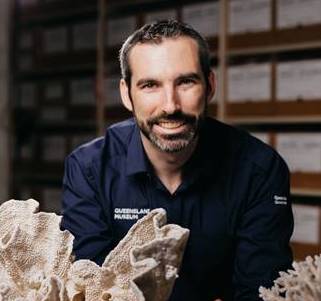
Peter Cowman
- Associate Professor
- peter.cowman@jcu.edu.au
Eric Wolanski
- Adjunct Professor
- eric.wolanski@jcu.edu.au

Rima Jabado
- Adjunct Senior Research Fellow
- rima.jabado@jcu.edu.au
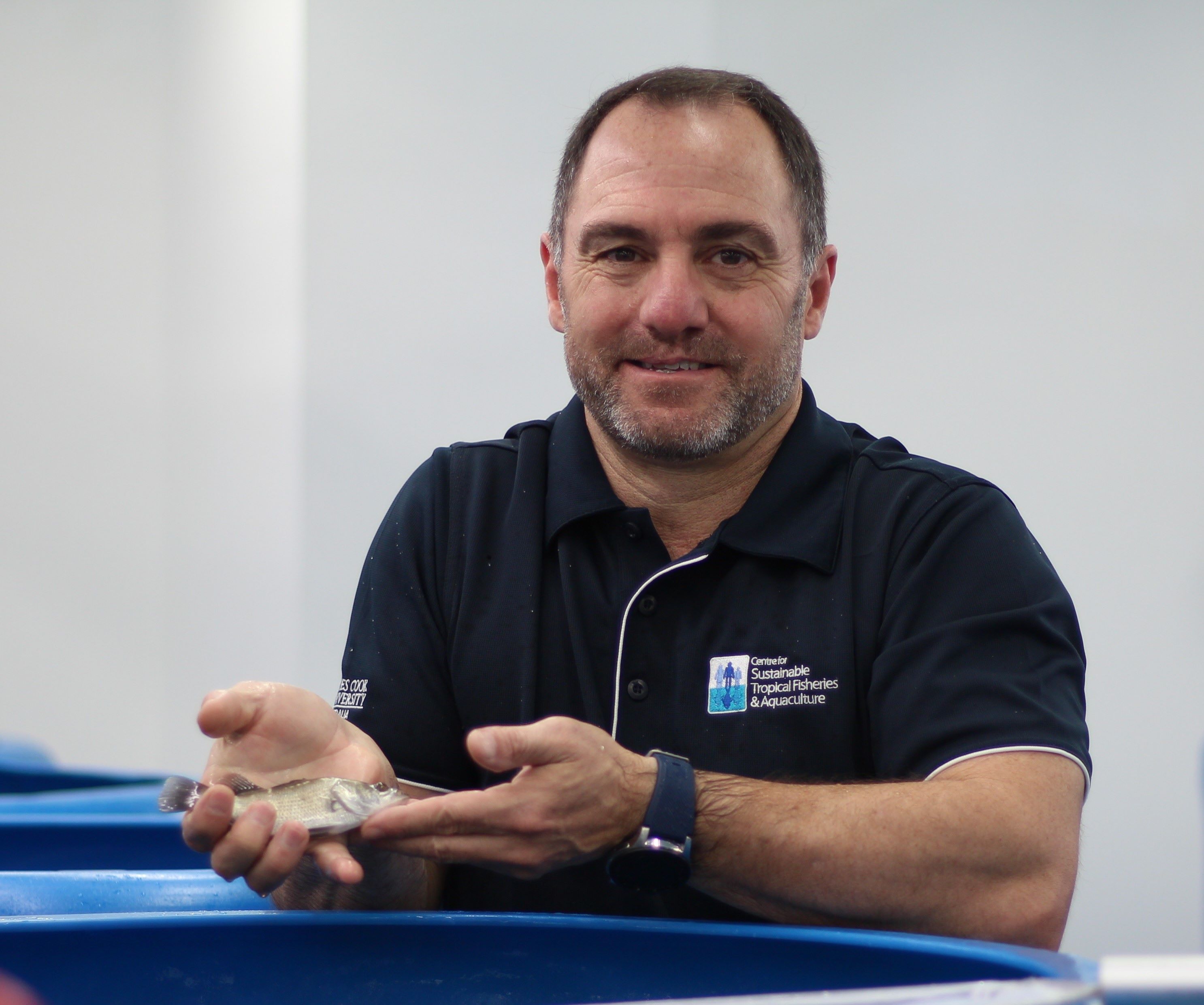
Dean Jerry
- Professor
- dean.jerry@jcu.edu.au

John Choat
- Adjunct Professor
- john.choat@jcu.edu.au
Grouper nutrition review (Old ID 26828)
A new ACIAR Concept Note is in preparation for the continuation of ACIAR investment in hybrid grouper aquaculture in Vietnam (FIS/2020/106). In parallel with the development of the Concept Note that will include a high level approach to nutrition research, a desk-top review of existing research is needed to prepare a targeted and practical research focus for the grow-out nutrition component of the project. The frequency of publication of peer-reviewed articles in grouper nutrition is ever increasing and understanding the current status of research is critical in order to maximise ACIAR investment in this area. The review will inform the detail of the experimental approach in the next ACIAR project, which needs to be planned in advance of the project start to maximise outcomes (possible start in July 2021). In addition, the COVID-19 pandemic has prevented further scoping travel to Vietnam in the short-term which will necessitate careful remote planning with proposed research partners to identify the most appropriate research systems and resource requirements in Vietnam and Australia for this research component (to be considered in time for resource requirements to be included in the Concept Note submitted in June 2019).
A new functional approach to coral reefs (Old ID 26230)
Around the world coral reefs are changing fast, challenging traditional scientific, management, and governance approaches. This project will address this challenge by implementing a new function, approach exploiting a unique combination of evolution ary and ecological methodologies. Expected outcomes include a global overview of ecosystem function and an in-depth understanding of how ecosystems change. This is likely to result in specific, and practical, management objectives by identifying crucial ecosystem functions that support reefs and the people who rely on them.
LEX/NG
Coral reefs face dual threats of climate change and local anthropogenic stressors, with losses of live corals often resulting in proliferated macroalgae (seaweeds). My previous National Geographic-funded research showed that a low-tech, simple approach of “sea-weeding” (i.e. removing seaweeds by hand) is effective in rehabilitating degraded, macroalgae-dominated reefs. Specifically, my 5-year research program resulted in a >600% increase in coral cover post-seaweed removal since 2018. These promising outcomes offer a cost-effective strategy for reef management, particularly for economically constrained island nations. However, the success of sea-weeding may be species-specific. On the studied reefs, Sargassum was the dominant genus of seaweed. Hence further research is required across diverse algal taxa to gauge the broader applicability of sea-weeding to improve coral reef resilience.
Many South Pacific island nations are facing increased seaweed abundance as reefs continue to degrade. The loss of corals is catastrophic, as reefs form an integral part of Pacific culture, providing a significant proportion of dietary protein through reef-associated fish. Additionally, coral reefs provide shoreline protection for low-lying islands, and losses of reefs could contribute to oceanic inundation. The PALA and PAPA voyage locations are ideal candidates for implementing sea-weeding as a low-cost restoration and management technique. However, these reefs are relatively unexplored, with little recent quantitative documentation of reef community composition. Indeed, even where surveys exist, the taxonomic resolution of seaweed communities is lacking (i.e., all algae are grouped together as “algae” rather than genus- or species-level observations). Hence, the primary objective of this project is to explore the distribution and diversity of reef communities around the tropical South Pacific. The data collected will form a baseline understanding over a large geographic area of w
Circular economy and feed management approaches for inclusive and sustainable development of marine aquaculture in Vietnam
Marine aquaculture in Vietnam has traditionally used low value ‘trash’ fish as a feed source, due to its low cost, relative nutrient completeness and ready availability. Trash fish is generally considered a high risk input as it can be a vector for disease entry into farms, and is often associated with a high degree of uneaten feed entering the environment, resulting in eutrophication. Formulated feeds result in better feed conversion and nutrient utilisation than trash fish, with lower nutrient output into the environment per unit fish produced. This project investigates feed management for optimised feed conversion, growth and lower environmental impact for marine fish aquaculture.
Herbert River Blue Carbon investigation Waltham
Working with landholders on floodplain to map out and identify suitable restoration project land suitable for environmental markets
Deciphering the molecular and environmental determinants of sex-change in barramundi (Old ID 20663)
Barramundi breeding programs to boost productivity and international competitiveness are hindered by a lack of reproductive control. Barramundi change sex from male to emale at 3-5 years of age, requiring hatcheries to maintain male broodstock for several years before they can be bred as females. This increases required infrastructure and decreases the rate of genetic improvement that can be achieved. This project will elucidate genetic mechanisms regulating barramundi sex change and will develop approaches allowing hatcheries to efficiently control broodstock sex. The ability to obtain reproductive control
Effects of ocean acidification on invertebrate behaviour (Old ID 21834)
New research shows ocean acidification alters marine invertebrate behaviour but the impacts are poorly known and this knowledge gap limits the capacity to understand and mitigate the effects of global change. This project will assess marine invertebrate behaviour and ecological interactions to better understand the effects of rising carbon dioxide on marine species.
The impact of increasing ocean temperatures on the movement and behaviour of the iconic Indo-Pacific fisheries species, coral trout (Old ID 22898)
Ocean warming is the most pervasive aspect of climate change, which impacts directly on the distribution, abundance, and population structure of fishes, as well as the viability and sustainability of fisheries. Tropical marine fishes are particularly vulnerable to ocean warming, because species are already exposed to summer temperatures that may have negative consequences for individual condition and fitness. Coral trout are among the most important tropical marine fisheries species, targeted by commercial and artisanal fishers throughout the Indo-Pacific. This study will explore if, and how coral trout mediate or acclimate to extreme temperatures, with a view to better understand the impacts of climate change on wild stocks of these important fishes.
Implementing artificial intelligence for the quantitative assessment of abalone in production systems (Old ID 26800)
This project will aim to develop, train, validate and implement an artificial intelligence model to identify and count abalone and measure quantitative abalone traits in production systems from an image. Currently, stock assessment is conducted manually, with large costs associated for the farms. This solution would reduce the cost of stock assessments and would greatly improve data quantity and quality using a “hands-off” approach. The model would also provide an advanced platform for further R & D improvements above and beyond basic assessments (e.g. growth monitoring in feeding trials).
Mungalla Wetland System Repair (Old ID 22784)
Coastal wetlands provide services important for aquatic wildlife. However, human need has contributed to modification and change to coastal wetland function. Government and community projects have commenced across the Great Barrier Reef catchment area to repair and revitalise coastal wetlands to, again, function as productive ecosystems, while still offering services for humans. A project has commenced, supported by Australian Government, to repair natural tidal flow and fisheries value to Mungalla wetland. This project herein will examine wetland aquatic ecology and water quality in response to broader system repair programs underway.
Conservation successes and challenges for wide-ranging sharks and rays
- 2023
- National Academy of Sciences
- Researchers:Colin Simpfendorfer
Macroalgae exhibit diverse responses to human disturbances on coral reefs
- 2023
- Blackwell Publishing
- Researchers:Andrew HoeyMorgan Pratchett
Multi-decadal stability of fish productivity despite increasing coral reef degradation
- 2023
- Wiley-Blackwell
- Researchers:David Bellwood
Gillnet size selectivity of shark and ray species from Queensland, Australia
- 2023
- Wiley-Blackwell
- Researchers:Colin Simpfendorfer
Start Date:
10 Nov 2024
Start Date:
31 Mar 2025
Start Date:
01 Jan 2024
Start Date:
01 Jan 2024
End Date:
01 Jan 2027
Start Date:
01 Jan 2004
End Date:
01 Jan 2006
Start Date:
01 Jan 2007
End Date:
01 Jan 2007
Title:
PhD, James Cook University
Start Date:
01 Jan 2002
End Date:
01 Jan 2005
Start Date:
01 Jan 1996
End Date:
01 Jan 1999