
College of Science & Engineering

Sophia Love
- Doctor of Philosophy (Natural and Physical Sciences)
- sophie.love@jcu.edu.au
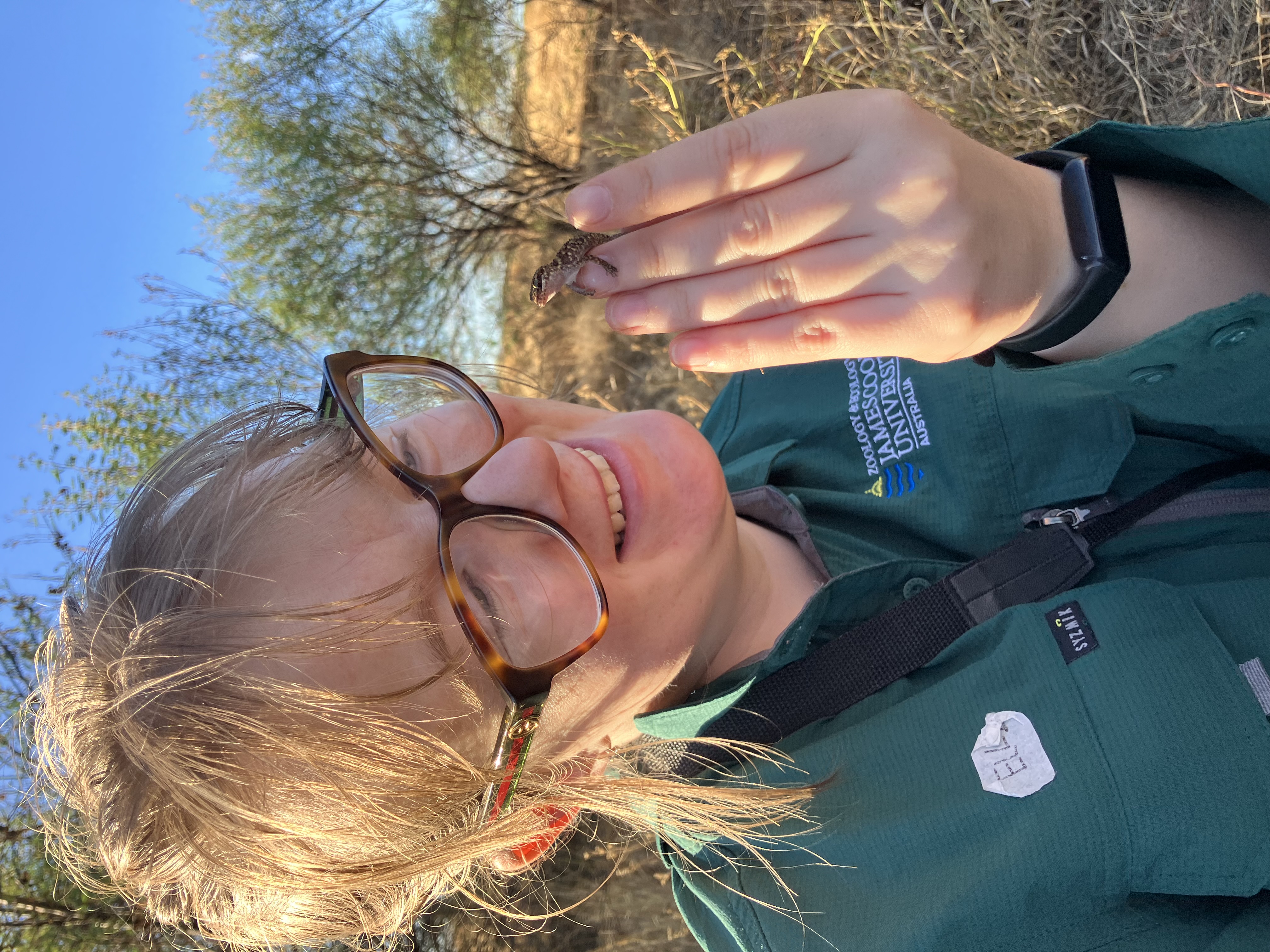
Elle Robertson
- Doctor of Philosophy (Agriculture, Environmental and Related Studies)
- elle.robertson@jcu.edu.au

Romain Vaucher
- Senior Lecturer, Sedimentology
- romain.vaucher@jcu.edu.au

Jenny Fisher
- Associate Dean, Learning and Teaching
- jenny.fisher@jcu.edu.au

Ambili Narayanan
- Doctor of Philosophy (Natural and Physical Sciences)
- ambili.narayanan@my.jcu.edu.au

Sarfaraz Ali
- Postdoctoral Research Fellow
- sarfaraz.ali@jcu.edu.au

Mikaeylah Davidson
- Postdoctoral Research Fellow
- mikaeylah.davidson@jcu.edu.au

Liuxin Chen
- Adjunct Lecturer
- liuxin.chen@jcu.edu.au

Rafael Cabral Carvalho
- Lecturer, Marine Geoscience
- rafael.cabralcarvalho@jcu.edu.au
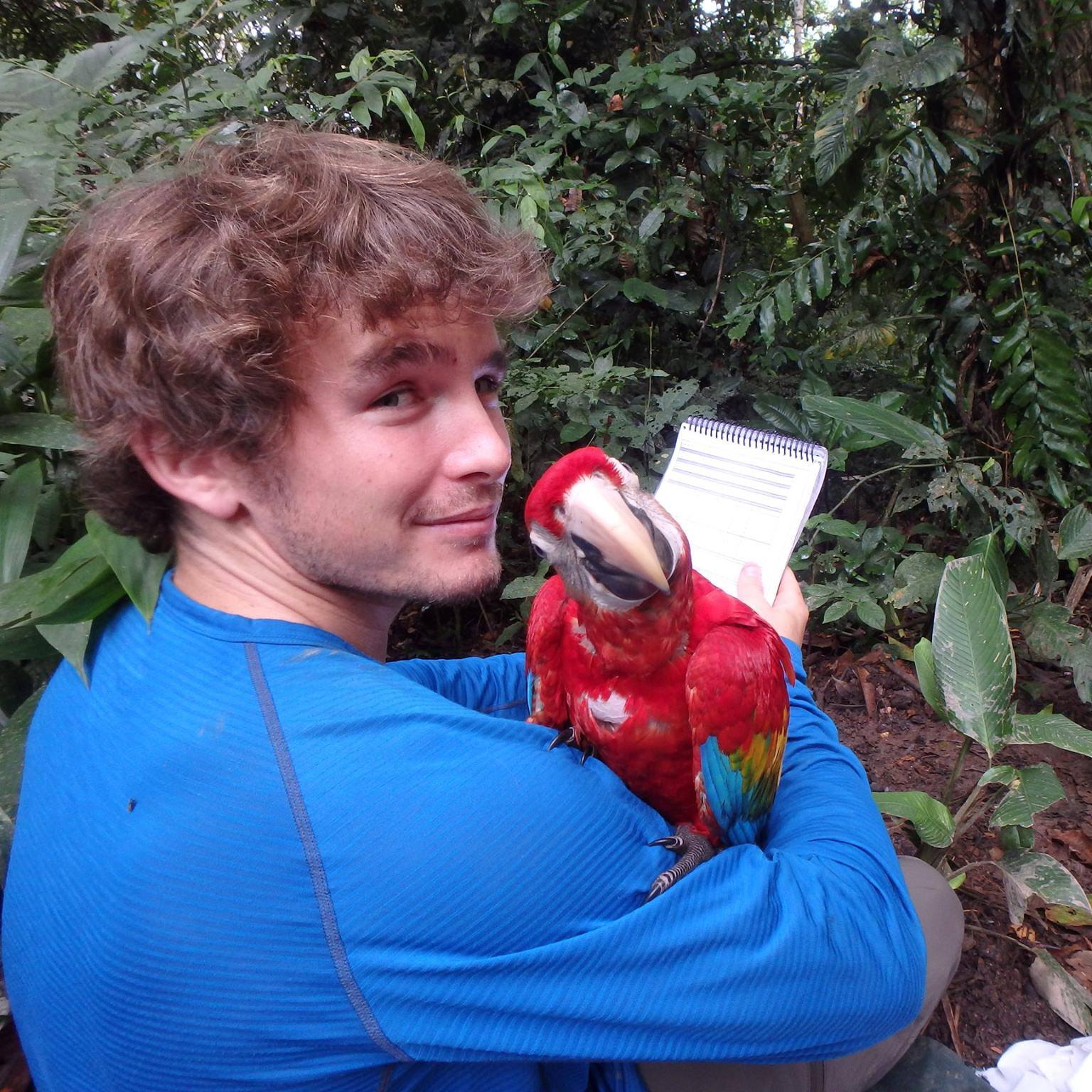
Tom Lloyd
- Postdoctoral Research Fellow, Global Ecosystems
- tom.lloyd@jcu.edu.au
Impacts of a volcanic eruption on coral reef fisheries in a co-managed fishery-system (Old ID 27870)
In January 2022, a massive submarine volcanic eruption occurred in the Kingdom of Tonga, causing widespread damage from both ashfall and tsunami waves. For 20 years prior to this eruption, the Tongan government has worked closely with local communities to manage and conserve the countries coral reef ecosystem and reef fisheries. In the wake of this acute disturbance, I aim to: 1)understand how coral reefs and their fisheries respond to massive acute disturbances, and 2)investigate whether local marine management measures can mitigate observed impacts. Ecological surveys of fish and reef health will be conducted across the country’s coral reefs, both within and beyond managed areas, at varying distances from the eruption epicentre.
Moore Reef Grounding Assessment (Coral Sea Marine Park) (Old ID 27905)
A vessel was reported to have run aground at Moore Reef in the Coral Sea Marine Park in December 2022. This project will use surveys of the grounding site and surrounding habitat to understand the impact of the vessel grounding on reef habitats, and benthic and fish communities on Moore Reef.
ARC Centre of Excellence for Integrated Coral Reef Studies (Old ID 21109)
The overarching aim of the ARC Centre of Excellence for Integrated Coral Reef Studies is to provide the scientific knowledge necessary for sustaining ecosystem goods and services of the world's coral reefs, which support the livelihoods and food security of millions of people in the tropics. The Centre will enhance Australia's global leadership in coral reef science through three ambitious research programs addressing the future of coral reefs and their ability to adapt to change. A key outcome of the research will be providing tangible benefits to all Australians by bui8lding bridges between the natural and social sciences, strengthening capacity, and informing and supporting transformative changes in coral reef governance and management.
ARC Centre of Excellence for Integrated Coral Reef Studies (Old ID 21109)
The overarching aim of the ARC Centre of Excellence for Integrated Coral Reef Studies is to provide the scientific knowledge necessary for sustaining ecosystem goods and services of the world's coral reefs, which support the livelihoods and food security of millions of people in the tropics. The Centre will enhance Australia's global leadership in coral reef science through three ambitious research programs addressing the future of coral reefs and their ability to adapt to change. A key outcome of the research will be providing tangible benefits to all Australians by bui8lding bridges between the natural and social sciences, strengthening capacity, and informing and supporting transformative changes in coral reef governance and management.
Council improving the water quality of the Great Barrier Reef through the use of smart sensors and the IoT for urban water management (Old ID 23533)
The primary aim of this grant application is to bring smart city technology into urban water management to improve urban water quality discharging to the Great Barrier Reef by: 1). Developing IOT technology to manage large data sets obtained from existing smart meters and water quality monitoring probes to make effective management decisions; and 2) Supporting the development of new cost effective, real time water quality monitoring technology. This grant application is for purchase of commercially available water quality monitoring probes suitable for a tropical urban stormwater environment, for supporting the development of new real time monitoring technology for nutrients; for the development of data analysis tools using IOT technology for both smart meter water consumption data, sewer pump station overflow data and stormwater water quality data so that the data is available in real time and can be used for effective decision making.
Climate Smart Sugarcane Irrigation Partnerships (CSSIP) (Old ID 24754)
CSSIP will minimise nutrient runoff, improve soil health and increase wetlands water quality by facilitating the adoption of world-class irrigation practices in sugarcane farming systems. Currently, best practice irrigation is assisted by an Irrigation Decision Support Tool (IDST) that provides evidence-based advice. However, IDSTs have not reached their full potential. Firstly, they do not integrate short to medium term weather forecasts (e.g. weekly to multi-weekly forecasts). Secondly, IDSTs do not operate at a spatial scale relevant to farmers. CSSIP will incorporate the Bureau or Meteorology’s new high-resolution climate model into the Irrigation Decision Support Tool. Thirdly, IDSTs require substantial time in manual data entry, which can be alleviated using real-time monitoring via Internet of Things technologies. This will increase irrigation efficiency, reducing excessive runoff into river systems and onto the Reef, and, will help farmers save water and energy costs.
Integrating climate adaptation into rainforest restoration plantings (Old ID 26711)
This project aims to investigate the impact of within species adaptation to climate on reforestation success in the Australian Wet Tropics. For a suite of six species of tropical tree frequently employed in rainforest restoration plantings in northeast Queensland, we will test the hypothesis that collecting seed from populations in similar ecoclimatic settings to the planting site will result in superior seedling growth and survival. The results of the study will allow us to provide practical advice to reforestation practitioners about the importance of matching the provenance of seed source to planting sites, and opportunities for selecting provenances pre-adapted to predicted future climatic conditions at planting sites.
Investigating combined stressors in bees: insecticides and thermal stress (Old ID 27283)
Insecticide use poses a risk to non-target insects including bees. The effects of these compounds is all the more worrying given that honey bees prefer nectar containing traces of the naturally derived insecticide class – the neonicotinoids. This project will expand upon previous bodies of work to investigate the preference of stingless bee species Tetragonula hockingsi when provided with the choice between an insecticide laced food source and a sucrose solution. This project will also explore the combined effects of insecticide exposure and increasing temperature on bees.
Ant-plant-herbivore interactions across global tropical ecosystems (Old ID 30049)
My project aims to investigate the plant-insect interactions in a highly invasive tropical weed to assess the interactions that unfold during the spread of alien invasive species. Sicklepod (Fabaceae; Senna obtusifolia) is native to the neotropics but has become invasive in many tropical ecosystems including Australia’s tropics. My project aims to investigate to what extent the ant-plant interaction increases plant fitness for the invasive sicklepod, and whether sicklepod benefits from enemy release in Australia. I anticipate that the results from this study will form one chapter of my PhD thesis, a manuscript for publication and presentations at an international conference.
AI-Powered Precision Farming: Mapping, Detection, Planning, and Spot Spraying (Old ID 31107)
High-tech solutions in agriculture offer many benefits for improved crop and land management. However, current methods rely heavily on human experts for monitoring and planning. To address this, we propose a state-of-the-art AI-based spraying strategy software that: • takes aerial images of the farm/land vegetation (using drones, planes, satellites, etc.) and detects field requirements, • generates a pre-spray map on GIS systems, considering the existing terrain topographies, • optimally plans the detailed spraying strategy and suggests one or a combination of proper spraying methods such as blanket, vehicular spot, or aerial spraying, and • whenever possible, effectively commands and controls appropriate devices to spray, such as drones, vehicles, people, etc. It might also receive feedback and correspondingly optimize the process/plan. This AI-Powered system helps farmers and producers precisely spray, saving costs and the environment.
Organic matter, sodicity and soil structure
- 1998
- Oxford University Press
- Researchers:Paul Nelson
Start Date:
10 Nov 2024
Start Date:
31 Mar 2025
Title:
Bengali
Reseracher:
Khandakar Faisal Ibn Murad
(Doctor of Philosophy (Engineering and Related Technologies))
Title:
English
Reseracher:
Khandakar Faisal Ibn Murad
(Doctor of Philosophy (Engineering and Related Technologies))
Start Date:
01 Jan 2024
Start Date:
01 Jan 2014
Start Date:
01 Jan 2024
End Date:
01 Jan 2027
Start Date:
01 Jan 2003
Title:
PhD, James Cook University
End Date:
01 Jan 2010
Start Date:
01 Jan 2024
End Date:
01 Jan 2024