
College of Science & Engineering

Sophia Love
- Doctor of Philosophy (Natural and Physical Sciences)
- sophie.love@jcu.edu.au

Romain Vaucher
- Senior Lecturer, Sedimentology
- romain.vaucher@jcu.edu.au

Jenny Fisher
- Associate Dean, Learning and Teaching
- jenny.fisher@jcu.edu.au

Ambili Narayanan
- Doctor of Philosophy (Natural and Physical Sciences)
- ambili.narayanan@my.jcu.edu.au

Sarfaraz Ali
- Postdoctoral Research Fellow
- sarfaraz.ali@jcu.edu.au

Mikaeylah Davidson
- Postdoctoral Research Fellow
- mikaeylah.davidson@jcu.edu.au

Liuxin Chen
- Lecturer
- liuxin.chen@jcu.edu.au

Rafael Cabral Carvalho
- Lecturer, Marine Geoscience
- rafael.cabralcarvalho@jcu.edu.au
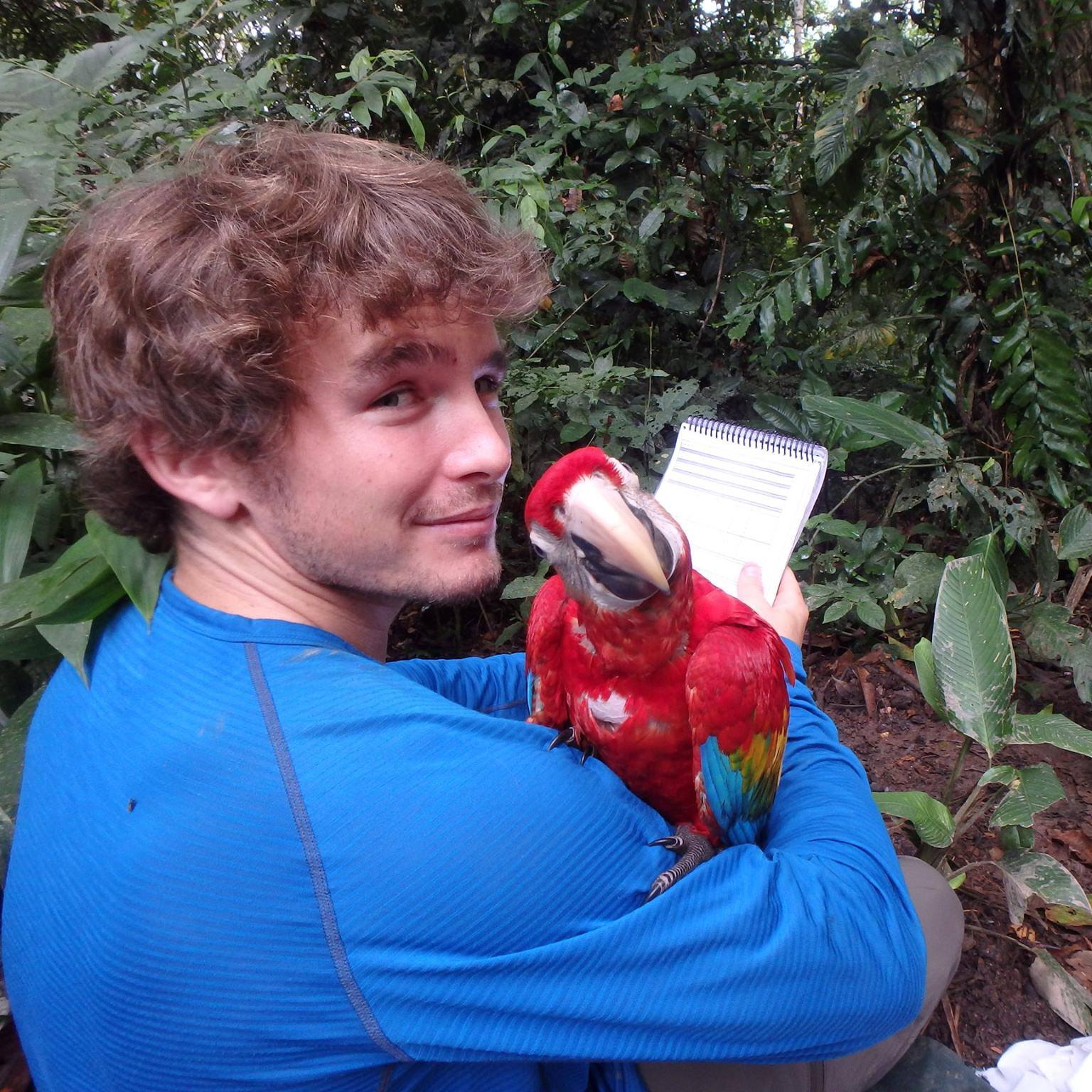
Tom Lloyd
- Postdoctoral Research Fellow, Global Ecosystems
- tom.lloyd@jcu.edu.au
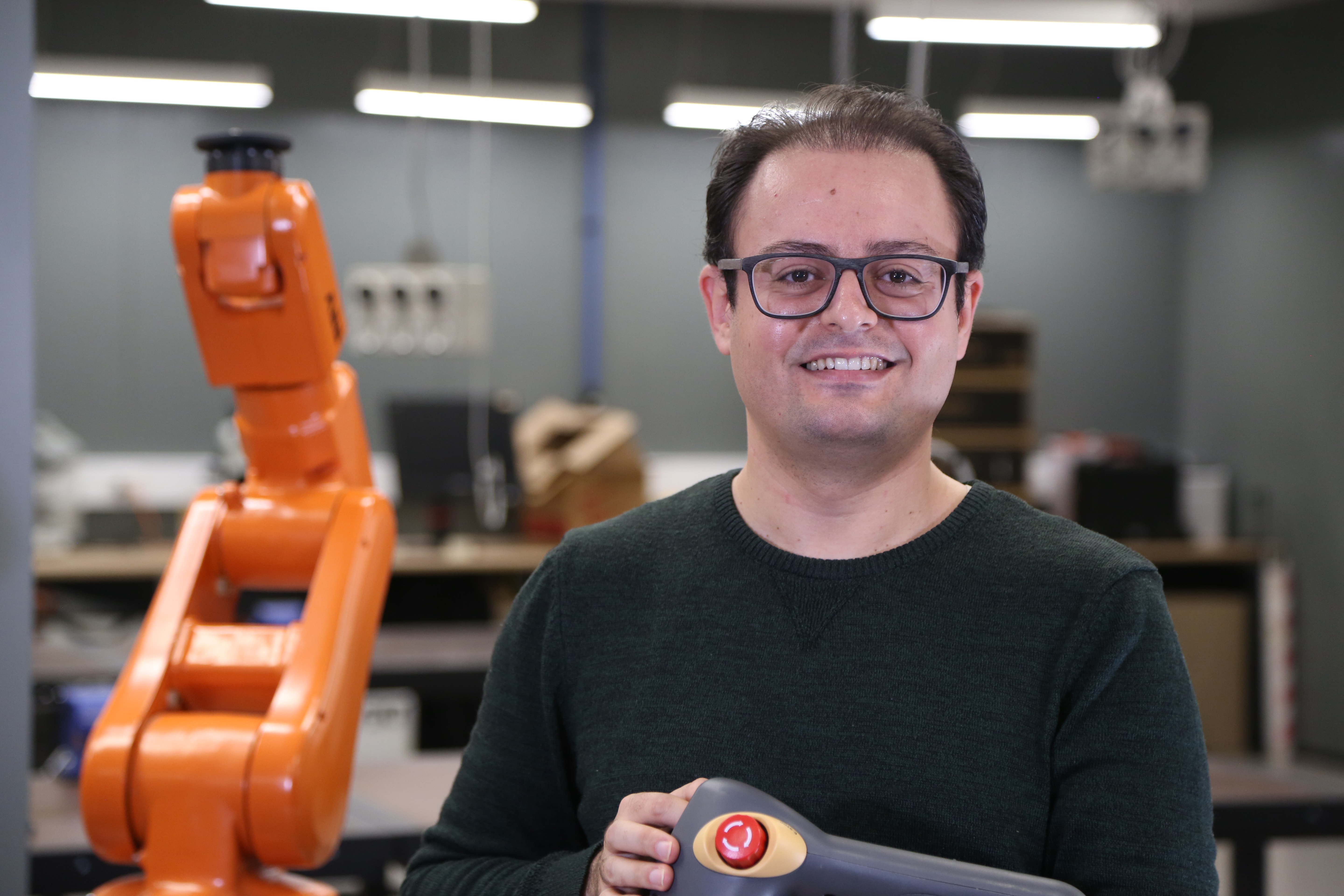
Mohamadreza Chalak Qazani
- Lecturer, Mechanical Engineering
- mohamadreza.chalakqazani@jcu.edu.au
Investigating combined stressors in bees: insecticides and thermal stress (Old ID 27283)
Peter Yeeles
30 Jun 2021 - 31 Jan 2022
Insecticide use poses a risk to non-target insects including bees. The effects of these compounds is all the more worrying given that honey bees prefer nectar containing traces of the naturally derived insecticide class – the neonicotinoids. This project will expand upon previous bodies of work to investigate the preference of stingless bee species Tetragonula hockingsi when provided with the choice between an insecticide laced food source and a sucrose solution. This project will also explore the combined effects of insecticide exposure and increasing temperature on bees.
Ant-plant-herbivore interactions across global tropical ecosystems (Old ID 30049)
Daniel Montesinos Torres
03 Jul 2023 - 31 Dec 2023
My project aims to investigate the plant-insect interactions in a highly invasive tropical weed to assess the interactions that unfold during the spread of alien invasive species. Sicklepod (Fabaceae; Senna obtusifolia) is native to the neotropics but has become invasive in many tropical ecosystems including Australia’s tropics. My project aims to investigate to what extent the ant-plant interaction increases plant fitness for the invasive sicklepod, and whether sicklepod benefits from enemy release in Australia. I anticipate that the results from this study will form one chapter of my PhD thesis, a manuscript for publication and presentations at an international conference.
AI-Powered Precision Farming: Mapping, Detection, Planning, and Spot Spraying (Old ID 31107)
Nathan Waltham
01 Sep 2023 - 29 Nov 2024
High-tech solutions in agriculture offer many benefits for improved crop and land management. However, current methods rely heavily on human experts for monitoring and planning. To address this, we propose a state-of-the-art AI-based spraying strategy software that: • takes aerial images of the farm/land vegetation (using drones, planes, satellites, etc.) and detects field requirements, • generates a pre-spray map on GIS systems, considering the existing terrain topographies, • optimally plans the detailed spraying strategy and suggests one or a combination of proper spraying methods such as blanket, vehicular spot, or aerial spraying, and • whenever possible, effectively commands and controls appropriate devices to spray, such as drones, vehicles, people, etc. It might also receive feedback and correspondingly optimize the process/plan. This AI-Powered system helps farmers and producers precisely spray, saving costs and the environment.
AI-Powered Precision Farming: Mapping, Detection, Planning, and Spot Spraying (Old ID 31107)
Mostafa Rahimi Azghadi
01 Sep 2023 - 29 Nov 2024
High-tech solutions in agriculture offer many benefits for improved crop and land management. However, current methods rely heavily on human experts for monitoring and planning. To address this, we propose a state-of-the-art AI-based spraying strategy software that: • takes aerial images of the farm/land vegetation (using drones, planes, satellites, etc.) and detects field requirements, • generates a pre-spray map on GIS systems, considering the existing terrain topographies, • optimally plans the detailed spraying strategy and suggests one or a combination of proper spraying methods such as blanket, vehicular spot, or aerial spraying, and • whenever possible, effectively commands and controls appropriate devices to spray, such as drones, vehicles, people, etc. It might also receive feedback and correspondingly optimize the process/plan. This AI-Powered system helps farmers and producers precisely spray, saving costs and the environment.
2022 Scientific Consensus Statement / Review of Water Quality Targets Projects (Old ID 27867)
Nathan Waltham
06 Dec 2022 - 30 Jun 2026
Project Part A: Lead authors selected to deliver synthesis of evidence for assigned questions forming the 2022 Scientific Consensus Statement Project Part C: Review of the GBR end of catchment water quality (sediment and nutrient) targets.
AutoFish: Automatic Fish Phenotyping Tool for Sustainable Aquaculture and Smart Fisheries (Old ID 28947)
Dave Jones
01 Mar 2023 - 30 Jun 2023
This project aims to advance an initial implementation of a new automatic fish phenotyping tool, named AutoFish, that will enhance aquaculture farming and post-harvest processing practices by accelerating the collection of data and automatically analysing and leveraging it using the latest advances in computer vision and machine learning technologies. We have already developed a ground-breaking solution for the aquaculture industry, and produced a Proof Of Concept (POC) device, which has been successfully tested. This POC is ready to get tailored, integrated and/or retrofitted into an available fish and aquaculture farm for grading, phenotypic collection and/or processing lines, due to its modular stand-alone nature. The AutoFish concept has been proven with Barramundi as a test species. However, it can be used to collect images of, and trained to predict features of other fish and/or aquaculture species. AutoFish can also be trained to detect and predict any customertailored features and traits of the fish/product, and/or be used to assess the health of fish/product, if th health issues are visually recognisable by an RGB camera and the background phenotypic data present for training. Hence this technology would be scalable and can be implemented for other aquaculture products worldwide. The main aim of this project is to unlock the potential of our initial AutoFish POC by applying it to, or altering it for, a partner Barramundi (or Prawn) farm, to solve a real end-users’ problem. This problem can be about any monitoring aspect, as long as cameras can capture it. We have narrowed down the scope of this project to Barramundi (and/or Prawn) due to our wider industry network in these two species.
Investigating differences in the behavioural syndromes of Melomys cerninipes from different habitat types (Old ID 22195)
Tasmin Rymer
01 Jul 2015 - 30 Jun 2016
Behavioural syndromes or personalities are a series of correlated behaviours that are consistently displayed within an environment by an individual. I aim to study whether the fawn-footed melomys, Melomys cervinipes, in the Wet Tropics has distinct behavioural syndromes and whether these behavioural syndromes are associated with habitat disturbance. I hypothesise that individual M. cervinipes will show distinct behavioural syndromes depending on their habitat. This study will provide a greater understanding of the relationship between behavioural syndromes and habitat disturbance in a poorly studied Australian rodent. This knowledge will provide an insight into how individual and population fitness could be affected in degraded environments and how animals may cope with environmental change.
Investigating the effects of insecticide exposure, pathogens, and heat stress on bee diversity, abundance, and health (Old ID 28974)
Peter Yeeles
01 Apr 2023 - 30 Apr 2026
Bees are threatened by multiple stressors including insecticide exposure, disease, loss of habitat, and climate change. Studies investigating stressors facing Australian bees are becoming more common, but many knowledge gaps still exist and while some studies document the effects of stressors in isolation, they stop short of investigating the effects of stressors in combination. My project will investigate how the stressors of insecticide exposure, pathogens and heat stress affect native bee diversity, abundance, and health, as well as investigate whether bee hotels cause increased pathogen and parasitism prevalence, and predation rates in native bees.
Canid alphaherpesvirus-1 in a Queensland district: seroprevalence and risk factors (Old ID 27363)
Paul Horwood
01 Sep 2021 - 31 Dec 2023
Canid alphaherpesvirus 1 (CaHV-1; previously known as canine herpesvirus-1) causes a highly fatal haemorrhagic disease in newborn puppies, as well as embryonic and foetal losses, manifested as infertility, abortion and stillbirth. In dogs over 5 weeks of age, CaHV-1 is of low pathogenicity but can cause genital lesions as well as respiratory (kennel cough) and ocular disease. CaHV-1 has been identified in numerous countries worldwide and is probably ubiquitous. In Belgium, around 46% of dogs sampled were seropositive to CaHV-1, where “seropositive” implies that the dog was infected during the preceding weeks to months. In South Africa, over half of sampled breeding kennels in one province were found to have one or more CaHV-1 seropositive dogs. In England, 94% of sampled dogs showed evidence of prior infection with CaHV-1. In Australia, surprisingly little has been reported on CaHV-1. Sudden deaths in a litter of greyhound puppies, with post mortem findings highly suggestive of CaHV-1, was reported by researchers from the University of Sydney in 1970. A diagnosis of CaHV-1 was confirmed as the cause of sudden deaths in a litter of Labrador puppies in Perth in 1971, as well as a litter of Doberman Pinschers in Queensland in 1974. In 2002, CaHV-1 isolated from a greyhound pup in Australia underwent genetic sequencing. No further case studies on CaHV-1 appear to have been reported. Moreover, no research into the seroprevalence of CaHV-1 has been undertaken in this country. Interestingly, a vaccine against CaHV-1 is available in other countries but is not currently registered in Australia. The aim of our research is to evaluate the seroprevalence of CaHV-1 in dogs in the Herbert and Lower Burdekin District of Queensland. A secondary aim is to identify risk factors for CaHV-1 infection based on a questionnaire supplied to the owners of dogs submitted for sampling. This research will provide an important first step in establishing the relevance of CaHV-1 to dog owners, breeders and veterinarians in Australia. Knowledge arising from this study may help to inform on strategies to minimise infection rates within dog populations. Furthermore, the results of this study may provide a preliminary indication on whether a vaccine against CaHV-1 could be of value to Australian breeding kennels.
Understanding fine-scale distribution and climate resilience in microhylid frogs - the Wet Tropics' most threatened vertebrates (Old ID 27600)
Conrad Hoskin
01 Apr 2022 - 31 Aug 2025
This grant will help fund field trip and equipment costs (e.g., acoustic monitoring devices) for my PhD project. My research aims to resolve current elevational ranges of threatened Cophixalus frog species in the Wet Tropics and determine what factors drive distributions and breeding activity, ultimately contributing to future management actions.
Natural resource system challenge IV: oceans and aquatic ecosystems
- 2002
- EOLSS Publishers
- Researchers:Eric Wolanski
Physical features and hydrography
- 2005
- University of Malaya Press
- Researchers:Eric Wolanski
High temperature superconducting planar filters for wireless communication
- 2004
- Kluwer Academic Publishers
- Researchers:Mohan Jacob
The oceanography of Palau
- 2007
- Palau International Coral Reef Center
- Researchers:Eric Wolanski
Start Date:
10 Nov 2024
Start Date:
31 Mar 2025
Title:
Bengali
Reseracher:
Khandakar Faisal Ibn Murad
(Doctor of Philosophy (Engineering and Related Technologies))
Title:
English
Reseracher:
Khandakar Faisal Ibn Murad
(Doctor of Philosophy (Engineering and Related Technologies))
Start Date:
01 Jan 2024
Start Date:
01 Jan 2024
End Date:
01 Jan 2027
Start Date:
01 Jan 2014
Start Date:
01 Jan 2003
Title:
PhD, James Cook University
End Date:
01 Jan 2010
Start Date:
01 Jan 2024
End Date:
01 Jan 2024