
College of Science & Engineering

Sophia Love
- Doctor of Philosophy (Natural and Physical Sciences)
- sophie.love@jcu.edu.au

Romain Vaucher
- Senior Lecturer, Sedimentology
- romain.vaucher@jcu.edu.au

Jenny Fisher
- Associate Dean, Learning and Teaching
- jenny.fisher@jcu.edu.au

Ambili Narayanan
- Doctor of Philosophy (Natural and Physical Sciences)
- ambili.narayanan@my.jcu.edu.au

Sarfaraz Ali
- Postdoctoral Research Fellow
- sarfaraz.ali@jcu.edu.au

Mikaeylah Davidson
- Postdoctoral Research Fellow
- mikaeylah.davidson@jcu.edu.au

Liuxin Chen
- Lecturer
- liuxin.chen@jcu.edu.au

Rafael Cabral Carvalho
- Lecturer, Marine Geoscience
- rafael.cabralcarvalho@jcu.edu.au
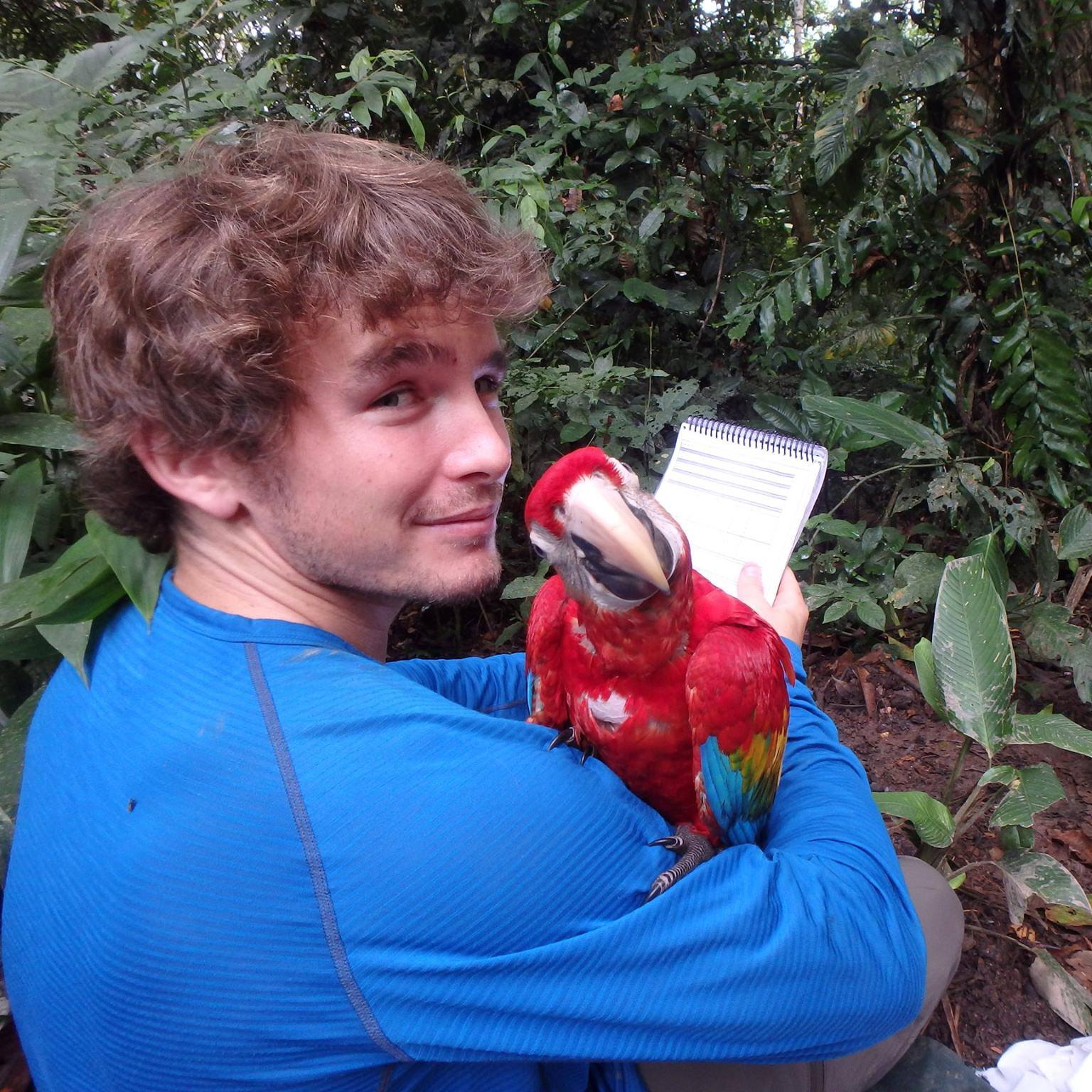
Tom Lloyd
- Postdoctoral Research Fellow, Global Ecosystems
- tom.lloyd@jcu.edu.au
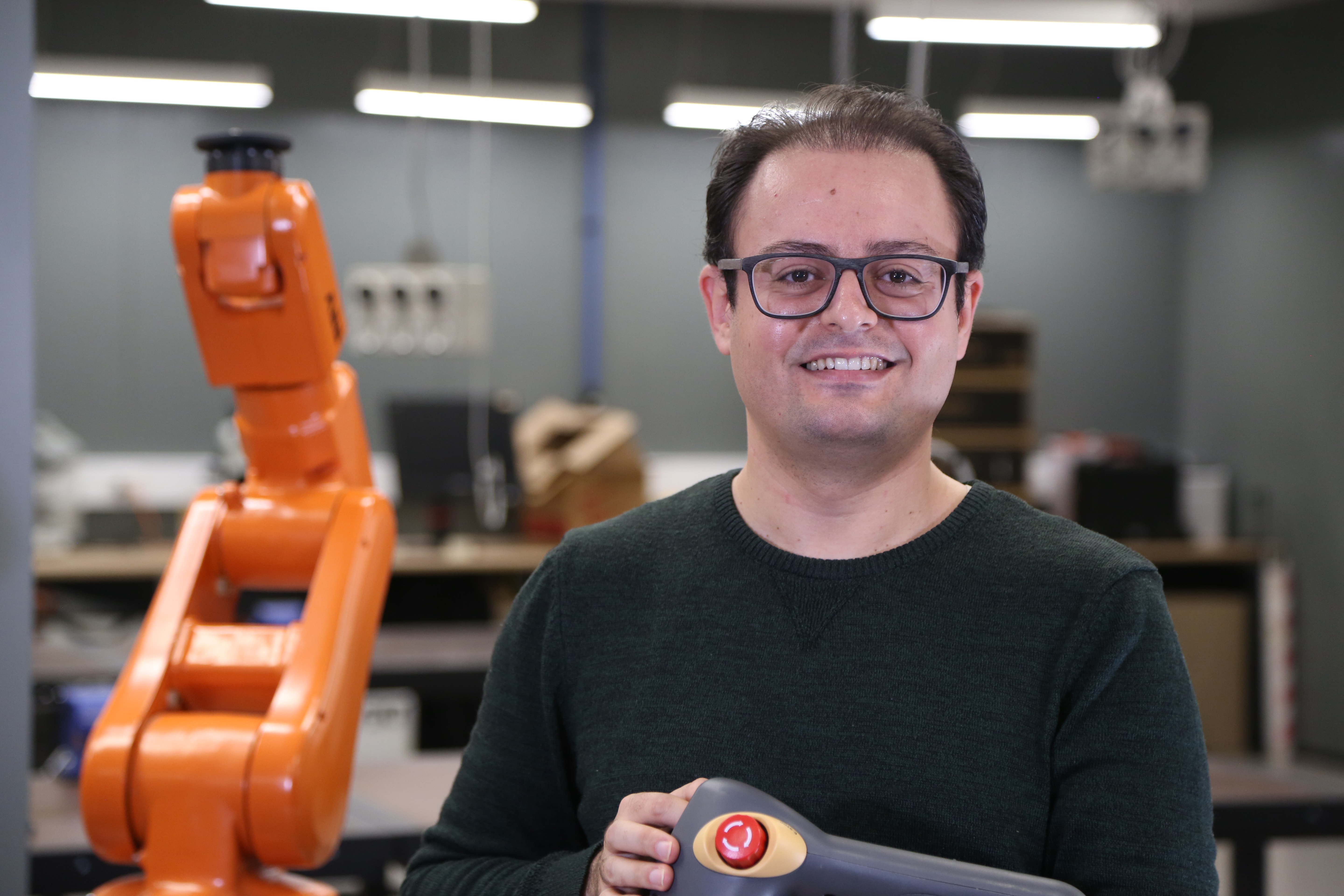
Mohamadreza Chalak Qazani
- Lecturer, Mechanical Engineering
- mohamadreza.chalakqazani@jcu.edu.au
Vibration analysis of mining industry conveyor belt systems: validation of method and pathways to improvement (Old ID 26579)
Bronson Philippa
19 Aug 2019 - 19 Feb 2020
Equipment failures in the mining industry can cause serious safety hazards and substantial financial losses. An automated, cost-effective monitoring system that could be retrofitted to existing equipment would provide advance warning to operators and reduce the likelihood of unscheduled outages. This project will test and validate a vibration-based monitoring system for conveyor belts and associated equipment. It will also identify improved methods to analyse the vibration data to increase the sensitivity and/or accuracy of the alerts that are generated.
Implementing artificial intelligence for the quantitative assessment of abalone in production systems (Old ID 26800)
Phoebe Arbon
01 Apr 2020 - 07 Feb 2022
This project will aim to develop, train, validate and implement an artificial intelligence model to identify and count abalone and measure quantitative abalone traits in production systems from an image. Currently, stock assessment is conducted manually, with large costs associated for the farms. This solution would reduce the cost of stock assessments and would greatly improve data quantity and quality using a “hands-off” approach. The model would also provide an advanced platform for further R & D improvements above and beyond basic assessments (e.g. growth monitoring in feeding trials).
Mix Designs for Paste Aggregate Fills (Old ID 22395)
Siva Sivakugan
27 Dec 2015 - 30 Apr 2016
JCU is requested to prepare the paste aggregate fill (PAF) samples, mixed with tailings in three different proportions. The samples are approximately 200mm diameter and 400mm in length, and the PAF should exclude fractions larger than 20mm and those less than 1.18mm. In all three mixes, UCS tests will be carried out after 7, 14, 28, 56 and 100 days and strength and Young's modulus will be determined. In addition, the grain size distribution, specific gravity, bulk density, and moisture content will be determined. In addition, it is also required to carry out slump tests on the different mixes using the standard slump cone.
Ecological influences on biodiverse morphology in climbing geckos (Old ID 27210)
Lin Schwarzkopf
15 Apr 2021 - 30 Apr 2025
Ecological interactions are one of the main drivers of biodiversity generation. The influence of ecology on the morphology of organisms is one such interaction that influences the generation of biodiversity. Australian Diplodactyline geckos are some of the most morphologically and ecologically diverse systems in the world. They occupy a diverse range of habitats and have evolved unique toe pads enable the exploitation of several substrates within the habitats they occupy. Therefore, my project will investigate how toe pads have evolved in response to habitat use in Diplodactyline geckos. We will examine these relationships by studying habitat use and morphology, with locomotor performance as an intermediary link.
Development of Microflow Photochemistry and its Application in the Synthesis of Platform Chemicals of Pharmaceutical Importance (Old ID 20071)
Michael Oelgemoeller
01 Aug 2013 - 31 Dec 2017
The proposal develops an innovative approach in organic synthesis. It combines organic photochemistry and microflow chemistry with novel lamp and LED technology. Advanced microflow reactor concepts based on microcapillaries or flow injection will be designed and applied in the synthesis of platform chemicals. LED-panels will be utilized as powerful, miniaturized light sources. Methods for parallel photochemistry and scale-up will be furthermore realized using important examples of pharmaceutical interest. The superiority of microflow photochemistry over conventional techniques will be demonstrated through comparison studies. Hence, microflow photochemistry will emerge as a concept, rapid and resource efficient synthesis tool.
Combined U-Pb zircon geochronology & Lu-Hf analysis of Jurassic-Cretaceous volcanics and sandstones from the Lord Howe Rise and Queensland Plateau, Australia (Old ID 22185)
Eric Roberts
01 Aug 2015 - 31 Dec 2016
We prosed to combine zircon geochronology on putative Cretaceous volcanics reported in the DSDP Leg 21-207 and combine this with more ambitious dual Lu-Hf isotope and U-Pb isotope analysis on detrital zircons collected from a suite of Cretaceous and Paleogene sedimentary rock samples in cores from DSDP Leg 21-206, 207, 208 and 209. This approach is designed to identify the distribution of ages and geochemical signatures associated with earlies Cretaceous-Jurassic age detrital zircons (and volcanics) in order to better understand the timing of Cretaceous-Jurassic volcanism, the possible provenance of Cretaceous-Jurassic volcanic sources and to glean a better understanding of the nature of the magmatism during the Jurassic and Early Cretaceous along eastern Australia.
Mungalla Wetland System Repair (Old ID 22784)
Nathan Waltham
01 Oct 2015 - 30 May 2017
Coastal wetlands provide services important for aquatic wildlife. However, human need has contributed to modification and change to coastal wetland function. Government and community projects have commenced across the Great Barrier Reef catchment area to repair and revitalise coastal wetlands to, again, function as productive ecosystems, while still offering services for humans. A project has commenced, supported by Australian Government, to repair natural tidal flow and fisheries value to Mungalla wetland. This project herein will examine wetland aquatic ecology and water quality in response to broader system repair programs underway.
A national facility for the analysis of pyrogenic carbon (Old ID 23352)
Michael Bird
01 Jan 2018 - 31 Dec 2018
This project will develop a National Facility for Pyrogenic Carbon Analysis. Pyrogenic carbon (biochar, soot, charcoal, black carbon) is a poorly constrained, slow-cycling terrestrial carbon pool with significant carbon sequestration potential. It is also an important source of palaeoenvironmental and geochronological information. We will expand newly developed hydrogen pyrolysis analytical capability to provide high throughput, robust, measurement of the abundance and isotope (13C, 14C) composition of pyrogenic carbon in soils and sediments. The facility will advance multiple research agendas at nine participating institutions across palaeoecology, geomorphology, geochronology, archaeology and carbon cycle/ sequestration science
Taxonomic and Functional Diversity of Reef Corals (Old ID 25127)
Tom Bridge
30 Jun 2018 - 31 Dec 2022
Coral reefs are among the most threatened ecosystems on earth, and are strongly affected by comparative small changes in the environment. However, some coral populations have been shown to survive in habitats analogous to those predicted for later this century. This project will quantify how species diversity and their associated ecological traits vary along environmental gradients to understand how functional diversity varies among habitats. This information will enable better predictions of the functional composition of future coral reef ecosystems, and whether plasticity in functional traits may mediate the functional declines of reef ecosystems.
Understanding and improving rare earth corrosion inhibitors (Old ID 26335)
Peter Junk
10 Feb 2020 - 30 Jun 2024
This project aims to investigate rare earth corrosion inhibitors by an interdisciplinary program of chemistry and materials science. The project will generate new knowledge as to how rare earth corrosion inhibitors function and can be improved. Expected outcomes include a better understanding of inhibitor induced protective films and improved inhibitors. Significant benefits are eventually better protection of infrastructure from corrosion with greener inhibitors and a new bulk use for rare earths to aid Australia’s emerging rare earth industry.
Wave and wind parameters from HF ocean radar
- 2010
- Centre for Australian Weather and Climate Research
- Researchers:Jasmine Jaffres
Exploring discourses in environmental decision making: an Indigenous hunting case study
- 2010
- Taylor & Francis
- Researchers:Helene Marsh
Better governance to save rainforests
- 2010
- Nature Publishing Group
- Researchers:William Laurance
Predatory corporations, failing governance, and the fate of forests in Papua New Guinea
- 2011
- Wiley-Blackwell
- Researchers:William Laurance
Fluctuating wind loads for cladding design
- 2010
- Engineers Australia
- Researchers:John Ginger
Start Date:
10 Nov 2024
Start Date:
31 Mar 2025
Title:
Bengali
Reseracher:
Khandakar Faisal Ibn Murad
(Doctor of Philosophy (Engineering and Related Technologies))
Title:
English
Reseracher:
Khandakar Faisal Ibn Murad
(Doctor of Philosophy (Engineering and Related Technologies))
Start Date:
01 Jan 2024
Start Date:
01 Jan 2024
End Date:
01 Jan 2027
Start Date:
01 Jan 2014
Start Date:
01 Jan 2003
Title:
PhD, James Cook University
End Date:
01 Jan 2010
Start Date:
01 Jan 2024
End Date:
01 Jan 2024