
College of Science & Engineering

Sophia Love
- Doctor of Philosophy (Natural and Physical Sciences)
- sophie.love@jcu.edu.au
Romain Vaucher
- Senior Lecturer, Sedimentology
- romain.vaucher@jcu.edu.au
Jenny Fisher
- Associate Dean, Learning and Teaching
- jenny.fisher@jcu.edu.au

Ambili Narayanan
- Doctor of Philosophy (Natural and Physical Sciences)
- ambili.narayanan@my.jcu.edu.au

Sarfaraz Ali
- Postdoctoral Research Fellow
- sarfaraz.ali@jcu.edu.au
Mikaeylah Davidson
- Postdoctoral Research Fellow
- mikaeylah.davidson@jcu.edu.au

Liuxin Chen
- Lecturer
- liuxin.chen@jcu.edu.au
Rafael Cabral Carvalho
- Lecturer, Marine Geoscience
- rafael.cabralcarvalho@jcu.edu.au
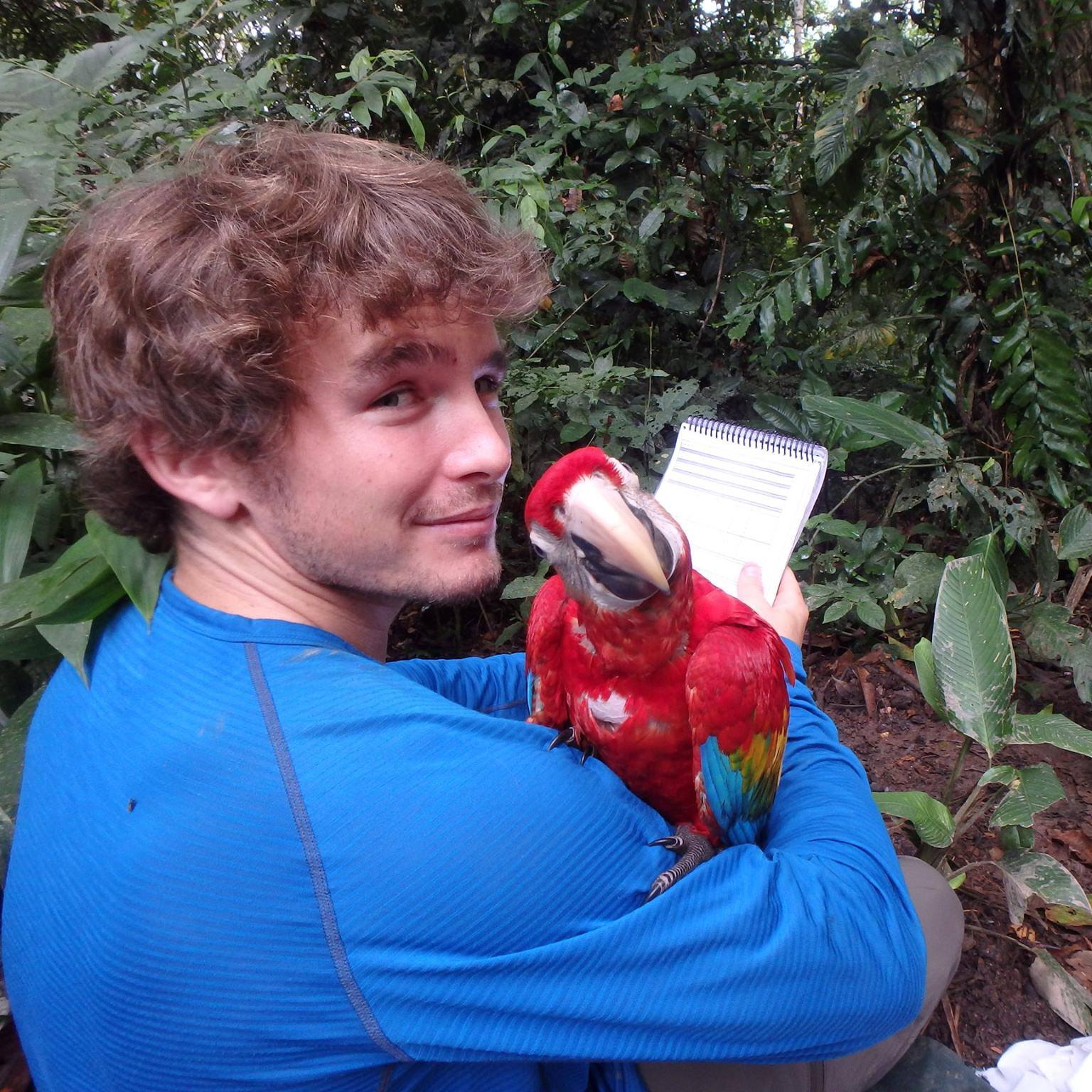
Tom Lloyd
- Postdoctoral Research Fellow, Global Ecosystems
- tom.lloyd@jcu.edu.au
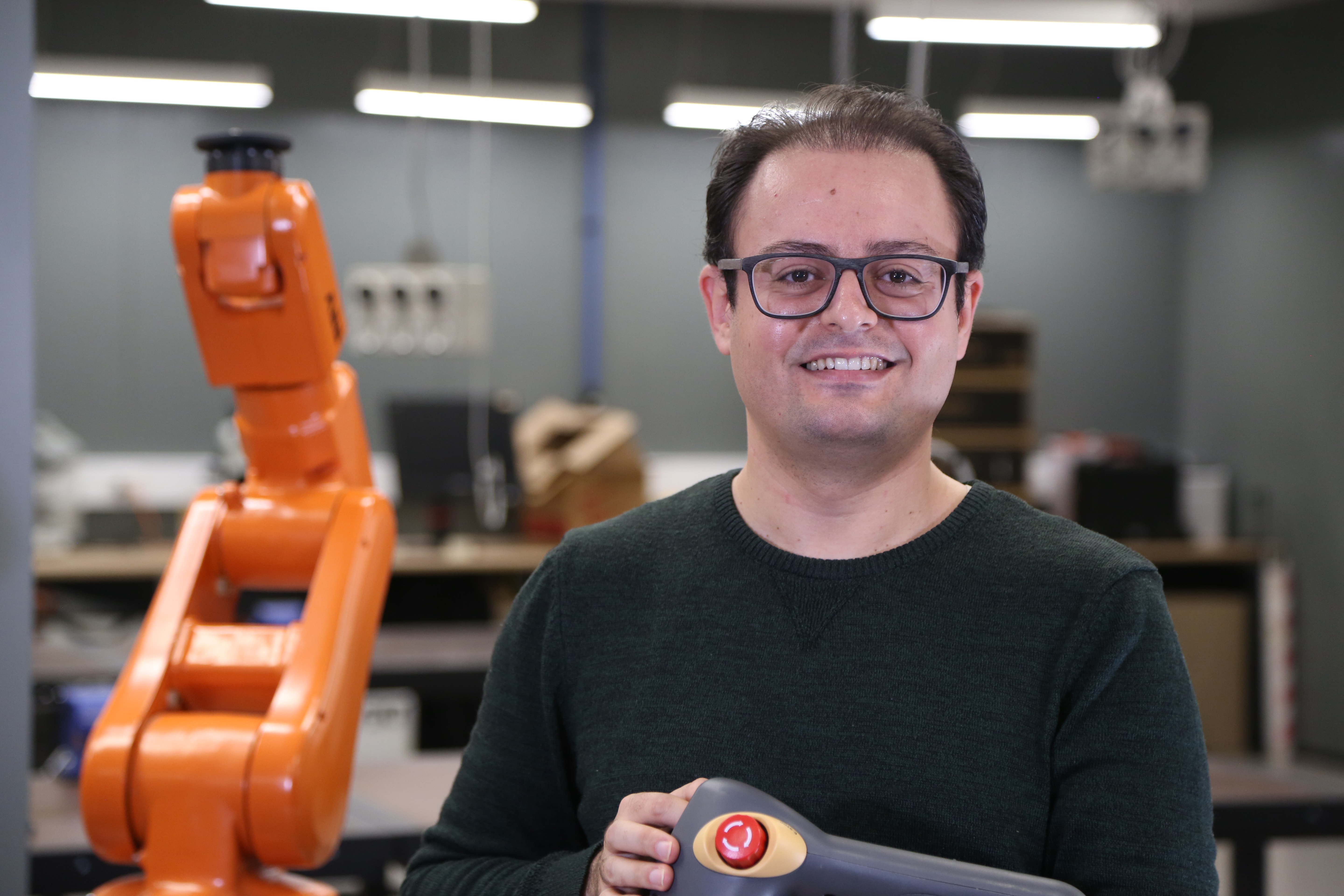
Mohamadreza Chalak Qazani
- Lecturer, Mechanical Engineering
- mohamadreza.chalakqazani@jcu.edu.au
Rare Earths-Critical Metals for Future Applications
Zhifang Guo
01 Jun 2025 - 31 Dec 2025
This is a new project. This project aims to develop unusual oxidation state rare earth metal (critical metal) organic complexes with high properties (e.g. reactivity, luminescence, strong magnetism), and small molecule activation of these new species. The project expects to advance knowledge of rare valent rare earth chemistry and to enhance the understanding of direct reactions and C-F activations and rare earth complexes involving organic radical anions. Expected outcomes include expansion of tetravalent lanthanoid chemistry and new structures, reactivity, and magnetic properties. Significant benefits are the applications of Australia's abundant rare earths in catalysis as well as the development of new extraction and separation techniques. The results for LnIV will provide key information for the isolation of stable lanthanoids (IV) complexes with high oxidizing abilities, which is important for the expansion of tetravalent lanthanoid chemistry and its applications in catalysis as well as the development of new separation techniques. Divalent and mixed valent rare earth compounds will expand their synthesis and application. All of them require considerable synthetic innovation and would be a major contribution to knowledge and would open exciting reaction chemistry. The innovation is to build –C-F-Ln bonds and induce C-F activation of fluorine substituted ligands by the direct reactions or redox transmetallation RT reactions from free rare earth metals. The redox-active ligand is a particularly attractive linker to promote magnetic coupling in lanthanoids resulting in complexes displaying exchange coupling and single molecule magnet behaviour. These radical-bridged complexes can be accessed using simple N/O supporting ligands. These findings will pave the way for the synthesis of radical-bridged complexes and suitable tuning of the supporting ligand should lead to improved magnetic communication, exchange-coupled SMMs, and understanding the magnetic properties of the 4f-block metal compounds. The main benefits of the project are advancement of knowledge of rare earth chemistry, especially of highly reactive metal-organic compounds, maintenance of Australia’s position as one of the leaders in this field. Knowledge and innovations acquired in this research will facilitate advances in use of Australia's abundant rare earths in chemical manufacture, catalysis, and recycling. It will add value to Australia’s abundant rare earth resources by providing a base for downstream applications. Moreover, the production of rare earth complexes with improved magnetic properties provides an opportunity for advanced manufacturing in Australia’s fine chemicals industry. The most expensive items are rare earth metals for the synthesis of tetravalent rare earth complexes. e.g. Eu $1200/20g, Yb $1252/100g, Dy $939/100g, Tb, $1565/50g, Pr 782/100g, Lu and Tm are much more expensive. Other necessary expensive reagents include pentafluorobenzene $688/500g, 2,6-Difluoroaniline 349/100g, 2,6-Diisopropylaniline $320/100g, 2,3,4,5-Tetrafluoroaniline $195/25g, 2,3,5,6-Tetrafluoroaniline $276/25g, 2,3,4,5,6-Pentafluoroaniline $342/100g, triethyl orthoformate $277/1L, pyrrole $189/100ml, 3-Pentanone $100/1kg needed to prepare organometallic reagents and ligands. Other important reagents include tris(4-bromophenyl)ammoniumyl hexachloroantimonate $105/5g (the oxidizing agent), Benzophenone ($122/1kg), 4,4´-Dipyridyl ($202/25g), iodine ($147/100g), K/Na metal, et al. A supply of deuterated solvents is needed for NMR spectroscopy, e.g. C6D6 ($495/100g) and C4D8O ($477/10g). Microanalyses are a major cost for a synthetic project as the analyses are determined in London (air-sensitive sample $45/C, H, N) and SQUID measurement will be determined at EPSRC National EPR Facility University of Manchester ($160/h).
Understanding the ecology and behaviour of platypus in far North Queensland
Tasmin Rymer
01 Apr 2025 - 01 Apr 2028
Our study seeks to understand the ecology and behaviour of genetically isolated and understudied platypuses in far north Queensland. While platypuses were classified as “near threatened” by the IUCN in 2016, most research has been confined to populations in NSW and Victoria. Far north Queensland uniquely hosts platypuses in a predominantly rainforest environment, yet formal region-specific ecological knowledge is lacking. To address this, we aim to 1) assess the presence and relative abundance of platypuses in the Atherton Tablelands, 2) quantify population demographics, and 3) quantify local resource availability and quantify carrying capacity. These efforts will help us establish a baseline understanding of the population’s overall health and longevity and cultivate a more nuanced understanding of the population’s unique characteristics and life history. Developing such knowledge is critical to informing current and future regional management and conservation efforts of this iconic Australian species in a rainforest biome.
This project will work closely with local stake holders and conservation efforts, mainly Dulguburra Yidinji traditional owners and the Yungaburra Landcare Group who share a vested interest in the project’s findings.
Mapping transcrustal transfer of energy critical metals in Northwest Queensland
Lauren Waszek
01 Jul 2025 - 31 Dec 2025
This project will target a resubmission of a near-miss 2025 Discovery Project Expression of Interest. The aim is to develop and demonstrate proof-of-concept methodologies, and deliver preliminary results, in order to strengthen the application for 2026. The project requests funds for 50% of four months salary for the new postdoctoral research associate in Geophysical Ore body modelling to perform this pilot study, and assist with updating and improving the DP application. Funds will be requested for a research associate within the DP application, and thus, if successful, the research associate would take up this role for the DP following the completion of their Trailblazer postdoctoral position.
Enhancing Battery Control and Market Integration for Renewable Support: Applications in Solar Firming and Dispatchable Generation
Yang Du
30 Jun 2025 - 30 Jun 2026
This project explores how advanced battery control strategies can enable renewable energy—particularly solar PV—to provide reliable, dispatchable power. It involves collaboration with US experts to develop market-aligned battery applications and educational materials that support Australia’s clean energy transition.
Enhancing Battery Control and Market Integration for Renewable Support: Applications in Solar Firming and Dispatchable Generation
Yang Du
30 Jun 2025 - 30 Jun 2026
This project explores how advanced battery control strategies can enable renewable energy—particularly solar PV—to provide reliable, dispatchable power. It involves collaboration with US experts to develop market-aligned battery applications and educational materials that support Australia’s clean energy transition.
Develop an autonomous AI vehicle damage assessment tool (Phase II) (Old ID 27223)
Ickjai Lee
04 May 2021 - 04 May 2022
Improvement upon the project 1 developed method for automated detection, identification and categorisation of vehicle panel damage by developing a user interface and video vision. Semantic segmentation and deep learning networks will be further refined and developed for the next evolution/iteration of the software platform.
The ecology of endangered and widespread species in the Vincetoxicum genus.
Daniel Montesinos Torres
12 Aug 2025 - 12 Aug 2028
The study of a rare and endangered plant species ecology, information from which we can protect the species and preserve the biodiversity of the Wet Tropics.
The ecology of endangered and widespread species in the Vincetoxicum genus.
Peter Yeeles
12 Aug 2025 - 12 Aug 2028
The study of a rare and endangered plant species ecology, information from which we can protect the species and preserve the biodiversity of the Wet Tropics.
Protection, Restoration and Management of Seagrass and Saltmarsh Ecosystems of India
Nathan Waltham
27 Jun 2025 - 30 Jun 2027
This project is about restoration, protection and management of seagrass and saltmarsh ecosystems from the coast of Odisha, India. Within the project GIS based mapping, field work for collection of sediment and plant samples, data analysis and reporting writing would be included. Consequently, restoration activities are also planned for both seagrass and saltmarsh ecosystems in India.
Upscaling oyster reef and mangrove restoration in GBR catchments
Nathan Waltham
05 Aug 2025 - 31 Mar 2028
This project builds on successful, community-driven habitat restoration initiatives that will contribute to improved ecological health and biodiversity in Great Barrier Reef (GBR) catchments.
The project will deliver a multi-habitat project that will restore oyster reefs and mangrove wetlands, resulting in improved structural habitat complexity and biodiversity at the restoration sites. The project will be implemented through a series of coordinated, community-led activities across several key locations.
The Project will focus on 3 key themes:
1. Community Engagement: Engaging local communities directly in habitat restoration activities, fostering a sense of ownership and stewardship.
2. Educational Programs: Providing educational opportunities to raise awareness about the importance of marine habitats and biodiversity.
3. Volunteer Training: Training new volunteers to participate in restoration activities, including monitoring and maintenance.
Services required
As per the project application:
Support for project monitoring and maintenance activities, including flora and fauna surveys and assistance with water quality monitoring.
Deliverables for this project for James Cook University (TropWATER) are:
1. Program Design and Site Prioritisation – Attend and contribute to monthly project working group meetings. Contribute technical expertise to key discussions (as required) on prioritisation of restoration sites, restoration methods and Development Approval requirements for restoration works.
2. Stakeholder Meetings – Attend and (where relevant) facilitate key stakeholder meetings with potential project partners, including Port of Gladstone, North QLD Bulk Ports and others.
3. Environmental Monitoring 01 – Prepare an environmental monitoring program, that contains detailed information on methods and timing of data collection for flora, fauna and water quality. Monitoring will include (but is not limited to) surveys of restoration sites to assess oyster recruitment, density and growth of mangrove propagules, biodiversity assessments of fish and invertebrate communities and water quality assessments.
4. Environmental Monitoring 02 – Complete of a minimum of one monitoring event (including flora, fauna and water quality surveys) at each prioritised restoration site each quarter (every three months), starting in July 2025 to December 2027. Results are to be presented to OzFish in the form of technical summary reports prior to payment of each of Milestones 2 – 5 (see Schedule 1).
5. Project Promotion – Work with OzFish Unlimited and Reef Catchments’ project delivery and communications teams to promote project events, delivery and outcomes.
6. Final Project Report – Produce a summary technical report, detailing the findings from flora and fauna surveys, as well as water quality data. Due Date – 25 February 2028
Deliverables may be adjusted pending the initial scope of works discussions, and development of the monitoring program, with both parties (JCU and OzFish) to agree and sign any new deliverables.
In preparing this funding grant, discussions with JCU staff agreed to include a proportion of the budget to award a PhD research scholoship as part of an Industry/JCU scholarship. Provision has been made in the budget for 50% contribution through this project towards the PhD scholarship, under the provision that JCU will contribute 50% towards the PhD scholarship ($65,000, ex GST). This PhD Scholarship expands the ability to complete the research component of this project – value adding to the overall project objectives. Should JCU not support a 50% industry scholarship contribution, than the funding allocated will be consolidated into the total contract amount for JCU staff to use to complete the project.
Organic matter, sodicity and soil structure
- 1998
- Oxford University Press
- Researchers:Paul Nelson
Argument free clustering via boundary extraction for massive point-data Sets
- 2002
- Researchers:Ickjai Lee
Start Date:
01 Jan 2004
End Date:
01 Jan 2006
Start Date:
01 Jan 2009
End Date:
01 Jan 2013
Start Date:
01 Jan 2006
End Date:
01 Jan 2008
Start Date:
01 Jan 2000
End Date:
01 Jan 2003
Start Date:
01 Jan 2004
End Date:
01 Jan 2009
Start Date:
01 Jan 2024
End Date:
01 Jan 2025
Start Date:
01 Jan 2012
Start Date:
01 Jan 2009
Start Date:
01 Jan 2007
Start Date:
01 Jan 2004
End Date:
01 Jan 2006