
College of Science & Engineering

Sophia Love
- Doctor of Philosophy (Natural and Physical Sciences)
- sophie.love@jcu.edu.au
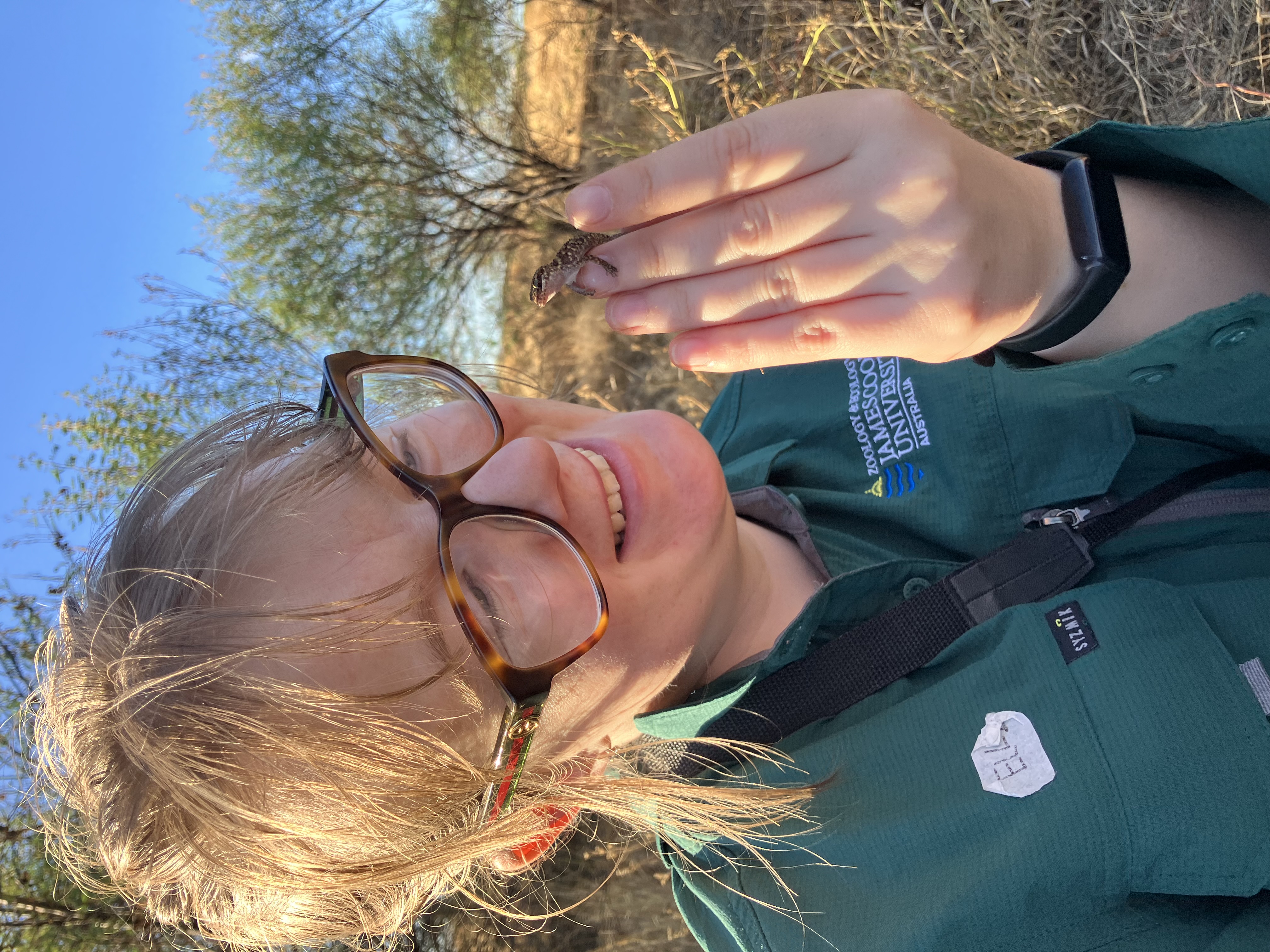
Elle Robertson
- Doctor of Philosophy (Agriculture, Environmental and Related Studies)
- elle.robertson@jcu.edu.au
Romain Vaucher
- Senior Lecturer, Sedimentology
- romain.vaucher@jcu.edu.au

Jenny Fisher
- Associate Dean, Learning and Teaching
- jenny.fisher@jcu.edu.au
Ambili Narayanan
- Doctor of Philosophy (Natural and Physical Sciences)
- ambili.narayanan@my.jcu.edu.au

Sarfaraz Ali
- Postdoctoral Research Fellow
- sarfaraz.ali@jcu.edu.au
Mikaeylah Davidson
- Postdoctoral Research Fellow
- mikaeylah.davidson@jcu.edu.au
Liuxin Chen
- Adjunct Lecturer
- liuxin.chen@jcu.edu.au
Rafael Cabral Carvalho
- Lecturer, Marine Geoscience
- rafael.cabralcarvalho@jcu.edu.au
Tom Lloyd
- Postdoctoral Research Fellow, Global Ecosystems
- tom.lloyd@jcu.edu.au
European Space Agency (ESA) World Ecosystem Extent Dynamics Project
The European Space Agency (ESA) aims to pioneer a new novel application to support international policies on the environment and sustainable development in its World Series of the Application Element (e.g. WorldSoils, WorldCover, WorldCereals, WorldWater). The objective of “World Ecosystem Extent Dynamics” project is to develop and demonstrate, the global applicability of integrated solutions driven by Earth Observation (EO) integrated solutions for mapping the extent and distribution of terrestrial, freshwater and coastal (up to the intertidal zones) ecosystems and monitoring the changes in their extent. We will achieve this with the support of exemplary countries with advanced data, technical capabilities, and reference ecosystem monitoring expertise (i.e. Champion Users). The project will develop and demonstrate a globally applicable open-source toolbox, also called EO-integrated solution, for a comprehensive mapping of the extent and distribution of ecosystem types, according to different ecosystem typologies, and for monitoring the temporal variations in the extent and distribution of ecosystem types.
CI Murray's role is as an expert consultant to join an international consultancy team tendering for the above project.
Wildlife Conservation Society Community Fisheries Program
The objective of this project is to advance the Wildlife Conservation Societies Community Fisheries program. The project will be lead by Dr. Patrick Smallhorn-West.
Based on decades of work in coastal communities, we have developed a strategy that crystalizes the goal shared by fishers and other coastal stakeholders worldwide: a vision of just and regenerative fisheries that equitably benefit nature and people. We are not only looking to slow declines in communities, coastal ecosystems and fisheries, but to reverse them to restore fisheries to their full social, economic, and environmental potential.
Our current research workstreams are:
1. Mainstreaming equity and inclusion within all aspects of WCS work with community fisheries. This includes high level assessments of NGO policies and practice.
2. Monitoring and evaluation of all aspects of community fisheries – ecological, fisheries, and socioeconomic, in ways that deliver clear and locally actionable knowledge of the impacts of interventions.
3. Elevating community fishers and strengthening their organizational capacity to participate fully in coastal governance.
4. Practicing effective co-management – evaluating and integrating the latest research on fisheries co-management into best practice.
5. Incentivizing responsible fishing that addresses unsustainable practices such as destructive fishing, illegal, unreported, and unregulated fishing, and bycatch.
Using a two-way knowledge exchange to illuminate the population dynamics of the dugong in the Gulf of Carpentaria
Dugongs are marine mammals with immense ecological and cultural significance, occurring in 40 countries in the Indo-Pacific. They are gardeners of seagrass beds and a major component of Indigenous culture. Their reliance on shallow seagrass beds exposes them to anthropogenic threats, e.g. pollution and boat disturbance. Dugongs are in decline in most of their range and are classified as vulnerable to extinction, with the populations in Australia representing a stronghold with an estimated 165,000 animals. My PhD project will use next-generation sequencing methods to assess genetic diversity, connectivity and health of dugongs in Australia, with a special focus on the remote and little-studied dugong populations in Western Australia and the Northern Territory. Indigenous Traditional Owners in remote northern Australia, such as the Kimberley region, have recently listed the genetic health and connectivity of dugongs as a top priority in their wildlife management plans. Within the next year, I am planning to actively travel to remote locations to give in-person workshops on tissue sampling of dugongs, starting a collaboration with Indigenous communities and rangers. I will then return to the same communities with my results, fostering a two-way knowledge exchange that encourages effective dugong conservation management and collaboration between different sea countries in Australia. As my PhD projects rely heavily on the retrieval of high-quality DNA, this hands-on approach is necessary to ensure proper handling of samples. During the first year, I will focus on collecting as many dugong samples as possible to ensure that all populations are well-represented and we can determine fine-scale population structure in Australian dugongs. At the end of my PhD, I will be able to assess important conservation parameters such as level of inbreeding, population fragmentation and migration along the entire Australian coast.
Barney Point Turbine Monitoring (Old ID 26341)
Monitoring surface video, underwater video, underwater acoustic and sidescan data streams using AI (January-April 2019) (including monthly regular reporting, final reporting and feasibility analysis), to assess whether the tidal turbine impacts fish and other aquatic organisms during its operations.
Wind driven rain-water Ingress through windows and doors. (Old ID 27058)
Water ingress through windows and doors is a leading cause of damage bills during severe weather. This project aims to determine basic relationships between applied pressure due to wind, amount of water incident on the window/ door and the resulting water ingress. Testing will be conducted using a specialised test chamber at the CTS capable of applying a range of wetting rates as well as both static and fluctuating pressures. The data from this project will allow the development of a standardised test method that will allow manufacturers to meet certain performance criteria to prevent unreasonable water ingress through windows and doors.
Immunogenicity of Inovio SARS-CoV-2 Vaccine candidate in Ferrets. (Old ID 27533)
This project aims to characterise the immune responses following two doses of SARS-CoV-2 vaccine candidates produced by Inovio Pharmaceuticals. The Inovio vaccine candidates are DNA-based vaccines (as opposed to RNA-based, such as the Pfizer vaccine; or viral vector-based, such as the AstraZeneca vaccine) and rely upon the injection of a circular DNA (plasmid) that, when it gets into a cell, tells the cell to produce a particular protein from SARS-CoV-2 (in this case the Spike protein, found on the surface of the virus particle). Completion of these studies will further support the Inovio vaccine candidate along its pathway to licensure for use in humans, in the context of emerging variants of concern, thus aiding in the testing of a vaccine that may be used to protect humans from SARS-CoV-2 infection in the future.
Conservation genomics and population status of the endangered Mahogany Gliders (Petaurus gracilis) (Old ID 27672)
Habitat loss and fragmentation have been threatening population connectivity and genetic diversity of Mahogany Gliders, a rare and endangered gliding possum endemic to the Australian Wet Tropics. Substantial habitat loss and fragmentation have brought concerns to the status of remnant populations. I will use distribution models to refine the distribution and guide camera trapping to find unknown populations. Connectivity between populations will be assessed using genomics, which also allows estimations of population structure and effective population size. Knowledge of distribution and genetics will be used to choose populations for long-term monitoring, and to guide conservation actions for Mahogany Gliders recovery.
Distribution, ecology and conservation of the Magnificent Broodfrog in the mountains of north Queensland (Old ID 27776)
This project aims to resolve the knowledge gaps surrounding the ecology and key threatening processes to the Magnificent Broodfrog, Pseudophryne covacevichae (MBF). We will do this by determining appropriate survey methods, investigating aspects of breeding behaviour and the associated climatic conditions; resolving the fine-scale distribution, determining connectivity among the known populations, and determining genetic diversity within populations. This project will also include an assessment of the genetic relatedness between MBFs and three isolated populations of the Great Brown Broodfrog, P. major in the Bowen and White Mountains regions. The genetic results will contribute to management actions for populations of the MBF and will shed light on the taxonomic status of these northern populations of P. major and, in turn, whether the MBF is a well-supported species.
Alluvial Gully Remediation in the Upper Burdekin Catchment (Old ID 27857)
In catchments draining to the Great Barrier Reef World Heritage Area, northeast Queensland, Australia, excess sediment derived from gully erosion is contributing to poor coastal water quality. Remediating and preventing further degradation of these landscapes is a major focus of investment toward improving coastal water quality. This project will monitor and evaluate the effect of several alluvial gully remediation measures on improving water quality in the Upper Burdekin catchment. The project will provide valuable new data, knowledge and understanding of the effectiveness of these remediation approaches for landholders interested in protecting and enhancing forage productivity, and for the organisations investing in activities to reduce sediment and nutrient loads delivered to the Great Barrier Reef.
Recommendations to maintain functioning of the Great Barrier Reef (Old ID 24994)
The Great Barrier Reef is experiencing increased environmental stress which threatens its functioning. Yet a subset of species are often disproportionately important in maintaining a functioning ecosystem. This project harnesses Queensland's breadth of reef expertise to deliver timely recommendations on what can be done to strengthen and protect key supportive species. Specifically we ask which species - or functional groups of species - drive processes that maintain a healthy reef. We provide a scientific consensus in support of (1) species' rankings and recommendations for enhanced protection, (2) informed scenarios for what's at stake; the consequences of not taking further action, and (3) make recommendations for targeted R&D. We will also suggest activities that can be undertaken by citizen science organisations to help monitor the status of priority species or identify areas of either outstanding value or threat.
Organic matter, sodicity and soil structure
- 1998
- Oxford University Press
- Researchers:Paul Nelson
Start Date:
01 Jan 2022
Start Date:
01 Jan 2022
Start Date:
01 Jan 2021
Start Date:
01 Jan 2018
Start Date:
01 Jan 2014
Start Date:
01 Jan 2013
Start Date:
01 Jan 2010
Start Date:
01 Jan 2009
Start Date:
01 Jan 2008
Start Date:
01 Jan 2019