
College of Science & Engineering

Sophia Love
- Doctor of Philosophy (Natural and Physical Sciences)
- sophie.love@jcu.edu.au
Elle Robertson
- Doctor of Philosophy (Agriculture, Environmental and Related Studies)
- elle.robertson@jcu.edu.au
Romain Vaucher
- Senior Lecturer, Sedimentology
- romain.vaucher@jcu.edu.au
Jenny Fisher
- Associate Dean, Learning and Teaching
- jenny.fisher@jcu.edu.au

Ambili Narayanan
- Doctor of Philosophy (Natural and Physical Sciences)
- ambili.narayanan@my.jcu.edu.au

Sarfaraz Ali
- Postdoctoral Research Fellow
- sarfaraz.ali@jcu.edu.au

Mikaeylah Davidson
- Postdoctoral Research Fellow
- mikaeylah.davidson@jcu.edu.au

Liuxin Chen
- Adjunct Lecturer
- liuxin.chen@jcu.edu.au
Rafael Cabral Carvalho
- Lecturer, Marine Geoscience
- rafael.cabralcarvalho@jcu.edu.au
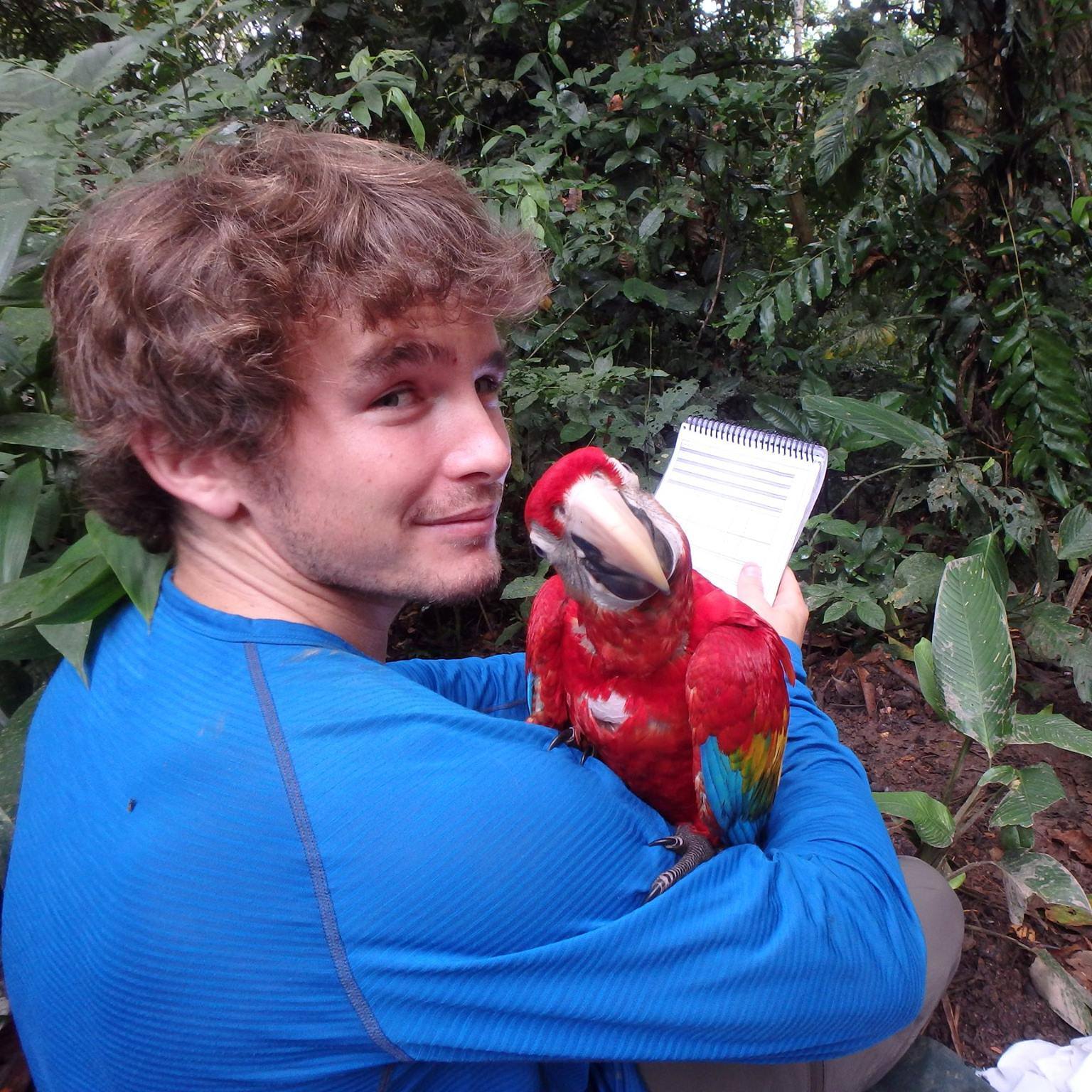
Tom Lloyd
- Postdoctoral Research Fellow, Global Ecosystems
- tom.lloyd@jcu.edu.au
Regional values across the North. (Old ID 27683)
The project will provide the QNA Section with a deeper understanding of regional values across the North through the analysis of interactions/relationships between major projects and regional environments and communities, and the discussion of significant potential impact themes. The project will support the development of more integrated environmental assessments and is strongly linked to the NESP Resilient Landscapes Hub, Project 1.32 Scoping Study: Supporting Regional Planning in Northern Australia under the Marine and Coastal Hub, and CRCNA investments in de-risking agriculture in Northern Australia.
Big Data for Sustainable Tropical Agriculture and Aquaculture (Old ID 22865)
Agri- and Aqua-cultural industries in Australia and around the world are lagging behind their business counterparts when it comes to creating efficiencies and increasing profitability using Big Data technologies. Big Data refers to the volume, variety and velocity that data can be collected. Barriers imposed by geography, social fabric and technological limitations such as poor mobile phone coverage and inadequate links to modern day storage devices such as the cloud has impeded the adoption of Big Data technologies in northern Australia. This project will explore how Big Data and other digital technologies can enhance the sustainability of Agricultural and Aquaculture systems in the Tropics.
The impact of yellow crazy ants on key invertebrates, skinks and frogs of the Wet Tropics (Old ID 23187)
This project aims to increase the understanding of the effects of the invasive yellow crazy ant. This will be achieved by conducting surveys of skinks, frogs and invertebrate across a number of sites. Certain sites will have crazy ant infestations, while others will be in similar, uninvaded habitats. Data from the invaded and uninvaded sites will be compared to examine the direct and indirect effects on biodiversity and community structure that yellow crazy ants have. This will allow us to better understand the risk they pose to the Wet Tropics World Heritage Area.
Machine learning approach to restoration, prediction and quality control of oceanographic data from IMOS Moorings (Old ID 24926)
This project investigates a machine learning approach to increasing the value of oceanographic data. The full collection of IMOS Moorings data will be available for use in developing and training algorithms. Much of this data has already been flagged by heuristic quality control routines, and manually annotated by domain experts.
GBRF Burdekin Irrigation Project. (Old ID 27063)
Increasing Industry Productivity and Profitability Through Transformational, Whole of Systems Sugarcane Approaches that Deliver Water Quality Benefits.
Development of multi-layered scaffolds to promote bone healing responses in non-union fractures
In 2022 FNQ had an estimated 18,000 people living with osteoporosis with on the rise. Sufferers are susceptible to complex or large bone fractures which take longer to heal or result in a non-union fracture. Bioactive ceramic structures can promote bone healing responses but, currently, these lack the required mechanical strength. We have used 3D printing to create multi-layered structures that contain the required mechanical strength but their ability to promote the correct healing response needs to be assessed. Information from this project can be used to create new treatment alternatives for those at risk of non-healing fractures.
Utilising drone-based thermal remote sensing technology to accurately estimate Spectacled Flying-Fox abundance and model population trajectories.
This project aims to address knowledge gaps in our understanding of the abundance and population trajectory of the spectacled flying fox, a keystone species in tropical rainforest ecosystems that is currently listed as Endangered. The research will focus on applying novel remote sensing technologies such as drone-based thermal imagery to estimate the current population size of spectacled flying foxes, and develop a standardised monitoring protocol specifically for use by Indigenous rangers. Additionally, the project will seek to test and adapt theoretical models for predicting species population trajectories using spectacled flying foxes as a case study. This work aligns with national conservation priorities and is crucial to understand whether conservation management actions are having the intended impact of mitigating spectacled flying fox population declines. Moreover, the project supports broader efforts to conserve tropical fauna globally by developing widely applicable field- and desktop-based methods for assessing population declines.
Innovative Therapeutic Strategies Targeting Aberrant Gene Regulation in Aggressive Breast Cancer
This grant will allow the generation of important preliminary data for an NHMRC Ideas grant application that was a near miss (score: 5.5) in the last round. In the proposed project we determine the impact of inefficient gene regulation on breast cancer survival and therapy resistance. The results of our project will open new avenues for (breast) cancer therapies with gene regulation as a therapeutic target.
ARC Centre of Excellence for Indigenous and Environmental Histories and Futures (Old ID 27585)
ARC Centre of Excellence for Indigenous and Environmental Histories and Futures. The proposed Centre aims to generate a new direction in knowledge creation based on Aboriginal- and Torres Strait Islander-led approaches to managing Land and Sea Country. The Centre expects to make a legacy contribution by developing complementary Indigenous and Western knowledge frameworks for modelling environmental, cultural, and historical change in Australia over the last millennium and into the near future. Expected outcomes focus on sustainable Indigenous land and sea management planning for future decades. Benefits include improved forecasting of the trajectory of environmental change, an increase in the capacity of Indigenous research, creation of a pipeline for Indigenous students into research, and evidence-based policy-making.
Organic matter, sodicity and soil structure
- 1998
- Oxford University Press
- Researchers:Paul Nelson
Start Date:
01 Jan 2015
End Date:
01 Jan 2020
Start Date:
01 Jan 2020
Start Date:
01 Jan 2015
Start Date:
01 Jan 2016
End Date:
01 Jan 2018