
College of Science & Engineering

Sophia Love
- Doctor of Philosophy (Natural and Physical Sciences)
- sophie.love@jcu.edu.au
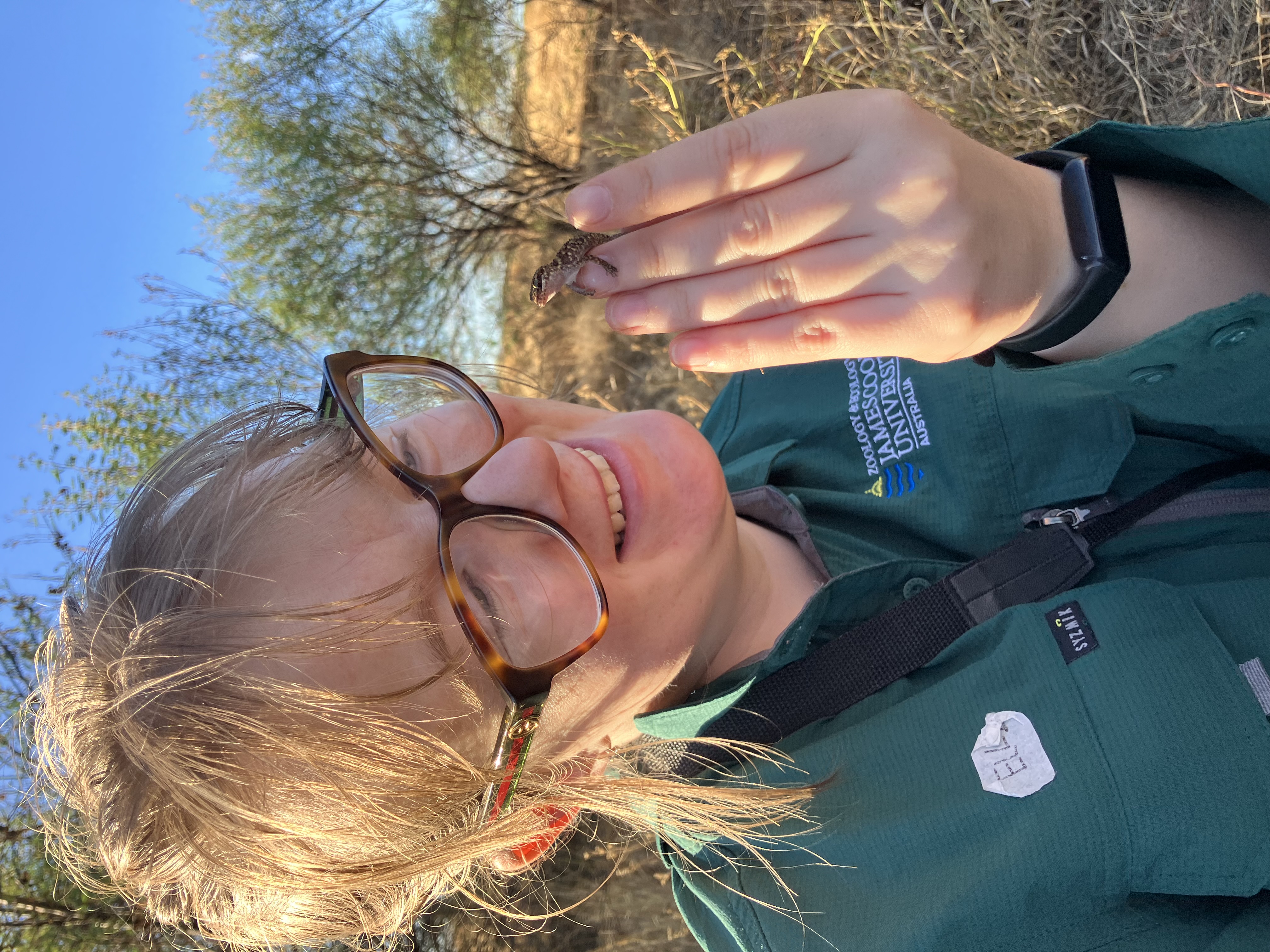
Elle Robertson
- Doctor of Philosophy (Agriculture, Environmental and Related Studies)
- elle.robertson@jcu.edu.au

Romain Vaucher
- Senior Lecturer, Sedimentology
- romain.vaucher@jcu.edu.au

Jenny Fisher
- Associate Dean, Learning and Teaching
- jenny.fisher@jcu.edu.au

Ambili Narayanan
- Doctor of Philosophy (Natural and Physical Sciences)
- ambili.narayanan@my.jcu.edu.au

Sarfaraz Ali
- Postdoctoral Research Fellow
- sarfaraz.ali@jcu.edu.au

Mikaeylah Davidson
- Postdoctoral Research Fellow
- mikaeylah.davidson@jcu.edu.au

Liuxin Chen
- Lecturer
- liuxin.chen@jcu.edu.au

Rafael Cabral Carvalho
- Lecturer, Marine Geoscience
- rafael.cabralcarvalho@jcu.edu.au
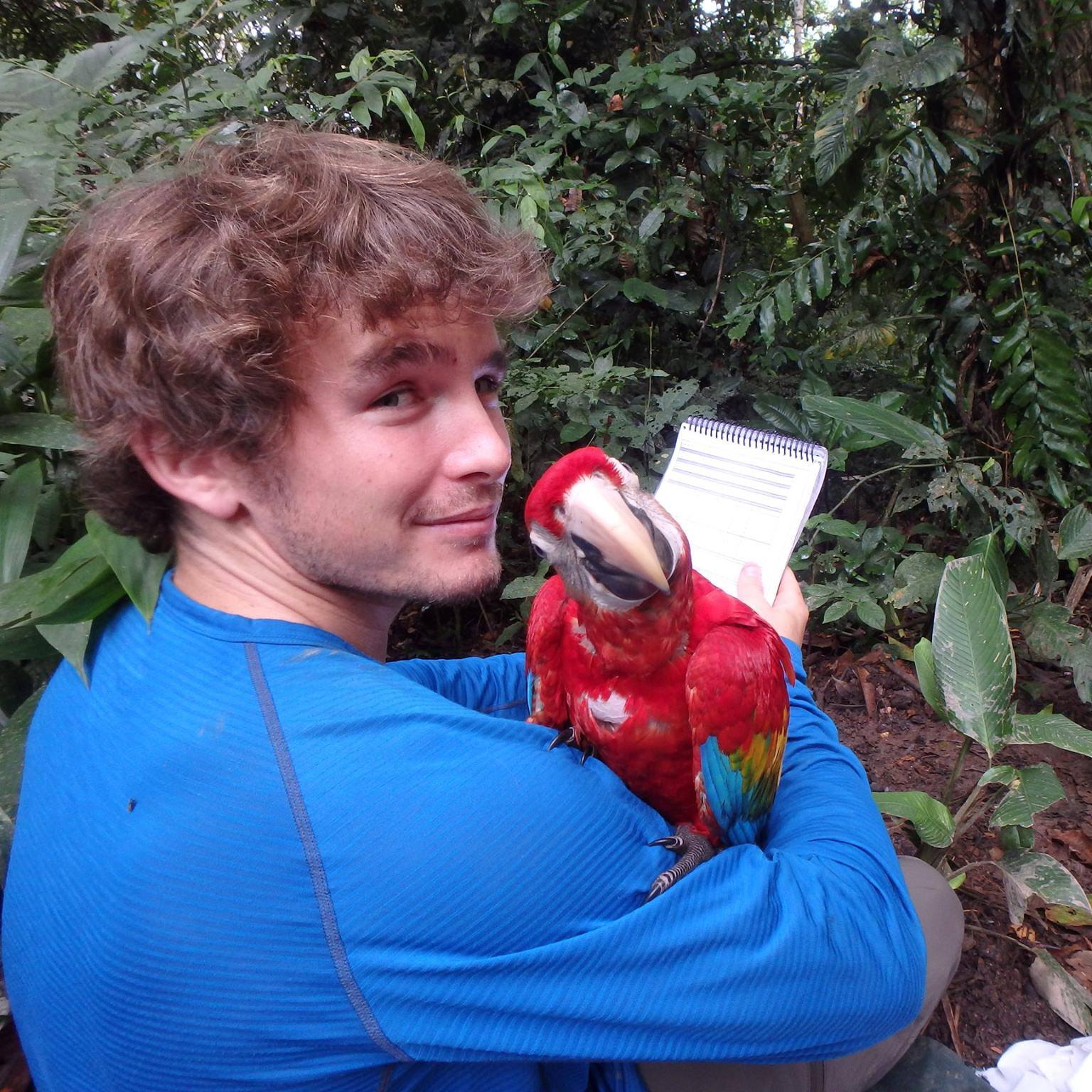
Tom Lloyd
- Postdoctoral Research Fellow, Global Ecosystems
- tom.lloyd@jcu.edu.au
Autoclave for the Northern Australia Plant Biosecurity Facility
The ARC-LIEF funded Northern Australia Plant Biosecurity Facility is to be built during 2024, procurement process is ongoing. The effective approval as a federally recognised quarantine facility requires the purchase of an autoclave to be located within the quarantine glasshouse, as per BC2 quarantine regulations. The proposal's funding was reduced on approval and funding for this essential piece of equipment is lacking.
Using pheromones to understand Australia's diverse lizard fauna (Old ID 22866)
This project will investigate the mating pheromones of a cryptic species complex of geckos (Heteronotia binoei) to determine how pheromones vary between populations and genetic lineages within and between species. There are 13 genetic lineages in total within these four species. I expect that pheromones will differ significantly between divergent lineages within each species. I will then perform behavioural experiments to confirm that phermone divergence can result in reproductive isolation. If so, pheromones will be an informative taxonomic character for these morphologically conservative groups, and will contribute to our understanding of vertebrate diversity in the Australian tropics.
Using pheromones to understand Australia's diverse lizard fauna (Old ID 22866)
This project will investigate the mating pheromones of a cryptic species complex of geckos (Heteronotia binoei) to determine how pheromones vary between populations and genetic lineages within and between species. There are 13 genetic lineages in total within these four species. I expect that pheromones will differ significantly between divergent lineages within each species. I will then perform behavioural experiments to confirm that phermone divergence can result in reproductive isolation. If so, pheromones will be an informative taxonomic character for these morphologically conservative groups, and will contribute to our understanding of vertebrate diversity in the Australian tropics.
Virtual Reality 3D First Aid Training Scene Capture Solution (Old ID 23632)
To provide a much more immersive experience for first aid training, the funding body - Rescue Swag is seeking a solution to replace the conventional 2D first aid scene capture solution. This project is aiming at design a 3D stereoscopic shooting solution using the high definition camera, including both system design, hardware and software solutions. At the end of this project, a system will be experience, and improve the training outcomes.
Exploring the nexus between environment, emotion and spatial cognition: a test using Melomys cervinipes (Old ID 22683)
The loss of environmental complexity in tropical rainforests due to anthropogenic deforestation is a major threat to mammals. How an animal copes with these changes may be dependent on integrated physiological, behavioural and cognitive responses to environmental stimuli. The aim of this study is to investigate whether environmental complexity influences these responses of Malomys cervinipes. I predict that animals from complex habitats will demonstrate lowered anxiety and stress and will show enhanced learning and performance in a cognitive behavioural task. This study is the first to investigate the links between environmental complexity, physiology, behaviour and cognition in an Australian mammal.
Development of digital apps to facilitate insurance eligibility verification and post-event claim filing for Fijian homeowners - TASK 1 Design software framework and logic flow (Old ID 26517)
This project follows on from CTS developing a structural engineering basis for vulnerability models for different housing types in Fiji, for the World Bank and Tower Insurance. The scope covers stage 1 of a 6 stage program to develop digital applications for use by Fijian homeowners to: (a) seek eligibility for cyclone (wind damage) insurance; and (b) initiate claims post event.
Water flow ecology: How reef structure and water flow shape the world of fishes (Old ID 27855)
This project aims to understand how coral reef fishes interact with their whole environment. Currently, we have some understanding of how fishes interact with the 3D reef, but not the water which flows around it. I will explore how water flow changes around a complex reef and how fishes use this flow. This project will quantify water flow on a biologically relevant scale, a scale which is often overlooked. It will provide a crucial stepping stone to further ecological research on coral reefs.
Application of a machine learning approach for effective stock management of abalone (Old ID 26742)
Determining the number and size distribution of abalone present at various stages of production is critical information for effective stock management. Currently the Australian abalone aquaculture industry spends in the order of $25,000 per annum, per farm, gathering this information by hand. However, the resulting data is of mediocre quality, is limited in its scope, and collecting the data causes stress to the animals which can compromise growth and survival. Automated counting and measuring of abalone will increase farm efficiency and productivity in the short term and, in the longer term, will provide an advanced platform for further R&D improvements. Artificial intelligence and machine learning has now matured to a point that accurately counting and measuring abalone is possible using this approach. This project would involve the development, training and validation of a machine learning model to identify, segment and measure quantitative abalone traits in production systems, and render the product data to be accessible and applicable for farmers.
Application of a machine learning approach for effective stock management of abalone (Old ID 26742)
Determining the number and size distribution of abalone present at various stages of production is critical information for effective stock management. Currently the Australian abalone aquaculture industry spends in the order of $25,000 per annum, per farm, gathering this information by hand. However, the resulting data is of mediocre quality, is limited in its scope, and collecting the data causes stress to the animals which can compromise growth and survival. Automated counting and measuring of abalone will increase farm efficiency and productivity in the short term and, in the longer term, will provide an advanced platform for further R&D improvements. Artificial intelligence and machine learning has now matured to a point that accurately counting and measuring abalone is possible using this approach. This project would involve the development, training and validation of a machine learning model to identify, segment and measure quantitative abalone traits in production systems, and render the product data to be accessible and applicable for farmers.
Rehabilitating Bare Ground in the Southern Gulf Region to Improve Drought Resilience (Old ID 27902)
The project will monitor and evaluate the effectiveness of bare ground rehabilitation techniques on improving drought resilience on cattle grazing properties throughout the Southern Gulf region of north-west Queensland. Detailed on-ground measurement, coupled with remote sensing techniques, will be used to evaluate changes in soil and vegetation condition as a result of rehabilitation approaches trialled. The project will be underpinned by extensive communication and engagement activities. Ultimately, the project will deliver new knowledge to support more drought resilient, sustainable and profitable cattle production in tropical north Queensland, and other parts of northern Australia.
Save Singapore's freshwater streams
- 2016
- Singapore Press Holdings
- Researchers:HanShe Lim
Water and the tropics
- 2018
- Uro Publications
- Researchers:HanShe Lim
Anticoagulant heparin mimetics via RAFT polymerization
- 2020
- American Chemical Society
- Researchers:George Vamvounis
Elucidating the effects of guest-host energy level alignment on charge transport in phosphorescent OLEDs
- 2019
- American Institute of Physics
- Researchers:Bronson PhilippaGeorge Vamvounis
Thermal induced NDC of electron swarms in N-2 and N-2-like gases: the role of temperature and collision operator approximations
- 2019
- IOP Publishing
- Researchers:Madalyn CaseyGreg Boyle
Title:
EMBL Australia PhD course
Start Date:
01 Jan 2014
End Date:
01 Jan 2016
Start Date:
01 Jan 2018
End Date:
01 Jan 2025
Start Date:
01 Jan 2022
Start Date:
01 Jan 2021
Start Date:
01 Jan 2010
Start Date:
01 Jan 2014
Title:
Conference Session Chair x 4
Start Date:
01 Jan 2017
Start Date:
01 Jan 2022
Start Date:
01 Jan 2020
Start Date:
01 Jan 2018