
College of Science & Engineering

Sophia Love
- Doctor of Philosophy (Natural and Physical Sciences)
- sophie.love@jcu.edu.au
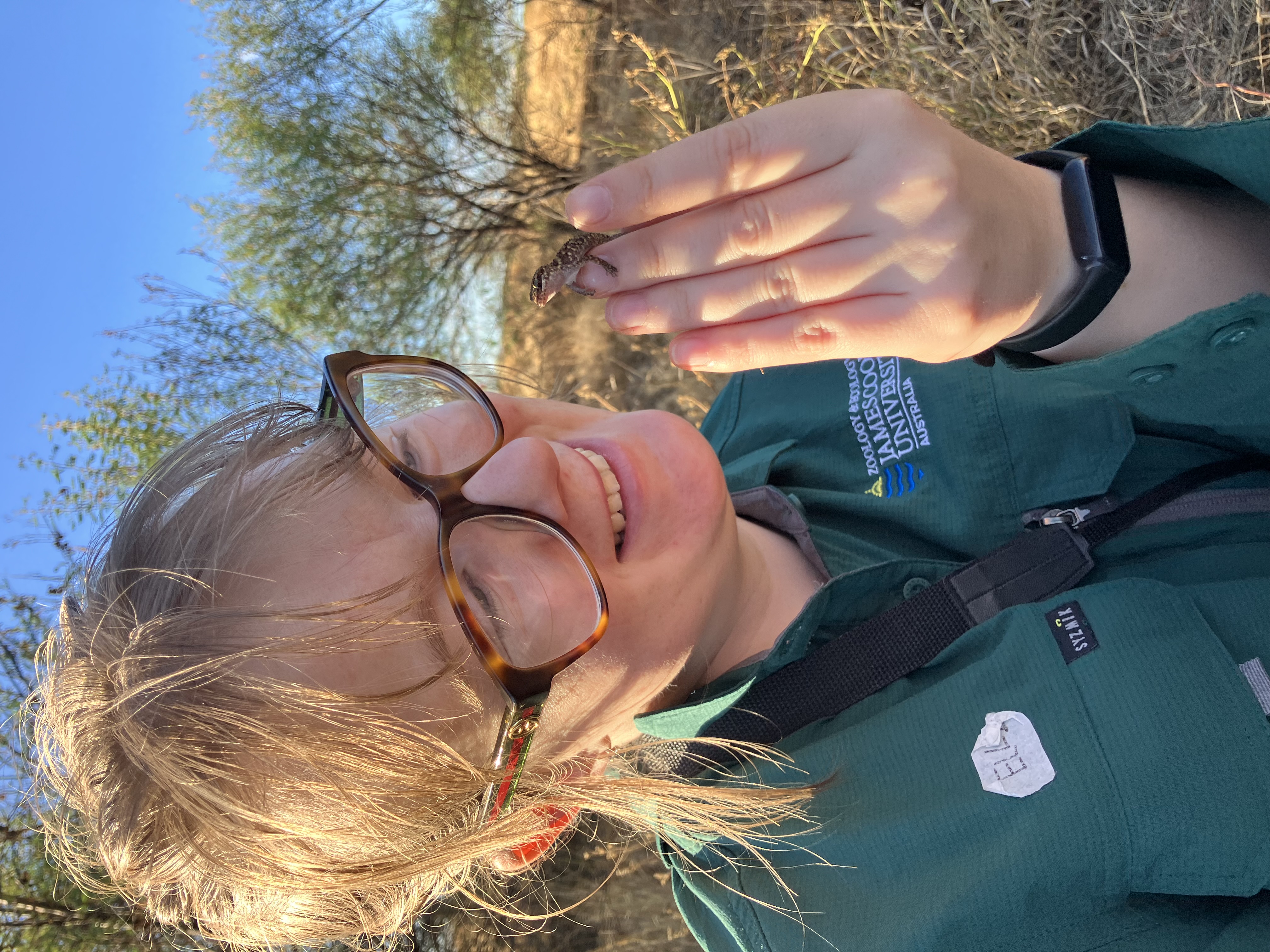
Elle Robertson
- Doctor of Philosophy (Agriculture, Environmental and Related Studies)
- elle.robertson@jcu.edu.au

Romain Vaucher
- Senior Lecturer, Sedimentology
- romain.vaucher@jcu.edu.au

Jenny Fisher
- Associate Dean, Learning and Teaching
- jenny.fisher@jcu.edu.au

Ambili Narayanan
- Doctor of Philosophy (Natural and Physical Sciences)
- ambili.narayanan@my.jcu.edu.au

Sarfaraz Ali
- Postdoctoral Research Fellow
- sarfaraz.ali@jcu.edu.au

Mikaeylah Davidson
- Postdoctoral Research Fellow
- mikaeylah.davidson@jcu.edu.au

Liuxin Chen
- Lecturer
- liuxin.chen@jcu.edu.au

Rafael Cabral Carvalho
- Lecturer, Marine Geoscience
- rafael.cabralcarvalho@jcu.edu.au

Tom Lloyd
- Postdoctoral Research Fellow, Global Ecosystems
- tom.lloyd@jcu.edu.au
Restoration Grassroots ACRN
Working with community groups to examine restoration outcomes and approaches by grass root groups
Restoration Grassroots ACRN
Working with community groups to examine restoration outcomes and approaches by grass root groups
Sustainable REE extraction from Australian ores using environmentally friendly reagents, advanced characterisation techniques and geological knowledge
This project aims to improve the sustainable extraction of rare earths from Australian ores using environmentally friendly reagents.
Sustainable REE extraction from Australian ores using environmentally friendly reagents, advanced characterisation techniques and geological knowledge
This project aims to improve the sustainable extraction of rare earths from Australian ores using environmentally friendly reagents.
Sustainable REE extraction from Australian ores using environmentally friendly reagents, advanced characterisation techniques and geological knowledge
This project aims to improve the sustainable extraction of rare earths from Australian ores using environmentally friendly reagents.
Sustainable REE extraction from Australian ores using environmentally friendly reagents, advanced characterisation techniques and geological knowledge
This project aims to improve the sustainable extraction of rare earths from Australian ores using environmentally friendly reagents.
Optimising the geophysical ore body model to aid in the discovery of new critical mineral deposits
This project aims to develop advanced geophysical tools that can help exploration companies identify critical mineral resources. Current geophysical exploration methods—such as magnetic, electric, gravimetric, magnetotelluric, radiometric, and seismic surveys—are commonly used in the industry to detect geophysical anomalies. However, many detected anomalies do not contain mineralization due to a lack of tools to identify the specific geophysical signatures of ore bodies.
Our goal is to create tools that enable explorers to distinguish between barren and mineralized anomalies, enhancing the accuracy of mineral discovery. Currently, there is limited knowledge on the specific geophysical responses of mineralized ore bodies. Some preliminary research by CSIRO on IOCG deposits in Cloncurry suggests that combining geological and petrophysical data can model an ore body's geophysical response.
Optimising the geophysical ore body model to aid in the discovery of new critical mineral deposits
This project aims to develop advanced geophysical tools that can help exploration companies identify critical mineral resources. Current geophysical exploration methods—such as magnetic, electric, gravimetric, magnetotelluric, radiometric, and seismic surveys—are commonly used in the industry to detect geophysical anomalies. However, many detected anomalies do not contain mineralization due to a lack of tools to identify the specific geophysical signatures of ore bodies.
Our goal is to create tools that enable explorers to distinguish between barren and mineralized anomalies, enhancing the accuracy of mineral discovery. Currently, there is limited knowledge on the specific geophysical responses of mineralized ore bodies. Some preliminary research by CSIRO on IOCG deposits in Cloncurry suggests that combining geological and petrophysical data can model an ore body's geophysical response.
Optimising the geophysical ore body model to aid in the discovery of new critical mineral deposits
This project aims to develop advanced geophysical tools that can help exploration companies identify critical mineral resources. Current geophysical exploration methods—such as magnetic, electric, gravimetric, magnetotelluric, radiometric, and seismic surveys—are commonly used in the industry to detect geophysical anomalies. However, many detected anomalies do not contain mineralization due to a lack of tools to identify the specific geophysical signatures of ore bodies.
Our goal is to create tools that enable explorers to distinguish between barren and mineralized anomalies, enhancing the accuracy of mineral discovery. Currently, there is limited knowledge on the specific geophysical responses of mineralized ore bodies. Some preliminary research by CSIRO on IOCG deposits in Cloncurry suggests that combining geological and petrophysical data can model an ore body's geophysical response.
Save Singapore's freshwater streams
- 2016
- Singapore Press Holdings
- Researchers:HanShe Lim
Water and the tropics
- 2018
- Uro Publications
- Researchers:HanShe Lim
Anticoagulant heparin mimetics via RAFT polymerization
- 2020
- American Chemical Society
- Researchers:George Vamvounis
Elucidating the effects of guest-host energy level alignment on charge transport in phosphorescent OLEDs
- 2019
- American Institute of Physics
- Researchers:Bronson PhilippaGeorge Vamvounis
Thermal induced NDC of electron swarms in N-2 and N-2-like gases: the role of temperature and collision operator approximations
- 2019
- IOP Publishing
- Researchers:Madalyn CaseyGreg Boyle
Start Date:
01 Jan 2004
End Date:
01 Jan 2006
Start Date:
01 Jan 2009
End Date:
01 Jan 2013
Start Date:
01 Jan 2006
End Date:
01 Jan 2008
Start Date:
01 Jan 2000
End Date:
01 Jan 2003
Start Date:
01 Jan 2004
End Date:
01 Jan 2009
Start Date:
01 Jan 2024
End Date:
01 Jan 2025
Start Date:
01 Jan 2012
Start Date:
01 Jan 2009
Start Date:
01 Jan 2007
Start Date:
01 Jan 2022