
College of Science & Engineering

Sophia Love
- Doctor of Philosophy (Natural and Physical Sciences)
- sophie.love@jcu.edu.au
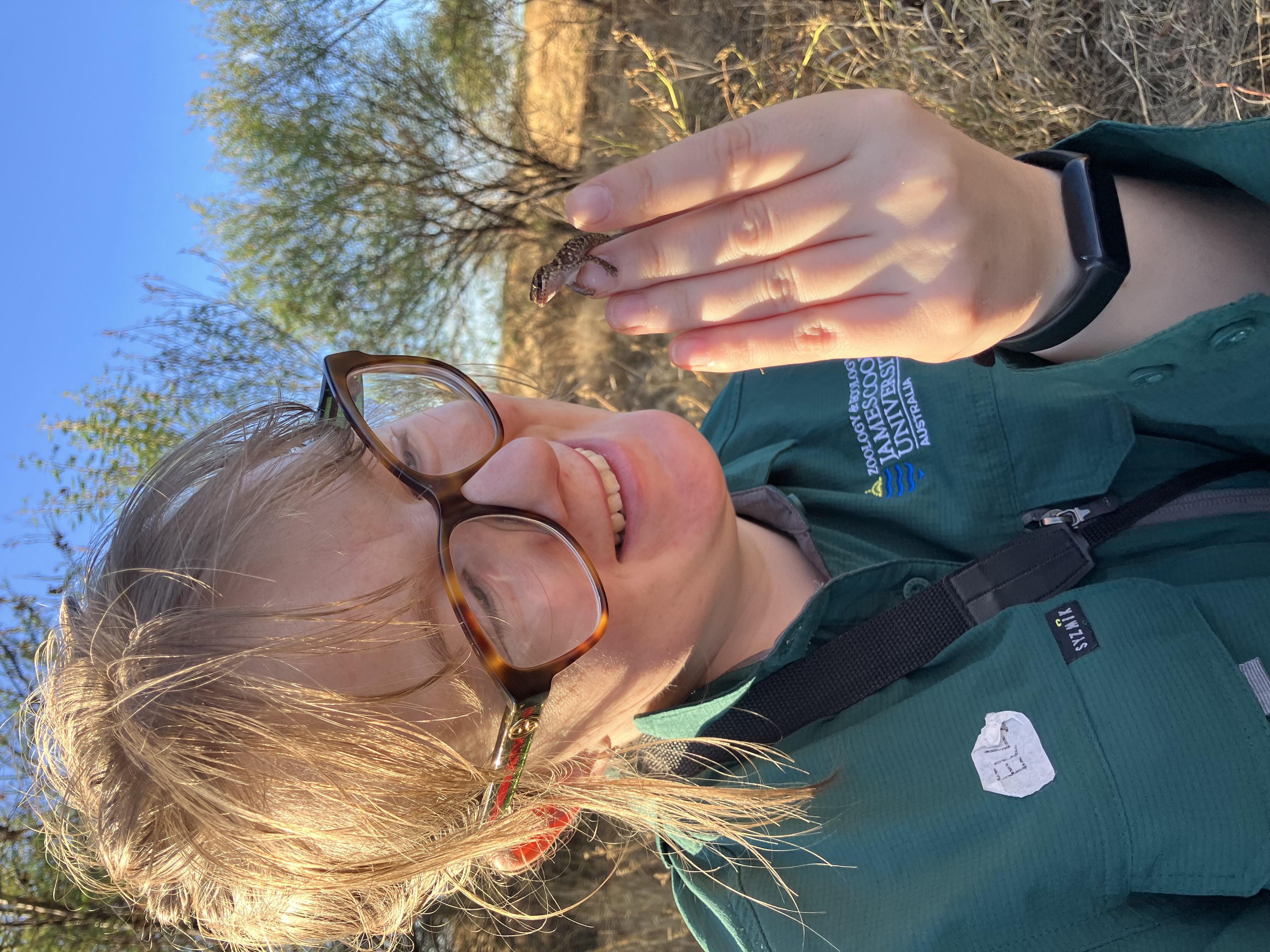
Elle Robertson
- Doctor of Philosophy (Agriculture, Environmental and Related Studies)
- elle.robertson@jcu.edu.au

Romain Vaucher
- Senior Lecturer, Sedimentology
- romain.vaucher@jcu.edu.au

Jenny Fisher
- Associate Dean, Learning and Teaching
- jenny.fisher@jcu.edu.au

Ambili Narayanan
- Doctor of Philosophy (Natural and Physical Sciences)
- ambili.narayanan@my.jcu.edu.au

Sarfaraz Ali
- Postdoctoral Research Fellow
- sarfaraz.ali@jcu.edu.au

Mikaeylah Davidson
- Postdoctoral Research Fellow
- mikaeylah.davidson@jcu.edu.au

Liuxin Chen
- Adjunct Lecturer
- liuxin.chen@jcu.edu.au

Rafael Cabral Carvalho
- Lecturer, Marine Geoscience
- rafael.cabralcarvalho@jcu.edu.au
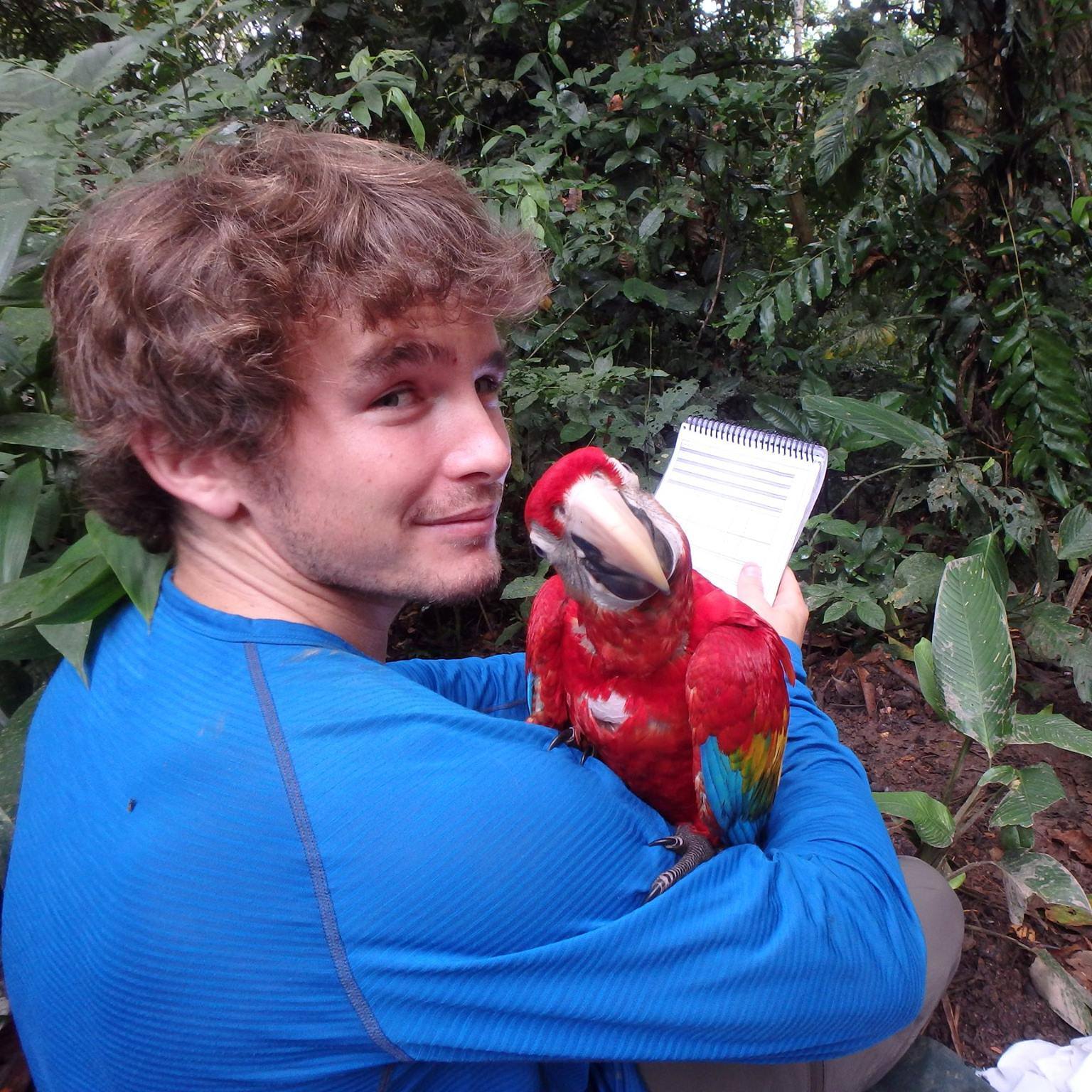
Tom Lloyd
- Postdoctoral Research Fellow, Global Ecosystems
- tom.lloyd@jcu.edu.au
Genomics for Undiagnosed Infectious Disease Evaluation and Diagnosis in Northern Australia (GUIDED-North Australia) (Old ID 23362)
The early detection and diagnosis of infectious diseases currently relies on a best guess of likely causative agents with specific testing for those agents. In this project, we aim to evaluate a genomics approach for the diagnosis of febrile illnesses of unknown cause in Northern Australia. The project will be conducted in major hospitals across three different regions of Northern Australia: Cairns (Queensland), Darwin (Northern Territory) and Broome (Western Australia). It is likely that most emerging infectious diseases initially present as undifferentiated fevers. It follows then that investigation of undifferentiated fevers provides targeted surveillance for new and emerging infectious diseases.
Magmatic History, Fertility and Metallogenesis of the Mary Kathleen Domain of the Mt Isa Inlier (Old ID 24902)
This project aims to highlight the exploration potential in the Mary Kathleen Domain of the Mt Isa Inlier by providing key mineralisation insights that can assist mining companies to plan their exploration strategy for better targeting and enhance the potential for new discoveries. To achieve this, the project has three main objectives: (1) Establish the extent, character and timing of the dominant magmatic epochs in the Mary Kathleen Domain of the Mt Isa Inlier (2) Develop an understanding of the tectono-magmatic history of the Mary Kathleen Domain and its links to metallogenesis; (3) Explore the applicability of magma fertility concepts as a tool for exploration for a variety of deposit types.
Imaygi Maalu (Unchartered waters): The governance and management of the Torres Strait fisheries into the future (Old ID 26723)
The key objective of this project is to investigate existing national and international research knowledge on the management of fisheries that have recognised Indigenous interests, how this knowledge interfaces with commercial enterprises, and sustains the health of the fisheries and the cultural traditions of the Indigenous people. Accommodating such components into existing legal frameworks remain a challenge for various governments and is a challenging matter in many of the world's fisheries. The Torres Strait fisheries is no different and exists in a complex legislative framework.
Nuclear Magnetic Resonance facility for Northern Australia (Old ID 21541)
Nuclear magnetic resonance spectroscopy is a fundamentally and critically important technique in the characterisation of organic, inorganic and biological compounds. The purchase of a state-of-the-art instrument at James Cook University and a lower resolution instrument at Charles Darwin University are required to support productive existing research projects, and nurture future projects, in organometallic chemistry and the development of new materials and analytical sensors; organic photochemistry as applied in synthesis and degradation; natural products, pharmaceutical, inorganic chemistry, where multinuclear nuclear magnetic resonance is most important and applicable in drug design, development and delivery.
Investigation of differential antigen processing and presentation of allergenic vs. non-allergenic tropomyosin (Old ID 22369)
Food allergy to shellfish is a rapidly growing concern. Allergen-specific immunotherapy is a well-accepted treatment strategy for IgE-mediated allergic disease to pollen and dust-mites; however, not much progress has been made for food allergies. Tropomyosin, which is the major allergenic protein in shellfish has been structurally and immunologically well characterised by our group. The aim of the proposed research project is to elucidate the mechanisms of differential uptake and presentation of peptides from allergenic and non-allergenic tropomyosin on human dendritic cells. The outcomes of this research will open new avenues for the development of novel immunotherapeutic strategies for shellfish allergy.
Combat apathy in traumatic brain injury patients (Old ID 27911)
Clinicians often mention apathy as the cause for decreased treatment progression for Traumatic Brain Injury patients. TBI patients with apathy symptoms are less motivated to engage continuously in their therapy schedule. Constant monitoring of patient engagement can help clinicians better measure patient progress and personalise the treatment accordingly. However, current clinical measurements of apathy cannot provide clinicians with continuous feedback. This project offers a novel continuous comprehensive measure of apathy feedback to assist clinicians with assessing and improving patient recovery. This apathy measure will combine traditional clinical measures of apathy with neurophysiological data collected from a virtual reality exoskeleton device.
The impact of typhoons on reef fish assemblages, and the effectiveness of marine reserve networks in aiding their recovery (Old ID 22502)
Increasing anthropogenic and environmental impacts are modifying coral reefs and their associated fish assemblages in unprecedented ways, compromising food security and biological stability. Networks of no-take marine reserves are implemented in Australia and the Philippines to conserve biodiversity and manage fish stocks, but it's unknown whether reserves can continue to perform under cumulative stressors, including those from cyclones and typhoons. For the first time, this study will 1) investigate how the structure function and behaviour of herbivorous reef fish assemblages are impacted by typhoons; and 2) discover whether marine reserves facilitate recovery of fish stocks following these impacts.
Effective sampling of Acanthaster cf. solaris to provide early-warning of new and renewed outbreaks (Old ID 26779)
This project aims to develop a holistic monitoring program that will not only help to deliver an early-warning syste, but will increase the viability of culling CoTS populations even during non-outbreak periods with the ultimate goal of reducing the frequency and severity of future outbreaks. Perhaps even more importantly, this project will deliver (for the first time) spatially and temporally explicit information about the structure and dynamics of crown-of-thorns starfish within the “initiation zone” and in the lead-up to a new population irruption, which is a critical knowledge gap that limits understanding of the initiation and causes of population outbreaks.
Sex determination of fruit fly pupa using Near Infrared Spectroscopy. (Old ID 26970)
Implementation of an effective sterile insect program for fruit fly species Bactrocera tryoni requires that only sterile male insects be released. Therefore at some stage of the fly production process the females need to be removed. Hand sexing is very labour intensive and current automated systems based on colour and size are not effective in differentiating between male and female pupae for B. tryoni. Hence, a non-destructive, rapid method of sex separation is required that does not impact on the viability of the pupae and which can be incorporated into a mass rearing system. Preliminary research has demonstrated that Near Infrared Spectroscopy (NIRS) has great potential as an objective non-invasive method to sex B. tryoni pupae. The aim of this project is to develop and semi-automate a non-invasive rapid assessment technique to rapidly and consistently sort male and female B. tryoni pupae based on NIRS technology.
Reducing herbicide usage in the Burdekin and Proserpine reef catchment areas with precise robotic weed control in sugarcane (Old ID 26973)
The main objective of this project is to develop and build the world’s first robotic platform for selective weed control in sugarcane. Specifically, we aim to retrofit two 12-metre sugarcane booms for farmers in the Burdekin and Proserpine GBR catchment areas with state-of-the-art deep learning detection and spraying technology. The fundamental aim of this project is to significantly minimise the herbicide usage by selective spot spraying. We have set a target to reduce the knockdown herbicide usage on the chosen farms by 80% compared to the traditional blanket spraying that is performed during various stages of the crop cycle.
Organic matter, sodicity and soil structure
- 1998
- Oxford University Press
- Researchers:Paul Nelson
Title:
HDR CSE Incentive Award
Start Date:
01 Jan 2024
Start Date:
01 Jan 2024
End Date:
01 Jan 2025
Start Date:
01 Jan 2024
Title:
Engineering Research Leader
Start Date:
01 Jan 2024
Start Date:
01 Jan 2024
Start Date:
01 Jan 2023
End Date:
01 Jan 2023
Start Date:
01 Jan 2021
End Date:
01 Jan 2023
Start Date:
01 Jan 2024
Title:
English
Title:
Hindi