
College of Medicine & Dentistry

Kerrianne Watt
- Adjunct Professor
- kerrianne.watt@jcu.edu.au

Damien Paris
- Associate Professor - Reproductive Physiology
- damien.paris@jcu.edu.au

David Plummer
- Adjunct Professor
- david.plummer@jcu.edu.au

Catherine Seaton
- Senior Research Officer
- catherine.seaton@jcu.edu.au

Anupama Bangara Kulur
- Lecturer, Physiology/Pathophysiology
- anupama.bangrakulur@jcu.edu.au

Patricia Graves
- Adjunct Professorial Research Fellow
- patricia.graves@jcu.edu.au
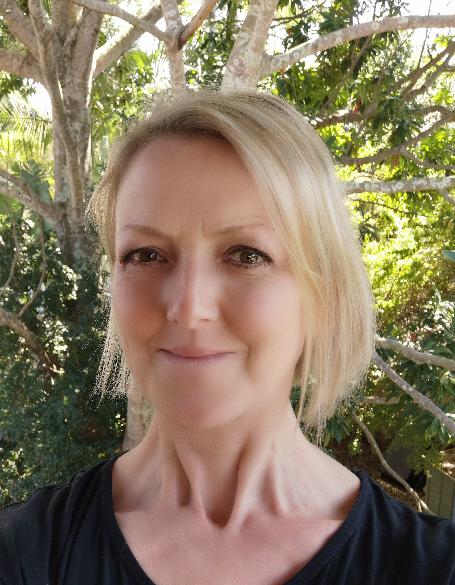
Yvonne Hornby-Turner
- Adjunct Research Fellow
- yvonne.hornbyturner@jcu.edu.au

Geoffrey Dobson
- Professor
- geoffrey.dobson@jcu.edu.au

Robi Islam
- Senior Lecturer, Pharmacy
- robi.islam@jcu.edu.au

Anna Vnuk
- Academic Coordinator, Cairns
- anna.vnuk@jcu.edu.au
Securing the frontline for health secure communities (Old ID 26522)
The aim is to build capacity to detect/respond to infectious disease outbreaks through frontline public health (human and animal) workforce which includes community members, volunteers, community health workers, environmental health workers, biosecurity and environmental officers and primary health care staff. This will be achieved through: Strengthened capability at community/primary care levels to anticipate outbreaks; Improved response at early stages of potential outbreaks; A quality timely and thorough response to outbreaks at the frontline level ; An operational learning and feedback process for continued improvement and currency of detection of and response to infectious diseases outbreaks.
Handling Mortality in Redclaw Crayfish (Cherax quadricarinatus) from farms (Old ID 21741)
Crayfish have become stress-sensitive to handling with low grade mortalities continuing until the crayfish re-acclimate. It is suspected they are carrying so-called orphan viruses. This project will use two independent observational techniques, histopathology and rolling-cycle PCR to look for difficult-to-diagnose viruses. These results will be used to support chapters in the PhD theses of two doctoral students, Shaun Bochow and Kitikarn Sakuna.
Improving Australia’s health and biosecurity through a greater marriage of infectious diseases modelling and genomic surveillance (Old ID 26942)
Emerging infectious diseases and antimicrobial resistance are among the greatest threats to the Australian health system, and current surveillance tools may fail to detect and mitigate infectious disease outbreaks in real time. This project will develop advanced phylodynamic methods (i.e. mathematical models of infectious disease transmission and pathogen evolution) to enable real-time surveillance of infectious disease outbreaks as they emerge and monitor levels of drug resistance.
Tilapia Biocontrol Project. (Old ID 27262)
Determine the susceptibility of two tilapias species present in Australian waterways (O. mossambicus and T. mariae) to TiLV and demonstrate the efficacy of TiLV as a potential biocontrol agent for tilapia in Australia.
Women's Action for Mums and Bubs (WOMB): A pragmatic trial of participatory women's groups to improve Indigenous maternal and child health (Old ID 23276)
There is strong evidence elsewhere that involving community women in decision-making about strategies to improve the health of mothers and babies is a cheap and effective way of improving health. The WOMB study tests whether community women's groups improve the quality of maternal and child health care and outcomes in Aboriginal and Torres Strait Islander communities, the cost-effectiveness and mechanism of action.
Developing phylodynamic models of bacterial evolution to investigate the tuberculosis (TB) outbreak in Daru, Papua New Guinee (Old ID 26449)
Australia's nearest neighbour, Papua New Guinea (PNG), is listed by the WHO as one of 30 high TB-burden countries, and Daru Island, off the southern coast of PNG, has been identified as a major TB hotspot. Given the immediate and porous border between Daru and Far-North Queensland (FNQ), cross-border transmission of drug-resistance tuberculosis into mainland Australia is a major public health concern. Here we use phylodynamic models (i.e mathematical models of infectious disease transmission supplemented with genetic data) to investigate the scale and severity of TB transmission in Daru and prevent similar outbreaks among FNQ communities.
Developing culturally appropriate tools to screen for common mental health disorders in older adults aged 45 and over living in the Torres Strait. (Old ID 27232)
The aim of the study is to develop culturally appropriate mental health assessment tools for older adults (e.g. aged 45 and over) living in the Torres Strait. Data from yarning circles with Torres Strait community members and health care staff will be used to identify how mental health disorders are expressed in the Torres Strait. A Delphi process will then be used to identify appropriate tools for assessing these domains of mental ill health for use in older adults in the Torres Strait. These tools will then be piloted to determine acceptability and validated for use in the Torres Strait.
Building Capacity for Periodontal Disease Management in the Kingdom of Tonga (Old ID 27558)
Periodontitis is an inflammation of the bone supporting teeth. It destroys the jawbone and is prevalent globally. Left untreated, it will lead to tooth loss and internal toxicity. It affects heart disease and diabetes. There is a lack of clinical capacity in Tonga to treat this. Local Dentists will be trained to assess, treat, and monitor this disease. The community will be screened, patients with the disease identified and then treated. Patients will be monitored by their dentists. The study findings will be shared with the local dental health administration and published in relevant journals for the global community.
'Let's get active at Dialysis', an Exercise Physiology led activity program at North Ward Haemodialysis centre (Old ID 23471)
This study will aim to answer the research question: Is exercise performed during dialysis sufficient to improve clinical outcomes of haemodialysis patients? The aim of the study is to measure the effect of progressive resistance training during dialysis on HD patients.
Discovering the Faecal Microbiome Associated with Pre-Term Birth (Old ID 25095)
Development of the pre-term gut microbiome is important for immediate and longer term health outcomes. Much of what is known about the infant and neonatal microbiome has been derived from healthy full term infants. Collecting and understanding the microbiome of the TTH NICU cohort would provide a unique insight into the microbial development and in pre-term babies admitted to the NICU. This information will provide further evidence for interventions currently undertaken in the NICU such as administration of probiotics to infants <32 weeks. This project supports evidence-based multidisciplinary research in a novel way to assess the neonatal microbiome development.
Beak and feather disease virus: biology and resultant disease
- 2020
- Researchers:Subir Sarker
Characterization of the first mitochondrial genome of a little Corella (Cacatua sanguinea) and its phylogenetic implications
- 2019
- Taylor & Francis
- Researchers:Subir SarkerSaranika Talukder
The first complete mitogenome of Indian ringneck (Psittacula krameri) demonstrates close phylogenetic relationship with Eclectus parrot
- 2019
- Taylor & Francis
- Researchers:Subir SarkerSaranika Talukder
Title:
Men are shaving off their eyelashes on TikTok, here's why that might be a bad idea, The Conversation
Start Date:
14 May 2025
Start Date:
15 May 2025
Start Date:
03 Jun 2025
Start Date:
01 Jan 2012
Title:
Grants Review
Start Date:
01 Jan 2024
End Date:
01 Jan 2024
Title:
Public Health Advocacy
Start Date:
01 Jan 2024
End Date:
01 Jan 2024
Start Date:
16 Jun 2025