
Tropical Water & Ecosystems
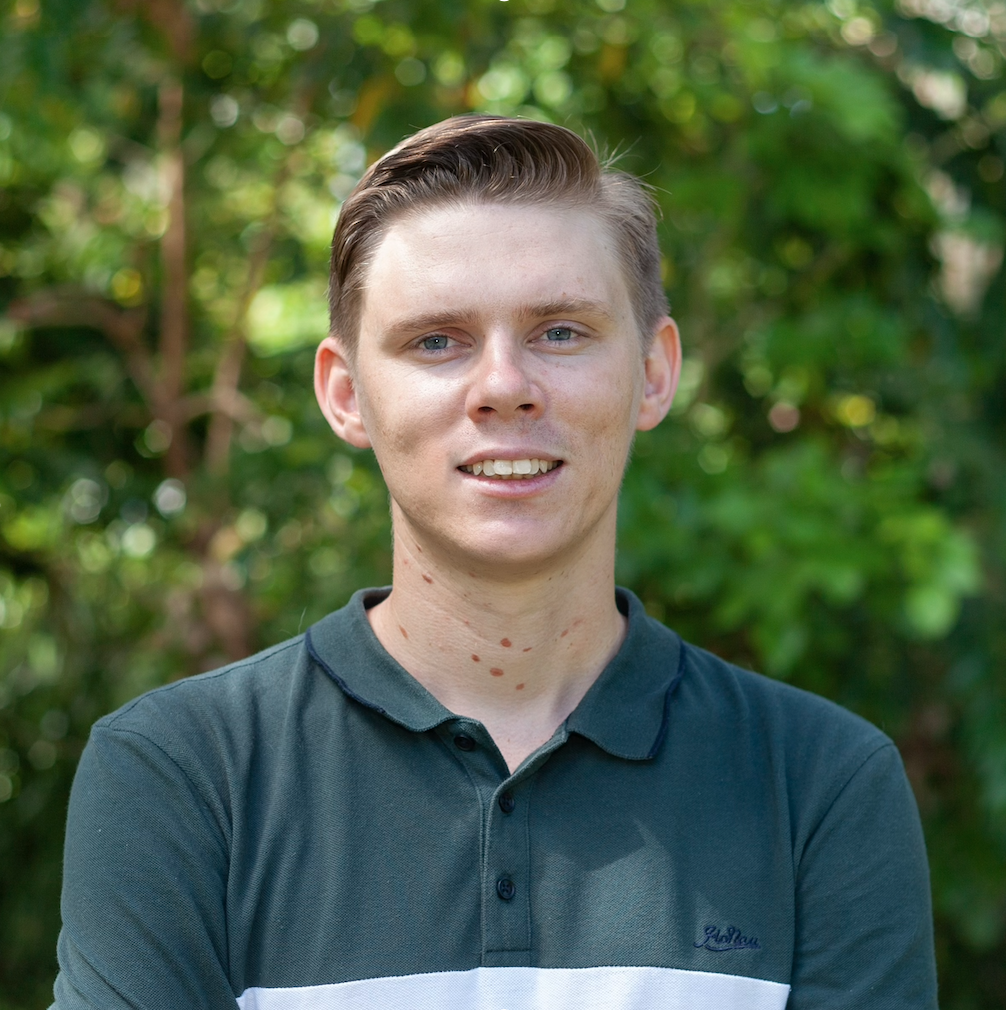
Scott Morrissey
- Research Officer
- scott.morrissey@jcu.edu.au
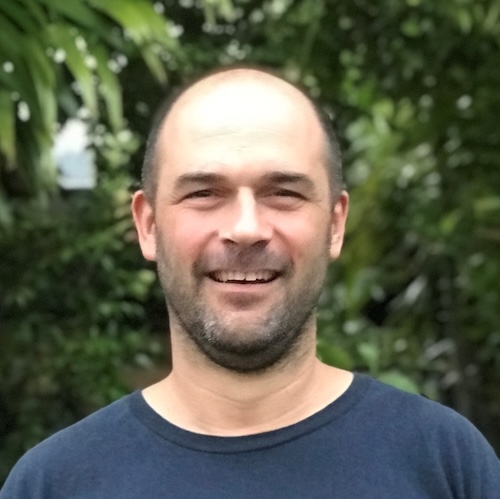
Tim Smith
- Senior Research Officer
- tim.smith2@jcu.edu.au
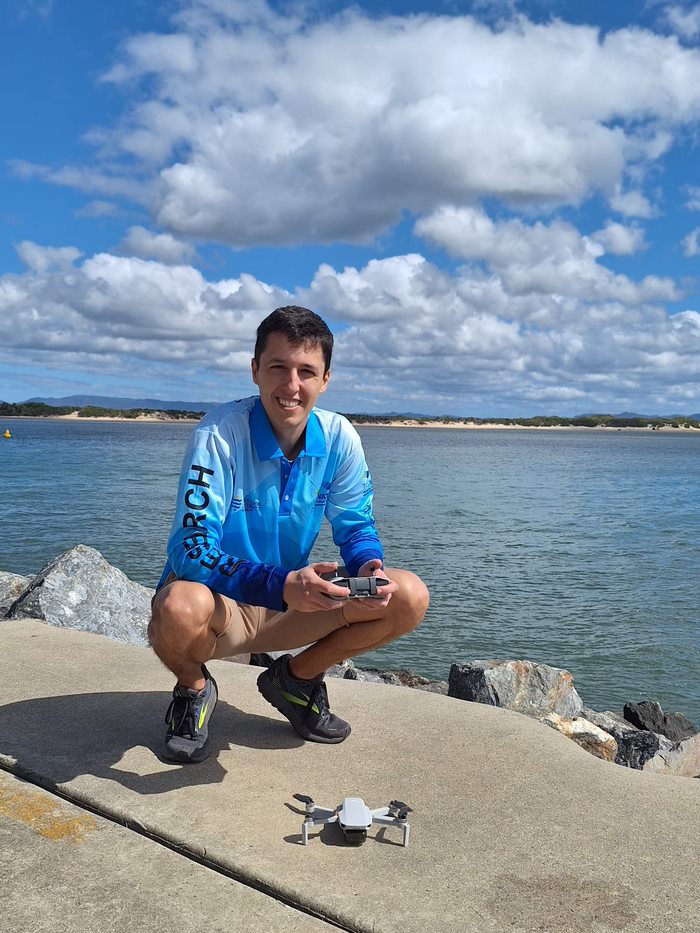
Alejandro Navarro Otero
- Casual Research Worker
- alejandro.navarrootero@jcu.edu.au
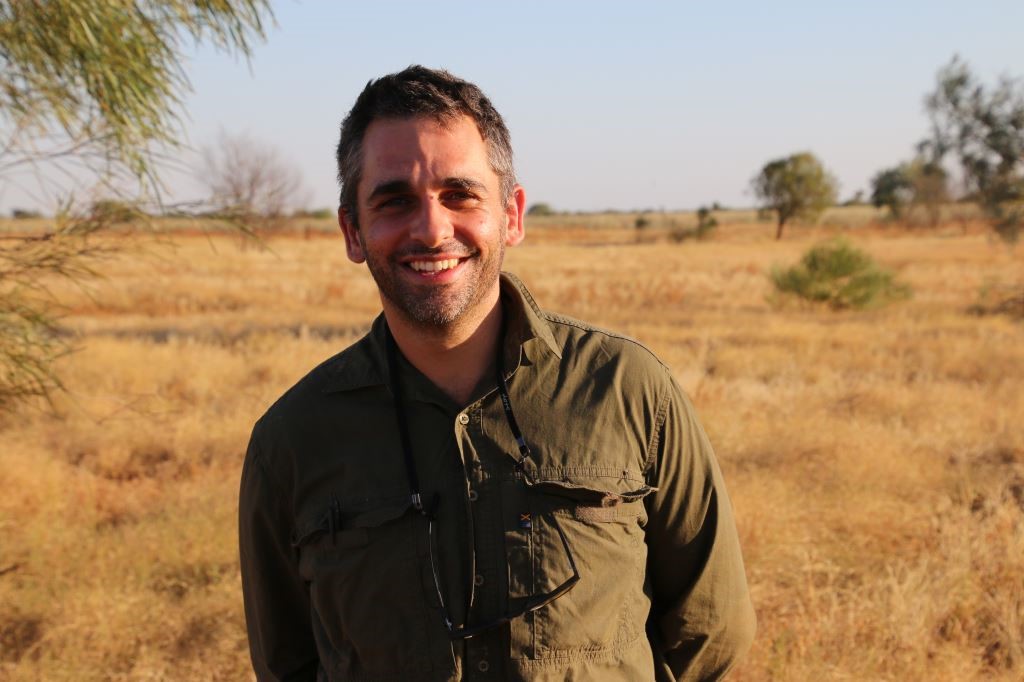
Jack Koci
- Principal Research Officer
- jack.koci1@jcu.edu.au
Sarah McDonald
- Senior Research Officer
- sarah.mcdonald@jcu.edu.au
Emily Webster
- Research Officer
- emily.webster1@jcu.edu.au

Abbi Scott
- Senior Research Officer
- abbi.scott1@jcu.edu.au

Catherine Collier
- Principal Research Officer
- catherine.collier@jcu.edu.au

Rob Coles
- Principal Research Scientist
- rob.coles@jcu.edu.au

Aaron Davis
- Principal Research Officer
- aaron.davis@jcu.edu.au
Developing and refining biological indicators for seagrass condition assessments in an integrated monitoring program (Old ID 22243)
Refinement of biological indicators for condition assessment is an immediate priority as highlighted in a recent review of the GBR Marine Monitoring Program (MMP). Seagrass carbohydrate content is an early-warning indicator of water quality impacts. Samples collected quarterly since 2008 will be analysed and used to establish baselines and optimize protocols for applying carbohydrates as an indicator for future monitoring. Furthermore, calibration formulae to convert seagrass percent cover, the principal condition indicator, to biomass will be developed allowing integration across programs critical for the Reef-Wide Integrated Monitoring and Reporting Program. This project provides excellent value for money because samples have been collected in-kind.
Mt Leyshon Receiving Environment Monitoring & Environmental Assessment. (Old ID 26869)
Environmental monitoring and assessment to meet regulatory assessment requirements for aquatic, riparian and terrestrial systems in the region of the closed Mt Leyshon mine. In addition, there are investigations and research into site specific water quality and sediment quality objectives.
Marine Monitoring Program Pesticide Support. (Old ID 27862)
The Reef 2050 WQIP Marine Monitoring Program (MMP) is a key component in the assessment of long term improvements in inshore water quality and marine ecosystem. This component of the program includes deployment and retrieval of pesticide passive samplers at 4 locations in the GBR from November 2022 to June 2023.
Deriving ecologically relevant load targets to meet desire ecosystem condition for the Great Barrier Reef: a case study for seagrass meadows in the Burdekin region (Old ID 23153)
This project will derive ecologically relevant targets (ERTs) for water quality and sediment loads by: 1) defining seagrass desired state targets; 2) calculating water quality guidelines (light); and 3) calculating ERTs for terrestrially sourced sediment loads. Historical and new data collections will be used to derive ERTs via statistical models and eReefs (RECOM), and the seagrass sub-model in eReefs will be used to test ERTs. A framework for setting seagrass desired state will be developed for the entire GBR and water quality guidelines and sediment load ERTs will be quantitatively defined for the Burdekin basin where suspended sediments affect seagrass condition.
Mapping of Hervey Bay and Great Sandy Straits seagrass meadows post floods (Old ID 27628)
This project will map seagrass meadows across Hervey Bay and collect data on intertidal seagrass habitats in Great Sandy Straits to provide post flood update on the state of seagrass meadows in the region.
Investigating the behavioural ecology of diving and feeding in a cryptic marine mammal: the Dugong (Old ID 27881)
As air-breathing, bottom-feeding marine mammals, dugongs must dive to survive and thrive. Quantifying the diving and feeding behaviours of dugongs in three dimensions is a missing link in the science basis for the conservation of this Vulnerable species. This project will use advanced sensing technology to understand how seagrass biomass and dugong activity and energetics influence their diving and feeding behaviors. The resultant improved fine-scale understanding of these behaviors will provide important new information about their risk from vessel strike and the potential energetic consequences of habitat loss associated with extreme weather events and human disturbance.
Expanding Traditional Owner led seagrass monitoring and restoration in the Girringun TUMRA
Girringun elders and rangers have discussed the emerging Australian blue carbon market and are interested to learn more about what it means for Girringun clans and the health of their country. While progress has been made to include blue carbon in international and national policy and finance mechanisms, the full integration of coastal management activities as part of a climate mitigation strategy has not yet been realised. Estimates of organic carbon storage by seagrass meadows considering inter-habitat variability are essential to understand their potential to sequester carbon dioxide (CO2) and derive robust global and regional estimates of blue carbon storage. Girringun Aboriginal Corporation sees this project as an opportunity to investigate the potential to improve the health of our coast, trial new technology to map seagrass/ blue carbon habitat, estimate carbon value in sea country, increase ranger skills, and learn more about carbon storage in the TUMRA region and how emissions can be reduced in sea country.
The project is designed to use a two-way knowledge approach, incorporating Indigenous knowledge (IK) and western science and technology in the Girringun TUMRA. Through this project GAC aims to continue their collaboration with JCU and CDU and form a new partnership with UQ. GAC have chosen these university partners due to their scientific expertise in seagrass and carbon research and experience working with Traditional Owners and Indigenous Ranger groups. This project includes Traditional Owners for six coastal clan groups in the Girringun TUMRA.
Benthic Mapping with Traditional Owners and Wellesley Islands Rangers in the Gulf of Carpentaria Marine Park
There is little recent information on benthic habitats in the Gulf of Carpentaria Marine Park (GOCMP) and adjacent Thuwathu/Bujimulla Indigenous Protected Area (TBIPA), which is needed to make management decisions around zoning, habitat protection, assisted recovery, and species conservation. Marine habitats of the southern Gulf of Carpentaria have long been identified as ecologically and culturally significant, with large areas of seagrass supporting high densities of dugongs and turtles, and traditional, commercial and recreational fisheries. Wellesley Islands Rangers and scientists from JCU and CDU will conduct mapping at a scale that can comprehensively inform marine park management and the Lardil, Yangkaal, Kaiadilt and Gangalida peoples’ sustainable management of Sea Country.
Using a two-way knowledge exchange to illuminate the population dynamics of the dugong in the Gulf of Carpentaria
Dugongs are marine mammals with immense ecological and cultural significance, occurring in 40 countries in the Indo-Pacific. They are gardeners of seagrass beds and a major component of Indigenous culture. Their reliance on shallow seagrass beds exposes them to anthropogenic threats, e.g. pollution and boat disturbance. Dugongs are in decline in most of their range and are classified as vulnerable to extinction, with the populations in Australia representing a stronghold with an estimated 165,000 animals. My PhD project will use next-generation sequencing methods to assess genetic diversity, connectivity and health of dugongs in Australia, with a special focus on the remote and little-studied dugong populations in Western Australia and the Northern Territory. Indigenous Traditional Owners in remote northern Australia, such as the Kimberley region, have recently listed the genetic health and connectivity of dugongs as a top priority in their wildlife management plans. Within the next year, I am planning to actively travel to remote locations to give in-person workshops on tissue sampling of dugongs, starting a collaboration with Indigenous communities and rangers. I will then return to the same communities with my results, fostering a two-way knowledge exchange that encourages effective dugong conservation management and collaboration between different sea countries in Australia. As my PhD projects rely heavily on the retrieval of high-quality DNA, this hands-on approach is necessary to ensure proper handling of samples. During the first year, I will focus on collecting as many dugong samples as possible to ensure that all populations are well-represented and we can determine fine-scale population structure in Australian dugongs. At the end of my PhD, I will be able to assess important conservation parameters such as level of inbreeding, population fragmentation and migration along the entire Australian coast.
NQBP and JCU Research and Monitoring Partnership – Seagrass and Coral Studies. (Old ID 27001)
This project conducts the long term annual monitoring of seagrasses and corals in Mackay, Hay Point Abbot Point/Bowen and Weipa. The work forms part of a research and monitoring partnership between JCU and NQBP to monitor and assess marine environmental health within ports as well as support related research and education opportunities for undergraduate and postgraduate students in seagrass and coral ecology and applied management in the ports industry.
Coral decline threatens fish biodiversity in marine reserves
- 2004
- National Academy of Sciences
- Researchers:Maya Srinivasan
Mid-late Holocene sea-level variability in eastern Australia
- 2008
- Wiley-Blackwell
- Researchers:Stephen Lewis
Start Date:
01 Jan 2009
End Date:
01 Jan 2026
Start Date:
01 Jan 2009
End Date:
01 Jan 2030
Start Date:
01 Jan 2014
End Date:
01 Jan 2030
Start Date:
01 Jan 2021
End Date:
01 Jan 2025
Start Date:
01 Jan 1981
End Date:
01 Jan 1984
Start Date:
01 Jan 1986
End Date:
01 Jan 1988
Start Date:
01 Jan 1973
End Date:
01 Jan 1973
Start Date:
01 Jan 2024
Start Date:
01 Jan 2022
End Date:
01 Jan 2023
Title:
Conference co-chair
Start Date:
01 Jan 2023
End Date:
01 Jan 2023