
Engineering

Liuxin Chen
- Lecturer
- liuxin.chen@jcu.edu.au
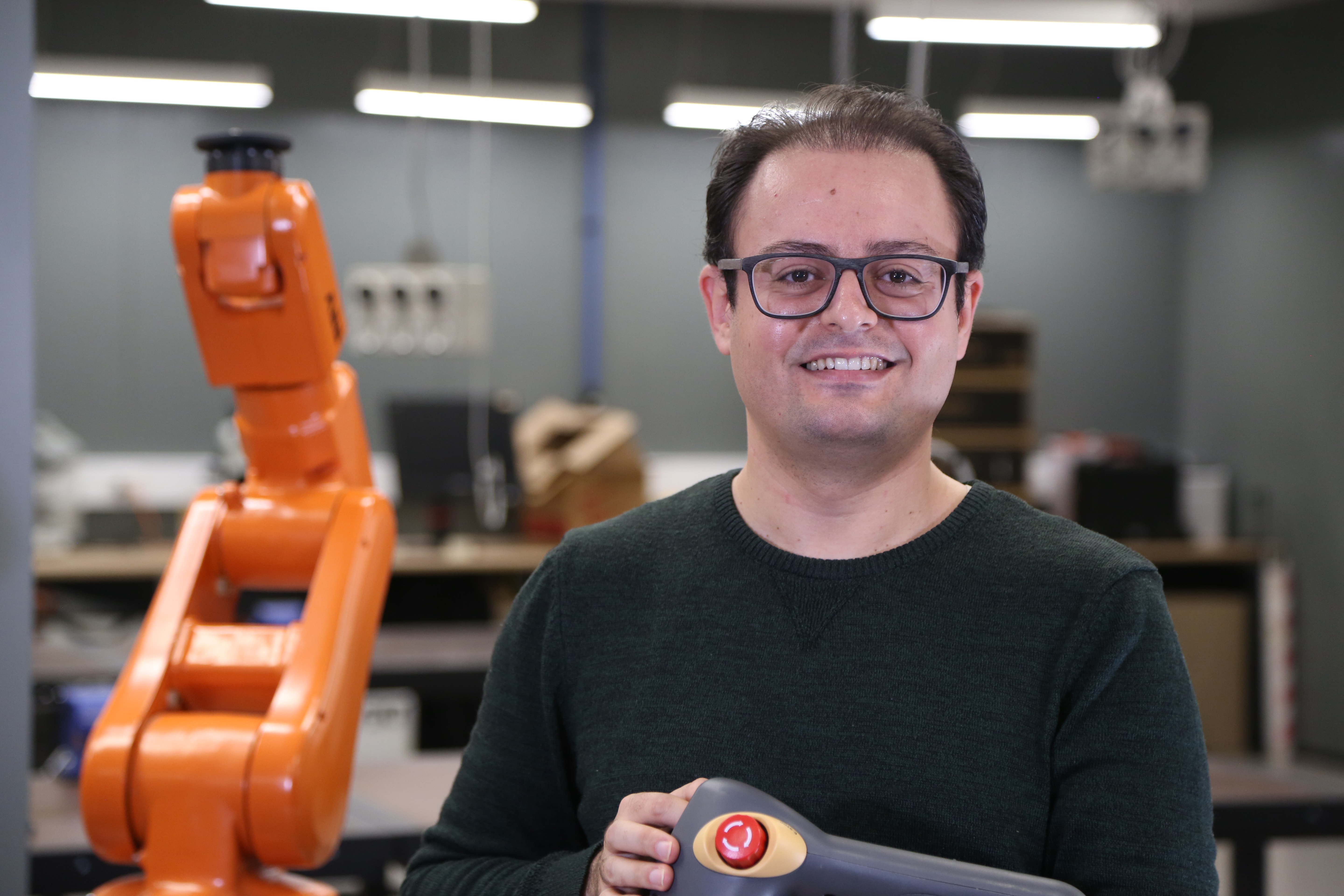
Mohamadreza Chalak Qazani
- Lecturer, Mechanical Engineering
- mohamadreza.chalakqazani@jcu.edu.au
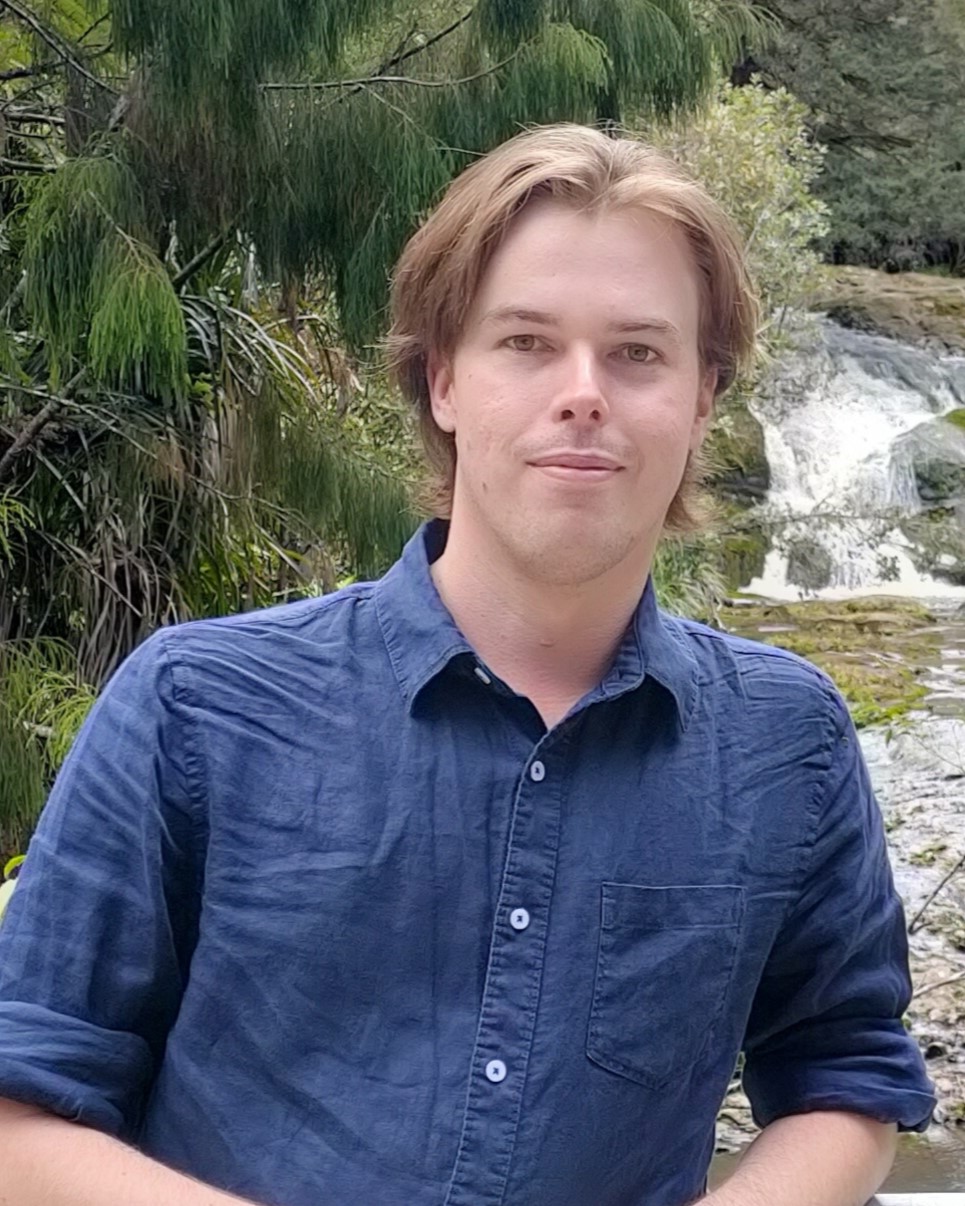
Lewis Gooch
- Lecturer
- lewis.gooch@jcu.edu.au

Judy Yang
- Postdoctoral Research Fellow, Applied AI for Forestry Weed Detection and Mapping
- judy.yang@jcu.edu.au

Bouchra Senadji
- Head, Engineering
- bouchra.senadji@jcu.edu.au
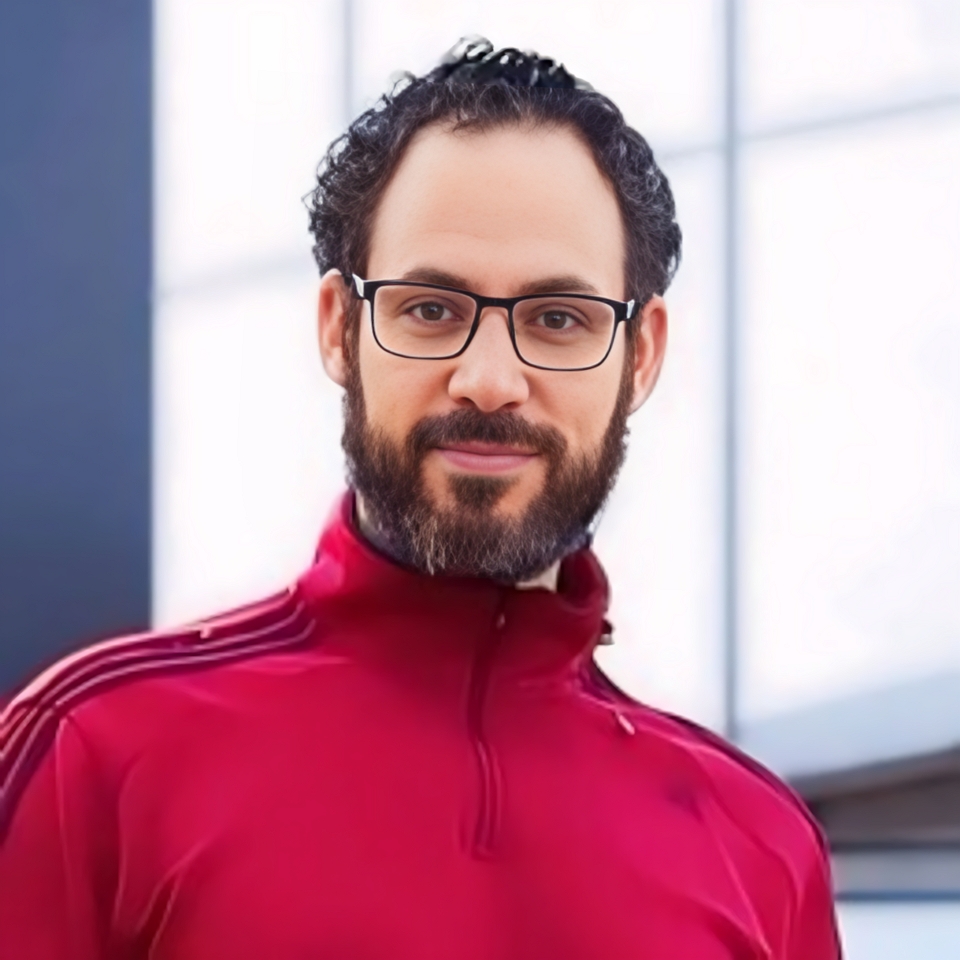
Alzayat Saleh
- AIMS@JCU Postdoctoral Research Fellow, Marine Science Technology
- alzayat.saleh@jcu.edu.au
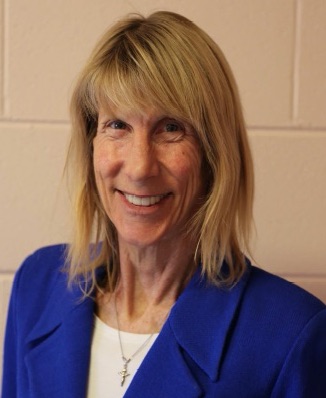
Anne Steinemann
- Adjunct Professor
- anne.steinemann@jcu.edu.au

Nico Adams
- Professor, Electronic Systems & IoT Engineering
- nico.adams@jcu.edu.au

Elsa Antunes
- Associate Professor, Mechanical Engineering
- elsa.antunes1@jcu.edu.au

Eric Wang
- Senior Lecturer, Electronic Systems and IoT Engineering
- eric.wang@jcu.edu.au
Climate Smart Sugarcane Irrigation Partnerships (CSSIP) (Old ID 24754)
Bronson Philippa
22 Aug 2018 - 30 Jun 2023
CSSIP will minimise nutrient runoff, improve soil health and increase wetlands water quality by facilitating the adoption of world-class irrigation practices in sugarcane farming systems. Currently, best practice irrigation is assisted by an Irrigation Decision Support Tool (IDST) that provides evidence-based advice. However, IDSTs have not reached their full potential. Firstly, they do not integrate short to medium term weather forecasts (e.g. weekly to multi-weekly forecasts). Secondly, IDSTs do not operate at a spatial scale relevant to farmers. CSSIP will incorporate the Bureau or Meteorology’s new high-resolution climate model into the Irrigation Decision Support Tool. Thirdly, IDSTs require substantial time in manual data entry, which can be alleviated using real-time monitoring via Internet of Things technologies. This will increase irrigation efficiency, reducing excessive runoff into river systems and onto the Reef, and, will help farmers save water and energy costs.
AI-Powered Precision Farming: Mapping, Detection, Planning, and Spot Spraying (Old ID 31107)
Mohammad Jahanbakht
01 Sep 2023 - 29 Nov 2024
High-tech solutions in agriculture offer many benefits for improved crop and land management. However, current methods rely heavily on human experts for monitoring and planning. To address this, we propose a state-of-the-art AI-based spraying strategy software that: • takes aerial images of the farm/land vegetation (using drones, planes, satellites, etc.) and detects field requirements, • generates a pre-spray map on GIS systems, considering the existing terrain topographies, • optimally plans the detailed spraying strategy and suggests one or a combination of proper spraying methods such as blanket, vehicular spot, or aerial spraying, and • whenever possible, effectively commands and controls appropriate devices to spray, such as drones, vehicles, people, etc. It might also receive feedback and correspondingly optimize the process/plan. This AI-Powered system helps farmers and producers precisely spray, saving costs and the environment.
Thermal stratification, overturning and mixing in riverine environments (Old ID 21650)
Wenxian Lin
16 Jan 2015 - 15 Jan 2018
Thermal stratification is common in Australia's rivers due to our hot, drought-prone climate and high human demands relative to available supply, which has led to a significant reduction in flows relative to natural levels. Thermal stratification inhibits mixing, creating stagnant conditions characterised by low oxygen levels and increased concentrations of contaminants, leading to algal blooms, fish kills and systemic damage to ecosystems. The aim of this project is to develop predictive models for the effects of physical processes such as night-time cooling, wind, turbulence and currents n riverine thermal stratification. This will enable a more accurate determination of the flow rates required to maintain the health of our river systems.
AutoFish: Automatic Fish Phenotyping Tool for Sustainable Aquaculture and Smart Fisheries (Old ID 28947)
Mostafa Rahimi Azghadi
01 Mar 2023 - 30 Jun 2023
This project aims to advance an initial implementation of a new automatic fish phenotyping tool, named AutoFish, that will enhance aquaculture farming and post-harvest processing practices by accelerating the collection of data and automatically analysing and leveraging it using the latest advances in computer vision and machine learning technologies. We have already developed a ground-breaking solution for the aquaculture industry, and produced a Proof Of Concept (POC) device, which has been successfully tested. This POC is ready to get tailored, integrated and/or retrofitted into an available fish and aquaculture farm for grading, phenotypic collection and/or processing lines, due to its modular stand-alone nature. The AutoFish concept has been proven with Barramundi as a test species. However, it can be used to collect images of, and trained to predict features of other fish and/or aquaculture species. AutoFish can also be trained to detect and predict any customertailored features and traits of the fish/product, and/or be used to assess the health of fish/product, if th health issues are visually recognisable by an RGB camera and the background phenotypic data present for training. Hence this technology would be scalable and can be implemented for other aquaculture products worldwide. The main aim of this project is to unlock the potential of our initial AutoFish POC by applying it to, or altering it for, a partner Barramundi (or Prawn) farm, to solve a real end-users’ problem. This problem can be about any monitoring aspect, as long as cameras can capture it. We have narrowed down the scope of this project to Barramundi (and/or Prawn) due to our wider industry network in these two species.
Plasma assisted fabrication of nanofirous membranes for energy applications (Old ID 22343)
Mohan Jacob
01 Oct 2015 - 30 Sep 2016
Development of highly stable proton conductive polymer electrolyte membranes will enable advances in energy conversion systems. This project focuses on developing innovative membranes for fuel cells and vanadium redox battery based on cheap electrospun nanofibrous modified with plasma. Nanofiberousmats containing proton conducting functionalities will be prepared by electrospinning of desired polymers followed by immobilising of ionic groups. Composite membranes with webbed morphologies will be obtained using plasma assisted crosslinking of nanofiberousmats followed by introducing additional polyelectrolyte layers. The adopted fabrication technique will be a versatile strategy for producing low cost and mechanically stable PEMs for numerous electrochemical applications.
RRAP CAD-01: Coral propagation and deployment (Old ID 27237)
Elsa Antunes
01 Oct 2020 - 30 Jun 2025
Deployment device shape and material can considerably affect the growth rates and survival of recruits, but the optimal physical properties of deployment devices to maximise the survival and growth of a diversity of corals are not yet clear. For example, crevice size is an important physical factor that influences the survivorship of coral recruits and juveniles. Spatial structure of settlement surfaces can provide refugia from algae and release from grazing. The first part of the project consists of selecting potential device materials, porosities and textures that will be assessed for fouling and recruit survival. These will be first tested in the SeaSim and the most promising candidates in the field in across a range of environments and environmental gradients. The second part of the project consists of optimization and scaling up of the fabrication technology to produce millions of devices.
Developing an innovative low-power and high-speed architecture for smart machines (Old ID 25065)
Mostafa Rahimi Azghadi
01 Jul 2018 - 31 Dec 2018
This project aims to significantly improve the processing speed and power consumption of intelligent, mobile computing devices. Using a novel computing architecture inspired by the low-energy, parallel processing of the brain, the project will overcome a major impediment to progress, that placing ever more transistors on electronic chips is reaching its physical limits. The intended outcomes include important theoretical advances in electronic engineering, a new architecture enabling intelligent devices to operate independently of remote supercomputers, and a software trial in a robot. Applicable to devices ranging from smartphones to medical diagnostic equipment to autonomous vehicles, the new architecture promises significant benefits.
Independent testing of solar panel cooling device (the B-Panel) (Old ID 23054)
Ahmad Zahedi
01 Aug 2016 - 31 Dec 2017
Provide independent testing of a solar panel modification claiming to boost average power output by 30%. Testing will help progress the concept and current prototype further towards commercialisation. Test a collaboration model for new, early stage start-ups being trailed by JCU and iNQ. Aims to explore how access to JCU's technical skills, equipment and technical mentoring plus guided linkage with local entrepreneurial activities at iNQ e.g. Involvement in Start-Up weekends and membership of iNQ plus access to one-on-one entrepreneurial assessment, mentoring and training activities at iNQ improves the chances of success for micro and SMEs in commercialisation ideas.
Deep Learning for Waste Management (Old ID 27687)
Mostafa Rahimi Azghadi
12 Aug 2022 - 30 Jun 2027
To keep our planet safe and healthy, new techniques for managing and recycling waste should be devised. This project aims to use the latest advances in deep learning and computer vision technologies to better manage waste by developing a fast and accurate waste analysis system.
Vibration analysis of mining industry conveyor belt systems: validation of method and pathways to improvement (Old ID 26579)
Bronson Philippa
19 Aug 2019 - 19 Feb 2020
Equipment failures in the mining industry can cause serious safety hazards and substantial financial losses. An automated, cost-effective monitoring system that could be retrofitted to existing equipment would provide advance warning to operators and reduce the likelihood of unscheduled outages. This project will test and validate a vibration-based monitoring system for conveyor belts and associated equipment. It will also identify improved methods to analyse the vibration data to increase the sensitivity and/or accuracy of the alerts that are generated.
Distributed Deep Learning in the Cloud and Energy-efficient Real-time Image Processing at the Edge for Fish Segmentation in Underwater Videos Segmentation in Underwater Videos
- 2022
- Institute of Electrical and Electronics Engineers
- Researchers:Mohammad JahanbakhtWei XiangNathan WalthamMostafa Rahimi Azghadi
Start Date:
01 Jan 2010
End Date:
01 Jan 2015
Start Date:
01 Jan 2004
End Date:
01 Jan 2006
Start Date:
01 Jan 2010
Title:
Senior Member, IEEE
Start Date:
01 Jan 2012
Title:
Reperio Innovation Award
Start Date:
01 Jan 2015
Start Date:
01 Jan 2015
Start Date:
01 Jan 2013
Start Date:
01 Jan 2010
Start Date:
01 Jan 2006
Start Date:
01 Jan 2006