
Engineering

Liuxin Chen
- Lecturer
- liuxin.chen@jcu.edu.au
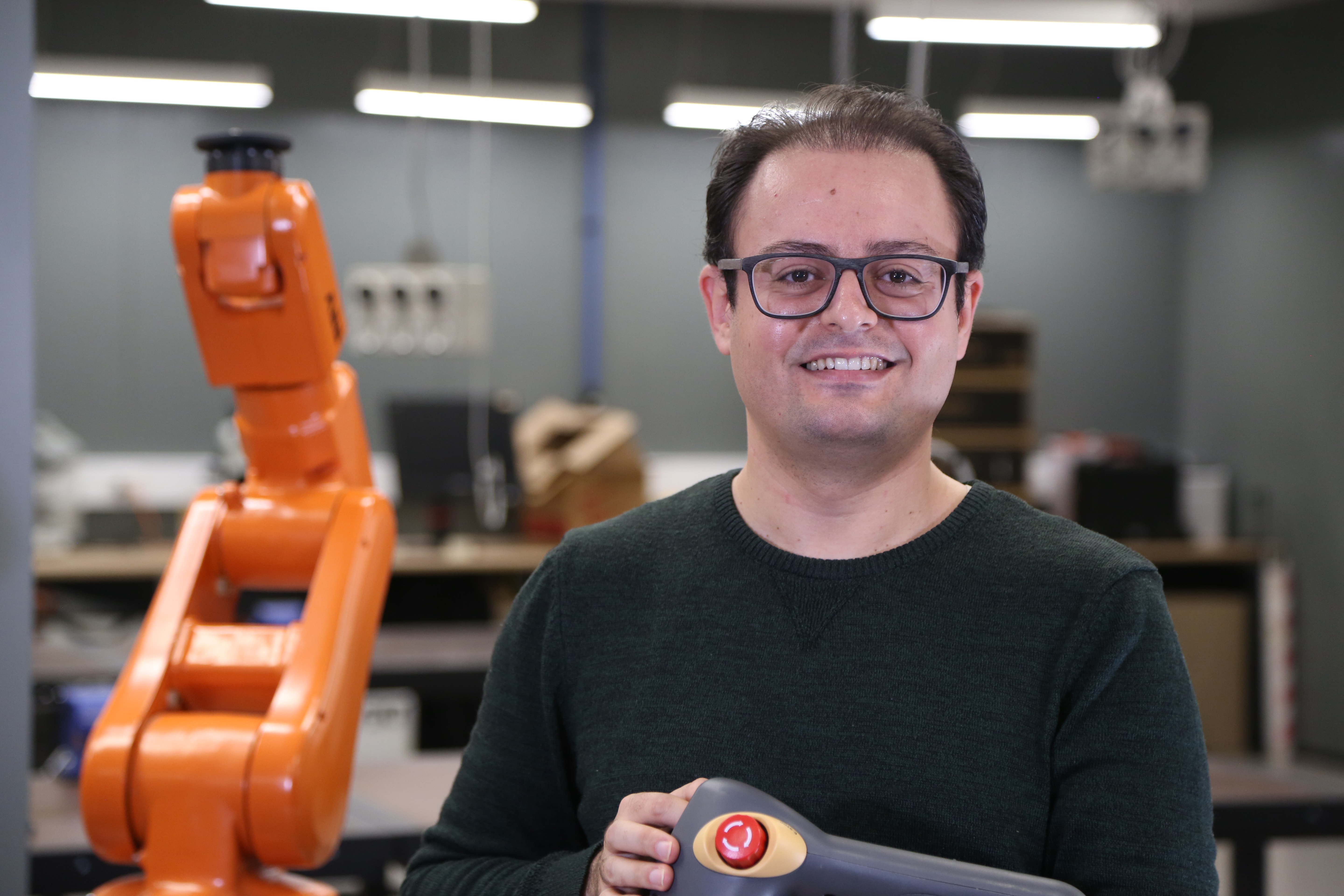
Mohamadreza Chalak Qazani
- Lecturer, Mechanical Engineering
- mohamadreza.chalakqazani@jcu.edu.au

Lewis Gooch
- Lecturer
- lewis.gooch@jcu.edu.au

Judy Yang
- Postdoctoral Research Fellow, Applied AI for Forestry Weed Detection and Mapping
- judy.yang@jcu.edu.au

Bouchra Senadji
- Head, Engineering
- bouchra.senadji@jcu.edu.au

Alzayat Saleh
- AIMS@JCU Postdoctoral Research Fellow, Marine Science Technology
- alzayat.saleh@jcu.edu.au

Anne Steinemann
- Adjunct Professor
- anne.steinemann@jcu.edu.au

Nico Adams
- Professor, Electronic Systems & IoT Engineering
- nico.adams@jcu.edu.au

Elsa Antunes
- Associate Professor, Mechanical Engineering
- elsa.antunes1@jcu.edu.au

Eric Wang
- Senior Lecturer, Electronic Systems and IoT Engineering
- eric.wang@jcu.edu.au
Applying new image recognition techniques for automatic detection and spraying of Harrisia cactus (Old ID 26461)
Mostafa Rahimi Azghadi
01 Jul 2019 - 31 Oct 2021
harrisia cactus is a significant rangeland weed in Queensland and bnorthern NSW. It competes against native species, inhibits stock accdess and endangers wildlife. JCU have developed image recognition software to identify Harrisia cactus in pasture; which has been deployed on a prototype robotic platform for selective spot spraying. This proect will see the development of a new spraying unit incorporating JCU's developed technology with a vehicle provided by Warrakirri Cropping. The unit will then be used to treat 500 ha of infested pasture at Warrakirri's "Willaroo" property. Its performance will be compared to traditional methods and showcased to local landholders.
Improving the extraction process for QCIDE ™ oil (Old ID 26192)
Yinghe He
25 Sep 2018 - 28 Feb 2019
This project involves data-logging to quantify process variables, and taking samples of hydrosol to determine the state of steam-biomass contact to determine oil yield and areas for process improvement.
Machine-learning based monitoring system for cyanobacterial blooms in tropical freshwater reservoirs
Tao Huang
20 Apr 2026 - 22 Oct 2029
This project calls for the development of machine learning methods for the surveillance and monitoring of cyanobacteria in tropical reservoirs. The project will integrate data from multiple length scales (e.g. point samples, optical sensors at fixed locations, colour and/or multispectral imagery from remotely piloted aircraft, and satellite-based remote sensing). There is the opportunity to develop innovative ML methods and combine applied research (to develop useful industrial applications) and fundamental research (to create new ML algorithms and incorporate innovative approaches to handle, for instance, sparsely labelled data, multiple input modalities, etc). There is also the opportunity to develop new optical or electrical sensors for in-situ measurements.
Machine-learning based monitoring system for cyanobacterial blooms in tropical freshwater reservoirs
Bronson Philippa
20 Apr 2026 - 22 Oct 2029
This project calls for the development of machine learning methods for the surveillance and monitoring of cyanobacteria in tropical reservoirs. The project will integrate data from multiple length scales (e.g. point samples, optical sensors at fixed locations, colour and/or multispectral imagery from remotely piloted aircraft, and satellite-based remote sensing). There is the opportunity to develop innovative ML methods and combine applied research (to develop useful industrial applications) and fundamental research (to create new ML algorithms and incorporate innovative approaches to handle, for instance, sparsely labelled data, multiple input modalities, etc). There is also the opportunity to develop new optical or electrical sensors for in-situ measurements.
Machine-learning based monitoring system for cyanobacterial blooms in tropical freshwater reservoirs
Mahmood Sadat Noori
20 Apr 2026 - 22 Oct 2029
This project calls for the development of machine learning methods for the surveillance and monitoring of cyanobacteria in tropical reservoirs. The project will integrate data from multiple length scales (e.g. point samples, optical sensors at fixed locations, colour and/or multispectral imagery from remotely piloted aircraft, and satellite-based remote sensing). There is the opportunity to develop innovative ML methods and combine applied research (to develop useful industrial applications) and fundamental research (to create new ML algorithms and incorporate innovative approaches to handle, for instance, sparsely labelled data, multiple input modalities, etc). There is also the opportunity to develop new optical or electrical sensors for in-situ measurements.
Modelling Catchment Hydrology and Nutrient Fluxes to Forecast Cyanobacterial Blooms in In Ross River Reservoir
Bronson Philippa
20 Apr 2026 - 22 Oct 2029
The project focuses on developing an integrated modelling framework for forecasting cyanobacterial blooms in tropical reservoirs. It combines surface water modelling (SWAT or similar) with groundwater modelling (MODFLOW or similar) to capture the coupled dynamics of catchment hydrology, nutrient transport, and reservoir inflows. These physical models are further integrated with remote sensing datasets and machine learning approaches (e.g., Random Forest, GNN, LSTM) to identify bloom drivers and improve prediction. Additionally, sub-seasonal to seasonal (S2S) climate forecasts are incorporated to extend predictive lead times, enabling an early warning system for effective reservoir and water quality management.
Modelling Catchment Hydrology and Nutrient Fluxes to Forecast Cyanobacterial Blooms in In Ross River Reservoir
Mahmood Sadat Noori
20 Apr 2026 - 22 Oct 2029
The project focuses on developing an integrated modelling framework for forecasting cyanobacterial blooms in tropical reservoirs. It combines surface water modelling (SWAT or similar) with groundwater modelling (MODFLOW or similar) to capture the coupled dynamics of catchment hydrology, nutrient transport, and reservoir inflows. These physical models are further integrated with remote sensing datasets and machine learning approaches (e.g., Random Forest, GNN, LSTM) to identify bloom drivers and improve prediction. Additionally, sub-seasonal to seasonal (S2S) climate forecasts are incorporated to extend predictive lead times, enabling an early warning system for effective reservoir and water quality management.
Sustainable use of tailings as land-fill and non-structural construction material - Phase 1 (Old ID 27170)
Peter To
01 Jan 2021 - 31 Dec 2021
The central aim of the project is the assessment of blended residue from Townsville Energy Chemicals Hub (TECH) for sustainable use. Tailings can be processed to remove the acidic content or mixed with binder to become safe backfill or non-structural materials. TECH proposed to process annually 600,000 tons of high grenade Nickel and Cobalt ore. Phase 1 of the project will undertake physical, chemical, geotechnical and engineering strength tests on tailings from TECH to estimate the limits and to assess characteristics, including the acid-insoluble content of the tailings. The understanding will help to develop research in phase 2 and 3.
Sex determination of fruit fly pupa using Near Infrared Spectroscopy. (Old ID 26970)
Bronson Philippa
23 Sep 2020 - 31 Jan 2023
Implementation of an effective sterile insect program for fruit fly species Bactrocera tryoni requires that only sterile male insects be released. Therefore at some stage of the fly production process the females need to be removed. Hand sexing is very labour intensive and current automated systems based on colour and size are not effective in differentiating between male and female pupae for B. tryoni. Hence, a non-destructive, rapid method of sex separation is required that does not impact on the viability of the pupae and which can be incorporated into a mass rearing system. Preliminary research has demonstrated that Near Infrared Spectroscopy (NIRS) has great potential as an objective non-invasive method to sex B. tryoni pupae. The aim of this project is to develop and semi-automate a non-invasive rapid assessment technique to rapidly and consistently sort male and female B. tryoni pupae based on NIRS technology.
Reducing herbicide usage in the Burdekin and Proserpine reef catchment areas with precise robotic weed control in sugarcane (Old ID 26973)
Mostafa Rahimi Azghadi
25 Sep 2020 - 31 Dec 2025
The main objective of this project is to develop and build the world’s first robotic platform for selective weed control in sugarcane. Specifically, we aim to retrofit two 12-metre sugarcane booms for farmers in the Burdekin and Proserpine GBR catchment areas with state-of-the-art deep learning detection and spraying technology. The fundamental aim of this project is to significantly minimise the herbicide usage by selective spot spraying. We have set a target to reduce the knockdown herbicide usage on the chosen farms by 80% compared to the traditional blanket spraying that is performed during various stages of the crop cycle.
PIDO: the primary immunodeficiency disease ontology
- 2011
- Oxford University Press
- Researchers:Nico Adams
Start Date:
01 Jan 2010
End Date:
01 Jan 2015
Start Date:
01 Jan 2004
End Date:
01 Jan 2006
Start Date:
01 Jan 2010
Title:
Senior Member, IEEE
Start Date:
01 Jan 2012
Title:
Reperio Innovation Award
Start Date:
01 Jan 2015
Start Date:
01 Jan 2015
Start Date:
01 Jan 2013
Start Date:
01 Jan 2010
Start Date:
01 Jan 2006
Start Date:
01 Jan 2006