
College of Science & Engineering

Sophia Love
- Doctor of Philosophy (Natural and Physical Sciences)
- sophie.love@jcu.edu.au

Romain Vaucher
- Senior Lecturer, Sedimentology
- romain.vaucher@jcu.edu.au

Jenny Fisher
- Associate Dean, Learning and Teaching
- jenny.fisher@jcu.edu.au

Ambili Narayanan
- Doctor of Philosophy (Natural and Physical Sciences)
- ambili.narayanan@my.jcu.edu.au

Sarfaraz Ali
- Postdoctoral Research Fellow
- sarfaraz.ali@jcu.edu.au

Mikaeylah Davidson
- Postdoctoral Research Fellow
- mikaeylah.davidson@jcu.edu.au

Liuxin Chen
- Lecturer
- liuxin.chen@jcu.edu.au

Rafael Cabral Carvalho
- Lecturer, Marine Geoscience
- rafael.cabralcarvalho@jcu.edu.au
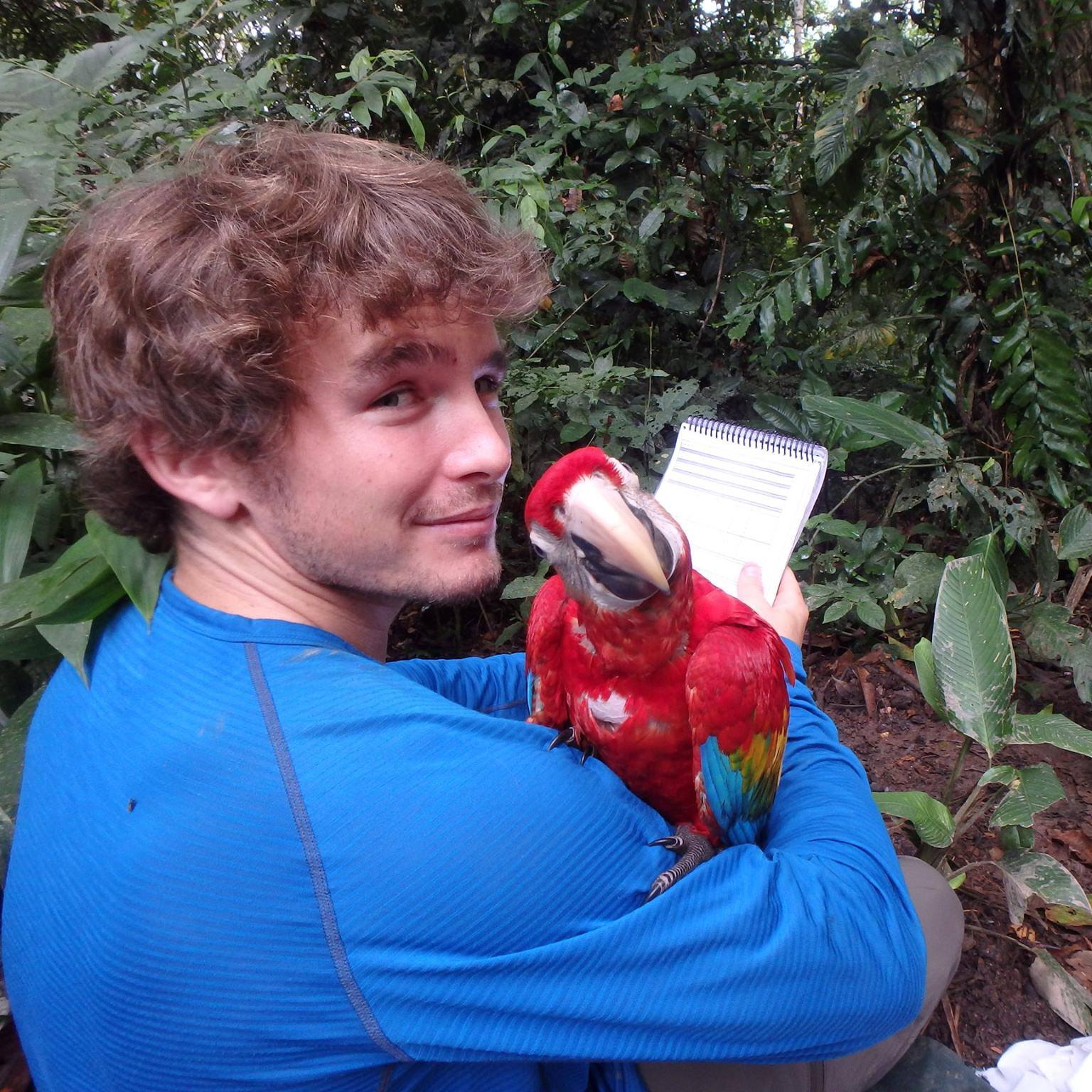
Tom Lloyd
- Postdoctoral Research Fellow, Global Ecosystems
- tom.lloyd@jcu.edu.au
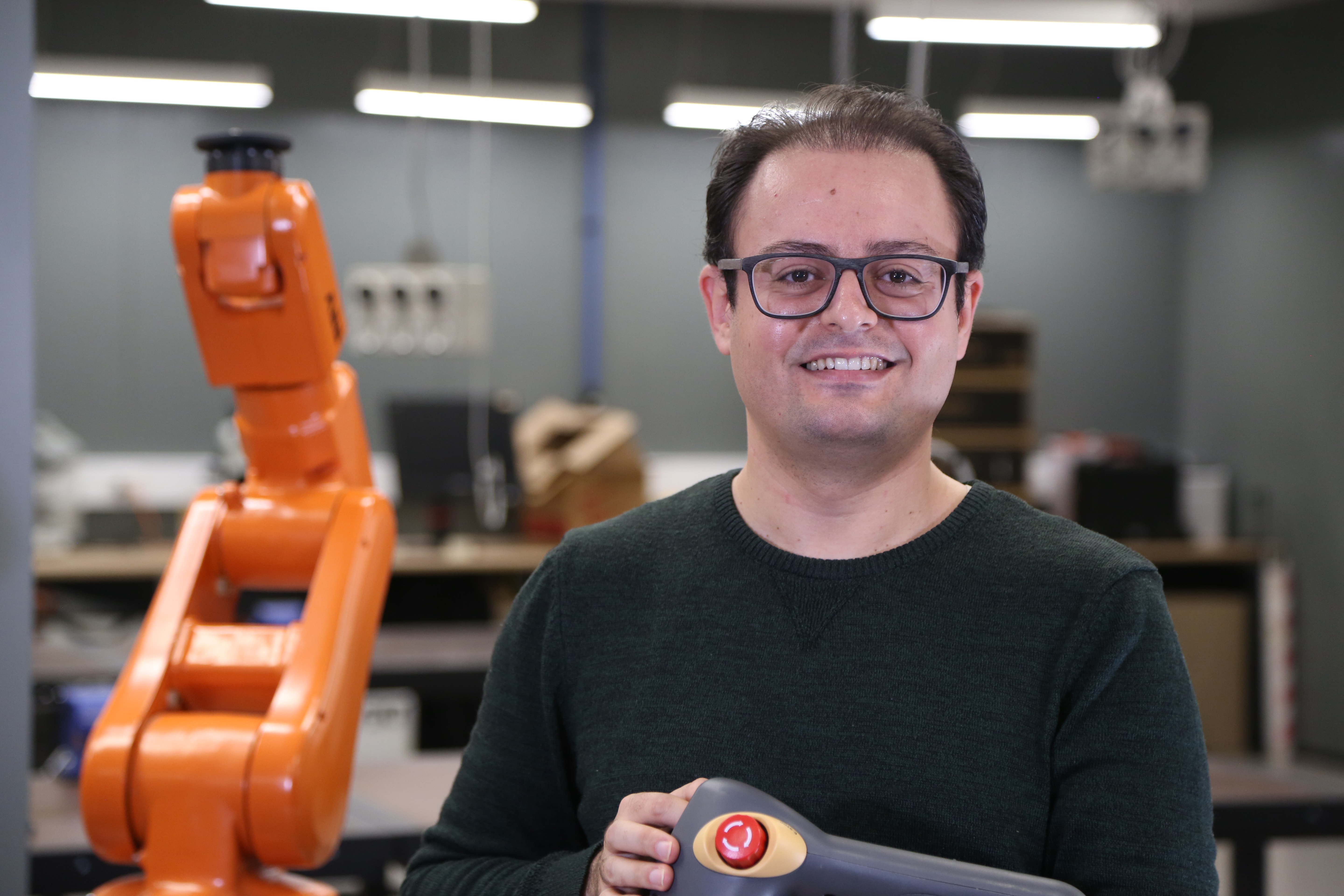
Mohamadreza Chalak Qazani
- Lecturer, Mechanical Engineering
- mohamadreza.chalakqazani@jcu.edu.au
Fingerprinting environmentally sustainable ores using neodymium isotopes (Old ID 27841)
Alex McCoy-West
01 Sep 2022 - 30 Jun 2026
The rare earth elements (REE) are a critical resource as the world transitions to an energy system dominated by green energy. However, current extraction methods rely on strong acid leaching, which has the potential to create environmental contamination. Alternative REE extraction methodologies, including phyto‐extraction (using plants) and bacteria induced bioleaching are currently being investigated. This project aims to utilise radiogenic and stable neodymium isotopes to characterise the isotopic fractionations induced during different REE extraction techniques. This isotopic fingerprinting will provide a method to verify more sustainably generated REE concentrates, enabling the Australian REE industry to be positioned as a world leading environmental producer.
Fish tissue proteomics as baseline evaluation for safer cultivated seafood with known allergen profile
Ludwig Lopata
20 Nov 2022 - 19 Nov 2023
Cultivated seafood is far less researched than traditional livestock alternatives. We will address this critical knowledge gap through high throughput proteomic analysis of various tissues from different fish species, used for cultivation, with a focus on comparative composition of allergenic proteins (allergens), and directly compare with cultivated meat. Closing this lack of industry-wide target product, protein, and allergen profiles is essential for success in the alternative protein field and will promote regulation of safe cultivated foods.
Satellite Based Water Analysis and Drought Planning in Northwest Qld
Ben Jarihani
01 Aug 2023 - 23 Apr 2025
This project will utilize satellite imagery to map and monitor small water bodies and farm dams to
improve grazing land management. The project aims to extract time series of water areas from
the satellite images, perform time series analysis to assess the shrinkage or expansion of the
water bodies, water levels, and determine their precise locations.
The focus is on understanding the availability and dynamics of these water resources, which are
vital for livestock, domestic use and wildlife habitats.
This project will be a partnership between SGNRM and JCU.
Northern Australia Plant Biosecurity Facility
Lucas Cernusak
01 Jan 2024 - 30 Jun 2025
This proposal aims to establish the only Australian plant quarantine facility north of the 27th parallel (Brisbane), and therefore the only one in the Australian tropics. The facility will enable effective research on tropical invasive plants, which currently can only be developed via proxy facilities far from the relevant habitats. This poses severe limitations to biosecurity research in the Australian Tropics. JCU is a leading institution in tropical environmental research, and as a broad and diverse base of biosecurity researchers that will be expand their capacity to develop world class research on plant biosecurity under safe and adequate conditions. Research ranges from the impact of reintroduction of new genotypes on weed fitness, genetic variability and sensitivity, impact of climate change on weed expansion, the role of plant-animal interactions on plant control, and others.
Lead Scientist - Group on Earth Observations Global Ecosystem Atlas
Nicholas Murray
01 Feb 2024 - 31 Dec 2024
The Group on Earth Observations (GEO) is a global partnership that promotes the use of Earth observations (EO) as evidence for environmental decisions, policies and finance. GEO’s recently adopted Post-2025 Strategy envisions a bold direction for the future. It calls for transformative programs that will enable GEO to deliver a portfolio of initiatives, providing Earth intelligence needed to unlock transformational change in the way that societies interact with the planet. As part of this vision, the Global Ecosystems Atlas initiative has been established as an international collaboration convened by GEO to create an urgently needed common reference to facilitate harmonized and coherent national, regional, and global reporting of the state of ecosystems. To move the concept closer to its realization as a full proof-of-concept by the Convention of Biodiversity (CBD) Conference of the Parties (COP) in October 2024, GEO is planning to contract Associate Professor Nicholas Murray to perform the role of Lead Scientist. The Lead Scientist will lead the design, planning and execution of atlas activities in 2024 and coordinate the globally distributed Science Core Team.
How plant heat stress will influence global warming this century
Alex Cheesman
01 Mar 2024 - 30 Nov 2024
Our objective is to elucidate the mechanism, from subcellular to global scale, underlying the interdependence of
plants and climate during Earth's current climate transition. This century, rising CO2 will force global temperatures to
increase, pushing some vegetation systems into heat stress and potentially physiological collapse, irrespective of
rainfall (1). Indeed, the most vulnerable regions are humid, high rainfall zones where 'wet-bulb' temperature (the
lowest temperature that an evaporating object or organism can cool to) will rise to levels known to induce
physiological stress and cellular death (2).
Plants crucially affect climate through stomatal regulation of transpiration, which influences partitioning of
net solar radiation into heating and evaporative cooling actions at the land surface (3). Plant vulnerability to heat
stress can diminish this role and promote further climate warming, but little is known of the physiological and
molecular mechanisms of stomatal regulation under heat stress, or of the combined physiological and climatic
conditions that generate lethal leaf temperatures. This limits our capacity to predict and prepare for the long-term
effects of global warming (4). This project will unlock mechanistic information from plant molecular genetics and
heat stress physiology to formulate new theory describing stomatal regulation under temperature extremes, and
apply this in an Earth system modeling framework to develop tools for predicting and adapting plant-atmosphere
dynamics.
Our central hypothesis is that previously unrealized breakdown of the stomatal regulation mechanism under
heat stress, when expressed at the landscape scale, will add a significant and as yet unforeseen enhancing feedback
to climate change this century. To test this, we will undertake the first coordinated integration and scaling of the
stomatal control mechanism responding to heat under high CO2, from molecular signaling through to global fluxes, to
quantify the full effects of plant heat stress on regional and global climate. Genetic and physiological methods will be
used to develop and validate a new leaf-scale model of stomatal regulation at high temperature. This will be
implemented in Earth system simulations to re-evaluate end of century climate scenarios in the most heatvulnerable
regions using improved surface energy partitioning calculations.
She Flies: Using Drones to build STEM Confidence in Girls (Old ID 22974)
Karen Joyce
17 Feb 2017 - 31 Dec 2017
The ‘new drone economy’ is estimated to be worth US 20B pa by 2020, providing 10% of future jobs. Australia leads the world in non-defence applications of drone technology. Yet women and girls are largely missing from this important emerging sector (<1% female pilots). ‘She Flies’ will give girls confidence in a male dominated STEM field. We will create and deliver a hands on workshop for high school girls, their parents and teachers, teaching technical skills, safety, and environmental survey.
Genomics for Undiagnosed Infectious Disease Evaluation and Diagnosis in Northern Australia (GUIDED-North Australia) (Old ID 23362)
Paul Horwood
01 Jan 2018 - 31 Dec 2019
The early detection and diagnosis of infectious diseases currently relies on a best guess of likely causative agents with specific testing for those agents. In this project, we aim to evaluate a genomics approach for the diagnosis of febrile illnesses of unknown cause in Northern Australia. The project will be conducted in major hospitals across three different regions of Northern Australia: Cairns (Queensland), Darwin (Northern Territory) and Broome (Western Australia). It is likely that most emerging infectious diseases initially present as undifferentiated fevers. It follows then that investigation of undifferentiated fevers provides targeted surveillance for new and emerging infectious diseases.
Genetic diversity audit of farm held stock of greenlip and blacklip abalone (Old ID 23387)
Jan Strugnell
03 Apr 2017 - 31 Oct 2018
Conduct a genetic audit of farm held stocks of greenlip and blacklip abalone to identify current levels of genetic diversity, effective population sizes, and levels of coancestry/relatedness captured within individual farms and the wider industry.
Environmentally friendly corrosion inhibitors (Old ID 25075)
Peter Junk
16 Jul 2018 - 15 Mar 2019
Corrosion is a multibillion dollar cost afflicting critical infrastructure in almost all major industries. This research project aims to translate the cutting edge of corrosion science and technology to advance the knowledge of corrosion and its inhibition for a practical industry application. JCU will collaborate with Prochem haulage to design a corrosion inhibitor formulation for water used in cleaning/washing of mining vehicles.
Start Date:
10 Nov 2024
Start Date:
31 Mar 2025
Title:
Bengali
Reseracher:
Khandakar Faisal Ibn Murad
(Doctor of Philosophy (Engineering and Related Technologies))
Title:
English
Reseracher:
Khandakar Faisal Ibn Murad
(Doctor of Philosophy (Engineering and Related Technologies))
Start Date:
01 Jan 2024
Start Date:
01 Jan 2024
End Date:
01 Jan 2027
Start Date:
01 Jan 2014
Start Date:
01 Jan 2003
Title:
PhD, James Cook University
End Date:
01 Jan 2010
Start Date:
01 Jan 2024
End Date:
01 Jan 2024