
College of Science & Engineering

Sophia Love
- Doctor of Philosophy (Natural and Physical Sciences)
- sophie.love@jcu.edu.au
Romain Vaucher
- Senior Lecturer, Sedimentology
- romain.vaucher@jcu.edu.au

Jenny Fisher
- Associate Dean, Learning and Teaching
- jenny.fisher@jcu.edu.au

Ambili Narayanan
- Doctor of Philosophy (Natural and Physical Sciences)
- ambili.narayanan@my.jcu.edu.au

Sarfaraz Ali
- Postdoctoral Research Fellow
- sarfaraz.ali@jcu.edu.au

Mikaeylah Davidson
- Postdoctoral Research Fellow
- mikaeylah.davidson@jcu.edu.au
Liuxin Chen
- Lecturer
- liuxin.chen@jcu.edu.au
Rafael Cabral Carvalho
- Lecturer, Marine Geoscience
- rafael.cabralcarvalho@jcu.edu.au
Tom Lloyd
- Postdoctoral Research Fellow, Global Ecosystems
- tom.lloyd@jcu.edu.au
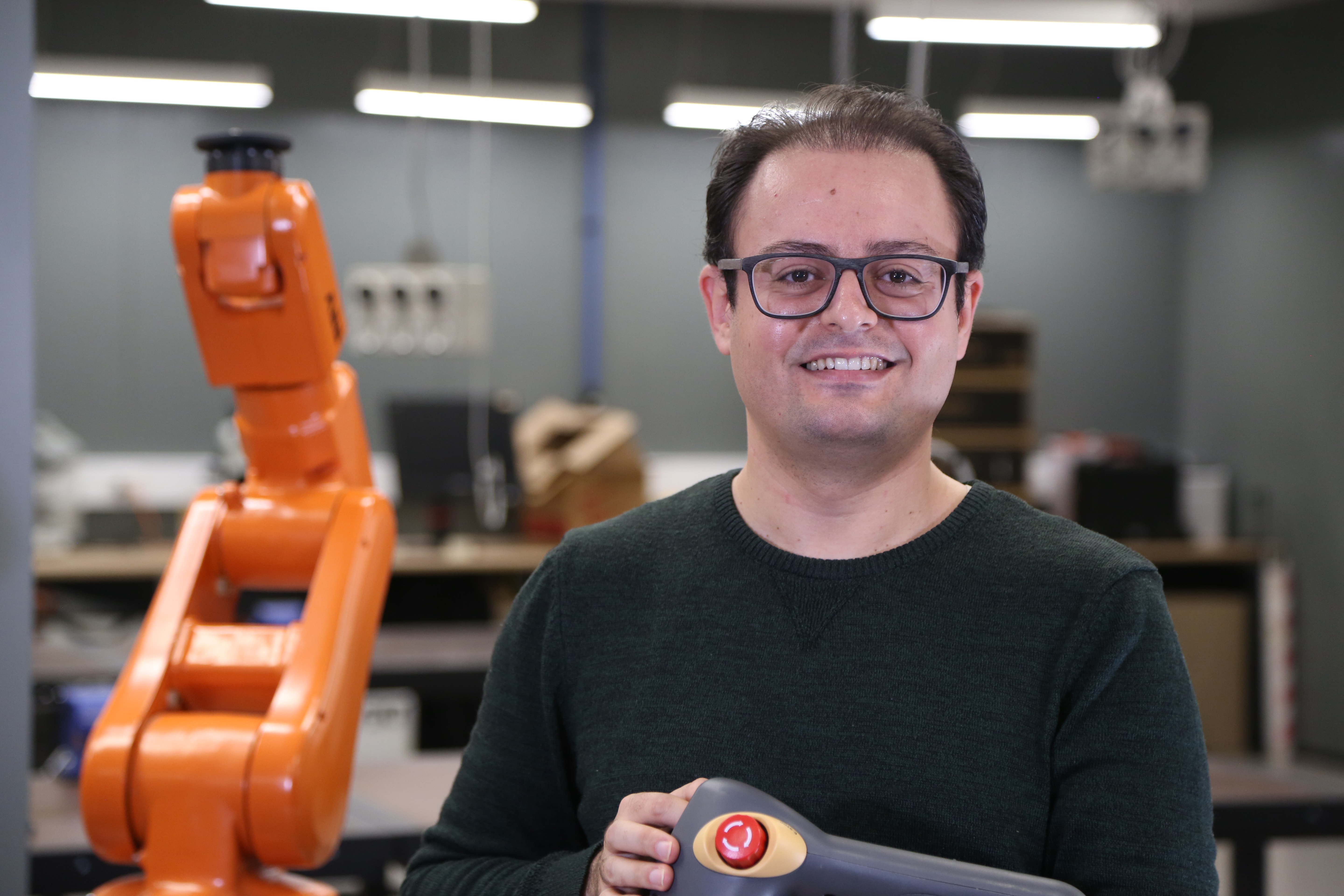
Mohamadreza Chalak Qazani
- Lecturer, Mechanical Engineering
- mohamadreza.chalakqazani@jcu.edu.au
Traditional Owner engagement for the JCU-CSIRO Community-led Biosecurity Initiative
Paul Horwood
06 Jun 2024 - 30 Sep 2025
The objective of this Project is to understand the interests and needs of Traditional Owners and have them engage with the JCU-CSIRO collaboration to develop community-led projects that will aim to reduce biosecurity risks and/or impacts. The Project will undertake steps to identify sustainable ways to reduce biosecurity risks (diseases, plant, and animal pests) in northern Queensland through creating mutually beneficial and sustainable approaches with community that improves livelihoods. The Project intends to enable Traditional Owners to develop research priorities and own and lead research projects with JCU and CSIRO researchers (that are based on these research priorities), which could develop economic opportunities and engage with regional partners to identify and reduce potential biosecurity risks.
Sugar-AI: Smart Sugarcane Health Monitoring and Ratoon Stunting Disease (RSD) Detection with Satellite Remote Sensing and Machine Learning (Old ID 30057)
Mostafa Rahimi Azghadi
01 Aug 2024 - 31 Dec 2025
The aim of the Sugar-AI project is to develop a prototype smart software system for sugarcane health monitoring. The prototype will focus on accurately diagnosing Ratoon Stunting Disease (RSD), which is considered by most sugarcane pathologists globally to be the most important disease that impacts on sugarcane yields between 5-60%.
Addressing key technical bottlenecks in the grouper supply chain in Vietnam and Australia through manufactured feed and hatchery developments that aim to improve sector profitability (Old ID 29011)
Leo Nankervis
01 Jun 2024 - 01 Dec 2027
The project aims to address key bottlenecks in the aquaculture grouper supply chain in Vietnam and Australia through research into nutritional constraints and drivers for commercial feed adoption by the Vietnam grow-out farming sector, as well as factors affecting the supply of high-quality eggs, larvae and juveniles in both Vietnam and Australia. A physiological approach to nutrient requirements and feeds development will be applied to address nutrient-related production bottlenecks for grouper aquaculture. This project will develop commercially implemented feed formulated specifically for grouper, facilitating the further development of the industry in Vietnam and Australia.
Prototype of a Cost Effective Thermal Energy Storage System for Air-conditioning Photovoltaic-Powered Homes
Wenxian Lin
27 May 2024 - 30 Jun 2025
This project addresses the critical issue of intermittency in solar energy generation by proposing an innovative solution that combines energy storage with air conditioning demand to achieve net zero emission in hot but solar energy abundant Northern Queensland with the construction and research of the prototype of a cost effective thermal energy storage system for air-conditioning photovoltaic-powered homes. This prototype could significantly enhance the viability of solar energy as a primary power source for households and building complexes, contributing to the long-term sustainability and resilience of tropical regions in the face of escalating energy requirements and climate change.
SEAPRO - Seaweed Environmental Action for Pollution Reduction and Algae Protein Optimisation
Ludwig Lopata
27 May 2024 - 30 Jun 2025
Aquaculture plays a crucial role in ensuring global food security and fostering future job creation, especially given the rising global demand for seafood and the plateauing of capture fisheries. In Queensland, it significantly contributes to the bioeconomy, playing a pivotal role in food production and economic development. The industry's value in the region has reached $224.7 million, indicating a notable growth of 16.1% from 2021. While the aquaculture industry in Queensland heavily relies on two main species, prawns, and barramundi, which collectively contribute to 95% of the state's production. Currently within aquaculture there is a growing global recognition of another species group: Seaweed. Seaweed is gaining recognition not only as a sustainable food source but also for its remarkable capacity to function as bio-filters, extracting excess nutrients (N & P) from aquatic environments. This makes it a potentially valuable new aquaculture product while also enhancing the environmental sustainability and circularity of aquaculture operations. Integrated aquaculture technology is a key driver of this progress, enabling the coordinated and sustainable cultivation of multiple species. This technology can be integrated into both new and existing commercial operations both on land and at sea, thereby diversifying production within a single cultivation area. By incorporating algal biofilters, this technology efficiently removes excess nutrients and contaminants from farm effluent, transforming them into valuable co-products.
This project aims to strategically deploy seaweed aquaculture to eliminate nutrient pollution and simultaneously enhance the growth of the aquaculture and seaweed industry in the tropics. Focusing on Queensland's aquaculture industry, we aim to employ innovative technology developed by Blue Carbon Pty Ltd to convert excess nutrients into high-value food proteins (extracted from algae) developed by James Cook University, crucial for the growing alternative protein sector.
Preliminary work will determine which species of seaweed which are culturable within the IMTA systems will be most appropriate for use in the alternative protein sector, and will include both marine (Ulva ohnoi, Cladophora sp., Sargasum sp. Asparagopsis taxiformis, etc.) and freshwater species (Oedogonium sp.). The selected seaweed species will be analysed for the abundance and type of extracted proteins using biochemical process developed by the research team at James Cook University. This proof-of-concept project envisions a harmonious blend of technological innovation and sustainable aquaculture practices to produce sustainable proteins for the growing alternative protein food sector as well as animal feed.
The new protein products developed from seaweed will be economically viable and increase the circular product generation of the aquaculture industry, while helping to reduce negative effect on the environment both directly and indirectly. This innovative protein production is highly scalable through the implementation of IMTA technology within aquaculture operations and different types of seaweed can be identified for production in both tropical and tempered water of Australia. The introduction of Australia's Reef Credit Scheme further amplifies the benefits of such technology. Farms implementing integrated aquaculture technology not only contribute to sustainable farming and diversifying products but also standing to gain additional benefits through this innovative credit scheme.
Overall, these advancements have the potential to significantly improve the overall sustainability, environmental impact, and circularity of aquaculture operations. This investment promises not only environmental benefits but also positions Queensland as a key player in the evolving landscape of alternative protein production.
Novel governance for marine ecosystems in rapid transition
Sarah Lawless
01 Jan 2023 - 01 Dec 2026
This research program combines the political and climate sciences with ecology and geography to understand and improve the design of complex environmental governance regimes. The team works closely with a range of governments, NGOs and donors on co-creating solutions to environmental governance problems. Interdisciplinary science capacity and competitiveness is underpinned by partnerships with an international expert working group, involving cotutelle PhD supervision and co-appointed postdoctoral fellowships at James Cook University, University of Melbourne, WorldFish, the Australian Institute of Marine Science, and the University of Tasmania.
SNAPP Governing Changing Oceans
How can improved marine governance guide more responsible, equitable, and effective interventions in climate-impacted oceans? Novel blue economy, blue carbon, and blue conservation interventions are being trialed and implemented to support climate-vulnerable oceans across the globe. Transitions in governance are needed to keep pace with novel interventions: to realize new opportunities, manage competing and escalating demand for marine resources, and mitigate risks and unintended consequences. How can marine governance transition to meet these new challenges? Answering this question is urgent, because while investment in climate-impacted oceans is accelerating, most interventions remain ad hoc, uncoordinated, and potentially ungovernable.
OUR APPROACH: Researchers in marine governance, fisheries, and climate science are collaborating with government and non-government experts in blue carbon, blue finance, blue conservation, Indigenous governance, co-management, and community resilience. The team’s mission is to collaboratively deliver governments, industries, NGOs, donors and ocean user groups and rights holders with practical insight on governance transitions that are fit for novel and rapidly emerging interventions in climate-impacted oceans.
AIMS@JCU Research Fellowship
Sarah Lawless
01 May 2023 - 30 Apr 2026
Sarah’s research is supported under a AIMS@JCU fellowship. The AIMS@JCU program is a strategic partnership between JCU and the Australian Institute of Marine Science. Sarah is the first social scientist engaged under this program, where she contributes to a key research area of common interest - improving governance of changing oceans.
Early Career Researcher Grant - Blue carbon markets: preventing or fuelling marine tenure insecurity?
Sarah Lawless
01 Jun 2024 - 27 Dec 2024
Internal grant awarded by the Centre for Sustainable Tropical Fisheries and Aquaculture (CSTFA) at James Cook University to support my investigation of blue carbon markets, including where markets may enable tenure security, leading to improved stewardship of blue carbon ecosystems, food and livelihood security, poverty reduction, and social equity.
Marine sediment geochemical survey: Coastal waters of southeastern Brazil
This project involves comprehensive geochemical fingerprinting of sediments from a marine environment to trace the potential distribution of exogenous components from a tailings dam failure. JCU is leading the systematic multi-instrument (XRD, XRF, ICP-MS, MC-ICP-MS) geochemical and isotopic characterization of approximately 200 samples. This includes quantifying the mineralogy, major, trace and volatile element concentration analysis, coupled with high-precision O-Sr-Nd-Fe isotope composition analyses.
Negotiating the bar: sex, money and the uneasy politics of Third Space
- 2004
- Oxford Blackwell
- Researchers:Lisa Law
The beach, the gaze and film tourism
- 2007
- Sage Publications
- Researchers:Lisa Law
Start Date:
10 Nov 2024
Start Date:
31 Mar 2025
Title:
Bengali
Reseracher:
Khandakar Faisal Ibn Murad
(Doctor of Philosophy (Engineering and Related Technologies))
Title:
English
Reseracher:
Khandakar Faisal Ibn Murad
(Doctor of Philosophy (Engineering and Related Technologies))
Start Date:
01 Jan 2024
Start Date:
01 Jan 2024
End Date:
01 Jan 2027
Start Date:
01 Jan 2014
Start Date:
01 Jan 2003
Title:
PhD, James Cook University
End Date:
01 Jan 2010
End Date:
01 Jan 2003