
College of Science & Engineering

Sophia Love
- Doctor of Philosophy (Natural and Physical Sciences)
- sophie.love@jcu.edu.au
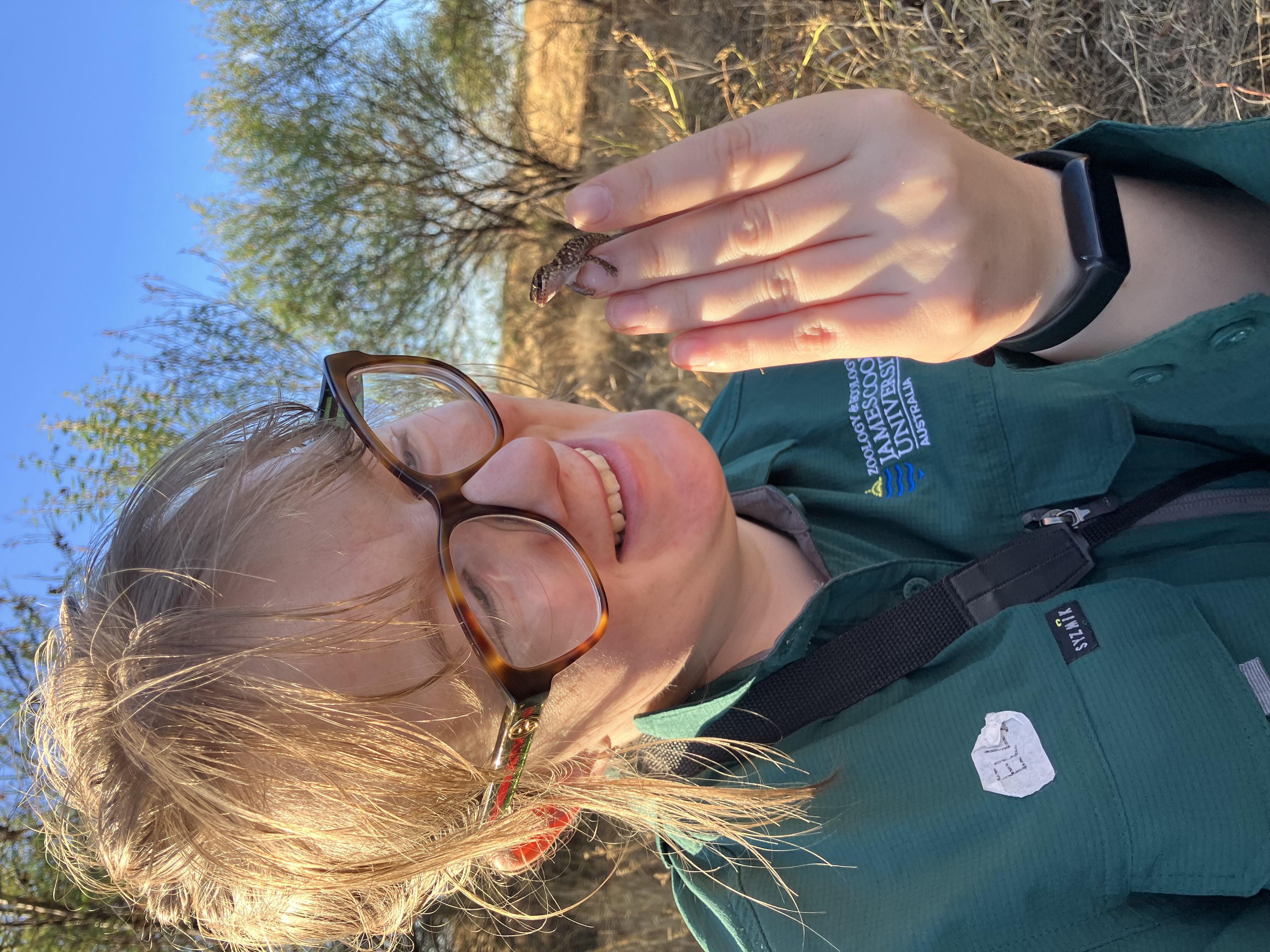
Elle Robertson
- Doctor of Philosophy (Agriculture, Environmental and Related Studies)
- elle.robertson@jcu.edu.au

Romain Vaucher
- Senior Lecturer, Sedimentology
- romain.vaucher@jcu.edu.au

Jenny Fisher
- Associate Dean, Learning and Teaching
- jenny.fisher@jcu.edu.au

Ambili Narayanan
- Doctor of Philosophy (Natural and Physical Sciences)
- ambili.narayanan@my.jcu.edu.au

Sarfaraz Ali
- Postdoctoral Research Fellow
- sarfaraz.ali@jcu.edu.au

Mikaeylah Davidson
- Postdoctoral Research Fellow
- mikaeylah.davidson@jcu.edu.au

Liuxin Chen
- Adjunct Lecturer
- liuxin.chen@jcu.edu.au

Rafael Cabral Carvalho
- Lecturer, Marine Geoscience
- rafael.cabralcarvalho@jcu.edu.au
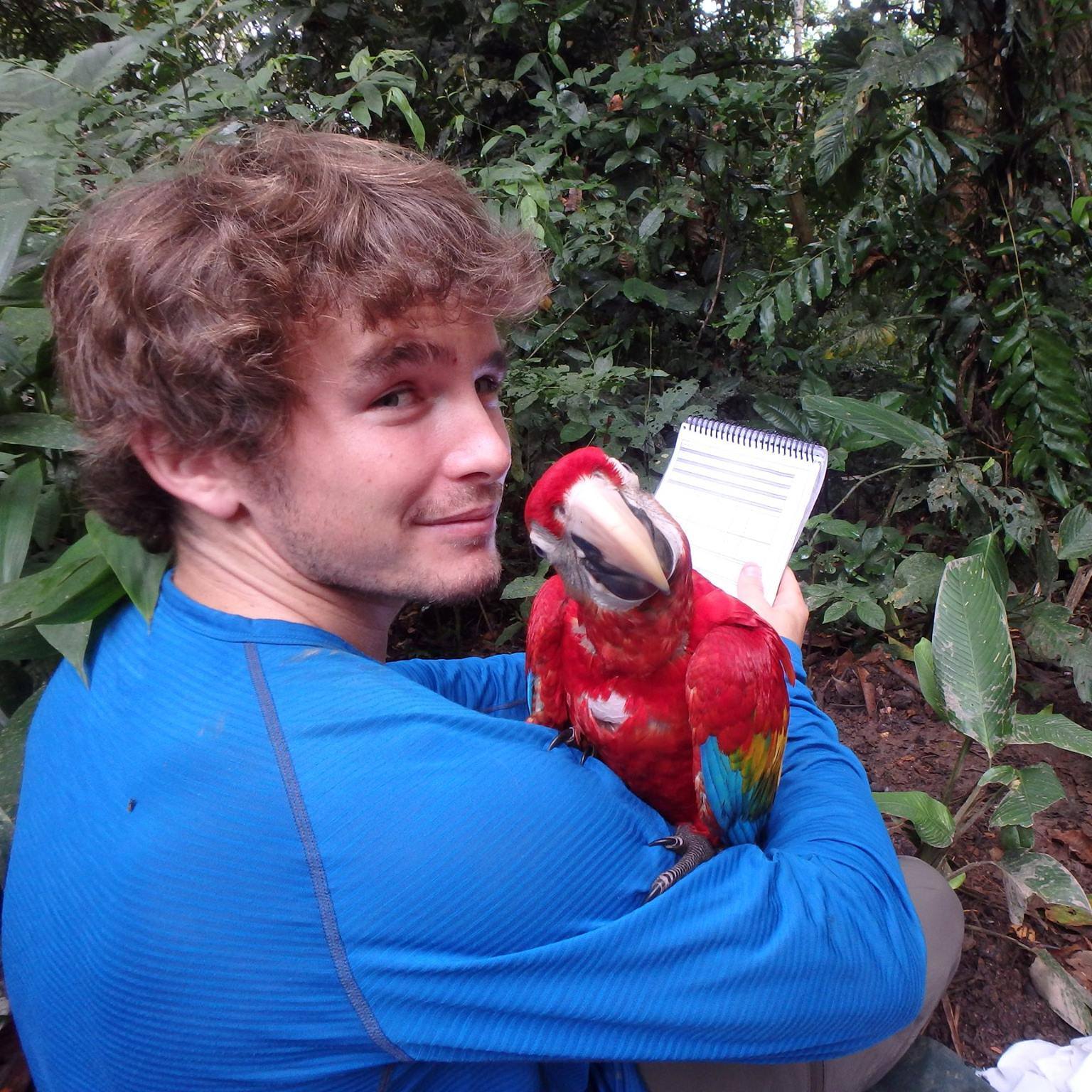
Tom Lloyd
- Postdoctoral Research Fellow, Global Ecosystems
- tom.lloyd@jcu.edu.au
Application of new prawn viral strain and prevalence data to determine viral infection risk (Old ID 24887)
The project will monitor the presence and viral load of a number of endemic prawn viruses in farmed prawns collected at Seafarm. The data collected will be used to prepare evidence based management protocols to improve biosecurity management on the farm.
GBR Coral Replenishment (Old ID 26328)
This funding will be used to support our research on the capacity of coral reefs to cope with climate change. Specifically, in 2019 we will examine the rate of coral replenishment along the length of the Great Barrier Reef, in the aftermath of the two bleaching events in 2016 and 2017. The objective is to compare stock-recruitment relationships today with earlier, to better understand the recoverability of reefs.
Improving performance of bioreactors for treating effluent from land- based aquaculture. (Old ID 26969)
Effluent from land-based aquaculture is problematic because of its nutrient content. This project aims to enhance the performance of ‘denitrification bioreactors’ designed to remove nitrogen from effluent. It will be carried out on a barramundi farm near Innisfail. Availability of carbon appears to limit bioreactor performance, so the effect of adding molasses will be tested, under different conditions of salinity and retention time. The ability of the bioreactors to eliminate algae and parasites will also be tested. The results will be applicable to aquaculture farms throughout the tropics, facilitating more effective treatment of water leaving farms or being recirculated.
Towards sustainable economic aquafeed for spiny lobsters (Old ID 27894)
Aquaculture of the tropical lobster Panulirus ornatus is a recently commercialised industry in Australia. Recent review of nutritional knowledge of this species has revealed significant limitations to commercialisation of feeds, including data on key nutrient requirements, raw materials and feed processing. This project will begin to address these limitations, placing this industry on the path towards improved sustainable development.
Evaluating Australian grains potential for Aquafeed in SE Asia (Old ID 31119)
Australia produces a range of grains and legumes that are routinely used for aquafeed in Australia, however their uptake in SE Asian markets appears to be limited. This project investigates opportunities and constraints of Australian grains and legumes in aquafeed production in Indonesia, Philippines, Thailand and Vietnam. It consists of a desktop study and report on opportunities and directions in this export market, followed by engagement with aquafeed specialists in these areas and scoping opportunities for research to test our assumptions around the most likely products in local feed production in-country.
Photochemical Optimization Study (Old ID 22803)
This project deals with the optimization of a known photochemical reaction of industrial interest. It will investigate the exploratory, validation and scale-up of the reaction.
Innovative economic levers: A system for underwriting risk of practice change in cane-farming (Old ID 23138)
This project will enable reduced DIN exports from cane lands by developing and promoting a tested framework for commercial insurance businesses to underwrite risk of nitrogen practice change in sugarcane farming.
Light Field Video Compression and Streaming (Old ID 23155)
Recent advances in light field (LF) photography open a new horizon for digital video streaming, where the single-shot LF capture and glasses-free 3D display capabilities are perfect for a wide range of 3D interactive applications. This proposal aims to propose an interactive 3D VR streaming system based upon the state-of-the-art LF video compression and transmission technology. The proposed new framework and novel algorithms will be able to efficiently compress the enormous amounts of LF-based VR video data, ensure the quality of the views of interest, and achieve low-latency and error-resilient 3D video transmission.
Council improving the water quality of the Great Barrier Reef through the use of smart sensors and the IoT for urban water management (Old ID 23533)
The primary aim of this grant application is to bring smart city technology into urban water management to improve urban water quality discharging to the Great Barrier Reef by: 1). Developing IOT technology to manage large data sets obtained from existing smart meters and water quality monitoring probes to make effective management decisions; and 2) Supporting the development of new cost effective, real time water quality monitoring technology. This grant application is for purchase of commercially available water quality monitoring probes suitable for a tropical urban stormwater environment, for supporting the development of new real time monitoring technology for nutrients; for the development of data analysis tools using IOT technology for both smart meter water consumption data, sewer pump station overflow data and stormwater water quality data so that the data is available in real time and can be used for effective decision making.
Climate Smart Sugarcane Irrigation Partnerships (CSSIP) (Old ID 24754)
CSSIP will minimise nutrient runoff, improve soil health and increase wetlands water quality by facilitating the adoption of world-class irrigation practices in sugarcane farming systems. Currently, best practice irrigation is assisted by an Irrigation Decision Support Tool (IDST) that provides evidence-based advice. However, IDSTs have not reached their full potential. Firstly, they do not integrate short to medium term weather forecasts (e.g. weekly to multi-weekly forecasts). Secondly, IDSTs do not operate at a spatial scale relevant to farmers. CSSIP will incorporate the Bureau or Meteorology’s new high-resolution climate model into the Irrigation Decision Support Tool. Thirdly, IDSTs require substantial time in manual data entry, which can be alleviated using real-time monitoring via Internet of Things technologies. This will increase irrigation efficiency, reducing excessive runoff into river systems and onto the Reef, and, will help farmers save water and energy costs.
Organic matter, sodicity and soil structure
- 1998
- Oxford University Press
- Researchers:Paul Nelson
Start Date:
01 Jan 2013
End Date:
01 Jan 2021
Start Date:
01 Jan 1992
End Date:
01 Jan 2002
Start Date:
01 Jan 2023
Reseracher:
Stephanie Baker
(Senior Lecturer, Electronic Systems and Internet of Things Engineering)
Start Date:
01 Jan 2022
Start Date:
01 Jan 2015
Start Date:
01 Jan 2015
Start Date:
01 Jan 2014
Start Date:
01 Jan 2015
Start Date:
01 Jan 2014
Start Date:
01 Jan 2020