
College of Science & Engineering

Sophia Love
- Doctor of Philosophy (Natural and Physical Sciences)
- sophie.love@jcu.edu.au
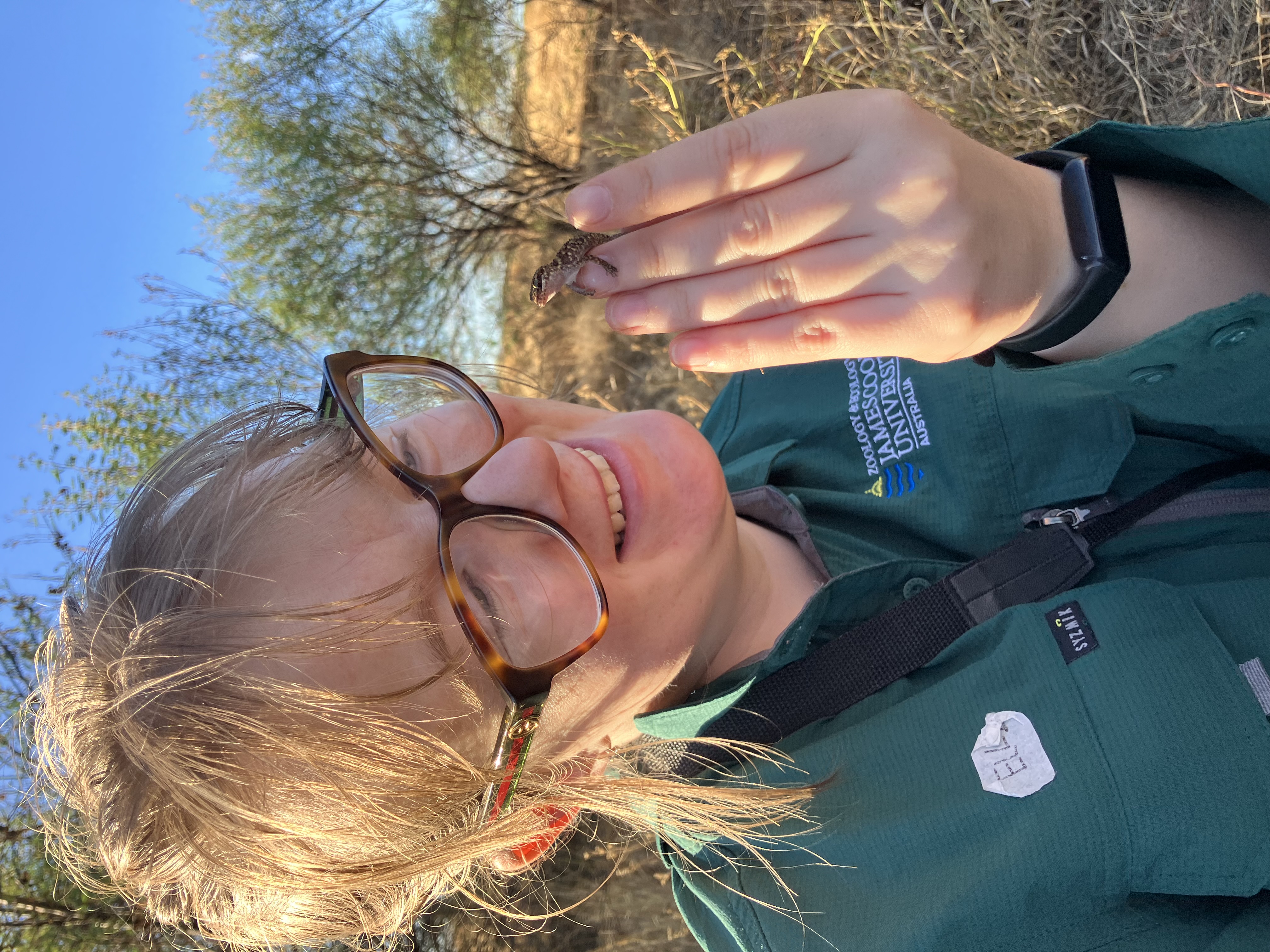
Elle Robertson
- Doctor of Philosophy (Agriculture, Environmental and Related Studies)
- elle.robertson@jcu.edu.au
Romain Vaucher
- Senior Lecturer, Sedimentology
- romain.vaucher@jcu.edu.au

Jenny Fisher
- Associate Dean, Learning and Teaching
- jenny.fisher@jcu.edu.au
Ambili Narayanan
- Doctor of Philosophy (Natural and Physical Sciences)
- ambili.narayanan@my.jcu.edu.au

Sarfaraz Ali
- Postdoctoral Research Fellow
- sarfaraz.ali@jcu.edu.au
Mikaeylah Davidson
- Postdoctoral Research Fellow
- mikaeylah.davidson@jcu.edu.au
Liuxin Chen
- Lecturer
- liuxin.chen@jcu.edu.au
Rafael Cabral Carvalho
- Lecturer, Marine Geoscience
- rafael.cabralcarvalho@jcu.edu.au
Tom Lloyd
- Postdoctoral Research Fellow, Global Ecosystems
- tom.lloyd@jcu.edu.au
Climate Vulnerability Index Vega
Climate change poses an existential threat to global heritage. With rising sea-levels, more extreme weather events and aridification, the extensive impacts of climate are evident at heritage sites globally and the pace of this change is startling. In most parts of the world the rate of loss is exceeding adaptive capacity and this deficit is only getting worse. Decisions on conservation and preservation begin with a detailed understanding of a place's vulnerability. The choices made will directly impact that ability to effectively integrate the goals of safeguarding heritage, adapting and mitigating climate change, and driving sustainable development. This project will apply the Climate Vulnerability Index process to assess the vulnerability of the Vegaoyen – The Vega Archipelago World Heritage property and its associated communities. There is an urgent need to assess climate vulnerability using community-based methodologies to inform actions taken by decision makers.
X-ray tomography of Archean putative trace fossils and microfossils (Old ID 23652)
The 2700 Ma metasediments from the Tanzania lCratpon contain centimeter size structures that resemble Phanerozoic trace fossils. They have a tube-like shape with an s-like curcature and are more than 15 centimeters long. Thin section studies and elemental mapping revealed that the grain size and comp;osition of the 'concretions' are very different from the surrounding matrix. They contain a complex internal structure which is inconsistent with an inorganic origin opening the extraoredinary possibility for the existence of complex life forms 2700 Ma ago.
Coastal wetland systems repair across GBR catchments - values based causal framework validation (Old ID 26386)
Conservation and repair of the coastal wetland ecosystems' in the Great Barrier Reef catchments have come into focus following media converging on the point that the reef health and land use in catchments has been compromised. While on-ground wetland repair investment activities are underway, data to demonstrate water quality and biodiversity return for the investment is not available. Here we continue working with project partners, further contributing to change management practices, consolidate new project partnerships, and road test the Queensland Westland's Values Based Causal Framework using existing and new data.
Securing Antarctica's Environmental Future (Old ID 26624)
This program aims to deliver unprecedented research capability for securing Antarctic environments in the face of uncertain change. By integrating a highly skilled team with new approaches and breakthrough technologies, the program anticipates discovery science, enhanced environmental forecasting and optimised decision-making to advance Australia’s position as an influential Antarctic nation. Expected outcomes include better environmental management, unparalleled strategic decision-support for an effective Antarctic Treaty, and new minds to address Antarctica’s new challenges. Anticipated benefits are the means to transform environmental forecasting and management in the Antarctic, for Australia, and to the advantage of global security.
Burdekin wetlands restoration research. (Old ID 27072)
Wetlands provide some many services and values, yet are under pressure from continuing and expanding land use change. North Queensland Dry Tropics (NQDT) are implementing a range of restoration projects to improve the Burdekin floodplain, and have engaged TropWATER to complete wetland restoration monitoring to measure and evaluate the success of these works. This monitoring will cover fish sampling, water and sediment chemistry, aquatic plant assessments and hydrology. The data will provide NQDT with information to assist with further works and funding on the horizon.
Molecular-based method for the quantification of in situ crown-of-thorns starfish settlement rates (Old ID 27772)
This research will develop and validate an innovative protocol for the quantification of in situ crown-of-thorns starfish (COTS) settlement rates. DNA spiked samples will be analysed using two different DNA extraction methods and droplet digital PCR to determine relative method performance and sub-sampling requirements. Analyses of control samples collected outside the reproductive season may provide additional method validation by ruling out sample contamination by waterborne DNA originating from adult COTS. This work will facilitate future research to resolve critical information gaps and improve the ecological underpinning of COTS management.
Rapid iteration selective breeding: Australia's fish to feed the world (Old ID 23446)
Barramundi - Australia’s favourite fish – is gaining popularity worldwide as a farmed solution for supply of white fish. The world needs a sustainable source of white fish, as current supply comes from declining wild catch fisheries. Industrial scale farming offers a solution. Success relies on improved seed stock and the Australian Barramundi industry in conjunction with the CRC-P program is tackling this challenge by applying advanced modern genetics to Australia’s barramundi breeding stocks.
Virtual Reality 3D First Aid Training Scene Capture Solution (Old ID 23632)
To provide a much more immersive experience for first aid training, the funding body - Rescue Swag is seeking a solution to replace the conventional 2D first aid scene capture solution. This project is aiming at design a 3D stereoscopic shooting solution using the high definition camera, including both system design, hardware and software solutions. At the end of this project, a system will be experience, and improve the training outcomes.
FRDC Sponsorship International Symposium for Genetics in Aquaculture XIII (Old ID 24782)
FRDC has provided sponsorship to ISGA to support travel costs for an internationally renowned plenary speaker in the application of biotechnology and synthetic biological solutions to future aquaculture production (ie CRISPR/TALEN gene editing. RNAi etc) to provide bursaries for participants from Australian industry/researchers to attend the conference and to cover costs associated with an industry tour to showcase to delegates examples of Australian tropical aquaculture.
Rapid and secure deployment of SWIRLnet (Old ID 21855)
Research into terrain effects on cyclonic wind speeds within several local government regions. Site analysis for locations required along with installation of secure foundation for rapid deployment of anemometers and associated equipment.
Pan-cancer analysis of whole genomes
- 2020
- Nature Publishing Group
- Researchers:Matt Field
Structural changes to the uterus of the dwarf ornate wobbegong shark (Orectolobus ornatus) during pregnancy
- 2020
- Wiley-Blackwell
- Researchers:Colin Simpfendorfer
Investigating the identification of atypical sugarcane using NIR analysis of online mill data
- 2020
- Elsevier BV
- Researchers:Justin SextonYvette EveringhamRon White
Start Date:
31 Aug 2016
Start Date:
15 Nov 2018
Start Date:
01 Jun 2016
Start Date:
31 May 2016
Start Date:
21 Oct 2019
Start Date:
01 Jan 2017
End Date:
01 Jan 2018
Start Date:
31 Oct 2024
Start Date:
01 Jan 2019
End Date:
01 Jan 2021
Start Date:
01 Jan 2020
End Date:
01 Jan 2020
Start Date:
01 Jan 2022
End Date:
01 Jan 2022