
College of Science & Engineering

Sophia Love
- Doctor of Philosophy (Natural and Physical Sciences)
- sophie.love@jcu.edu.au
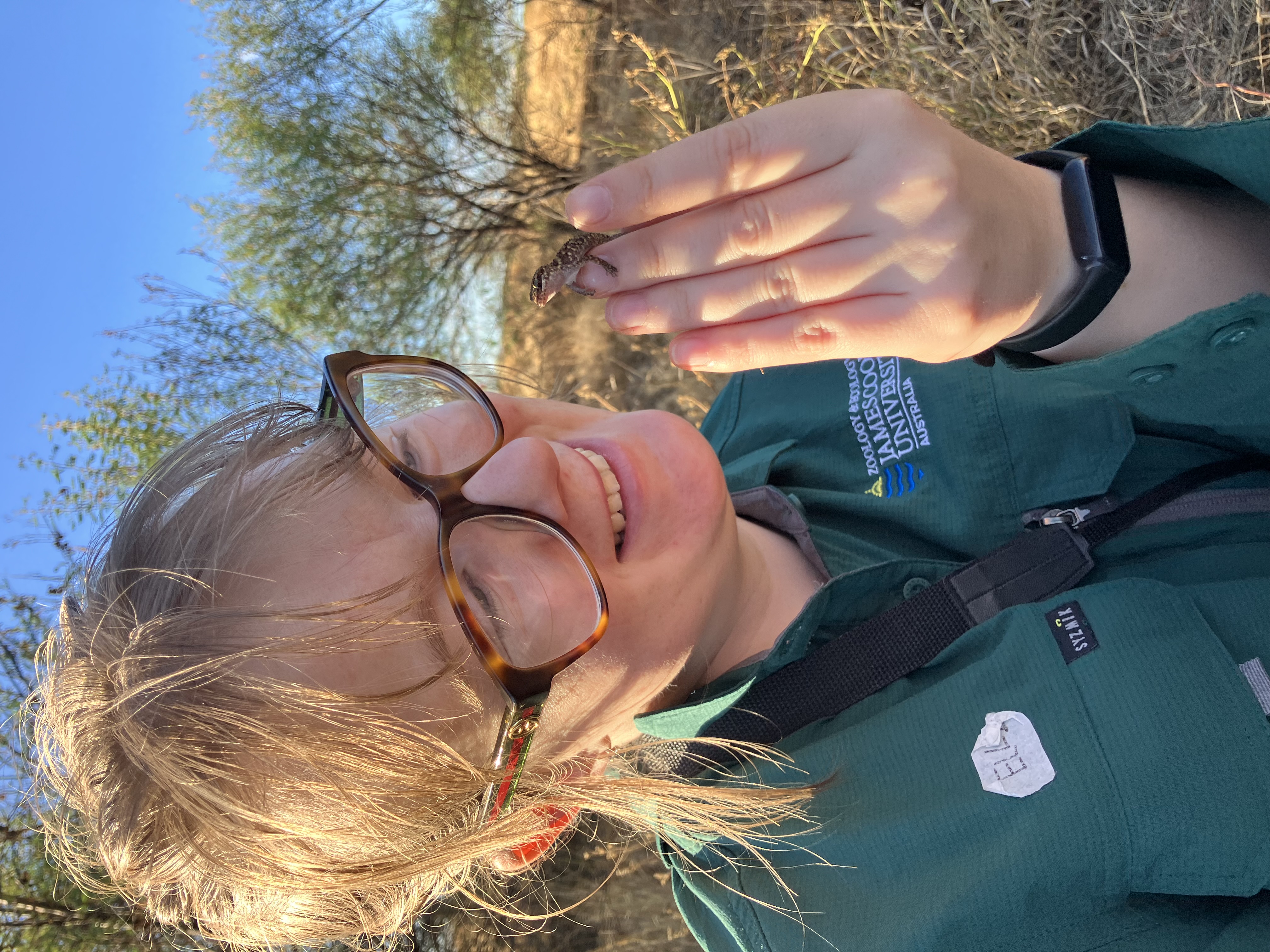
Elle Robertson
- Doctor of Philosophy (Agriculture, Environmental and Related Studies)
- elle.robertson@jcu.edu.au
Romain Vaucher
- Senior Lecturer, Sedimentology
- romain.vaucher@jcu.edu.au

Jenny Fisher
- Associate Dean, Learning and Teaching
- jenny.fisher@jcu.edu.au

Ambili Narayanan
- Doctor of Philosophy (Natural and Physical Sciences)
- ambili.narayanan@my.jcu.edu.au

Sarfaraz Ali
- Postdoctoral Research Fellow
- sarfaraz.ali@jcu.edu.au

Mikaeylah Davidson
- Postdoctoral Research Fellow
- mikaeylah.davidson@jcu.edu.au

Liuxin Chen
- Lecturer
- liuxin.chen@jcu.edu.au

Rafael Cabral Carvalho
- Lecturer, Marine Geoscience
- rafael.cabralcarvalho@jcu.edu.au
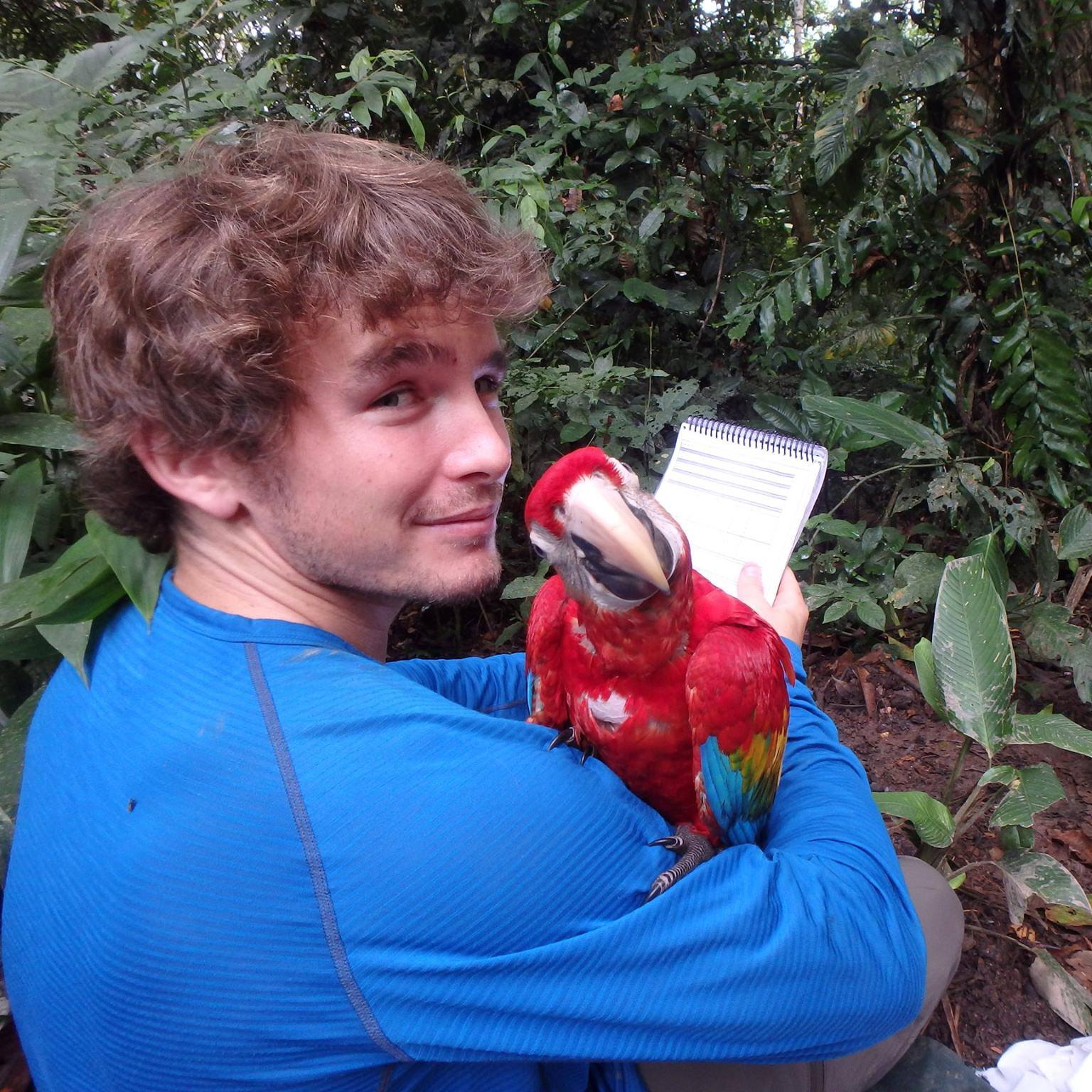
Tom Lloyd
- Postdoctoral Research Fellow, Global Ecosystems
- tom.lloyd@jcu.edu.au
Precision medicine for North Queensland Liver Cancer Patients. (Old ID 27477)
Hepatocellular carcinoma (HCC) is an aggressive and poorly treated liver cancer that is rapidly increasing in incidence in North Queensland. Most patients are ineligible to have their cancer surgically removed, and new systemic therapeutics only extend patient lives by six to eight months. Thus, new treatment approaches are urgently required. Through the collaboration of surgeons, scientists and bioinformaticians we are developing Precision Medicine for North Queensland Liver Cancer Patients. Using bioinformatics and three dimensional culture models we will trial novel therapeutic approaches. This research will rapidly lead to new therapeutic approaches to treat HCC.
Fluorescent fur remote camera field experiment (Old ID 27576)
Aims: To determine if fur fluorescence can be excited by natural light and detected by nocturnal vertebrates. Outcomes: If wild animals interact consistently more often with one fur type during full moons, it will change the way we think about how nocturnal animals use light. If animals cannot detect fluorescence, the outcome will negate the need for further testing of a visual function. Significance: Using real fluorescent fur pelts in natural lighting is a world-first in discovering if nocturnal vertebrates use fluorescence as a visual cue. The result will determine if fluorescence becomes visible in different terrestrial lighting conditions
Conservation genomics of the Critically endangered Kuranda Treefrog (Old ID 28987)
This project aims to assess the conservation status of the Critically Endangered Kuranda Treefrog using a population genomics approach. The last sampling for this declining and localised species took place more than 10 years ago, and continuing declines have been detected in the field. It is unclear whether the population is retaining genetic diversity despite the small and declining population size or whether it is rapidly losing genetic diversity. Resolving this will be crucial for the management of this species. In this project I aim to assess genetic diversity, connectivity and population size of this Critically Endangered species using population genomics.
Conservation genomics of the Critically endangered Kuranda Treefrog (Old ID 28987)
This project aims to assess the conservation status of the Critically Endangered Kuranda Treefrog using a population genomics approach. The last sampling for this declining and localised species took place more than 10 years ago, and continuing declines have been detected in the field. It is unclear whether the population is retaining genetic diversity despite the small and declining population size or whether it is rapidly losing genetic diversity. Resolving this will be crucial for the management of this species. In this project I aim to assess genetic diversity, connectivity and population size of this Critically Endangered species using population genomics.
Evolution, ecology, and genomics of a recent speciation event in a rainforest frog (Old ID 22201)
The Kuranda Treefrog (Litoria myola) is a critically endangered species restricted to rainforest in the Kuranda area. To conserve the Kuranda Treefrog we need to understand its evolutionary past and the key ecological factors that will determine its future. The Kuranda Treefrog is the most recent speciation event demonstrated in the Wet Tropics (occurred ~6,000 years ago) and one of the most recent globally. This project is a mix of pure and applied research that aims to resolve the origin and future of Kuranda Treefrog using detailed genetic analyses and ecological niche modelling.
Evolution, ecology, and genomics of a recent speciation event in a rainforest frog (Old ID 22201)
The Kuranda Treefrog (Litoria myola) is a critically endangered species restricted to rainforest in the Kuranda area. To conserve the Kuranda Treefrog we need to understand its evolutionary past and the key ecological factors that will determine its future. The Kuranda Treefrog is the most recent speciation event demonstrated in the Wet Tropics (occurred ~6,000 years ago) and one of the most recent globally. This project is a mix of pure and applied research that aims to resolve the origin and future of Kuranda Treefrog using detailed genetic analyses and ecological niche modelling.
Plasma polymers from natural extracts for wound healing applications (Old ID 27080)
Radio Frequency Plasma Enhanced Chemical Vapour Deposition (RF-PECVD) will be used to fabricate thin films from natural extracts and study their wound healing properties. RF-PECVD is a promising strategy to incorporate the developed thin films from volatile natural extracs, and thereby find applications in wound dressings. Wound healing will be enhanced by the inhibition of pro-inflammatory cytokines and the promotion of cell proliferation. This research also addresses optimising the wound healing properties of the thin films and conditions at which the desirable properties can be preserved/enhanced, so it could be effectively modified in order to fit specific wounds.
Can parental care behaviour and breeding microhabitat protect Critically Endangered nursery frogs from rising temperatures on Wet Tropics mountaintops? (Old ID 28956)
Nursery frogs are terrestrial breeders with ‘direct development’ and the male stays with the eggs until hatching. While climate change is their biggest threat and their breeding biology of is very poorly known. I will study parental care across Nursery frog species, under varied environmental conditions in the field (low elevation, upland areas, heatwaves, drought) to uncover the details of nest choice and parental care. I will use non-invasive cameras, artificial shelters, and data loggers in natural nesting sites to determine how variation in parental behaviour impacts larval survival and differs between species and microhabitats under different climatic conditions.
Resolving the genetics of adaptation and speciation (Old ID 22899)
The project will greatly assist my career development by increasing my skills and impact in genomic research. Genomic data is currently produced in a process (via next generation sequencing) that results in unordered markers. However the majority can only be resolved with ordered markers (i.e. genes arranged along chromosomes). This project will provide a way to determine the genetic structure that underlies SNPs and other types of genomic data for non-model organisms in order to product ordered markers.
The Development of Procedures for Quantifying Prawn Allergens (Old ID 23528)
There is an increasing prevalence of food allergies world-wide with shellfish being one of the main food groups that provoke serious IgE-mediated adverse reactions. Shellfish allergy affects up to 2% of the world population, with higher prevalence seen in areas with high seafood consumption. Because of the high incidence of allergic reactions to prawns, the study focuses on this highly consumed shellfish species. The major allergenic proteins from prawns will be purified and monoclonal antibodies will be developed against them. These antibodies will be used to establish a sensitive and reproducible ELISA based quantification method for the prawn allergens.
Brazilian national parks at risk
- 2020
- American Association for the Advancement of Science
- Researchers:William Laurance
Emerging challenges for sustainable development and forest conservation in Sarawak, Borneo
- 2020
- Public Library of Science
- Researchers:William Laurance
Autoweed: detecting Harrisia cactus in the Goondiwindi region for selective spot-spraying
- 2019
- Queensland Pest Animal and Weed Symposium
- Researchers:Bronson PhilippaMostafa Rahimi Azghadi
Nonlinear variation in clinging performance with surface roughness in geckos
- 2020
- Wiley-Blackwell
- Researchers:Lin Schwarzkopf
Start Date:
01 Jan 2012
End Date:
01 Jan 2012
Start Date:
01 Jan 2011
End Date:
01 Jan 2011
Start Date:
01 Jan 2009
End Date:
01 Jan 2009
Start Date:
01 Jan 2008
End Date:
01 Jan 2008
Start Date:
01 Jan 2020
Start Date:
01 Jan 2015
Start Date:
01 Jan 2011
Start Date:
01 Jan 2010
End Date:
01 Jan 2022
Start Date:
01 Jan 2019
End Date:
01 Jan 2022
Start Date:
01 Jan 2005
End Date:
01 Jan 2010