
College of Science & Engineering

Sophia Love
- Doctor of Philosophy (Natural and Physical Sciences)
- sophie.love@jcu.edu.au
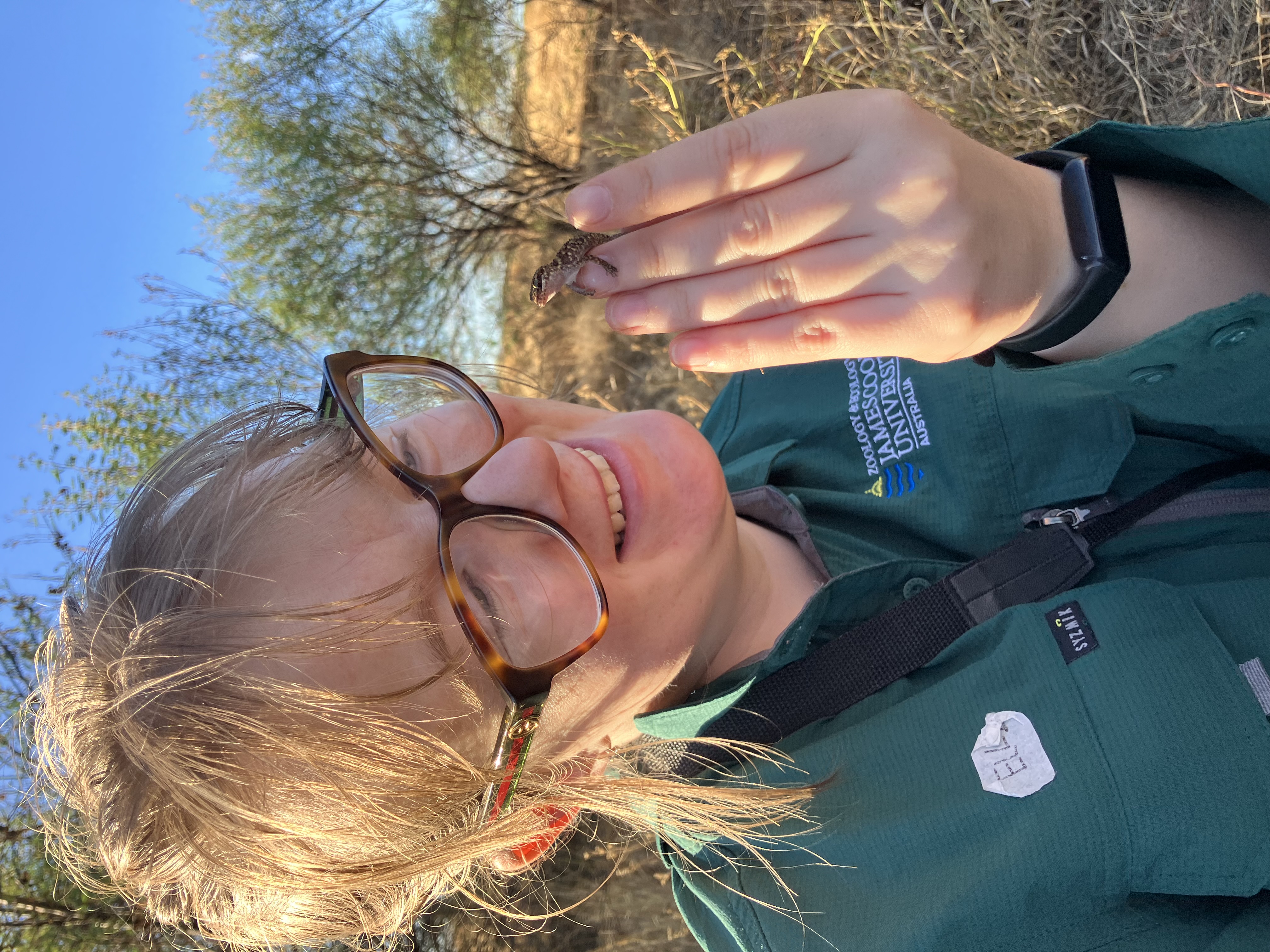
Elle Robertson
- Doctor of Philosophy (Agriculture, Environmental and Related Studies)
- elle.robertson@jcu.edu.au
Romain Vaucher
- Senior Lecturer, Sedimentology
- romain.vaucher@jcu.edu.au

Jenny Fisher
- Associate Dean, Learning and Teaching
- jenny.fisher@jcu.edu.au

Ambili Narayanan
- Doctor of Philosophy (Natural and Physical Sciences)
- ambili.narayanan@my.jcu.edu.au

Sarfaraz Ali
- Postdoctoral Research Fellow
- sarfaraz.ali@jcu.edu.au

Mikaeylah Davidson
- Postdoctoral Research Fellow
- mikaeylah.davidson@jcu.edu.au

Liuxin Chen
- Lecturer
- liuxin.chen@jcu.edu.au
Rafael Cabral Carvalho
- Lecturer, Marine Geoscience
- rafael.cabralcarvalho@jcu.edu.au
Tom Lloyd
- Postdoctoral Research Fellow, Global Ecosystems
- tom.lloyd@jcu.edu.au
Portable Sensors for Phosphate Detection in Cattle Samples
Addressing phosphorus deficiency in cattle through accurate monitoring can enhance farm productivity and animal welfare. This project aims to develop a portable electrochemical sensing platform for phosphate detection, offering farmers a practical solution to manage phosphorus levels and improve cattle health.
CVI Gondwana
Climate change poses an existential threat to global heritage. With rising sea-levels, more extreme weather events and aridification, the extensive impacts of climate are evident at heritage sites globally and the pace of this change is startling. In most parts of the world the rate of loss is exceeding adaptive capacity and this deficit is only getting worse. This includes in Queensland, for which climate change is becoming more and more of an issue, requiring more knowledge and skills to help address the management options. Decisions on conservation and preservation begin with a detailed understanding of a place's vulnerability. The choices made will directly impact that ability to effectively integrate the goals of safeguarding heritage, adapting and mitigating climate change, and driving sustainable activities. This project will apply the Climate Vulnerability Index process to assess the vulnerability of the Queensland component of the Gondwana Rainforests World Heritage property.
Workshop in Advanced Genomics Tools to Enhance Korean Aquaculture
The development and delivery of a workshop for Advanced Genomics Tools in Korea (through Jeju National University) for korean students, academics and industry players. JCU academic staff expert knowledge will be taught to the Korean scientific community and industry, with the expectation of reinforcing relationship and create new collaboration with Korea.
Workshop in Advanced Genomics Tools to Enhance Korean Aquaculture
The development and delivery of a workshop for Advanced Genomics Tools in Korea (through Jeju National University) for korean students, academics and industry players. JCU academic staff expert knowledge will be taught to the Korean scientific community and industry, with the expectation of reinforcing relationship and create new collaboration with Korea.
CVI Roros
Climate change poses an existential threat to global heritage. With rising sea-levels, more extreme weather events and aridification, the extensive impacts of climate are evident at heritage sites globally and the pace of this change is startling. In most parts of the world the rate of loss is exceeding adaptive capacity and this deficit is only getting worse. This includes in Europe, for which climate change is becoming more and more of an issue, requiring more knowledge and skills to help address the management options. Decisions on conservation and preservation begin with a detailed understanding of a place's vulnerability. The choices made will directly impact that ability to effectively integrate the goals of safeguarding heritage, adapting and mitigating climate change, and driving sustainable activities. This project will apply the Climate Vulnerability Index process to assess the vulnerability of the Roros Mining Town and the Circumference World Heritage property.
CVI Curonian Spit
Climate change poses an existential threat to global heritage. With rising sea-levels, more extreme weather events and aridification, the extensive impacts of climate are evident at heritage sites globally and the pace of this change is startling. In most parts of the world the rate of loss is exceeding adaptive capacity and this deficit is only getting worse. This includes in Europe, for which climate change is becoming more and more of an issue, requiring more knowledge and skills to help address the management options. Decisions on conservation and preservation begin with a detailed understanding of a place's vulnerability. The choices made will directly impact that ability to effectively integrate the goals of safeguarding heritage, adapting and mitigating climate change, and driving sustainable activities. This project will apply the Climate Vulnerability Index process to assess the vulnerability of the Lithuanian component of the Curonian Spit World Heritage property.
Investigating shellfish and mite allergen cross-reactivity and the effect of protein diversity on allergenicity
Shellfish allergy increases in prevalence with age and is often a life-long condition. However, the mechanism of this persistence is largely unknown. Persistence of shellfish allergy may be due to cross-reactive interactions between evolutionarily related species, which may initiate and sustain allergen sensitisation. Cross-reactivity results from shared allergen amino acid sequences between species, causing individual IgE-binding to both. Amino acid diversity may predict sensitisation to shellfish and/or mites, e.g., mite-sensitised individuals may be more at risk of developing shellfish allergy. Other large-scale forms of protein diversity may also influence allergenicity (e.g., environmental changes). Understanding allergen cross-reactivity and diversity will inform prevention and treatment strategies. This project aims to explore immunological and clinical cross-reactivity between shellfish and mite allergens and the effect of environmental temperature on allergen diversity in muscle tissue.
This project will be conducted under a postgraduate research top-up scholarship with the Centre for Food Allergy Research (CFAR), which grants $10,000 p.a. top-up to an existing PhD scholarship.
Investigating shellfish and mite allergen cross-reactivity and the effect of protein diversity on allergenicity
Shellfish allergy increases in prevalence with age and is often a life-long condition. However, the mechanism of this persistence is largely unknown. Persistence of shellfish allergy may be due to cross-reactive interactions between evolutionarily related species, which may initiate and sustain allergen sensitisation. Cross-reactivity results from shared allergen amino acid sequences between species, causing individual IgE-binding to both. Amino acid diversity may predict sensitisation to shellfish and/or mites, e.g., mite-sensitised individuals may be more at risk of developing shellfish allergy. Other large-scale forms of protein diversity may also influence allergenicity (e.g., environmental changes). Understanding allergen cross-reactivity and diversity will inform prevention and treatment strategies. This project aims to explore immunological and clinical cross-reactivity between shellfish and mite allergens and the effect of environmental temperature on allergen diversity in muscle tissue.
This project will be conducted under a postgraduate research top-up scholarship with the Centre for Food Allergy Research (CFAR), which grants $10,000 p.a. top-up to an existing PhD scholarship.
Weed impacts on ten of the most threatened plant species of the Australian wet tropics
One commonly stated threat to plant species conservation is displacement by invasive plants. However, very little quantitative information is available about the actual presence, abundance, and impact of invasives on individual threatened plant species. We have selected ten of the most threatened plant species of the wet tropics for which there are anecdotal reports of threats by invasives, as reported by the Species Profile and Threats Database. This project will remove or minimise immediate weed threats for ten of the most threatened species in the wet tropics, it will also establish a baseline for measuring impacts of invasive plants on plant conservation, for which there is currently a dearth of quantitative information, and it will develop a weed risk assessment tool to prioritize management interventions for weed threats.
Decoding the genomic basis underpinning Southern Ocean ecosystem resilience to change
This project applies traditional and latest genome sequencing technologies to advance the knowledge of nature's natural evolutionary solutions against climate changes. Expected outcomes of this project include uncovering novel genome structures and gene functions that underpin Southern Ocean species’ adaptation capabilities to climate changes.
The meaning of the term 'function' in ecology: a coral reef perspective
- 2019
- Wiley-Blackwell
- Researchers:David BellwoodRobert Streit
Elasmobranch bycatch in the demersal prawn trawl fishery in the Gulf of Papua, Papua New Guinea
- 2019
- Nature Publishing Group
- Researchers:Colin Simpfendorfer
Start Date:
01 Jan 2013
End Date:
01 Jan 2018
Start Date:
01 Jan 2009
End Date:
01 Jan 2013
Start Date:
01 Jan 2006
End Date:
01 Jan 2008
Start Date:
01 Jan 2000
End Date:
01 Jan 2003
Start Date:
01 Jan 2004
End Date:
01 Jan 2009
Start Date:
01 Jan 2024
End Date:
01 Jan 2025
Start Date:
01 Jan 2012
Start Date:
01 Jan 2009
Start Date:
01 Jan 2007
Start Date:
01 Jan 2022