
College of Science & Engineering

Sophia Love
- Doctor of Philosophy (Natural and Physical Sciences)
- sophie.love@jcu.edu.au
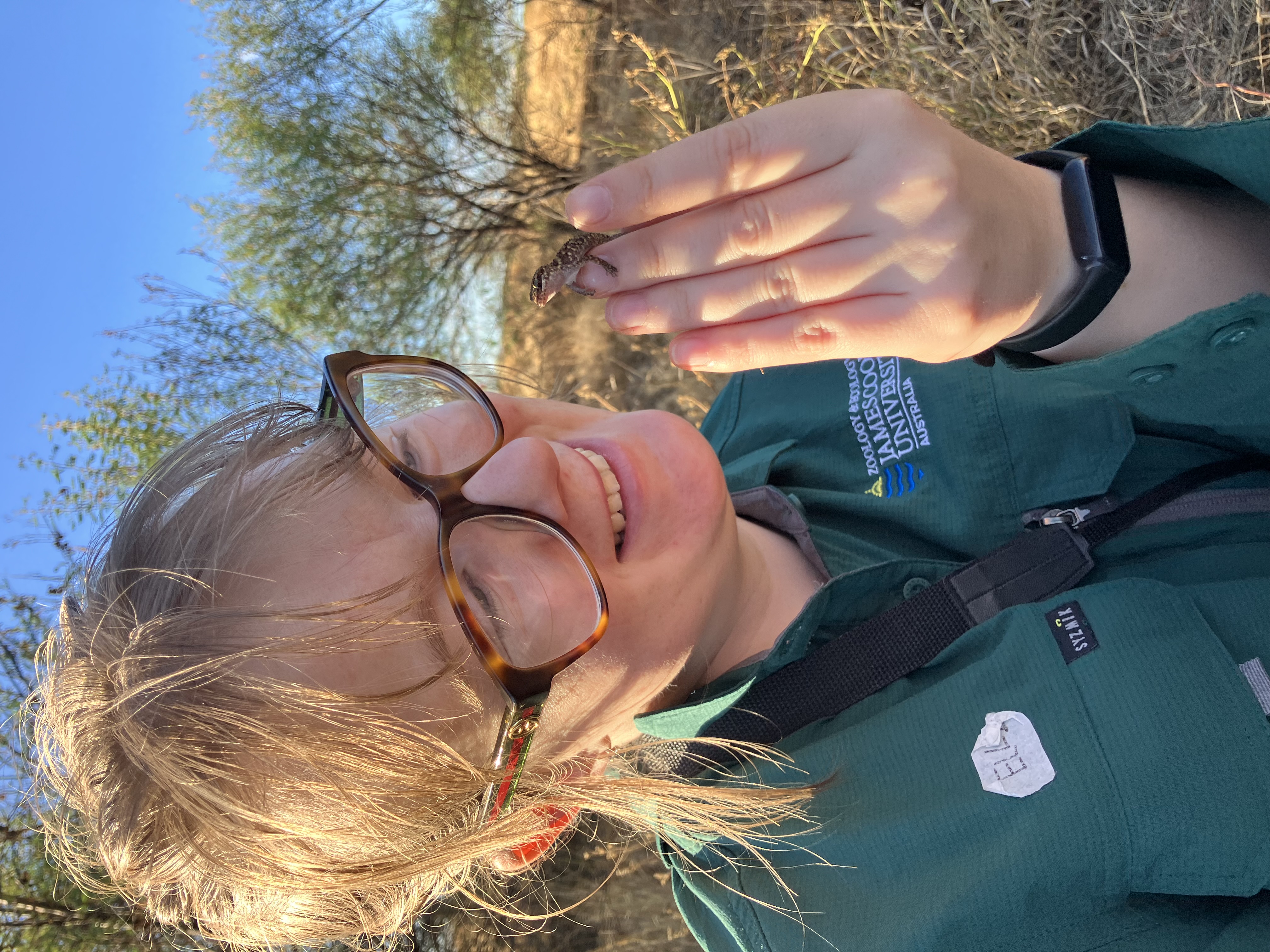
Elle Robertson
- Doctor of Philosophy (Agriculture, Environmental and Related Studies)
- elle.robertson@jcu.edu.au

Romain Vaucher
- Senior Lecturer, Sedimentology
- romain.vaucher@jcu.edu.au

Jenny Fisher
- Associate Dean, Learning and Teaching
- jenny.fisher@jcu.edu.au

Ambili Narayanan
- Doctor of Philosophy (Natural and Physical Sciences)
- ambili.narayanan@my.jcu.edu.au

Sarfaraz Ali
- Postdoctoral Research Fellow
- sarfaraz.ali@jcu.edu.au

Mikaeylah Davidson
- Postdoctoral Research Fellow
- mikaeylah.davidson@jcu.edu.au

Liuxin Chen
- Lecturer
- liuxin.chen@jcu.edu.au

Rafael Cabral Carvalho
- Lecturer, Marine Geoscience
- rafael.cabralcarvalho@jcu.edu.au
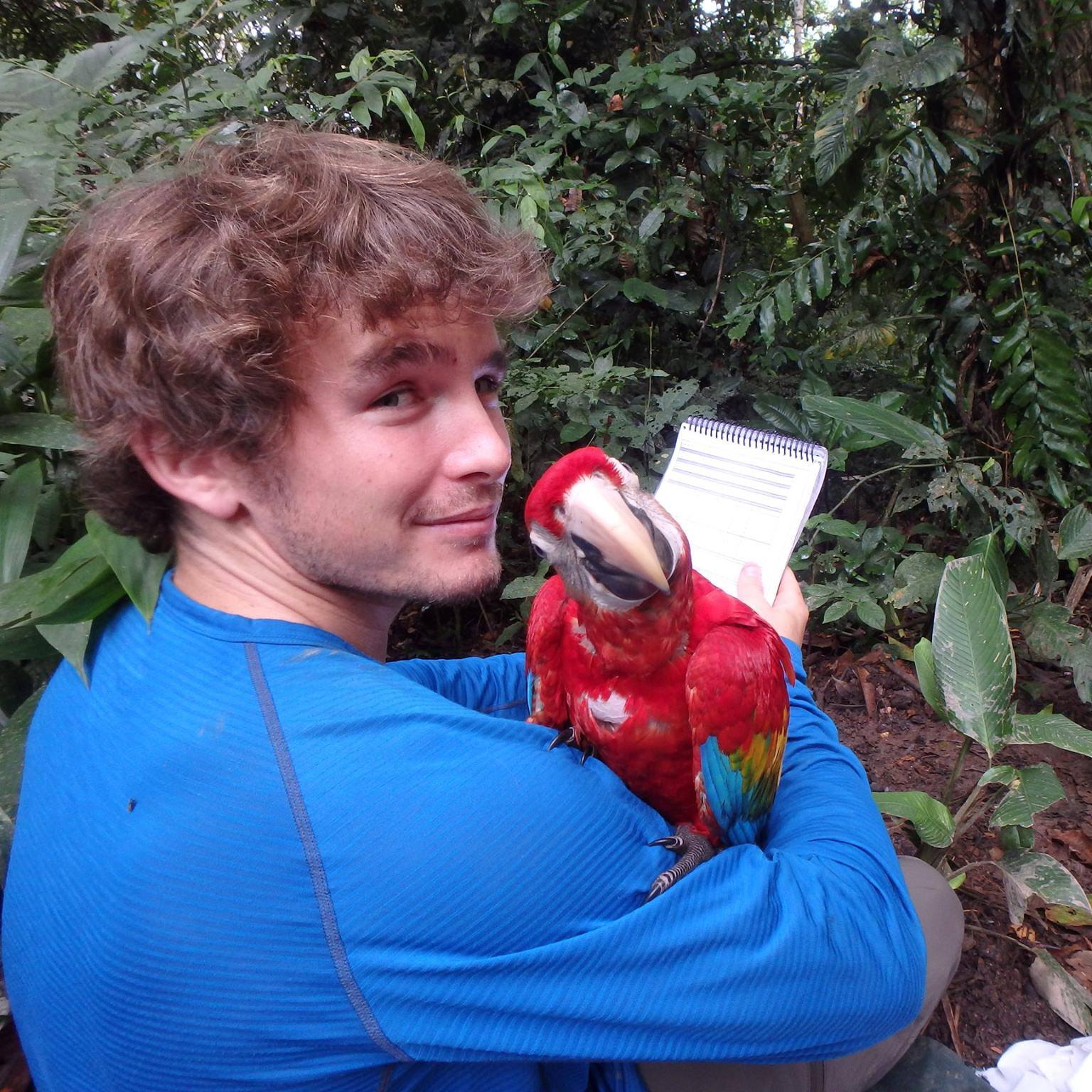
Tom Lloyd
- Postdoctoral Research Fellow, Global Ecosystems
- tom.lloyd@jcu.edu.au
ARC Industrial Transformation Training Centre in Plant Biosecurity
The Biosecurity Training Centre aims to deliver a solution for Australia’s increasing biosecurity risk through generational change in its workforce coupled with breakthrough technologies. It will launch an innovative training program for future leaders who will build relationships with end users and engage meaningfully with communities for effective implementation strategies. The Centre will provide data-driven systems, behavioural change for adoption and authentic industry engagement. This suite of graduates and technologies will transform the biosecurity sector and protect Australia’s critical agricultural industries.
ARC Industrial Transformation Training Centre in Plant Biosecurity
The Biosecurity Training Centre aims to deliver a solution for Australia’s increasing biosecurity risk through generational change in its workforce coupled with breakthrough technologies. It will launch an innovative training program for future leaders who will build relationships with end users and engage meaningfully with communities for effective implementation strategies. The Centre will provide data-driven systems, behavioural change for adoption and authentic industry engagement. This suite of graduates and technologies will transform the biosecurity sector and protect Australia’s critical agricultural industries.
Strengthening Integrated Surveillance and Response for Vector-Borne Diseases in Melanesia (STRIVE 2.0)
Strengthening Integrated surveillance and response for vector-borne diseases in Melanesia.
Emerging infectious diseases pose an intensifying global health threat, especially in the context of resource constrained health systems in Low-Middle-Income Countries (LMICs) and the increasing impact of climate change in the Pacific. A pressing need therefore exists for continued surveillance, rapid diagnosis and real-time tracking of emerging infectious diseases and antimicrobial resistance (AMR). These functions have been articulated in regional (Asia Pacific Strategy for Emerging Diseases) and global (Global Health Security Agenda) frameworks to strengthen health security. During the first iteration of the project, STRIVE amended its operations amidst the COVID-19 pandemic, establishing multi-pathogen sero-surveillance at the Molecular Hub, measuring antibodies for SARS-CoV-2 and other respiratory pathogens, to inform the COVID-19 response in PNG. This experience highlighted that despite the significant progress made through STRIVE in strengthening surveillance and outbreak response capacity in PNG, there is still a crucial need for ongoing laboratory workforce development and health systems strengthening to enable a timely and efficient use of data to inform local decision-making and response to outbreaks in both VBDs and novel pathogens.
In the next phase of STRIVE, the project will utilize the lessons learned, and foundational strengths developed in PNG to support Vanuatu and Solomon Islands in a priority pilot activity to strengthen VBD surveillance and response, whilst continuing to strengthen and expand upon the existing activities in PNG.
Genomics for Undiagnosed Infectious Disease Evaluation and Diagnosis in Northern Australia (GUIDED-North Australia) (Old ID 23362)
The early detection and diagnosis of infectious diseases currently relies on a best guess of likely causative agents with specific testing for those agents. In this project, we aim to evaluate a genomics approach for the diagnosis of febrile illnesses of unknown cause in Northern Australia. The project will be conducted in major hospitals across three different regions of Northern Australia: Cairns (Queensland), Darwin (Northern Territory) and Broome (Western Australia). It is likely that most emerging infectious diseases initially present as undifferentiated fevers. It follows then that investigation of undifferentiated fevers provides targeted surveillance for new and emerging infectious diseases.
Magmatic History, Fertility and Metallogenesis of the Mary Kathleen Domain of the Mt Isa Inlier (Old ID 24902)
This project aims to highlight the exploration potential in the Mary Kathleen Domain of the Mt Isa Inlier by providing key mineralisation insights that can assist mining companies to plan their exploration strategy for better targeting and enhance the potential for new discoveries. To achieve this, the project has three main objectives: (1) Establish the extent, character and timing of the dominant magmatic epochs in the Mary Kathleen Domain of the Mt Isa Inlier (2) Develop an understanding of the tectono-magmatic history of the Mary Kathleen Domain and its links to metallogenesis; (3) Explore the applicability of magma fertility concepts as a tool for exploration for a variety of deposit types.
Imaygi Maalu (Unchartered waters): The governance and management of the Torres Strait fisheries into the future (Old ID 26723)
The key objective of this project is to investigate existing national and international research knowledge on the management of fisheries that have recognised Indigenous interests, how this knowledge interfaces with commercial enterprises, and sustains the health of the fisheries and the cultural traditions of the Indigenous people. Accommodating such components into existing legal frameworks remain a challenge for various governments and is a challenging matter in many of the world's fisheries. The Torres Strait fisheries is no different and exists in a complex legislative framework.
Nuclear Magnetic Resonance facility for Northern Australia (Old ID 21541)
Nuclear magnetic resonance spectroscopy is a fundamentally and critically important technique in the characterisation of organic, inorganic and biological compounds. The purchase of a state-of-the-art instrument at James Cook University and a lower resolution instrument at Charles Darwin University are required to support productive existing research projects, and nurture future projects, in organometallic chemistry and the development of new materials and analytical sensors; organic photochemistry as applied in synthesis and degradation; natural products, pharmaceutical, inorganic chemistry, where multinuclear nuclear magnetic resonance is most important and applicable in drug design, development and delivery.
Investigation of differential antigen processing and presentation of allergenic vs. non-allergenic tropomyosin (Old ID 22369)
Food allergy to shellfish is a rapidly growing concern. Allergen-specific immunotherapy is a well-accepted treatment strategy for IgE-mediated allergic disease to pollen and dust-mites; however, not much progress has been made for food allergies. Tropomyosin, which is the major allergenic protein in shellfish has been structurally and immunologically well characterised by our group. The aim of the proposed research project is to elucidate the mechanisms of differential uptake and presentation of peptides from allergenic and non-allergenic tropomyosin on human dendritic cells. The outcomes of this research will open new avenues for the development of novel immunotherapeutic strategies for shellfish allergy.
Combat apathy in traumatic brain injury patients (Old ID 27911)
Clinicians often mention apathy as the cause for decreased treatment progression for Traumatic Brain Injury patients. TBI patients with apathy symptoms are less motivated to engage continuously in their therapy schedule. Constant monitoring of patient engagement can help clinicians better measure patient progress and personalise the treatment accordingly. However, current clinical measurements of apathy cannot provide clinicians with continuous feedback. This project offers a novel continuous comprehensive measure of apathy feedback to assist clinicians with assessing and improving patient recovery. This apathy measure will combine traditional clinical measures of apathy with neurophysiological data collected from a virtual reality exoskeleton device.
The impact of typhoons on reef fish assemblages, and the effectiveness of marine reserve networks in aiding their recovery (Old ID 22502)
Increasing anthropogenic and environmental impacts are modifying coral reefs and their associated fish assemblages in unprecedented ways, compromising food security and biological stability. Networks of no-take marine reserves are implemented in Australia and the Philippines to conserve biodiversity and manage fish stocks, but it's unknown whether reserves can continue to perform under cumulative stressors, including those from cyclones and typhoons. For the first time, this study will 1) investigate how the structure function and behaviour of herbivorous reef fish assemblages are impacted by typhoons; and 2) discover whether marine reserves facilitate recovery of fish stocks following these impacts.
Trophic niches determined from fatty acid profiles of sympatric coral reef mesopredators
- 2019
- Inter-Research
- Researchers:Colin Simpfendorfer
Acoustic monitoring reveals year-round calling by invasive toads in tropical Australia
- 2021
- Taylor & Francis
- Researchers:Lin Schwarzkopf
Do morphological adaptations for gliding in frogs influence clinging and jumping?
- 2020
- Cambridge University Press
- Researchers:Lin Schwarzkopf
Start Date:
01 Jan 2024
End Date:
01 Jan 2024
Title:
Animal Ethics Committee, JCU
Start Date:
01 Jan 2025
Title:
Veterinary Home Group, JCU
Start Date:
01 Jan 2025
Start Date:
01 Jan 2006
Title:
PhD in Natural and Physical Sciences (Discipline of Ecology and Evolution), James Cook University
Start Date:
01 Jan 2020
End Date:
01 Jan 2024
Start Date:
01 Jan 2014
End Date:
01 Jan 2018
Start Date:
01 Jan 2014
Title:
Fellow, Advance HE
Start Date:
01 Jan 2022
Start Date:
01 Jan 2012
End Date:
01 Jan 2016
Start Date:
01 Jan 1991
End Date:
01 Jan 1996