
College of Science & Engineering

Sophia Love
- Doctor of Philosophy (Natural and Physical Sciences)
- sophie.love@jcu.edu.au
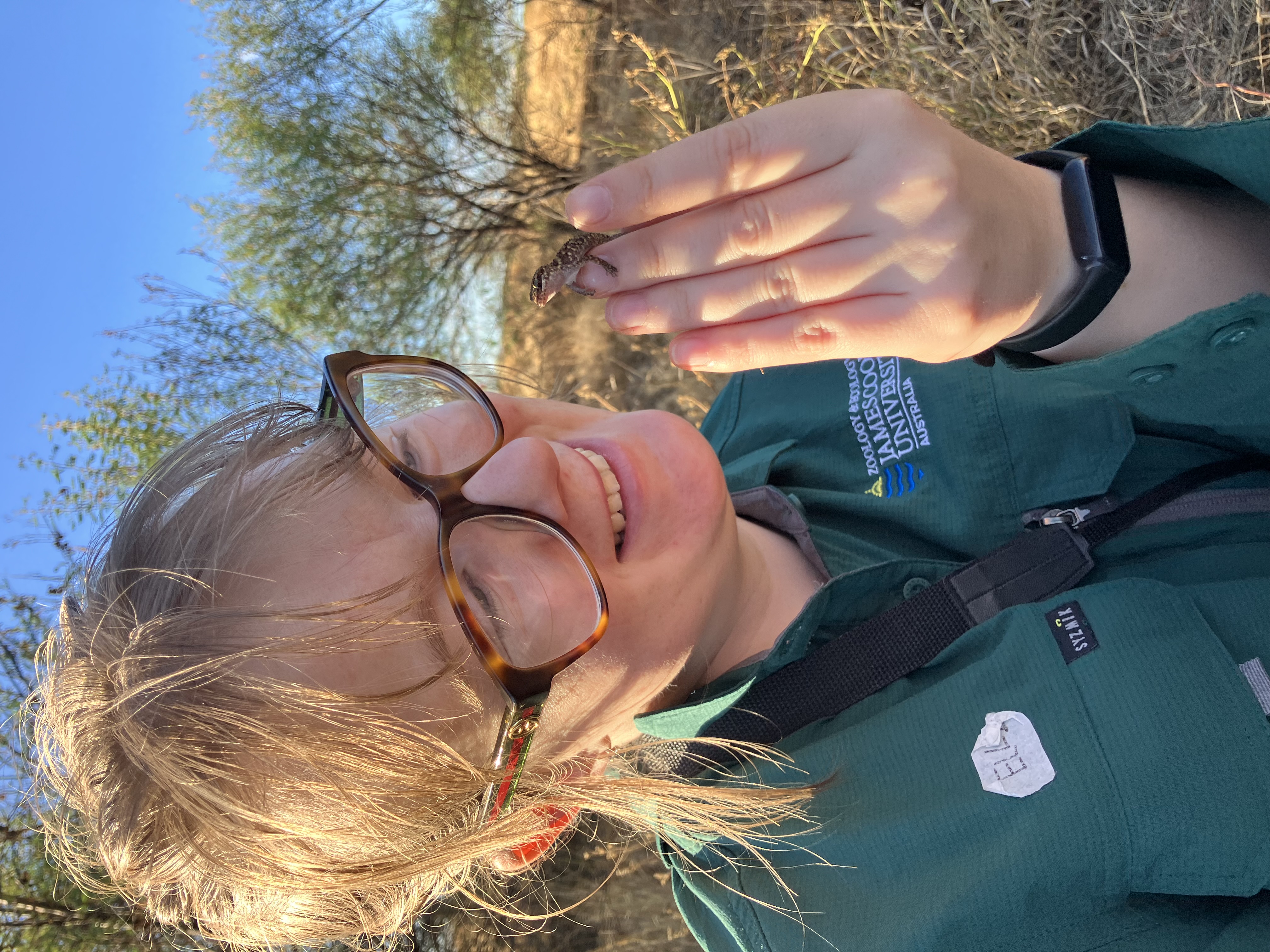
Elle Robertson
- Doctor of Philosophy (Agriculture, Environmental and Related Studies)
- elle.robertson@jcu.edu.au
Romain Vaucher
- Senior Lecturer, Sedimentology
- romain.vaucher@jcu.edu.au

Jenny Fisher
- Associate Dean, Learning and Teaching
- jenny.fisher@jcu.edu.au

Ambili Narayanan
- Doctor of Philosophy (Natural and Physical Sciences)
- ambili.narayanan@my.jcu.edu.au

Sarfaraz Ali
- Postdoctoral Research Fellow
- sarfaraz.ali@jcu.edu.au
Mikaeylah Davidson
- Postdoctoral Research Fellow
- mikaeylah.davidson@jcu.edu.au

Liuxin Chen
- Adjunct Lecturer
- liuxin.chen@jcu.edu.au
Rafael Cabral Carvalho
- Lecturer, Marine Geoscience
- rafael.cabralcarvalho@jcu.edu.au
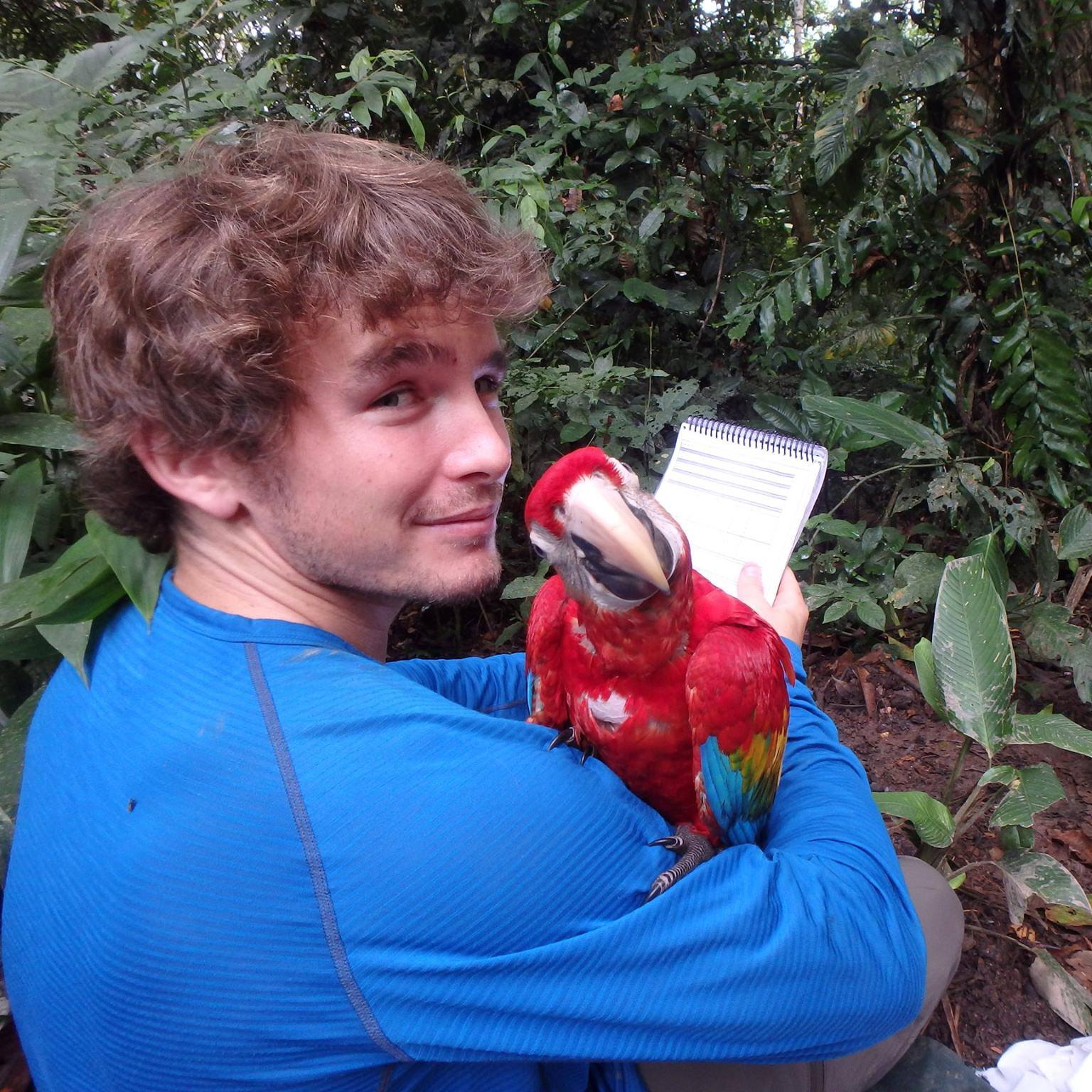
Tom Lloyd
- Postdoctoral Research Fellow, Global Ecosystems
- tom.lloyd@jcu.edu.au
Expanding spiny lobster aquaculture in Indonesia (Old ID 21727)
Project will provide research and extension to support expansion and increased productivity for spiny lobster aquaculture in Indonesia. Research will focus on improving survival and growth of lobsters from capture of natural seed through to market size, particularly through improved nutrition, husbandry and disease management. Extension will focus on demonstration of best practice to farmers. Impact will be on men, women and children in impoverished coastal communities. Some research will be conducted in Vietnam and Australia, with a view to improving sustainability of lobster farming in Vietnam and exploring opportunity for establishing Indigenous lobster aquaculture enterprises in Australia.
Scoping options for low-flying marginal cane land to reduce DIN in priority wet tropics catchments (Old ID 22528)
The project will explore alternative land use options to reduce nitrogen losses from marginal sugarcane land in priority wet tropics catchments. The Wet Tropics Water Quality Improvement Plan identified that complete adoption of sugarcane best management practices would be insufficient to achieve the nitrogen load reductions needed to meet the Great Barrier Reef Water Quality guidelines. This project will map low-lying, marginal cane land with community and industry partners, identify possible alternative uses, quantify economic costs and benefits of land transition, identify constraints and opportunities for alternative land uses proposed.
TruForest: Founding an Australian Rainforest LiDAR Monitoring Network
The TruForest project aims to establish a world-leading network for laser (LiDAR) scanning of Australia's rainforests. LiDAR is emerging as the most accurate tool for measuring forest structure, and hence also biomass and carbon stocks. The project intends to: (1) unite Australia's individual and institution-level LiDAR expertise, tools and data; (2) acquire cutting-edge LiDAR technology; (3) develop and test essential data procedures so that
the equipment is ready for use; and (4) develop a partnership for facilitating future usage and access for anyone. The result will be useful for understanding and monitoring Australia's forests, stimulating cutting-edge science, and helping to monitor achieve environmental and climate change targets.
Securing the only known viable population of the Ganges Shark Glyphis gangeticus
Securing national projection for the Ganges Shark in Indonesia. This will involve one small field trip, 2 workshops, and extensive report writing time
Airbag deployment test (Old ID 30048)
AEP Advance Engineering is planning to study airbag deployment in a car after modifications done on the car. This test will study an airbag deployment along the ceiling using high-speed camera at high frame per second rate of 5000. This study aims to investigate the deployment stages of the airbag and visually capture this process, so modifications applied on the car does not interfere with safety.
Artificial intelligence-guided detection of tumour peptides for immunotherapy against therapy-resistant cutaneous squamous cell carcinoma (CSCC)
North Queensland has the highest incidence of CSCC worldwide, which has a huge impact on the local population. With a high tumour mutational burden, CSCC is responsive to immunotherapy, however therapy-resistant CSCC presents a significant challenge. This project aims to detect and select tumour-specific peptides for immunotherapy in patients with therapy-resistant CSCC. The focus on tumour-specific peptides aims to ensure that these peptides are unique to tumour cells, thereby minimising the risk of triggering autoimmunity in treated patients. This innovative approach seeks to enhance the precision and safety of immunotherapies by targeting tumour-specific antigens.
Predicting genetic exchange between species under climate change (Old ID 27104)
This project aims to resolve the factors that lead to the mixing of species’ gene pools, with a focus on whether climate change will increase such mixing, possibly leading to extinction by genetic swamping. The significance is that the project would improve our understanding of speciation and species’ vulnerability to rapid climate change through genetic mixing; a largely overlooked process. Key outcomes would be to generate new knowledge of a fundamental evolutionary process and extend the toolbox of biodiversity managers facing rapid environmental change. The project would benefit Australia by highlighting our unique biodiversity and scientific capability, and by training early career researchers in advanced evolutionary biology.
Vanadium Extraction and Processing Innovation Project’
This project aims to advance the projects related to vanadium extraction and processing from the Toolebuc Formation in North Queensland and to develop capacity in North Queensland to assist with the emerging vanadium economy .
Vanadium Extraction and Processing Innovation Project’
This project aims to advance the projects related to vanadium extraction and processing from the Toolebuc Formation in North Queensland and to develop capacity in North Queensland to assist with the emerging vanadium economy .
Advancing the chemistry of rare earths-an Australian resource (Old ID 27702)
This project aims to advance knowledge of the synthesis, structures and reactivity of highly reactive rare earth metal-organic compounds. The project expects to build the knowledge and skills to underpin many developments of Australia's still under utilized rare earth resources to diversity from Chinese domination. The expected outcomes will be new synthetic and reaction chemistry including a demonstration of how size and electronic factors can be used to modify and advance rare earth chemistry and related heavy group 2 chemistry. This project should provide significant benefit such as are a better knowledge base in rare earth chemistry to underpin future applications in chemical manufacturing, new materials, catalysis and recycling.
Argument free clustering via boundary extraction for massive point-data Sets
- 2002
- Researchers:Ickjai Lee
Start Date:
01 Jan 2010
End Date:
01 Jan 2018
Start Date:
01 Jan 2015
End Date:
01 Jan 2017
Start Date:
01 Jan 2010
End Date:
01 Jan 2017
Start Date:
01 Jan 2014
End Date:
01 Jan 2015
Start Date:
01 Jan 2021
Start Date:
08 May 2023
Start Date:
19 Sep 2023
Start Date:
01 Jan 2010
End Date:
01 Jan 2013
Start Date:
01 Jan 2023
Start Date:
12 Mar 2024