
Tropical Water & Ecosystems
Scott Morrissey
- Research Officer
- scott.morrissey@jcu.edu.au
Tim Smith
- Senior Research Officer
- tim.smith2@jcu.edu.au
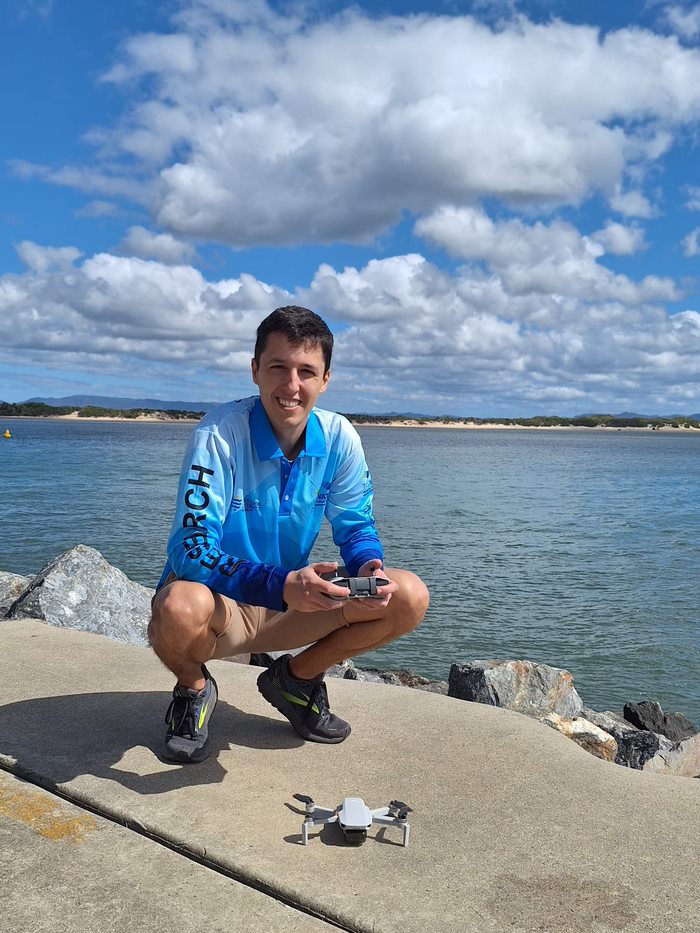
Alejandro Navarro Otero
- Casual Research Worker
- alejandro.navarrootero@jcu.edu.au
Jack Koci
- Principal Research Officer
- jack.koci1@jcu.edu.au

Sarah McDonald
- Senior Research Officer
- sarah.mcdonald@jcu.edu.au
Emily Webster
- Research Officer
- emily.webster1@jcu.edu.au

Abbi Scott
- Senior Research Officer
- abbi.scott1@jcu.edu.au

Catherine Collier
- Principal Research Officer
- catherine.collier@jcu.edu.au

Rob Coles
- Principal Research Scientist
- rob.coles@jcu.edu.au

Aaron Davis
- Principal Research Officer
- aaron.davis@jcu.edu.au
Wuthathi River to reef baselines and monitoring framework
Wuthathi Aboriginal Corporation would like to engage TropWATER JCU to assist with the implementation of the Wuthathi IPA Plan of management. This work will include 4 components to investigate connections from the Harmer River to the inshore Islands including Coastal mangroves. helicopter survey of Wuthathi coastline from Olive River to Captain Billys Landing and offshore islands showing impacts to mangroves. Seagrass. Vessel-based inshore sub-tidal camera drop surveys east and west of Harmer Creek and one day at Bird Island reef flat potentially using walking/quadrat survey methods. Dugong. Desktop analysis of existing data. Vessel-based trip to collect dugong skin samples and survey population and Land-based drone surveys of inshore areas near Ma’au. Aquatic ecosystems and oyster bed surveys. Harmer River assessment and assessment of Ma’au oyster bed and habitat and nearby coastal wetland/saltmarsh and riverine assessment and off-bank assessments of Harmer Creek.
Expanding Traditional Owner led seagrass monitoring and restoration – Woppaburra TUMRA
This project aims to build seagrass assessment and restoration capacity and identify seagrass cultural values within Woppaburra TUMRA Sea Country and communities. JCU will work with Woppaburra TUMRA Aboriginal Corporation and rangers to:
• synthesize and collate all existing seagrass mapping data. These data will identify seagrass mapping gaps and will inform further seagrass monitoring and restoration activities.
• build capacity of Rangers to conduct seagrass assessments.
• map Sea Country using drones and dropcameras, for areas identified as needing mapping.
Expanding Traditional Owner led seagrass monitoring and restoration – Woppaburra TUMRA
This project aims to build seagrass assessment and restoration capacity and identify seagrass cultural values within Woppaburra TUMRA Sea Country and communities. JCU will work with Woppaburra TUMRA Aboriginal Corporation and rangers to:
• synthesize and collate all existing seagrass mapping data. These data will identify seagrass mapping gaps and will inform further seagrass monitoring and restoration activities.
• build capacity of Rangers to conduct seagrass assessments.
• map Sea Country using drones and dropcameras, for areas identified as needing mapping.
Expanding Traditional Owner led seagrass monitoring and restoration – Woppaburra TUMRA
This project aims to build seagrass assessment and restoration capacity and identify seagrass cultural values within Woppaburra TUMRA Sea Country and communities. JCU will work with Woppaburra TUMRA Aboriginal Corporation and rangers to:
• synthesize and collate all existing seagrass mapping data. These data will identify seagrass mapping gaps and will inform further seagrass monitoring and restoration activities.
• build capacity of Rangers to conduct seagrass assessments.
• map Sea Country using drones and dropcameras, for areas identified as needing mapping.
Improving land condition across north-west Queensland to boost productivity, build climate resilience and increase biodiversity
Across the Southern and Northern Gulf region of north-west Queensland, there are many thousands of hectares of land in poor condition. Land that is in poor condition is less productive and therefore profitable, more susceptible to severe impacts from extreme climate events (e.g., floods and droughts), has a lower capacity to sequester and store carbon, and negatively impacts other ecosystem services (e.g., biodiversity and water quality). The overarching aim of the project is to build resilience in Southern and Northern Gulf rangeland production systems through improving land condition. To achieve improved land condition across the region, the project will work directly with land managers to implement on-ground land management practice changes and/or remediation treatments. The effectiveness of these interventions will be rigorously monitored and evaluated. Key learnings and outcomes will be passed on to the other landholders, NRM groups, Government extension staff and researchers through demonstration sites, field days, communications materials, scientific publications, and capacity building events. Overall, the project will provide much needed new knowledge, information, data, tools, and capacity to boost productivity, build climate resilience, and facilitate access to emerging environmental markets across north-west Queensland, and other parts of northern Australia.
McKenna Maternity Funding for Research Assistant (Old ID 23436)
Maternity funding to employ a research assistant to assist Senior Researcher whilst on maternity leave to maintain research progress.
Assessing impacts of extreme events on inshore coastal habitats in the northern Great Barrier Reef
This project aims to assess the impacts of Tropical Cyclone Jasper and associated flooding on inshore coastal habitats (i.e. mangroves, seagrass, coral) in the northern GBR. This project will provide a current consolidated asset assessment that will be compared against previous monitoring/assessment data to determine any impacts of TC Jasper. This will be achieved through high-resolution imagery, rapid on-ground aerial surveys, subtidal surveys using underwater camera systems, and consolidating other available information (i.e., anecdotal/private records). Understanding the impact of TC Jasper on inshore coastal habitats is essential as extreme climate events can cause significant and enduring changes to the condition and resilience of critical habitats of key species, such as dugongs and turtles.
A Toolkit for Ranger-Led Seagrass Monitoring in Northern Australia Sea Country 5.2
Monitoring of key habitats is increasingly being led by Indigenous Ranger groups. It is important that this information, across the whole of northern Australia, is collected in a reliable and consistent manner. Our project will develop a robust framework for monitoring seagrass habitats across northern Australia, ensuring consistent and reliable data collection to support conservation and management efforts. By partnering with Indigenous rangers, researchers, and local filmmakers, we will co-create visually engaging training materials and establish a monitoring decision-making framework tailored to diverse Sea Country environments, ranger resources, and monitoring questions. This research is crucial for managing culturally and economically significant species like dugongs and green turtles, aligning with national priorities and the NESP2 guidelines by promoting Indigenous-led conservation efforts and enhancing environmental data quality.
A Toolkit for Ranger-Led Seagrass Monitoring in Northern Australia Sea Country 5.2
Monitoring of key habitats is increasingly being led by Indigenous Ranger groups. It is important that this information, across the whole of northern Australia, is collected in a reliable and consistent manner. Our project will develop a robust framework for monitoring seagrass habitats across northern Australia, ensuring consistent and reliable data collection to support conservation and management efforts. By partnering with Indigenous rangers, researchers, and local filmmakers, we will co-create visually engaging training materials and establish a monitoring decision-making framework tailored to diverse Sea Country environments, ranger resources, and monitoring questions. This research is crucial for managing culturally and economically significant species like dugongs and green turtles, aligning with national priorities and the NESP2 guidelines by promoting Indigenous-led conservation efforts and enhancing environmental data quality.
A Toolkit for Ranger-Led Seagrass Monitoring in Northern Australia Sea Country 5.2
Monitoring of key habitats is increasingly being led by Indigenous Ranger groups. It is important that this information, across the whole of northern Australia, is collected in a reliable and consistent manner. Our project will develop a robust framework for monitoring seagrass habitats across northern Australia, ensuring consistent and reliable data collection to support conservation and management efforts. By partnering with Indigenous rangers, researchers, and local filmmakers, we will co-create visually engaging training materials and establish a monitoring decision-making framework tailored to diverse Sea Country environments, ranger resources, and monitoring questions. This research is crucial for managing culturally and economically significant species like dugongs and green turtles, aligning with national priorities and the NESP2 guidelines by promoting Indigenous-led conservation efforts and enhancing environmental data quality.
Using monitoring data to model herbicides exported to the Great Barrier Reef, Australia
- 2011
- Modelling and Simulation Society of Australia and New Zealand
- Researchers:Stephen LewisAaron Davis
Reef Rescue Marine Monitoring Program: 2009/2010 synthesis report
- 2011
- Reef and Rainforest Research Centre
- Researchers:Len McKenzie
A comparison of threats, vulnerabilities and management approaches in global seagrass bioregions
- 2012
- Institute of Physics Publishing
- Researchers:Alana GrechLen McKenzieMichael Rasheed
Start Date:
01 Jan 2009
End Date:
01 Jan 2026
Start Date:
01 Jan 2009
End Date:
01 Jan 2030
Start Date:
01 Jan 2014
End Date:
01 Jan 2030
Start Date:
01 Jan 2021
End Date:
01 Jan 2025
Start Date:
01 Jan 1981
End Date:
01 Jan 1984
Start Date:
01 Jan 1986
End Date:
01 Jan 1988
Start Date:
01 Jan 1973
End Date:
01 Jan 1973
Start Date:
01 Jan 2024
Start Date:
01 Jan 2022
End Date:
01 Jan 2023
Title:
Conference co-chair
Start Date:
01 Jan 2023
End Date:
01 Jan 2023