
Chemistry and Chemical Engineering

Sarfaraz Ali
- Postdoctoral Research Fellow
- sarfaraz.ali@jcu.edu.au

Liyuan Fan
- Adjunct Senior Lecturer
- liyuan.fan@jcu.edu.au
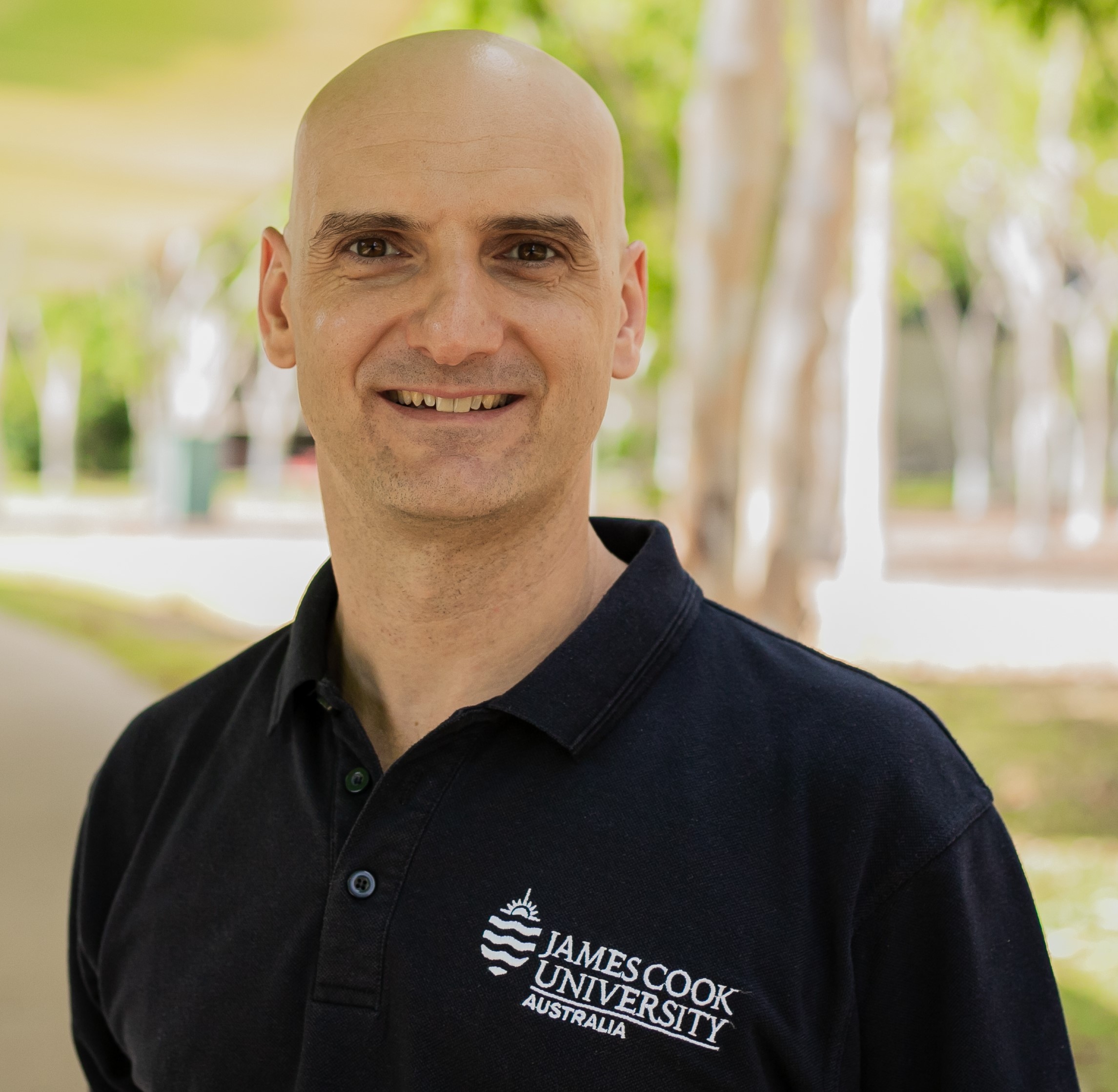
George Vamvounis
- Associate Professor, Chemical Engineering
- george.vamvounis@jcu.edu.au

Murray Davies
- Senior Lecturer
- murray.davies@jcu.edu.au

Michael Oelgemoeller
- Adjunct Professor
- michael.oelgemoeller@jcu.edu.au

Peter Junk
- Distinguished Professor; Nevitt Professor of Chemistry
- peter.junk@jcu.edu.au

Zhifang Guo
- Postdoctoral Researcher
- zhifang.guo@jcu.edu.au

Phurpa Wangchuk
- Associate Professor
- phurpa.wangchuk@jcu.edu.au

Yang Liu
- Associate Professor, Analytical Chemistry
- yang.liu11@jcu.edu.au
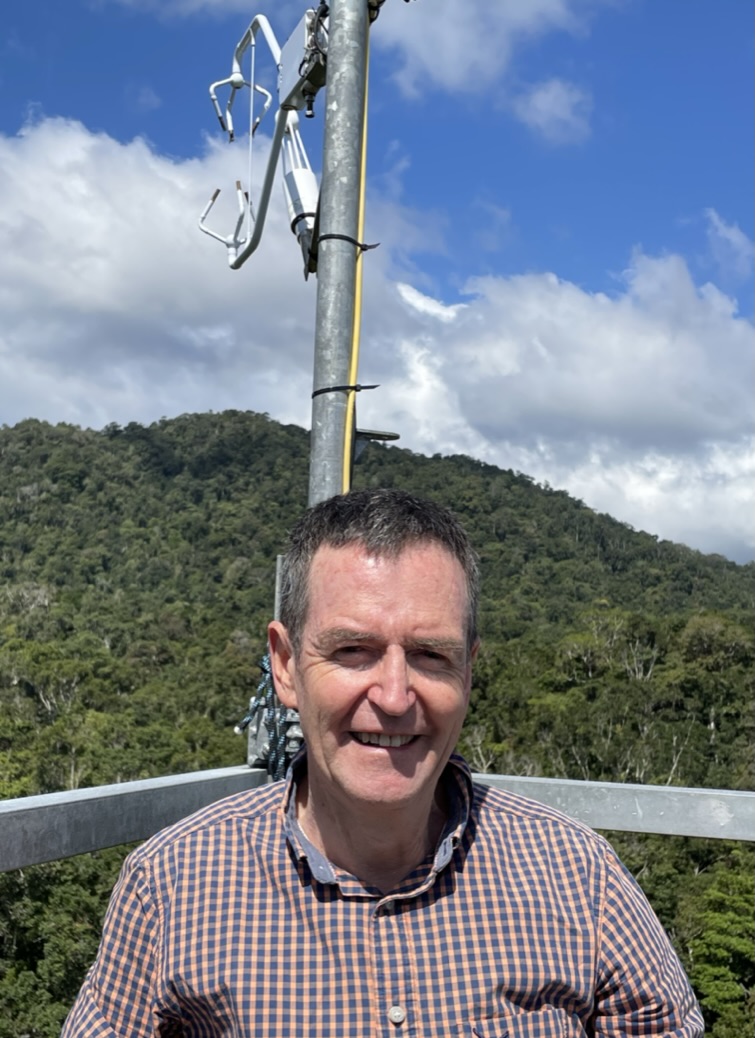
Michael Liddell
- Associate Professor
- michael.liddell@jcu.edu.au
Portable Polycyclic Aromatic Hydrocarbon (PAH) Detection (Old ID 22435)
George Vamvounis
01 Dec 2015 - 31 Dec 2017
Polycyclic aromatic hydrocarbons (PAHs) are toxic contaminants in the Great Barrier Reef (GBR) especially in areas near industrial, port and shipping activities. PAH monitoring is costly and complex. A portable technology for the quick detection of environmentally persistent and toxic PAHs will be developed using a new colourimetric detection technology based on photochromic compounds. This technology has been successfully used for sensing nitroaromatic-based explosives and will here be applied to strongly UV-absorbing PAHs. This work will be performed in collaboration with an end-user: Australian Maritime Safety Authority (AMSA).
Challenging targets in rare earth metalorganic chemistry (Old ID 24847)
Peter Junk
17 May 2019 - 31 Dec 2022
This project aims to prepare technically demanding, highly reactive rare earth organometallic and metal-organic compounds, especially from the free metals, and to determine their structures and reactivity. The challenging target systems include coordination stabilised novel ligands, pseudo-Grignard reagents LnR(X) including the rare fluorides, complexes primed for C-F activation, and intermediates from use of lanthanoid reagents in organic synthesis. The studies provide a knowledge base and expertise for the utilisation of Australia's abundant rare earths in chemical manufacture, catalysis, and recycling, and will transform the current behaviour of the elements.
Targeting bio-compatible homo- and hetero-bimetallic cages and their application in high energy and dual energy computed tomography (Old ID 21314)
Peter Junk
01 Jan 2014 - 31 Dec 2016
The project is focused on the synthesis, characterisation and stability of novel homo-metallic and hetero-metallic O- and S- based cage compounds which have the potential to be suitable for high energy and Dual Energy CT imaging (DECT), and also for optical imaging where rare-earth metals are involved. Pre-requisites for cage design are that they be stable and soluble in aqueous media, and be resistant to anionic ligand exchange at the cluster surface. The targeted metals are based on good attenuation at high (100-140 keV) and low X-ray (< 30 keV) energies, and the possibility of high stability and low toxicity.
Development of Pilot Scale Continuous Flow Photochemical Reactors (Old ID 22371)
Michael Oelgemoeller
01 Dec 2015 - 31 Dec 2018
The strategic goal of the collaboration is to pool expertise and resources in order to accelerate the adoption of continuous flow photochemical reactors by the fine chemical industry. For each party, the objectives of the collaboration are: For Vapourtec to benefit from the photochemical reaction knowledge and expertise at MO-JCU together with the academic and industrial contacts that may be made available through MO-JCU. For MO-JCU to have the opportunity to trial photochemical reactions on the equipment that Vapourtec makes available, this will include equipment up to pilot scale.
A customised triple-beam microscope for precise fabricating/characterising (Old ID 27325)
Yang Liu
26 Jul 2021 - 01 Jan 2024
This project aims to establish a customised triple-beam microscope to enable precise fabrication and polishing (using ion beams) and characterisation (using electron beam) of a wide range of advanced materials. It will provide solutions to prepare ultra-high quality and artefact-free specimens for transmission electron microscopy studies, and allow fabrication of unique nanostructures and nanostructured templates for high-performance applications. The customised features of the proposed instrument are the first of its kind in Australia. The new knowledge developed through this project will significantly impact on scientific insights and practical applications of new materials related to physics, chemistry, biology, geology and engineering.
TERN FNQ OzFlux
Michael Liddell
01 Jul 2011 - 30 Jun 2028
TERN FNQ OzFlux sites are funded by the Terrestrial Ecosystem Research Network.
TERN EP Robson Creek site - Rainforest in the Lamb Range on the Atherton Tablelands.
TERN EP Cow Bay site - Daintree Rainforest.
New Colombo Plan Mobility Grant - China Chemistry Practicum and Research
Yang Liu
01 Jan 2024 - 31 Dec 2025
Rare earth corrosion inhibitors in hydrogen production and storage systems
Peter Junk
01 Jul 2024 - 30 Jun 2025
This project is an internally funded project for a near miss ARC Discovery Grant, which was within 10% of those who missed.
This project addresses corrosion and embrittlement of steel in hydrogen storage facilities, a new dimension in the world-wide multi-trillion dollar problem of the corrosion of steel. With the emerging hydrogen economy, new infrastructure for hydrogen storage will need to be constructed. It has been recently found that hydrogen gas can decompose to hydrogen atoms on the surface of the steel on the inner lining of storage vessels, and impregnate the infrastructure, and therefore compromising the integrity of the high pressure storage vessels.
Defects in hydrogen storage facilities can therefore lead to catastrophic failure of hydrogen energy infrastructure.
The project will enhance the capacity of rare earth carboxylate corrosion inhibitors, which are an inexpensive and green solution, to mitigate both corrosion and hydrogen embrittlement of steel, and provide an understanding of the protection process. The benefits of this project will ultimately be a new bulk use for Australia’s abundant rare earth resources and new chemical manufacturing to produce the inhibitors.
The project aligns with JCU’s major theme of “Industries and economies in the tropics” particularly relevant with the proposed Townsville Region Hydrogen Hub, a $70M Australian Government investment. Furthermore, the rare earth metals are classified as critical metals, and the project aligns with the Critical Metals Trailblazer project.
The project requires bulk amounts of corrosion inhibitors for assessment. The most expensive items are lanthanoid salts (all REs required) for the synthesis of lanthanoid carboxylates. Listed costs for rare earth chlorides and nitrates follow as examples, but carbonates and acetates are required for optimising procedures. The metal costs are (quotes are for the least expensive to most expensive chlorides and nitrates): lanthanoid chlorides range from $209/100g for CeCl3 to $1580/5g for ScCl3 while nitrates are $127/100g for Ce(NO3)3 to $975/5g for Sc(NO3)3. For optimum inhibitor systems, all 16 rare earths will need to be. For brevity, we do not quote all prices here, but chlorides total ca $5800, while nitrates total ca $4400. Organic supporting ligands are estimated to cost ca. $3,000. Analysis costs are included below. Travel to Melbourne is planned to meet with our Monash and Deakin collaborators to draft the next grant proposal.
Nuclear Magnetic Resonance facility for Northern Australia (Old ID 21541)
George Vamvounis
26 Feb 2015 - 25 Feb 2016
Nuclear magnetic resonance spectroscopy is a fundamentally and critically important technique in the characterisation of organic, inorganic and biological compounds. The purchase of a state-of-the-art instrument at James Cook University and a lower resolution instrument at Charles Darwin University are required to support productive existing research projects, and nurture future projects, in organometallic chemistry and the development of new materials and analytical sensors; organic photochemistry as applied in synthesis and degradation; natural products, pharmaceutical, inorganic chemistry, where multinuclear nuclear magnetic resonance is most important and applicable in drug design, development and delivery.
Optimisation of QCIDE oil extraction and separation (Old ID 26712)
Yang Liu
26 Aug 2019 - 26 Aug 2021
This is project for Research Master Degree at JCU. Investigation of the pre-treatment, distillation and separation parameters of QCIDE extraction in order to assess the viability of industrial QCIDE production.
Multi-functionalized MOFs with large-pore apertures as luminescent probes for efficient sensing of quinones
- 2023
- Royal Society of Chemistry
- Researchers:Zhifang GuoPeter Junk
Formation of a cyclooctatetraenylsamarium(iii) inverse sandwich that ring-opens tetrahydrofuran
- 2023
- Royal Society of Chemistry
- Researchers:Zhifang GuoPeter Junk
Never a dull moment with praseodymium metal
- 2023
- Royal Society of Chemistry
- Researchers:Zhifang GuoPeter Junk
Bromobenzene Transforms Lanthanoid Pseudo-Grignard Chemistry
- 2023
- Wiley-Blackwell
- Researchers:Zhifang GuoPeter Junk
Start Date:
01 Jan 2022
End Date:
01 Jan 2025
Start Date:
01 Jan 2022
Start Date:
01 Jan 2025
Title:
JCU Distinguished Professor
Start Date:
01 Jan 2021
Start Date:
01 Jan 2020
Title:
Burrows Award, Premier Inorganic Chemistry Award for the RACI. Contributions to Inorganic Chemistry
Start Date:
01 Jan 2016
Start Date:
01 Jan 2016
Start Date:
01 Jan 2016
Start Date:
01 Jan 2007
Start Date:
01 Jan 2003